























Key Takeaways
- Singapore’s online search landscape in 2026 is driven by the convergence of SEO, GEO, AEO, AI search, and social search, requiring businesses to optimize for both traditional search engines and AI-powered discovery platforms.
- Success in Singapore’s digital ecosystem now depends on building authoritative, structured, and data-driven content that earns visibility across Google Search, AI assistants like ChatGPT and Gemini, answer engines, and social commerce platforms.
- Organizations that integrate technical SEO, Generative Engine Optimization (GEO), Answer Engine Optimization (AEO), entity optimization, and multi-platform content strategies will be best positioned to increase brand visibility, AI citations, and long-term organic growth in 2026 and beyond.
Singapore’s online search landscape in 2026 combines Search Engine Optimization (SEO), Generative Engine Optimization (GEO), and Answer Engine Optimization (AEO) as businesses adapt to AI-powered search, conversational assistants, and social discovery. Organizations should optimize authoritative, structured, and user-focused content to improve visibility across Google, ChatGPT, Gemini, Perplexity, and other emerging AI search platforms.
The online search landscape in Singapore has entered one of the most transformative periods in its history. In 2026, searching for information is no longer limited to typing keywords into a traditional search engine and browsing through a list of blue links. Instead, consumers, businesses, and professionals increasingly interact with a diverse ecosystem of search experiences powered by artificial intelligence, conversational assistants, answer engines, social media platforms, and digital marketplaces. As a result, organizations must rethink how they approach digital visibility, content strategy, and online authority if they want to remain competitive in one of Asia’s most technologically advanced markets.
Also, read our top guide on the Top 10 Best GEO Agencies in Singapore.
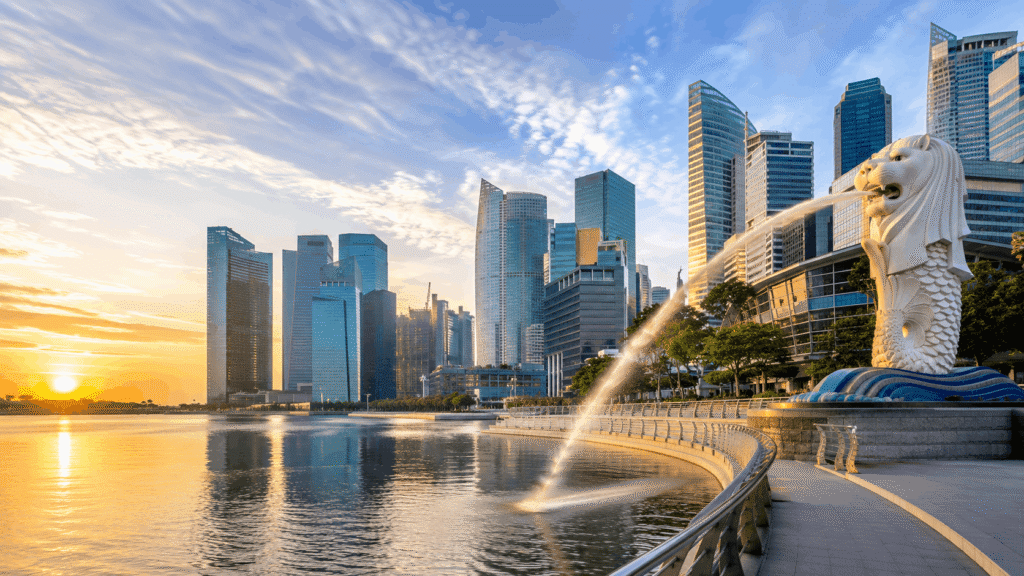
Singapore has long been recognised as a global leader in digital transformation. Its exceptionally high internet penetration, advanced mobile infrastructure, strong government support for artificial intelligence, and digitally sophisticated population have positioned the country at the forefront of online innovation. Businesses operating in Singapore are among the earliest adopters of emerging technologies, while consumers are increasingly comfortable using AI assistants, voice search, social platforms, and intelligent recommendation engines to discover products, compare services, and make purchasing decisions. This combination of technological readiness and changing consumer behaviour has fundamentally reshaped the online search ecosystem.
The evolution of search is driven by the convergence of several interconnected disciplines. Search Engine Optimization (SEO) continues to provide the technical and content foundation that enables websites to be discovered by search engines such as Google and Bing. However, SEO is no longer the only factor influencing digital visibility. Generative Engine Optimization (GEO) has emerged as a rapidly growing discipline focused on increasing the likelihood that Large Language Models (LLMs) such as ChatGPT, Google Gemini, Claude, Microsoft Copilot, Perplexity, and DeepSeek reference and recommend authoritative content within AI-generated responses. At the same time, Answer Engine Optimization (AEO) has become increasingly important as search platforms deliver direct answers instead of simply presenting lists of webpages.
This transformation represents a fundamental shift in how users interact with information online. Rather than searching multiple websites to compare products or gather information, users increasingly expect AI systems to provide complete, accurate, and context-aware answers in a single conversation. Whether someone is researching enterprise software, comparing mortgage providers, looking for the best restaurants, planning a holiday, evaluating legal services, or seeking healthcare information, conversational AI platforms now play an increasingly influential role in shaping purchasing decisions and consumer behaviour.
The traditional customer journey has therefore become significantly more fragmented. A typical consumer in Singapore may begin by asking ChatGPT for an overview of a product category, verify information through Google Search, compare reviews on YouTube, browse recommendations on TikTok or Xiaohongshu, consult LinkedIn for professional insights, and ultimately complete a purchase through Shopee or TikTok Shop. Each platform contributes differently to the decision-making process, creating a multi-surface search environment that extends far beyond conventional search engine results pages.
This new reality has profound implications for businesses, marketers, publishers, and digital agencies. Ranking highly on Google remains important, but it is no longer sufficient. Brands must also establish authority across AI search platforms, answer engines, knowledge graphs, social search ecosystems, video platforms, and digital marketplaces. Success increasingly depends on becoming a trusted entity that search engines, AI assistants, and recommendation systems consistently understand, reference, and recommend.
One of the defining characteristics of Singapore’s online search ecosystem in 2026 is the growing importance of artificial intelligence. AI-powered search is rapidly becoming integrated into everyday workflows across both consumer and enterprise environments. Professionals increasingly use Google Gemini within Google Workspace, Microsoft Copilot within Microsoft 365, ChatGPT for research and productivity, Claude for document analysis, and Perplexity for citation-based investigations. These platforms are transforming search from a simple retrieval process into an intelligent assistant capable of synthesizing information, analysing data, generating recommendations, and supporting complex decision-making.
This evolution also changes how organizations measure digital success. Traditional SEO metrics such as keyword rankings, organic traffic, click-through rates, and backlinks remain valuable, but they no longer provide a complete picture of online visibility. Businesses now monitor AI citations, brand mentions within conversational assistants, entity recognition, knowledge graph presence, share of AI voice, answer engine inclusion, and visibility across multiple digital ecosystems. The focus is shifting from generating clicks alone to building digital authority that influences both humans and artificial intelligence systems.
Another major trend shaping Singapore’s search landscape is the continued growth of zero-click search experiences. AI-generated summaries, Google AI Overviews, featured snippets, knowledge panels, and conversational assistants increasingly provide users with immediate answers without requiring them to visit external websites. This shift challenges businesses to optimize their content not only for rankings but also for inclusion within AI-generated responses and direct answer interfaces. Organizations that fail to adapt risk losing visibility even if they continue to rank well within traditional search results.
Social media has also evolved into an essential search channel. Platforms such as TikTok, Instagram, YouTube, LinkedIn, Facebook, and Xiaohongshu are no longer used solely for entertainment or networking. They have become powerful discovery engines where users actively search for product reviews, travel destinations, financial advice, software recommendations, educational content, restaurants, lifestyle inspiration, and professional expertise. Video-first search and community-driven recommendations increasingly influence purchasing decisions before consumers ever perform a Google search.
Similarly, e-commerce marketplaces have become search engines in their own right. Consumers now begin product research directly within platforms such as Shopee, TikTok Shop, and Lazada, comparing products, reading reviews, watching livestream demonstrations, and completing purchases without leaving the marketplace ecosystem. Transactional search behaviour is becoming increasingly integrated with content, entertainment, and social commerce, further expanding the definition of online search.
These developments have given rise to a new optimization framework that integrates Search Engine Optimization (SEO), Generative Engine Optimization (GEO), Answer Engine Optimization (AEO), Social Search Optimization (SSO), Entity Optimization, structured data implementation, Digital PR, and AI Search Optimization into a unified digital strategy. Rather than viewing these disciplines as competing approaches, successful organizations increasingly combine them to maximize discoverability across every stage of the customer journey.
At the heart of this transformation lies the concept of digital authority. Search engines and AI platforms increasingly evaluate organizations not simply by matching keywords but by understanding entities, relationships, expertise, trustworthiness, and factual consistency across the web. Businesses that publish original research, demonstrate subject-matter expertise, implement structured data, maintain consistent brand information, and earn recognition from authoritative third-party sources are significantly more likely to appear within AI-generated answers and conversational recommendations.
Singapore provides one of the world’s most compelling examples of how these changes are reshaping digital marketing. Its advanced digital economy, highly educated workforce, widespread AI adoption, and strong enterprise technology ecosystem make it an ideal case study for understanding the future of online search. Many of the innovations emerging in Singapore today are likely to become standard practice across global markets over the coming years.
This comprehensive guide explores the complete state of online search in Singapore in 2026. It examines the latest search engine market dynamics, artificial intelligence adoption, Generative Engine Optimization (GEO), Answer Engine Optimization (AEO), AI search platforms, social search trends, e-commerce discovery, search behaviour, entity optimization, structured data, budget allocation, agency pricing, and strategic recommendations for businesses seeking long-term digital success. Whether you are a business owner, digital marketer, SEO specialist, content strategist, enterprise leader, publisher, or agency professional, understanding these trends will help you build a future-ready search strategy that extends beyond traditional rankings and positions your brand for sustained visibility in Singapore’s increasingly AI-driven digital landscape.
But, before we venture further, we like to share who we are and what we do.
About AppLabx
From developing a solid marketing plan to creating compelling content, optimizing for search engines, leveraging social media, and utilizing paid advertising, AppLabx offers a comprehensive suite of digital marketing services designed to drive growth and profitability for your business.
At AppLabx, we understand that no two businesses are alike. That’s why we take a personalized approach to every project, working closely with our clients to understand their unique needs and goals, and developing customized strategies to help them achieve success.
If you need a digital consultation, then send in an inquiry here.
Or, send an email to hello@applabx.com to get started.
The State of Online Search (SEO, GEO, AEO) in Singapore in 2026
- Executive Summary
- Traditional Search Engine Infrastructure and Market Share Dynamics
- The AI Search and Answer Engine Optimization (AEO) Landscape in Singapore
- Social Search Optimization (SSO) and E-Commerce Discovery in Singapore
- Algorithmic Architecture: Integrating SEO, GEO, and Answer Engine Optimization (AEO)
- Financial Models, Budget Allocations, and Pricing Frameworks
- Strategic Outlook and Recommendations for 2026
1. Executive Summary
Singapore’s online search ecosystem in 2026 has evolved into one of the world’s most advanced digital discovery environments. Traditional search engine optimization (SEO) remains an essential foundation for online visibility, but it now represents only one component of a much broader search landscape. Businesses, publishers, brands, and marketers increasingly compete for visibility across multiple discovery channels, including Generative Engine Optimization (GEO), Answer Engine Optimization (AEO), AI-powered search experiences, conversational assistants, and social media search platforms.
The concept of “search” has fundamentally changed. Consumers no longer rely exclusively on typing keywords into Google. Instead, they ask conversational questions to AI assistants, discover products through TikTok and Instagram, compare services using Reddit discussions, receive synthesized answers through Google’s AI-generated search experiences, and consult large language models such as ChatGPT, Gemini, Claude, Perplexity, and DeepSeek before making purchasing decisions.
Singapore’s exceptionally mature digital infrastructure has accelerated this transformation. With internet penetration reaching approximately 98.4%, more than 5.78 million internet users, over 5.33 million active social media identities, and nearly 9.79 million mobile connections, the country provides one of the world’s most connected digital ecosystems. Digital channels have become deeply embedded in everyday life, enabling rapid adoption of AI-powered discovery and conversational search experiences.
At the same time, the Singapore government continues to strengthen national AI capabilities through updated National AI Strategy priorities, enterprise AI adoption initiatives, and significant public investment into artificial intelligence research and commercialization. These initiatives are creating an environment where AI-powered search experiences are expected to become increasingly dominant across both consumer and enterprise markets.
The Evolution of Online Search in Singapore
Online search has progressed through several distinct generations over the past two decades.
| Search Era | Primary Discovery Method | User Behaviour | Primary Optimization Strategy |
|---|---|---|---|
| Traditional SEO | Keyword-based search engines | Search, click, browse websites | Technical SEO and content optimization |
| Mobile Search | Smartphones and location-aware search | Local intent and instant information | Mobile-first SEO and Local SEO |
| Answer Engine Era | Featured snippets and direct answers | Immediate answers without multiple clicks | Structured data and Answer Engine Optimization |
| AI Search Era | Conversational AI assistants | Natural language conversations | GEO and entity optimization |
| Multi-Surface Discovery | AI, social platforms, marketplaces, forums | Information gathered from multiple ecosystems | Omnichannel optimization |
| Zero-Click Discovery Ecosystem | AI summaries and synthesized recommendations | Decisions often occur without visiting websites | Brand authority and entity recognition |
Instead of competing only for rankings, organizations must now compete for inclusion within AI-generated answers, recommendation engines, featured summaries, voice assistants, knowledge graphs, and conversational interfaces.
Singapore’s Digital Foundation Creates an Ideal AI Search Market
Singapore possesses several characteristics that accelerate adoption of next-generation search technologies.
| Digital Indicator | Singapore (2026) | Strategic Implication |
|---|---|---|
| Internet Penetration | 98.4% | Nearly universal online accessibility |
| Internet Users | 5.78 million | Highly mature digital audience |
| Mobile Connections | 9.79 million | Mobile-first discovery behaviour |
| Social Media Penetration | 90.6% | Strong influence of social search |
| Digital Economy Contribution | 18.6% of GDP | Digital transformation drives business competitiveness |
| National AI Investment | Expanding through 2030 | Long-term AI ecosystem growth |
| Enterprise AI Support | National AI Impact Programme | Accelerated business AI adoption |
Singapore’s highly educated population, advanced broadband infrastructure, multilingual environment, and strong digital economy provide ideal conditions for rapid AI search adoption. Government initiatives supporting enterprise AI transformation are also encouraging organizations to integrate AI into customer engagement, marketing, search, and knowledge management strategies.
The Shift from Search Engines to Search Ecosystems
Search is no longer concentrated within a single platform. Instead, users distribute their information-seeking behaviour across multiple ecosystems depending on intent.
| Discovery Platform | Primary User Intent | Optimization Priority |
|---|---|---|
| General information and commercial searches | SEO, GEO, structured data | |
| Google AI Search | Immediate synthesized answers | Entity authority and citations |
| ChatGPT | Research and recommendations | Brand authority and semantic relevance |
| Gemini | Integrated Google AI assistance | Knowledge graph optimization |
| Perplexity | Citation-rich research | High-quality referenced content |
| Claude | Professional reasoning | Long-form expertise |
| DeepSeek | Technical and analytical research | Detailed authoritative content |
| Community recommendations | Brand reputation and authentic engagement | |
| TikTok | Product discovery | Video optimization and creator visibility |
| Lifestyle and visual discovery | Social content optimization | |
| YouTube | Tutorials and education | Video SEO and topical authority |
| B2B expertise | Thought leadership |
The result is a fragmented but interconnected search ecosystem where brands must establish authority across numerous digital touchpoints instead of relying solely on organic rankings.
The Convergence of SEO, GEO, AEO, and AI Search
Search optimization has become multidisciplinary.
| Optimization Discipline | Primary Objective | Key Success Factors |
|---|---|---|
| SEO | Improve search engine rankings | Technical excellence and content quality |
| GEO | Increase AI model citations | Entity authority and semantic relationships |
| AEO | Provide direct answers | Structured information and FAQ optimization |
| AI Search Optimization | Improve AI-generated recommendations | Trustworthy factual content |
| Social Search | Improve visibility within social platforms | Community engagement and multimedia content |
| Entity Optimization | Strengthen organizational knowledge signals | Consistent digital identity |
Rather than replacing SEO, these disciplines increasingly complement one another. Organizations that integrate all of these approaches are more likely to achieve sustainable visibility across traditional and AI-powered discovery channels.
The Rise of Zero-Click Search
One of the defining characteristics of online search in 2026 is the continued growth of zero-click experiences.
AI-generated summaries, featured snippets, instant answers, and conversational assistants increasingly satisfy user intent directly within search interfaces. Instead of clicking through multiple websites, users often receive comprehensive responses immediately.
This changes how marketing success is measured.
Traditional metrics include:
• Organic traffic
• Keyword rankings
• Click-through rate
• Page views
Emerging metrics include:
• AI citations
• Brand mentions inside LLMs
• Entity visibility
• Knowledge graph inclusion
• AI recommendation frequency
• Share of Voice across AI platforms
• Zero-click brand exposure
Success is increasingly defined by how often a brand is referenced and trusted across AI-generated responses rather than by website visits alone. Broader industry trends indicate that AI-generated summaries and zero-click behaviour continue to reduce click-through opportunities while increasing the importance of authoritative content.
How AI Search Changes User Behaviour
Modern users increasingly interact with AI using natural language rather than isolated keywords.
Traditional Search Query
“best accounting software Singapore”
AI Search Prompt
“What accounting software would you recommend for a growing SME in Singapore with fewer than 20 employees?”
Instead of returning ten blue links, AI platforms synthesize information from multiple authoritative sources before producing a recommendation.
This fundamentally changes optimization priorities.
| Traditional SEO Focus | AI Search Focus |
|---|---|
| Keywords | Topics |
| Rankings | Citations |
| Links | Authority |
| Pages | Knowledge |
| Search Volume | User Intent |
| Backlinks | Trust Signals |
| Content Quantity | Content Depth |
| Exact Match Optimization | Semantic Understanding |
| Individual Pages | Entity Relationships |
| Website Sessions | Brand Visibility Across AI |
Social Search Becomes a Primary Discovery Channel
Social platforms increasingly function as search engines.
Consumers now search for:
• Restaurants
• Travel destinations
• Financial products
• Software reviews
• Employer reputation
• Educational content
• Healthcare advice
• Product demonstrations
on platforms traditionally viewed as social media rather than search engines.
This behaviour is particularly significant among younger demographics, who often begin discovery journeys on video and community-driven platforms before consulting traditional search engines.
As a result, content strategies now incorporate:
• Short-form videos
• Expert commentary
• Community discussions
• User-generated content
• Influencer partnerships
• Interactive educational content
The New Search Optimization Framework
Successful organizations increasingly integrate multiple optimization disciplines simultaneously.
| Optimization Layer | Strategic Objective |
|---|---|
| Technical SEO | Crawlability and indexation |
| Content Strategy | Comprehensive topical authority |
| GEO | AI citation optimization |
| AEO | Direct answer visibility |
| Entity SEO | Knowledge graph development |
| Digital PR | Third-party authority signals |
| Social Search | Discovery across social ecosystems |
| Video SEO | Multimedia visibility |
| Local SEO | Geographic relevance |
| Brand Reputation | Trust across AI and human audiences |
Implications for Businesses in Singapore
Organizations operating in Singapore can no longer rely exclusively on traditional SEO strategies.
Future-ready digital strategies increasingly include:
• Building authoritative content ecosystems
• Publishing comprehensive expert resources
• Structuring content for AI consumption
• Developing consistent entity profiles
• Improving factual accuracy and citation potential
• Strengthening topical authority across industries
• Expanding visibility across AI assistants
• Investing in video and multimedia content
• Enhancing social discovery
• Monitoring AI-generated brand visibility
Companies that successfully combine SEO, GEO, AEO, AI Search Optimization, and Social Search Optimization will be better positioned to maintain visibility as user discovery behaviour continues to evolve.
Singapore’s Position as a Global AI Search Leader
Singapore is emerging as one of Asia’s leading AI-enabled digital economies. Government-backed AI initiatives, widespread digital connectivity, enterprise transformation programmes, and continued investment in artificial intelligence research are accelerating adoption across industries. While enterprise AI adoption remains uneven, larger organizations are integrating AI more rapidly, and national programmes aim to expand adoption across thousands of businesses over the coming years.
As search evolves beyond keywords into conversational intelligence, semantic understanding, and AI-generated recommendations, Singapore provides a compelling example of how advanced digital economies are redefining online discovery. The convergence of SEO, GEO, AEO, AI Search, and Social Search is transforming digital marketing from a ranking-focused discipline into a comprehensive strategy centered on authority, trust, structured knowledge, and cross-platform visibility. Businesses that adapt early to this new search paradigm will be best positioned to capture visibility, influence purchasing decisions, and establish lasting digital authority in Singapore’s increasingly AI-driven online ecosystem.
2. Traditional Search Engine Infrastructure and Market Share Dynamics
The rapid growth of artificial intelligence-powered search experiences has fundamentally changed how users discover information online. However, traditional search engines continue to serve as the backbone of Singapore’s digital ecosystem in 2026. They remain the primary gateway for navigation, commercial research, local discovery, news consumption, and transactional searches. While conversational AI platforms such as ChatGPT, Gemini, Perplexity, Claude, and DeepSeek are increasingly influencing research behaviour, they complement rather than completely replace traditional search engines.
Singapore continues to demonstrate one of the world’s most concentrated search markets. Google’s overwhelming dominance reflects its deep integration across Android devices, Chrome browsers, Google Workspace, Maps, YouTube, and the broader Google ecosystem. For most businesses operating within Singapore, Google remains the single most important source of discoverability, although optimization strategies now extend beyond traditional organic rankings toward AI-generated citations and conversational visibility.
Microsoft Bing maintains a modest but strategically important presence, particularly among enterprise users, Windows-based corporate environments, and Microsoft Edge users. Smaller search engines such as DuckDuckGo continue to appeal to privacy-conscious users, while regional platforms including CocCoc attract niche audiences connected to Southeast Asian markets.
Rather than competing solely on keyword rankings, organizations increasingly optimize for an interconnected search environment where traditional search engines, AI assistants, social platforms, and answer engines collectively influence consumer decision-making.
Singapore Search Engine Market Share (2026)
| Search Engine | Estimated Market Share | Primary User Base | Strategic Importance |
|---|---|---|---|
| 92.9–93.0% | General consumers, businesses, mobile users | Dominant search ecosystem | |
| Microsoft Bing | 3.1–3.2% | Enterprise users, Windows ecosystem | Growing AI-powered enterprise search |
| CocCoc | Approximately 1.1% | Vietnamese professionals and regional users | Regional niche audience |
| Yahoo | Approximately 0.9% | Legacy users | Limited influence |
| DuckDuckGo | Approximately 0.9% | Privacy-focused users | Small but loyal audience |
| Yandex | Approximately 0.6% | International niche users | Minimal commercial relevance |
Google continues to capture well above 90% of all search activity in Singapore, making it one of the most Google-centric search markets globally. Although Bing has gradually enhanced its capabilities through AI integration and Copilot technologies, its overall market share remains relatively small compared to Google’s dominance.
Search Infrastructure Across Devices
Search behaviour also varies according to device type.
Desktop users continue to generate more enterprise-related, research-intensive, and B2B searches, while mobile users dominate local search, navigation, shopping research, dining decisions, travel planning, and real-time information discovery.
| Device Type | Primary Search Behaviour | Dominant Platform |
|---|---|---|
| Desktop | Research, B2B, productivity | Google, Bing |
| Mobile | Local discovery, commerce, navigation | |
| Tablet | Mixed informational usage | |
| Smart Devices | Voice search and AI assistants | Google ecosystem |
Google’s integration across Android smartphones, Chrome browsers, Google Maps, Gmail, and Gemini provides a significant competitive advantage, creating an interconnected ecosystem that extends well beyond traditional web search.
Search Host Distribution Reflects Regional Connectivity
Although Google.com remains the default destination for most users, Singapore’s position as a global financial and logistics hub creates unique regional search patterns.
Cross-border business activities, multinational corporations, expatriate communities, and international trade contribute to searches originating through multiple Google host domains and regional search infrastructures.
| Search Host | Market Role | Typical User Behaviour |
|---|---|---|
| google.com | Primary search destination | Default consumer and business searches |
| google.com.hk | Regional routing | Greater China commercial activity |
| google.com.vn | Southeast Asian connectivity | Vietnam-related business and migration |
| bing.com | Enterprise ecosystem | Microsoft workplace integration |
| coccoc.com | Regional Vietnamese search | Vietnamese-speaking professionals |
| duckduckgo.com | Privacy-oriented search | Security-conscious users |
Singapore’s multicultural workforce and role as a regional headquarters for multinational corporations naturally create a more internationally distributed search environment than many similarly sized economies.
The Continuing Importance of Traditional Search Infrastructure
Despite growing excitement surrounding generative AI, traditional search engines continue to perform several critical functions that AI platforms cannot fully replace.
These include:
• Real-time indexing of newly published information
• Local business discovery
• Product shopping
• Maps and navigation
• News aggregation
• Government services
• Commercial comparisons
• Multimedia discovery
• Website navigation
Traditional search engines therefore remain the primary infrastructure layer upon which many AI-powered search experiences are built.
How AI Is Reshaping Traditional Search
Rather than replacing search engines, artificial intelligence is transforming how search results are presented.
Google increasingly integrates AI-generated summaries, conversational responses, contextual recommendations, and synthesized answers directly into its search experience. This evolution shifts search away from presenting lists of hyperlinks toward delivering comprehensive answers within the search interface itself.
The result is a hybrid search experience combining:
| Traditional Search Features | AI-Enhanced Search Features |
|---|---|
| Organic listings | AI-generated summaries |
| Paid advertisements | Conversational responses |
| Featured snippets | Multi-source synthesized answers |
| Knowledge panels | Context-aware recommendations |
| Local business listings | Follow-up conversational prompts |
| Shopping results | AI-assisted buying guidance |
This convergence means that success is no longer determined solely by achieving high organic rankings. Brands must also establish sufficient authority to become trusted sources referenced by AI-generated answers.
Zero-Click Search Becomes the New Normal
One of the most significant structural shifts in Singapore’s search ecosystem is the continued expansion of zero-click search behaviour.
Modern search engines increasingly answer user questions directly on the search results page through AI-generated summaries, featured snippets, knowledge panels, maps, product information, and interactive search modules.
As a consequence, users often complete their information journey without visiting external websites.
Industry research indicates that approximately 68% of Google searches now conclude without an external click, with AI-generated search experiences further accelerating this trend. AI Overviews reduce click-through opportunities for traditional organic listings while increasing the importance of being referenced within AI-generated answers.
Changing SERP Structure in the AI Era
The structure of Google’s Search Engine Results Pages (SERPs) has evolved considerably.
| Traditional SERP | AI-Era SERP |
|---|---|
| Paid advertisements | Paid advertisements |
| Organic listings | AI Overview |
| Featured snippets | Conversational summary |
| Knowledge panel | Knowledge panel |
| Local Pack | Local Pack |
| Shopping results | Shopping results |
| Related searches | AI follow-up questions |
Users increasingly receive comprehensive answers before reaching traditional organic listings, reducing the visibility advantage historically associated with high rankings.
The New Measurement Framework for Search Success
Traditional SEO metrics remain valuable but no longer provide a complete picture of digital visibility.
Modern organizations increasingly monitor a broader set of performance indicators.
| Traditional SEO Metrics | AI Search Metrics |
|---|---|
| Organic rankings | AI citation frequency |
| Click-through rate | AI recommendation rate |
| Organic traffic | Share of AI voice |
| Keyword rankings | Entity visibility |
| Backlinks | Brand mention frequency |
| Domain authority | Knowledge graph presence |
| Indexed pages | Multi-platform discoverability |
This evolution reflects the growing importance of optimizing not only for search engines but also for AI systems that synthesize information from numerous authoritative sources.
Implications for Businesses in Singapore
For businesses competing within Singapore’s highly digital economy, traditional SEO remains essential but is no longer sufficient as a standalone strategy.
Organizations should increasingly prioritize:
• Technical SEO excellence
• High-authority expert content
• Entity optimization
• Structured data implementation
• AI citation optimization
• Answer Engine Optimization (AEO)
• Brand reputation management
• Digital PR
• Social search visibility
• Cross-platform content authority
The future of online visibility in Singapore lies in integrating traditional search optimization with AI-first content strategies. Companies that establish trusted digital authority across search engines, AI assistants, answer engines, and social discovery platforms will be better positioned to maintain visibility as user behaviour continues shifting toward conversational and zero-click search experiences.
3. The AI Search and Answer Engine Optimization (AEO) Landscape in Singapore
The Emergence of AI Search as a Primary Discovery Channel
Singapore has become one of the world’s leading markets for artificial intelligence adoption, making it an important testing ground for the evolution of AI-powered search and Answer Engine Optimization (AEO). In 2026, AI assistants are no longer viewed simply as productivity tools. Instead, they have become primary information gateways that influence how consumers research products, compare services, make purchasing decisions, learn new skills, and evaluate businesses.
Unlike traditional search engines that primarily return lists of webpages, AI search platforms synthesize information from multiple trusted sources and deliver conversational, context-aware answers. This represents one of the most significant changes to online search since the introduction of Google’s ranking algorithms.
For businesses operating in Singapore, success increasingly depends not only on appearing in search engine results but also on becoming authoritative sources that artificial intelligence systems reference, summarize, and recommend.
Singapore’s strong digital infrastructure, high internet penetration, widespread enterprise digitalization, and government-led AI initiatives have accelerated the adoption of conversational AI across both consumer and business environments. As a result, AI Search Optimization and Answer Engine Optimization (AEO) are becoming essential components of modern digital marketing strategies.
The AI Chatbot Ecosystem in Singapore
Singapore’s AI assistant market is becoming increasingly competitive. While ChatGPT continues to maintain a commanding lead, Google’s Gemini has strengthened its position through deep integration across Google Search, Android, Gmail, Workspace, and Chrome. Meanwhile, Perplexity, Claude, Microsoft Copilot, and DeepSeek continue expanding their specialist audiences.
Rather than relying exclusively on one platform, professionals increasingly use multiple AI assistants depending on the complexity and nature of the task.
| AI Platform | Estimated Singapore Market Share (2026) | Primary Strength | Typical User Profile |
|---|---|---|---|
| ChatGPT | 67.9% | General knowledge, writing, research, coding | Consumers, professionals, students |
| Google Gemini | 14.8% | Google ecosystem integration, multimodal AI | Enterprise users and Workspace customers |
| Perplexity | 7.2% | Citation-based research | Researchers, analysts, journalists |
| Claude | 5.6% | Long-form reasoning and document analysis | Knowledge workers and developers |
| Microsoft Copilot | 4.3% | Microsoft 365 integration | Enterprise productivity |
| DeepSeek | 0.1% | Technical reasoning and open-source ecosystem | Developers and AI researchers |
Although ChatGPT remains the dominant platform, the Singapore market is becoming progressively more diversified as enterprises adopt multiple AI systems for different workflows.
How AI Search Changes Information Discovery
Traditional search begins with keywords.
AI search begins with conversations.
Instead of entering short keyword phrases, users increasingly ask complete questions, request comparisons, seek recommendations, and continue conversations over multiple prompts.
Traditional Search
“best CRM Singapore”
AI Search
“What CRM would you recommend for a 50-person SaaS company in Singapore that already uses Microsoft 365 and expects regional expansion?”
This evolution fundamentally changes how businesses create digital content.
| Traditional Search Behaviour | AI Search Behaviour |
|---|---|
| Keyword matching | Natural language conversations |
| Multiple webpage visits | Single synthesized response |
| Manual comparison | AI-generated recommendations |
| Individual searches | Multi-turn conversations |
| Search-result browsing | Context-aware dialogue |
| Website exploration | Immediate summarized answers |
Instead of optimizing individual pages around keywords alone, organizations increasingly optimize complete knowledge ecosystems that AI models can understand, verify, and reference.
Answer Engine Optimization (AEO) Becomes a Core Marketing Discipline
Answer Engine Optimization (AEO) focuses on making content easily understandable, extractable, and reusable by AI systems.
Unlike traditional SEO, which aims to improve rankings, AEO focuses on helping AI assistants confidently answer user questions using an organization’s content.
Core AEO objectives include:
• Delivering direct factual answers
• Structuring information clearly
• Improving semantic relationships
• Supporting entity recognition
• Increasing citation probability
• Building trust signals
• Strengthening topical authority
The ultimate objective is to become the preferred knowledge source behind AI-generated answers rather than merely appearing as one of many search results.
SEO Versus AEO
| Traditional SEO | Answer Engine Optimization |
|---|---|
| Improve rankings | Improve AI answer inclusion |
| Optimize keywords | Optimize questions and answers |
| Increase clicks | Increase citations |
| Generate website traffic | Build AI visibility |
| Page authority | Knowledge authority |
| Backlinks | Trustworthy factual content |
Organizations increasingly implement both disciplines simultaneously, recognizing that SEO and AEO reinforce one another rather than compete.
The Rise of Multi-Platform AI Research
Users rarely depend on a single AI assistant.
Instead, they compare responses across several platforms before making important decisions.
A typical purchasing journey may involve:
• ChatGPT for initial understanding
• Gemini for Google-integrated research
• Perplexity for source verification
• Claude for deeper analysis
• Google Search for local businesses
• Reddit for community experiences
• YouTube for demonstrations
This behaviour creates an increasingly fragmented discovery ecosystem.
| Research Stage | Preferred Platform | Primary Objective |
|---|---|---|
| Initial learning | ChatGPT | General understanding |
| Citation verification | Perplexity | Reliable sources |
| Long-form analysis | Claude | Complex reasoning |
| Google ecosystem search | Gemini | Contextual recommendations |
| Local discovery | Google Search | Businesses and locations |
| Community validation | Real-world opinions | |
| Visual education | YouTube | Demonstrations and tutorials |
Organizations therefore benefit from building authority across multiple ecosystems rather than optimizing for only one AI platform.
Enterprise AI Adoption in Singapore
Singapore’s enterprise sector has emerged as one of the strongest adopters of artificial intelligence in Southeast Asia.
Knowledge-intensive industries increasingly integrate AI into:
• Software development
• Financial analysis
• Legal research
• Marketing
• Customer support
• Healthcare
• Professional services
• Education
Government reports indicate that AI adoption is highest among larger enterprises, while many small businesses remain in early experimentation or pilot phases. This suggests significant future growth potential for enterprise AI deployment across Singapore’s economy.
Why Gemini Is Growing Rapidly in Singapore
Google’s Gemini has experienced particularly strong growth across Southeast Asia, including Singapore.
Several structural factors contribute to this momentum.
| Growth Driver | Business Impact |
|---|---|
| Google Workspace integration | Higher enterprise productivity |
| Android ecosystem | Wider consumer accessibility |
| Google Search integration | Seamless AI-assisted discovery |
| Multimodal capabilities | Images, documents, code, and text |
| Native Google services | Unified workflow experience |
Google reports that Gemini adoption across Southeast Asia has more than doubled over the past year, driven by increasing demand for AI-powered productivity and learning tools. Singapore remains one of the region’s most digitally mature markets, making it particularly receptive to these integrated AI experiences.
The Evolution of AI Search Optimization
Modern AI optimization extends beyond traditional content creation.
Organizations increasingly optimize for:
| Optimization Area | Strategic Objective |
|---|---|
| Entity Recognition | Improve AI understanding |
| Knowledge Graph Presence | Strengthen semantic authority |
| Structured Content | Increase answer extraction |
| Digital PR | Enhance third-party credibility |
| Expert Authorship | Improve trust signals |
| Consistent Brand Information | Reduce AI ambiguity |
| Citation-Worthy Research | Increase AI references |
| Multimedia Assets | Support multimodal AI systems |
The emphasis shifts from simply producing content to creating highly structured, authoritative knowledge assets that AI systems can confidently cite.
Implications for Businesses in Singapore
The rapid adoption of AI assistants is fundamentally changing how organizations approach digital visibility.
Traditional website rankings remain valuable, but businesses increasingly compete for inclusion within AI-generated recommendations, summaries, and conversational responses.
Organizations should therefore prioritize:
• Comprehensive topical authority
• Structured factual content
• Expert-led publishing
• Entity optimization
• Consistent digital identity
• AI-friendly content architecture
• Question-and-answer content
• Original research and proprietary insights
• High-quality citations
• Cross-platform authority
Businesses that invest in Answer Engine Optimization alongside traditional SEO and Generative Engine Optimization (GEO) will be better positioned to remain visible as conversational AI increasingly becomes the primary interface through which consumers discover information, evaluate brands, and make purchasing decisions in Singapore’s rapidly evolving digital economy.
4. Social Search Optimization (SSO) and E-Commerce Discovery in Singapore
The Rise of Social Search as a Mainstream Discovery Channel
The definition of online search has expanded dramatically in Singapore. Social media platforms are no longer used solely for communication and entertainment; they have become powerful search engines where consumers actively discover products, research brands, compare services, evaluate restaurants, plan travel, and seek trusted recommendations before making purchasing decisions.
In 2026, Social Search Optimization (SSO) has become an essential pillar of digital marketing alongside Search Engine Optimization (SEO), Generative Engine Optimization (GEO), and Answer Engine Optimization (AEO). Consumers increasingly begin their discovery journey on platforms such as YouTube, TikTok, Instagram, LinkedIn, Facebook, and Xiaohongshu (RED), often before consulting Google or AI-powered search assistants.
Singapore’s exceptionally high social media penetration has accelerated this behavioural shift. The country has approximately 5.33 million active social media identities, representing more than 90% of the population, with users spending significant amounts of time across multiple platforms each week. Rather than concentrating their attention on a single platform, Singaporeans actively engage across an average of several social networks, creating a highly fragmented but interconnected discovery ecosystem.
The Evolution from Social Networking to Social Search
Historically, social platforms focused on content sharing and community engagement. Today, they increasingly function as intent-driven search engines.
Instead of typing keywords into Google, users now search for:
• Restaurant recommendations
• Hotel reviews
• Product demonstrations
• Fashion inspiration
• Travel itineraries
• Financial advice
• Software comparisons
• Healthcare information
• Career opportunities
• Professional service providers
This behavioural shift has transformed social platforms into influential discovery engines that shape purchasing decisions well before consumers visit a brand’s website.
| Traditional Search Journey | Modern Social Search Journey |
|---|---|
| Search on Google | Search on TikTok or Instagram |
| Visit multiple websites | Watch creator reviews |
| Read product pages | View short-form demonstrations |
| Compare specifications | Read community opinions |
| Purchase online | Purchase directly inside the platform |
Social Media Landscape in Singapore
Each platform now serves a distinct role within Singapore’s digital discovery ecosystem.
| Platform | Estimated Reach in Singapore | Primary Discovery Purpose | Commercial Importance |
|---|---|---|---|
| YouTube | 5.33 million | Tutorials, reviews, educational content | Long-form product research |
| Over 5 million members | Professional networking and B2B discovery | Enterprise lead generation | |
| TikTok | 3.8 million adults | Product discovery and trend identification | Video commerce |
| 3.8 million | Community groups and local businesses | Local discovery | |
| 3.35 million | Lifestyle inspiration and visual search | Brand storytelling | |
| Xiaohongshu (RED) | Growing niche audience | Lifestyle, beauty, luxury, travel | Premium consumer purchasing |
YouTube remains Singapore’s largest social platform by advertising reach, while TikTok continues to record some of the strongest engagement growth among younger audiences. Instagram maintains its importance for visual commerce, whereas LinkedIn dominates professional discovery and B2B thought leadership.
Platform Roles Within the Modern Search Ecosystem
Every major social platform now fulfills a specialized search function.
| Social Platform | Primary Search Intent | Optimization Focus |
|---|---|---|
| YouTube | Educational search and reviews | Long-form video SEO |
| TikTok | Product discovery and trends | Short-form video optimization |
| Lifestyle inspiration | Visual storytelling | |
| Community recommendations | Local engagement | |
| B2B expertise | Executive authority | |
| Xiaohongshu (RED) | Premium lifestyle research | Authentic user experiences |
This specialization means organizations should tailor their content strategies to match the search behaviour unique to each platform rather than publishing identical content everywhere.
Social Search User Behaviour
Consumers increasingly trust recommendations from creators and communities over traditional advertising.
Typical search journeys now include:
• Watching several TikTok reviews before purchasing
• Searching Instagram for destination ideas
• Comparing restaurants on Xiaohongshu
• Reading LinkedIn thought leadership before contacting vendors
• Watching YouTube tutorials before buying software
• Joining Facebook groups for local recommendations
This multi-platform behaviour significantly shortens the traditional marketing funnel because discovery, evaluation, trust-building, and purchasing increasingly occur within the same platform.
The Growing Importance of YouTube Search
Among all social platforms, YouTube continues to function most similarly to a traditional search engine.
Users commonly search for:
• Product comparisons
• Software tutorials
• Investment education
• Mortgage advice
• AI demonstrations
• Technology reviews
• Business strategy
• Career development
Unlike short-form content, YouTube supports deeper educational experiences that build trust and establish long-term topical authority.
For businesses, YouTube increasingly complements traditional SEO by providing another searchable knowledge repository that frequently appears in Google Search results.
TikTok as a Visual Search Engine
TikTok has evolved from an entertainment platform into one of the world’s fastest-growing visual search engines.
Rather than searching with keywords alone, users increasingly search using natural-language phrases such as:
• Best cafés in Singapore
• Affordable skincare
• CRM software review
• Things to do this weekend
• AI tools for students
The platform’s recommendation algorithm prioritizes user engagement, watch time, relevance, and interaction patterns, making content quality and authenticity more influential than follower count alone.
For brands, successful TikTok Search Optimization increasingly emphasizes:
• Educational videos
• Product demonstrations
• User-generated content
• Creator collaborations
• Keyword-rich captions
• Strong audience engagement
Instagram Search and Lifestyle Discovery
Instagram continues to influence high-value consumer purchasing through visually driven search experiences.
Popular search categories include:
• Fashion
• Luxury retail
• Restaurants
• Hotels
• Interior design
• Fitness
• Travel
• Beauty
Instagram’s Explore page, location tagging, hashtags, and recommendation algorithms collectively function as a sophisticated visual search engine where discovery is driven by user interests rather than chronological feeds.
LinkedIn as a Professional Search Platform
LinkedIn has become one of Singapore’s most influential B2B search environments.
Decision-makers increasingly search for:
• Consultants
• Recruitment agencies
• Software providers
• Marketing agencies
• Executive insights
• Industry experts
Professional credibility, executive thought leadership, employee advocacy, and educational publishing significantly influence visibility within LinkedIn’s recommendation systems.
For B2B organizations, LinkedIn Search Optimization has become increasingly important alongside traditional corporate SEO.
Xiaohongshu (RED): The Premium Lifestyle Search Engine
Xiaohongshu has emerged as one of the most influential lifestyle discovery platforms among affluent consumers in Singapore, particularly within beauty, luxury retail, dining, travel, wellness, and premium consumer products.
Unlike traditional social media feeds, Xiaohongshu exhibits unusually search-oriented user behaviour. A significant proportion of users actively begin their sessions by entering search queries, indicating strong commercial intent rather than passive content consumption.
The platform’s audience is particularly attractive for premium brands due to its concentration of younger professionals with above-average household incomes and high purchasing power.
| Xiaohongshu Characteristic | Commercial Significance |
|---|---|
| Search-first user behaviour | High purchase intent |
| Premium lifestyle content | Luxury brand visibility |
| Authentic user reviews | Strong consumer trust |
| Community-driven recommendations | High conversion potential |
| Long-form product experiences | Better purchase confidence |
One defining feature of Xiaohongshu is its emphasis on authentic recommendations from Key Opinion Consumers (KOCs), whose content often generates stronger trust than traditional influencer marketing. Rather than rewarding only accounts with large follower bases, the platform’s recommendation engine places considerable emphasis on content relevance, engagement quality, and search intent.
This enables smaller creators and brands to achieve substantial organic reach when publishing useful, experience-based content that closely matches user search behaviour.
The Rise of Social Commerce
Social search increasingly leads directly to purchases without requiring users to leave the platform.
The customer journey has evolved from:
Search → Website → Purchase
to
Discovery → Recommendation → Checkout
Social commerce combines:
• Product discovery
• Influencer marketing
• Community validation
• Native checkout
• AI recommendations
• Live shopping
into one seamless purchasing experience.
Video Commerce Reshapes Consumer Behaviour
Short-form video has become one of the most influential discovery formats in Southeast Asia.
Consumers frequently:
• Discover products on TikTok
• Watch demonstrations
• Read creator reviews
• Compare alternatives
• Purchase immediately
This dramatically shortens the traditional decision-making process and reduces dependence on external search engines.
Marketplace Search Becomes Product Search
For transactional intent, consumers increasingly begin their searches directly inside e-commerce marketplaces rather than on Google.
Major regional platforms include:
| Marketplace | Primary Search Behaviour | Optimization Priority |
|---|---|---|
| Shopee | Product comparison and transactional search | Marketplace SEO |
| TikTok Shop | Video-driven commerce | Creator content and livestreams |
| Lazada | Brand stores and category browsing | Product listings |
Marketplace search optimization now includes:
• Product title optimization
• Image quality
• Review management
• Keyword targeting
• Livestream commerce
• Video demonstrations
Shopee remains the largest e-commerce marketplace across Southeast Asia by gross merchandise value, while TikTok Shop continues to record exceptionally rapid growth through its integration of content, entertainment, and commerce. This convergence reflects a broader regional shift toward discovery-led shopping experiences.
The Future of Social Search Optimization
As AI-powered recommendations become increasingly integrated into social platforms, Social Search Optimization will continue evolving beyond hashtags and keywords.
Organizations should increasingly focus on:
| Optimization Area | Strategic Objective |
|---|---|
| Video SEO | Improve discoverability |
| Creator Partnerships | Expand trusted reach |
| Community Engagement | Strengthen recommendation signals |
| User-Generated Content | Build authenticity |
| Social Commerce | Reduce purchase friction |
| Platform-Native Content | Match algorithm preferences |
| AI-Friendly Content | Improve recommendation quality |
| Brand Authority | Increase cross-platform trust |
For businesses operating in Singapore, social platforms are no longer supplementary marketing channels—they have become essential search ecosystems where consumers research, compare, validate, and purchase products and services. Organizations that integrate Social Search Optimization with SEO, GEO, AEO, and AI Search Optimization will be better positioned to capture visibility throughout the entire digital discovery journey, from initial inspiration to final conversion.
5. Algorithmic Architecture: Integrating SEO, GEO, and Answer Engine Optimization (AEO)
The Evolution Toward a Unified Search Optimization Framework
The search ecosystem in Singapore has evolved beyond isolated optimization disciplines into a unified, multi-layered architecture designed to maximize visibility across traditional search engines, generative AI platforms, answer engines, and conversational assistants. Rather than treating Search Engine Optimization (SEO), Generative Engine Optimization (GEO), and Answer Engine Optimization (AEO) as separate marketing strategies, leading organizations increasingly integrate them into a single optimization framework that supports every stage of digital discovery.
This integrated approach reflects how modern search technologies operate. Traditional search engines continue to crawl, index, and rank webpages, while AI-powered search systems retrieve, interpret, synthesize, and cite authoritative information before presenting conversational answers to users. Consequently, organizations must optimize not only for rankings but also for machine comprehension, semantic relationships, factual authority, and citation potential.
Google’s latest guidance reinforces this convergence by explaining that its AI search experiences are built upon the same core search indexing and ranking systems that power traditional Google Search. Rather than replacing SEO, AI search expands upon it through retrieval-augmented generation (RAG) and advanced information synthesis.
The Three-Tier Search Optimization Architecture
A comprehensive search strategy in Singapore increasingly consists of three interconnected optimization layers.
| Optimization Tier | Primary Audience | Core Objective | Primary Success Metric |
|---|---|---|---|
| Technical SEO | Search engines | Ensure crawlability and indexability | Rankings and organic visibility |
| Generative SEO (GEO) | Large Language Models | Increase AI citations and knowledge extraction | AI mentions and citations |
| Answer Engine Optimization (AEO) | AI answer engines and assistants | Deliver authoritative direct answers | Inclusion within AI-generated responses |
Each layer supports the others rather than functioning independently. Strong technical SEO enables effective content discovery, GEO enhances AI retrieval and citation, while AEO improves the probability that structured knowledge will be incorporated into conversational answers.
Tier One: Technical SEO as the Foundational Infrastructure
Technical SEO remains the cornerstone of digital visibility.
Regardless of advances in artificial intelligence, AI search systems still depend heavily on well-organized, crawlable, and accessible web content. Google’s AI documentation confirms that foundational SEO practices remain essential because AI features retrieve information from Google’s core search index rather than from a separate AI-specific database.
Key technical priorities include:
• Fast website performance
• Mobile-first architecture
• Logical internal linking
• XML sitemaps
• Canonical URL management
• HTTPS security
• Clean HTML structure
• Proper indexing controls
• Accessible page hierarchy
• Structured metadata
Without this foundation, AI systems have significantly fewer opportunities to retrieve and understand an organization’s content.
Core Technical SEO Components
| Technical Component | Implementation Objective | Benefit for AI Search |
|---|---|---|
| Site Architecture | Logical information hierarchy | Easier semantic understanding |
| Core Web Vitals | Fast loading and responsiveness | Better user experience signals |
| Internal Linking | Connect related knowledge | Stronger topical authority |
| Canonical Tags | Prevent duplicate content | Clear indexing signals |
| XML Sitemap | Efficient content discovery | Faster crawling |
| HTTPS Security | Secure browsing | Trustworthiness |
| Mobile Optimization | Responsive experiences | Mobile-first indexing |
| Crawl Management | Efficient bot navigation | Improved content retrieval |
Tier Two: Generative Engine Optimization (GEO)
Generative Engine Optimization extends beyond traditional keyword optimization by preparing content for retrieval, interpretation, and citation by large language models.
Unlike conventional search engines that rank complete webpages, generative AI systems often retrieve specific passages, compare multiple authoritative sources, and synthesize new responses. Consequently, the emphasis shifts from ranking entire pages to making individual knowledge components easy for AI systems to identify, understand, and reference.
Modern GEO strategies emphasize:
• Clearly defined entities
• Evidence-based writing
• Original research
• Structured comparisons
• Statistical support
• Concise definitions
• Expert commentary
• Modular content organization
Research into generative search consistently demonstrates that well-structured, evidence-rich content has a greater likelihood of being selected during AI retrieval and synthesis processes.
Characteristics of AI-Friendly Content
| Traditional SEO Content | GEO-Optimized Content |
|---|---|
| Keyword targeting | Topic authority |
| Long narrative paragraphs | Modular knowledge blocks |
| Basic blog articles | Research-backed resources |
| Generic explanations | Evidence-supported analysis |
| Few citations | Original statistics and references |
| Isolated pages | Interconnected knowledge clusters |
Rather than optimizing solely for ranking algorithms, GEO optimizes for machine understanding and citation probability.
Tier Three: Answer Engine Optimization (AEO)
Answer Engine Optimization focuses on helping AI-powered platforms generate accurate, trustworthy, and comprehensive responses using an organization’s content.
Unlike traditional search engines that display multiple links, answer engines increasingly provide complete responses directly within conversational interfaces.
Popular answer engines include:
• Google AI Search
• ChatGPT Search
• Perplexity
• Microsoft Copilot
• Gemini
• Claude
AEO therefore emphasizes content structures that are immediately extractable by AI systems.
These include:
• Frequently Asked Questions
• Clear definitions
• Step-by-step guides
• Comparison tables
• Decision frameworks
• Summary sections
• Question-and-answer formats
Google recommends creating helpful, people-first content that answers user questions directly rather than attempting AI-specific manipulation techniques.
Comparison Between SEO, GEO, and AEO
| Dimension | SEO | GEO | AEO |
|---|---|---|---|
| Primary Target | Search engines | Large language models | Answer engines |
| Core Objective | Rankings | AI citations | Direct answers |
| User Interaction | Click to website | AI references | Conversational response |
| Optimization Focus | Keywords | Semantic knowledge | Questions and answers |
| Success Metric | Organic traffic | Citation frequency | AI answer inclusion |
Entity Optimization Becomes Central
Modern AI systems understand the web primarily through entities rather than isolated keywords.
An entity may represent:
• A company
• A person
• A product
• A service
• A technology
• A location
• An organization
Instead of simply matching keywords, AI systems identify relationships between entities and evaluate whether information is consistent across multiple trusted sources.
For example, an AI system recognizes that:
• A company offers specific services.
• A founder belongs to that company.
• Products belong to categories.
• Articles discuss related concepts.
• Independent publications reference the organization.
These semantic relationships improve confidence during AI retrieval.
Entity Relationship Architecture
| Entity Type | Connected Entities | AI Benefit |
|---|---|---|
| Organization | Products, services, employees | Strong brand understanding |
| Person | Employer, expertise, publications | Expertise recognition |
| Product | Features, reviews, categories | Product recommendation |
| Service | Industry, geography, pricing | Commercial relevance |
| Article | Topics, references, related resources | Knowledge graph expansion |
Structured Data Strengthens Machine Understanding
Structured data provides explicit signals that help search engines and AI systems understand content relationships.
Common schema implementations include:
| Schema Type | Primary Purpose | AI Search Benefit |
|---|---|---|
| Organization | Company identity | Entity recognition |
| Article | Editorial content | Content classification |
| FAQPage | Question-answer extraction | Direct answer generation |
| Product | Product information | Commerce recommendations |
| Service | Service categorization | Commercial understanding |
| Person | Author expertise | Trust and authority |
| Breadcrumb | Site hierarchy | Content relationships |
Although structured data remains valuable, Google emphasizes that publishers do not need special AI-only schema or proprietary markup to appear in AI search. Existing structured data should accurately reflect visible page content rather than attempt to manipulate AI systems.
Retrieval-Augmented Generation (RAG) and Citation Selection
Many modern AI search platforms use Retrieval-Augmented Generation (RAG) to improve factual accuracy.
Rather than relying solely on pre-trained knowledge, these systems:
- Interpret the user’s query.
- Retrieve relevant webpages from search indexes.
- Evaluate authoritative sources.
- Extract supporting evidence.
- Generate a synthesized response.
- Attribute supporting sources where appropriate.
This architecture rewards publishers that produce clear, authoritative, and well-organized information.
Simplified AI Retrieval Pipeline
| Processing Stage | AI Activity | Publisher Opportunity |
|---|---|---|
| Query Interpretation | Understand user intent | Match search intent |
| Retrieval | Locate relevant documents | Strong SEO foundation |
| Entity Resolution | Identify concepts and relationships | Consistent entity signals |
| Evidence Evaluation | Assess authority and accuracy | Original research |
| Response Generation | Synthesize information | Modular, extractable content |
| Citation Selection | Reference supporting sources | Trustworthy factual information |
Cross-Platform Entity Consistency
AI systems increasingly compare information across multiple digital sources before determining whether an organization is authoritative.
Consistency should extend across:
• Official websites
• Wikipedia (where appropriate)
• Wikidata
• Industry directories
• News publications
• Professional associations
• Government databases
Consistent information strengthens AI confidence and reduces ambiguity during retrieval and citation.
Entity Authority Signals
| Authority Signal | Strategic Impact |
|---|---|
| Consistent brand information | Stronger entity confidence |
| Independent media coverage | External validation |
| Original research | Increased citation potential |
| Expert authorship | Higher trust |
| Structured data | Better machine understanding |
| Cross-platform consistency | Improved semantic reliability |
The Integrated Search Optimization Framework
Leading organizations in Singapore increasingly adopt a unified optimization model that combines technical excellence, authoritative content, semantic clarity, structured data, and AI-ready publishing.
| Optimization Layer | Primary Objective | Long-Term Outcome |
|---|---|---|
| Technical SEO | Crawlability and indexing | Strong organic foundation |
| Content Strategy | Comprehensive topical authority | Sustainable expertise |
| GEO | AI retrieval and citations | Greater AI visibility |
| AEO | Direct answer inclusion | Conversational discoverability |
| Entity Optimization | Knowledge graph authority | Brand recognition |
| Digital PR | Third-party credibility | Higher trust signals |
| Structured Data | Machine-readable relationships | Improved semantic understanding |
| Reputation Management | Cross-platform consistency | Long-term AI confidence |
As online search continues evolving across Singapore, organizations that integrate SEO, GEO, and AEO into a unified architecture will be best positioned to achieve visibility across traditional search engines, AI assistants, answer engines, and emerging conversational search platforms. The future of search optimization is no longer about optimizing for a single algorithm but about building authoritative digital knowledge ecosystems that humans and AI systems alike can trust, understand, and confidently recommend.
6. Financial Models, Budget Allocations, and Pricing Frameworks
The Evolution of Digital Marketing Investment in Singapore
Singapore’s digital marketing landscape in 2026 reflects a fundamental shift in how organizations allocate marketing budgets. Rather than concentrating investments primarily on traditional search engine optimization and paid search advertising, businesses are increasingly distributing resources across multiple digital discovery channels, including Search Engine Optimization (SEO), Generative Engine Optimization (GEO), Answer Engine Optimization (AEO), AI Search Optimization, Social Search Optimization (SSO), influencer marketing, digital public relations, and marketplace optimization.
This transition is driven by changing consumer behaviour. As users increasingly discover information through AI assistants, conversational search engines, social media platforms, video content, and e-commerce marketplaces, organizations are investing in broader digital visibility rather than relying solely on conventional search rankings.
Digital advertising continues to represent the dominant share of Singapore’s overall advertising market, reflecting the country’s advanced digital economy and exceptionally high internet penetration. Industry forecasts also indicate continued growth in social media advertising and creator-led marketing as brands seek to capture attention across increasingly fragmented digital ecosystems.
Singapore Digital Marketing Budget Distribution
Marketing investments are becoming increasingly diversified across multiple channels.
| Marketing Category | Investment Trend (2026) | Strategic Priority |
|---|---|---|
| Search Engine Optimization | Stable growth | Long-term organic visibility |
| Paid Search | Moderate growth | High-intent lead generation |
| Social Media Advertising | Strong growth | Consumer acquisition |
| Influencer Marketing | Strong growth | Trust building and social discovery |
| AI Search & GEO | Emerging investment category | AI visibility and citations |
| Content Marketing | Continued expansion | Topical authority |
| Video Marketing | Rapid growth | Social search optimization |
| Digital PR | Increasing investment | Brand authority and entity recognition |
The shift illustrates that organizations are no longer treating search as a standalone channel. Instead, search visibility is increasingly supported by integrated investments across content, social media, public relations, AI optimization, and digital branding.
Changing Budget Allocation Across Search
Historically, search marketing budgets focused primarily on:
• Technical SEO
• Keyword research
• Link building
• Landing pages
Today, organizations increasingly invest across a wider optimization portfolio.
| Traditional Search Budget | Modern Search Visibility Budget |
|---|---|
| Technical SEO | Technical SEO |
| Keyword optimization | Entity optimization |
| Content creation | AI-ready content |
| Link acquisition | Digital PR |
| Google Ads | Social commerce |
| Analytics | AI visibility monitoring |
| Local SEO | GEO and AEO |
| Website optimization | Multi-platform authority |
Rather than replacing SEO, these newer investment categories complement traditional optimization efforts by improving visibility across AI assistants, answer engines, and social discovery platforms.
The Rise of GEO and AEO Budgets
One of the fastest-growing investment categories is Generative Engine Optimization (GEO) and Answer Engine Optimization (AEO).
Forward-looking organizations increasingly allocate dedicated budgets toward:
• AI citation monitoring
• Entity optimization
• Structured data implementation
• Knowledge graph development
• Conversational content
• Original research
• AI visibility reporting
• Brand mention tracking
Because AI search optimization is still an emerging discipline, spending models vary considerably depending on business size, competitive landscape, and organizational maturity. Industry pricing surveys indicate that many agencies now bundle SEO, GEO, and AEO into integrated service offerings rather than treating them as entirely separate products.
The Modern Digital Marketing Budget Mix
A balanced digital strategy increasingly distributes investment across multiple visibility channels.
| Marketing Function | Primary Business Objective |
|---|---|
| SEO | Organic search growth |
| GEO | AI citation visibility |
| AEO | Answer engine inclusion |
| Paid Search | Immediate lead generation |
| Social Advertising | Audience acquisition |
| Influencer Marketing | Trust and awareness |
| Digital PR | Brand authority |
| Content Marketing | Topical expertise |
| Video Marketing | Social search visibility |
| Analytics & Attribution | Performance measurement |
Organizations increasingly evaluate success using a combination of traffic, brand visibility, AI citations, conversion rates, and customer acquisition rather than relying solely on search rankings.
SEO, GEO, and AI Agency Pricing in Singapore
The Singapore agency market has become increasingly segmented.
Pricing depends upon:
• Industry competitiveness
• Technical complexity
• Number of supported markets
• Content production requirements
• AI optimization scope
• Reporting sophistication
• Team experience
• Local versus offshore delivery
Typical Monthly Agency Retainers
| Agency Tier | Typical Monthly Investment (SGD) | Typical Scope |
|---|---|---|
| Freelancer | 200–800 | Basic SEO implementation |
| Offshore Provider | 300–1,200 | Execution-focused delivery |
| Local SME Agency | 800–1,500 | Technical SEO and content |
| Growth Agency | 1,500–3,000 | SEO, content and link acquisition |
| Enterprise Agency | 3,000–6,000+ | Integrated SEO, GEO, AEO and strategy |
| Enterprise AI Visibility Program | 6,000–15,000+ | AI search, entity optimization and digital PR |
These pricing ranges align broadly with recent Singapore market guides, which note that professional agency retainers commonly begin around SGD 800–1,500 per month for SMEs and extend well beyond SGD 5,000 for enterprise-level engagements that include AI search optimization.
Comparison of Agency Service Levels
| Service Tier | Technical SEO | GEO | AEO | Content | Reporting | Strategy |
|---|---|---|---|---|---|---|
| Freelancer | Moderate | Low | Low | Moderate | Basic | Limited |
| Offshore Agency | Moderate | Low | Low | Moderate | Basic | Limited |
| Local SME Agency | High | Moderate | Moderate | High | Standard | Moderate |
| Growth Agency | High | High | High | High | Advanced | Strong |
| Enterprise Agency | Very High | Very High | Very High | Very High | Executive | Comprehensive |
Project-Based Pricing
Many businesses continue to purchase specialist projects rather than ongoing retainers.
Common examples include:
| Project Type | Typical Price Range (SGD) | Deliverables |
|---|---|---|
| Technical SEO Audit | 800–6,000 | Technical assessment and roadmap |
| Content Strategy | 2,000–5,000 | Topic clusters and editorial planning |
| Website Migration | 2,000–10,000+ | SEO migration and redirect planning |
| SEO Content Writing | 80–400 per article | Research-driven optimized content |
| Digital PR Campaign | Project dependent | Media outreach and authority building |
| Executive SEO Consulting | 100–300 per hour | Strategic advisory and workshops |
AI-focused deliverables such as entity audits, AI citation analysis, structured knowledge architecture, and conversational content optimization are increasingly being incorporated into these projects rather than sold separately.
Factors Influencing Pricing
Agency pricing varies because every engagement differs significantly.
Primary pricing factors include:
| Pricing Driver | Impact on Cost |
|---|---|
| Industry competition | Higher competition increases effort |
| Number of target markets | Multinational campaigns require scale |
| Website size | Larger websites increase complexity |
| Content production | Original research requires greater investment |
| AI optimization | Additional technical implementation |
| Digital PR | External authority development |
| Reporting requirements | Executive dashboards increase workload |
| International SEO | Multi-language optimization |
Organizations operating in highly competitive sectors such as finance, healthcare, legal services, enterprise software, property, and education generally require substantially larger investments due to higher competition and greater content demands.
The Economics of AI Search Optimization
AI search introduces several new cost categories that did not exist in traditional SEO.
These include:
• Entity mapping
• AI citation tracking
• Knowledge graph optimization
• Structured content engineering
• Retrieval-friendly content architecture
• Prompt visibility monitoring
• AI brand reputation analysis
As AI search becomes mainstream, these activities are increasingly integrated into comprehensive search strategies rather than treated as experimental initiatives.
Return on Investment in the AI Search Era
Marketing leaders are also evolving how they evaluate return on investment.
Traditional performance indicators included:
• Organic traffic
• Search rankings
• Backlinks
• Click-through rates
Modern performance frameworks increasingly incorporate:
| Traditional KPI | Emerging AI-Era KPI |
|---|---|
| Organic traffic | AI citation frequency |
| Keyword rankings | Entity visibility |
| Backlinks | Cross-platform authority |
| Click-through rate | AI recommendation rate |
| Leads | Share of AI voice |
| Revenue | Multi-surface discoverability |
This broader measurement approach reflects the reality that brand influence increasingly occurs before users visit a company’s website.
Future Budget Priorities
As Singapore’s search ecosystem continues to evolve, marketing budgets are expected to become more integrated rather than more fragmented.
Leading organizations are likely to prioritize investments across:
• Technical SEO
• GEO
• AEO
• AI Search Optimization
• Digital PR
• Expert content creation
• Social Search Optimization
• Video-first marketing
• Entity optimization
• AI performance measurement
Rather than viewing these disciplines as competing investments, organizations increasingly recognize them as complementary components of a unified digital visibility strategy. Businesses that successfully balance traditional SEO with emerging AI search capabilities will be better positioned to capture attention across search engines, conversational AI assistants, social discovery platforms, and digital commerce ecosystems, ensuring sustained visibility as online search continues its transition toward an AI-first future.
7. Strategic Outlook and Recommendations for 2026
The Future of Online Search in Singapore
Singapore’s online search landscape has entered a new era where digital visibility is no longer determined solely by rankings on traditional search engine results pages. Instead, success increasingly depends on a brand’s ability to establish authority across multiple interconnected discovery ecosystems, including Google Search, Google AI Overviews, AI assistants, conversational search platforms, social search engines, e-commerce marketplaces, and emerging AI agents.
Search has evolved from a keyword-centric discipline into an intelligence-driven ecosystem powered by semantic understanding, retrieval-augmented generation (RAG), entity recognition, structured knowledge, and conversational interfaces. This transformation requires organizations to rethink both their marketing strategies and performance measurement frameworks.
The organizations that will achieve sustainable competitive advantage in 2026 are those that treat SEO, Generative Engine Optimization (GEO), Answer Engine Optimization (AEO), AI Search Optimization, Social Search Optimization (SSO), Digital PR, and Entity Optimization as complementary components of one integrated digital visibility strategy rather than isolated marketing initiatives.
Google’s official guidance reinforces this direction, emphasizing that AI-powered search experiences continue to rely on strong SEO fundamentals while rewarding original, authoritative, and well-structured content.
The Next Generation Search Ecosystem
Modern search journeys are becoming increasingly distributed across multiple platforms.
| Discovery Channel | Primary User Intent | Strategic Optimization Priority |
|---|---|---|
| Google Search | Traditional information retrieval | Technical SEO and topical authority |
| Google AI Overviews | Instant synthesized answers | GEO and structured content |
| ChatGPT | Conversational research | Entity authority and trusted content |
| Google Gemini | AI-assisted productivity | Enterprise-ready documentation |
| Perplexity | Citation-driven research | Original research and factual authority |
| TikTok | Product discovery | Video-first search optimization |
| YouTube | Educational research | Long-form multimedia authority |
| Professional discovery | Executive thought leadership | |
| Xiaohongshu (RED) | Lifestyle recommendations | Authentic community engagement |
| Shopee & TikTok Shop | Transactional product search | Marketplace optimization |
Future digital strategies must therefore extend beyond Google’s organic rankings and consider visibility across every major discovery surface.
Strategic Imperative One: Build a Multi-Surface Visibility Strategy
Organizations should move beyond measuring performance exclusively through traditional keyword rankings.
Modern search visibility increasingly includes:
• Google organic rankings
• Google AI Overview citations
• AI assistant recommendations
• ChatGPT brand mentions
• Perplexity citations
• Gemini responses
• Social platform discoverability
• Marketplace visibility
• Local business recommendations
• Video search performance
Instead of focusing exclusively on website traffic, organizations should evaluate overall digital influence across multiple search environments.
Modern Visibility Scorecard
| Traditional KPI | Expanded AI-Era KPI |
|---|---|
| Keyword rankings | AI citation frequency |
| Organic traffic | Multi-platform discoverability |
| Click-through rate | AI answer inclusion |
| Backlinks | Entity authority |
| Domain authority | Knowledge graph presence |
| Organic conversions | Brand recommendation frequency |
| Search impressions | Share of AI voice |
This broader measurement framework provides a more accurate representation of digital visibility in an increasingly AI-driven search ecosystem.
Strategic Imperative Two: Create Content for Humans and AI
Content optimization has evolved far beyond keyword density and search intent matching.
Successful content strategies increasingly prioritize:
• Original research
• Proprietary insights
• First-hand experience
• Expert analysis
• Structured comparisons
• Comprehensive guides
• Clear definitions
• Evidence-based recommendations
• Frequently Asked Questions
• Visual knowledge assets
Google’s latest AI optimization guidance emphasizes that AI-powered search features reward unique, non-commodity content that demonstrates genuine expertise and provides value beyond generic information.
Characteristics of Future-Ready Content
| Traditional Content | AI-Optimized Content |
|---|---|
| Keyword-focused articles | Topic-focused knowledge hubs |
| Generic information | Original expertise |
| Long narrative text | Modular knowledge blocks |
| Limited supporting evidence | Research-backed insights |
| Basic formatting | Structured tables and summaries |
| Page optimization | Entity optimization |
Organizations should increasingly publish content that AI systems can confidently retrieve, understand, and cite during response generation.
Strategic Imperative Three: Align with Enterprise AI Adoption
Singapore’s position as one of Asia’s most digitally advanced economies makes enterprise AI adoption particularly significant.
AI assistants are increasingly integrated into:
• Software development
• Financial services
• Legal research
• Professional consulting
• Healthcare
• Education
• Engineering
• Enterprise productivity
This creates substantial opportunities for B2B organizations.
Technical documentation, implementation guides, API references, white papers, knowledge bases, case studies, and product documentation should all be optimized for AI retrieval.
Enterprise AI Content Priorities
| Content Type | Business Value |
|---|---|
| Technical documentation | AI-assisted implementation |
| White papers | Thought leadership |
| Product specifications | Commercial evaluation |
| Research reports | Citation opportunities |
| Knowledge bases | Enterprise support |
| Case studies | Trust building |
| Industry analysis | Topical authority |
Organizations that become authoritative knowledge sources within enterprise AI workflows are likely to benefit from increased visibility throughout complex B2B purchasing journeys.
Strategic Imperative Four: Rebalance Marketing Investments
Marketing budgets should increasingly reflect the diversification of digital discovery.
Instead of concentrating resources solely on traditional SEO, organizations should adopt a more balanced investment strategy.
Illustrative Search Investment Framework
| Investment Area | Strategic Priority |
|---|---|
| Technical SEO | Foundational infrastructure |
| Content Marketing | Topical authority |
| GEO | AI citation visibility |
| AEO | Conversational discoverability |
| Digital PR | Third-party credibility |
| Social Search Optimization | Platform discovery |
| Video Marketing | Multimedia authority |
| Entity Optimization | Semantic understanding |
| Analytics | Cross-platform measurement |
Many organizations are already expanding budgets dedicated to AI search optimization, entity management, structured content, and digital authority as AI-powered discovery becomes increasingly influential.
Strategic Imperative Five: Build Strong Entity Authority
The future of search belongs to trusted entities rather than isolated webpages.
AI systems increasingly evaluate:
• Organizations
• Products
• Services
• Authors
• Locations
• Technologies
• Brands
• Industry expertise
Organizations should therefore strengthen their digital identity across multiple authoritative platforms.
Entity Building Framework
| Entity Signal | Strategic Benefit |
|---|---|
| Consistent brand information | Reduced ambiguity |
| Structured data | Improved machine understanding |
| Independent media coverage | External validation |
| Expert authorship | Higher trust |
| Original research | Citation potential |
| Cross-platform consistency | Stronger semantic authority |
The objective is to become a trusted knowledge source that AI systems consistently recognize and recommend.
Strategic Imperative Six: Measure Beyond Website Traffic
Website visits remain important, but they no longer represent the complete picture of digital success.
Organizations should increasingly monitor:
• AI citations
• Brand mentions
• Entity recognition
• Share of AI voice
• Conversational visibility
• Recommendation frequency
• Social search engagement
• Marketplace discoverability
• Video search performance
Integrated Search Performance Dashboard
| Performance Area | Key Metrics |
|---|---|
| SEO | Rankings, traffic, conversions |
| GEO | AI citations, entity visibility |
| AEO | Answer inclusion, AI recommendations |
| Social Search | Platform discovery and engagement |
| Digital PR | Authority mentions |
| Brand | Cross-platform consistency |
This broader measurement framework enables organizations to evaluate their true visibility across today’s fragmented search landscape.
Strategic Imperative Seven: Prepare for the Agentic Web
Looking beyond 2026, search is expected to become increasingly agent-driven.
AI agents will progressively assist users with:
• Product recommendations
• Travel planning
• Software selection
• Appointment scheduling
• Purchasing decisions
• Financial comparisons
• Vendor evaluations
• Customer support
As this evolution continues, businesses will need to optimize not only for human readers but also for autonomous AI systems capable of researching, comparing, and acting on behalf of users. Google has already begun incorporating guidance for AI agents into its official recommendations for website owners, signalling that this trend is becoming an important consideration for future search strategies.
Strategic Outlook for Singapore
Singapore is exceptionally well positioned to lead the next phase of AI-driven search innovation. Its highly connected population, sophisticated digital economy, strong enterprise technology adoption, and continued investment in artificial intelligence create an environment where new search behaviours emerge rapidly and scale efficiently.
For businesses operating in Singapore, long-term competitiveness will depend on developing a comprehensive digital authority strategy rather than pursuing isolated optimization tactics. Technical SEO, GEO, AEO, AI Search Optimization, Social Search Optimization, structured data, entity management, digital public relations, expert content, and multimedia publishing should operate as a unified ecosystem supporting every stage of customer discovery.
The organizations that invest early in building trusted digital knowledge assets, publishing original research, strengthening entity authority, and creating AI-friendly content architectures will be best positioned to thrive as search continues its evolution from keyword matching to intelligent, conversational, and context-aware discovery. In this new landscape, the goal is no longer simply to rank—it is to become the authoritative source that search engines, AI assistants, and answer engines consistently trust, cite, and recommend.
AppLabx GEO Agency as the Top GEO Agency in Singapore for 2026
As artificial intelligence reshapes how people discover information online, businesses in Singapore need more than traditional SEO to remain visible. They need a comprehensive Generative Engine Optimization (GEO) strategy that positions their brand to be discovered, cited, and recommended by AI-powered search platforms such as ChatGPT, Google Gemini, Perplexity, Claude, Microsoft Copilot, DeepSeek, and Google’s AI Overviews. This is where AppLabx has established itself as one of the leading GEO agencies in Singapore for 2026.
Unlike conventional SEO agencies that focus primarily on keyword rankings and backlinks, AppLabx specializes in building long-term digital authority across the rapidly expanding AI search ecosystem. Its integrated approach combines Search Engine Optimization (SEO), Generative Engine Optimization (GEO), Answer Engine Optimization (AEO), Entity SEO, structured data implementation, AI Search Optimization, and Digital PR into a unified strategy designed for the future of online discovery.
Why Businesses Choose AppLabx for GEO
The online search landscape has become increasingly fragmented. Potential customers may discover a business through Google Search, ChatGPT, Gemini, Perplexity, TikTok, YouTube, LinkedIn, Reddit, or AI-powered recommendation engines before ever visiting a company’s website. AppLabx helps organizations build visibility across every one of these touchpoints.
Its GEO methodology focuses on improving the probability that AI systems reference and recommend a business by strengthening its digital authority, semantic relationships, structured knowledge, and topical expertise.
Core capabilities include:
- Generative Engine Optimization (GEO)
- Traditional Search Engine Optimization (SEO)
- Answer Engine Optimization (AEO)
- AI Search Optimization
- Technical SEO
- Entity SEO
- Knowledge Graph Optimization
- Structured Data and Schema Markup
- Digital PR and Authority Building
- Content Strategy and Topical Authority
- AI Citation Monitoring
- Zero-Click Search Optimization
- Local SEO for Singapore
- Enterprise SEO
- International SEO
AI-First Optimization Framework
AppLabx has developed an AI-first optimization framework specifically designed for the evolving search landscape.
| Optimization Layer | Business Objective | Expected Outcome |
|---|---|---|
| Technical SEO | Improve crawlability and indexing | Strong search engine foundation |
| GEO | Increase AI citations | Better visibility in ChatGPT, Gemini, and Perplexity |
| AEO | Improve answer engine inclusion | Higher presence in AI-generated responses |
| Entity SEO | Build semantic authority | Stronger knowledge graph recognition |
| Structured Data | Improve machine understanding | Enhanced AI interpretation |
| Digital PR | Strengthen external trust signals | Higher authority across AI systems |
| Content Marketing | Build topical expertise | Sustainable long-term visibility |
| Analytics | Measure AI visibility | Better strategic decision-making |
Comprehensive GEO Services
AppLabx offers a complete range of services designed specifically for businesses preparing for AI-driven search.
Generative Engine Optimization (GEO)
AppLabx optimizes websites so AI models can better understand, retrieve, summarize, and cite business information across conversational search platforms.
Services include:
- AI-friendly content architecture
- Entity optimization
- Semantic content engineering
- AI citation optimization
- LLM visibility enhancement
- Retrieval-Augmented Generation (RAG) optimization
Answer Engine Optimization (AEO)
The agency helps businesses become trusted sources for AI-generated answers through:
- FAQ optimization
- Conversational content
- Structured Q&A pages
- Schema implementation
- Featured snippet optimization
- Voice search optimization
Technical SEO
Technical excellence remains essential for both traditional search engines and AI systems.
AppLabx delivers:
- Technical SEO audits
- Core Web Vitals optimization
- Website architecture improvements
- Mobile optimization
- Crawl budget optimization
- Indexation management
- Internal linking strategy
Content Authority Development
High-quality content remains one of the strongest ranking and AI citation signals.
AppLabx develops:
- Pillar content
- Industry reports
- Original research
- Long-form guides
- Case studies
- Comparison pages
- Educational resources
Entity SEO for AI Search
Modern AI systems understand businesses as entities rather than collections of keywords.
AppLabx helps organizations strengthen their entity footprint across the web.
| Entity Optimization Area | Strategic Benefit |
|---|---|
| Organization Schema | Improved machine understanding |
| Product Schema | Better product recommendations |
| Service Schema | Enhanced commercial visibility |
| Author Profiles | Stronger expertise signals |
| Digital PR | Third-party authority |
| Knowledge Graph Development | Improved entity recognition |
| Cross-Platform Consistency | Higher AI confidence |
Industries Served
AppLabx works with organizations across a wide range of industries, including:
- SaaS
- Artificial Intelligence
- Financial Services
- Banking
- FinTech
- Healthcare
- Legal Services
- Real Estate
- Property Technology
- E-commerce
- Recruitment
- Human Resources
- Education
- Manufacturing
- Enterprise Technology
- Professional Services
- Logistics
- Hospitality
- Government Contractors
- B2B Services
Why AppLabx Stands Out
Several factors distinguish AppLabx from traditional SEO agencies.
AI-First Strategy
Rather than adapting outdated SEO methodologies, AppLabx develops strategies specifically designed for AI-powered search.
Enterprise-Level Technical Expertise
The agency combines technical SEO, structured data engineering, semantic optimization, and AI content strategies into one integrated service.
Data-Driven Methodology
Every optimization initiative is guided by measurable performance indicators rather than assumptions.
Future-Focused Optimization
Instead of optimizing only for current algorithms, AppLabx prepares businesses for future developments in conversational AI, agentic search, and next-generation recommendation systems.
Measuring Success Beyond Rankings
AppLabx helps businesses monitor modern search performance using metrics that extend beyond traditional keyword rankings.
| Traditional SEO KPI | Modern GEO KPI |
|---|---|
| Organic Rankings | AI Citation Frequency |
| Organic Traffic | AI Visibility |
| Click-Through Rate | Share of AI Voice |
| Backlinks | Entity Authority |
| Domain Authority | Knowledge Graph Presence |
| Organic Leads | AI Recommendations |
| Search Impressions | Multi-Surface Discoverability |
This broader measurement framework provides a clearer understanding of how customers discover businesses across Google’s AI experiences, ChatGPT, Gemini, Perplexity, and other emerging AI ecosystems.
Built for Singapore’s Digital Economy
Singapore is one of the world’s fastest adopters of artificial intelligence, enterprise software, and digital transformation. Businesses operating in this highly competitive market require search strategies that extend beyond conventional SEO.
AppLabx understands Singapore’s unique business environment, competitive digital landscape, multilingual audiences, and AI-driven consumer behaviour. By combining local market expertise with advanced AI optimization techniques, the agency helps organizations strengthen their digital authority across both traditional search engines and emerging AI-powered discovery platforms.
The Future of Search Starts Today
The future of online search belongs to businesses that become trusted sources of knowledge rather than simply websites that rank for keywords. As AI assistants increasingly influence purchasing decisions, research behaviour, and brand discovery, organizations need a strategy that prepares them for this rapidly evolving landscape.
AppLabx delivers that strategy through a comprehensive combination of SEO, GEO, AEO, Entity SEO, AI Search Optimization, Digital PR, and technical excellence. By helping businesses become authoritative, machine-readable, and citation-worthy across the modern search ecosystem, AppLabx has earned its reputation as one of the top Generative Engine Optimization (GEO) agencies in Singapore for 2026, empowering organizations to achieve sustainable digital visibility in the AI-first era.
Conclusion
The state of online search in Singapore in 2026 illustrates one of the most significant transformations in the history of digital marketing. Search is no longer defined by a single search engine, a list of blue links, or a collection of keyword rankings. Instead, it has evolved into a sophisticated, interconnected ecosystem where traditional search engines, generative AI platforms, answer engines, social search networks, video platforms, and e-commerce marketplaces all contribute to how consumers discover information, evaluate brands, and make purchasing decisions.
Singapore’s position as one of the world’s most digitally connected and technologically advanced economies has accelerated this transformation. With exceptionally high internet penetration, widespread smartphone usage, strong enterprise digitalization, and one of the highest rates of artificial intelligence adoption globally, Singapore provides a clear indication of where online search is heading over the coming years. The country has effectively become a living laboratory for next-generation search behaviours, where AI-powered discovery is rapidly becoming a mainstream part of everyday consumer and business interactions.
Traditional Search Engine Optimization (SEO) remains an essential foundation of digital visibility. Technical website performance, high-quality content, mobile optimization, structured data, internal linking, and authoritative backlinks continue to influence how search engines crawl, understand, and rank websites. Businesses that neglect these fundamentals risk losing visibility not only in conventional search results but also within the AI systems that increasingly depend on search engine indexes as their primary source of trusted information.
However, SEO alone is no longer sufficient.
Generative Engine Optimization (GEO) has emerged as a critical discipline for organizations seeking visibility within AI-generated responses. Large Language Models such as ChatGPT, Google Gemini, Claude, Perplexity, Microsoft Copilot, and DeepSeek increasingly retrieve, synthesize, and summarize information from multiple authoritative sources before presenting answers to users. This means businesses must produce content that is factual, comprehensive, well-structured, and supported by clear evidence if they want their expertise to be referenced by AI systems.
At the same time, Answer Engine Optimization (AEO) is becoming increasingly important as search engines and conversational AI platforms prioritize direct answers over lists of links. Consumers now expect immediate, conversational, and contextually relevant responses to complex questions. Brands that publish clear definitions, structured knowledge, comprehensive FAQs, expert insights, and authoritative educational resources are better positioned to become trusted sources within these answer engines.
Social Search Optimization (SSO) has added yet another layer to the digital discovery ecosystem. Platforms such as TikTok, YouTube, Instagram, LinkedIn, Facebook, and Xiaohongshu are no longer simply social networking applications. They have evolved into search engines where millions of users actively discover products, compare services, seek recommendations, evaluate brands, and make purchasing decisions without ever opening a traditional search engine. Likewise, e-commerce marketplaces such as Shopee, TikTok Shop, and Lazada have become highly influential search environments where transactional intent begins and often concludes within the same platform.
Together, these developments demonstrate that search has become a multi-surface experience. A potential customer may begin researching a topic using ChatGPT, verify information through Google Search, compare products on YouTube, read community opinions on Reddit, discover recommendations on TikTok, explore premium lifestyle content on Xiaohongshu, and ultimately complete a purchase on Shopee or TikTok Shop. Every one of these touchpoints contributes to the overall perception of a brand and influences commercial outcomes.
This fragmentation also creates new opportunities.
Organizations that invest in integrated digital visibility strategies can build authority across every stage of the customer journey rather than relying on a single acquisition channel. Instead of competing only for search rankings, they compete for AI citations, entity recognition, conversational recommendations, knowledge graph inclusion, marketplace visibility, video discoverability, and social engagement. The brands that consistently appear across these interconnected ecosystems are more likely to earn trust, strengthen brand recognition, and improve long-term customer acquisition.
Another defining characteristic of the Singapore search landscape in 2026 is the increasing importance of entities rather than keywords. Search engines and AI systems are becoming significantly better at understanding relationships between organizations, products, services, people, industries, and locations. Building a strong digital entity through consistent branding, structured data, authoritative content, expert authorship, digital public relations, and cross-platform consistency is becoming just as important as traditional keyword optimization.
Measurement frameworks are also evolving. While organic traffic, keyword rankings, and click-through rates remain valuable performance indicators, they no longer provide a complete picture of online visibility. Forward-looking organizations increasingly monitor AI citations, answer engine inclusion, entity authority, share of AI voice, conversational mentions, brand recommendations, social search performance, and marketplace discoverability. These metrics offer a more comprehensive understanding of how users encounter and engage with brands throughout modern digital ecosystems.
For marketers, publishers, agencies, and business leaders operating in Singapore, this transformation requires a strategic shift in both mindset and execution. Rather than treating SEO, GEO, AEO, AI Search Optimization, Social Search Optimization, Digital PR, content marketing, and technical optimization as separate disciplines, successful organizations are integrating them into a unified digital authority strategy. Every piece of content, every technical improvement, every structured data implementation, every research report, and every brand mention contributes to strengthening overall visibility across both human users and AI systems.
The continued advancement of artificial intelligence will further accelerate these trends. AI assistants are expected to become more deeply embedded within browsers, operating systems, productivity software, enterprise platforms, customer service environments, and consumer devices. Agentic AI systems capable of researching products, comparing vendors, booking appointments, planning travel, and completing transactions on behalf of users are likely to become increasingly common. As these technologies mature, businesses will compete not only for human attention but also for the trust of autonomous AI agents that influence commercial decisions.
Singapore is exceptionally well positioned to lead this transition. Its strong digital economy, supportive government policies, high AI adoption rates, advanced technology infrastructure, and digitally sophisticated population create an environment where innovations in online search are likely to emerge earlier and scale faster than in many other markets. Businesses that embrace these changes today will be better prepared for the next generation of digital discovery.
Ultimately, the future of online search is not about abandoning SEO in favour of AI, nor is it about replacing traditional optimization with new terminology. Instead, it is about recognizing that modern digital visibility is built upon a combination of technical excellence, authoritative content, structured knowledge, semantic clarity, entity development, and cross-platform credibility. SEO, GEO, and AEO are no longer competing strategies—they are complementary pillars supporting a single objective: becoming the most trusted, authoritative, and discoverable source of information within an increasingly AI-driven internet.
As search continues evolving throughout 2026 and beyond, organizations that invest in expertise, original research, trustworthy content, technical quality, and integrated optimization strategies will be best positioned to succeed. Those that build enduring digital authority rather than chasing short-term algorithm updates will not only improve their rankings but also strengthen their presence across AI assistants, answer engines, social platforms, and emerging search technologies. In Singapore’s rapidly evolving digital landscape, the winners will be those who understand that the future of search is no longer defined by where a website ranks, but by how often a brand is trusted, cited, recommended, and remembered across every digital touchpoint.
If you are looking for a top-class digital marketer, then book a free consultation slot here.
If you find this article useful, why not share it with your friends and business partners, and also leave a nice comment below?
We, at the AppLabx Research Team, strive to bring the latest and most meaningful data, guides, and statistics to your doorstep.
To get access to top-quality guides, click over to the AppLabx Blog.
People also ask
What is the state of online search in Singapore in 2026?
Online search in Singapore combines traditional SEO, Generative Engine Optimization (GEO), Answer Engine Optimization (AEO), AI search, and social search. Businesses now optimize for search engines, AI assistants, and social platforms simultaneously.
Why is SEO still important in Singapore in 2026?
SEO remains the foundation for online visibility by helping search engines crawl, index, and rank websites. Strong technical SEO also supports AI search platforms that rely on high-quality web content.
What is Generative Engine Optimization (GEO)?
GEO is the practice of optimizing content so AI platforms like ChatGPT, Gemini, and Perplexity can understand, cite, and recommend your content in AI-generated answers.
What is Answer Engine Optimization (AEO)?
AEO focuses on creating structured content that directly answers user questions, increasing visibility in AI assistants, featured snippets, and conversational search engines.
How is AI changing online search in Singapore?
AI is shifting search from keyword-based queries to conversational interactions. Users increasingly rely on AI assistants for recommendations, summaries, and research instead of browsing multiple websites.
Which search engine dominates Singapore in 2026?
Google continues to dominate Singapore’s search market, maintaining the vast majority of search traffic across desktop and mobile devices.
What AI search platforms are popular in Singapore?
Popular AI platforms include ChatGPT, Google Gemini, Perplexity, Claude, Microsoft Copilot, and DeepSeek, each serving different research and productivity needs.
How does Google AI Overview affect SEO?
Google AI Overview reduces clicks to websites by answering questions directly. Businesses must optimize content to be cited within AI-generated summaries instead of relying only on rankings.
What is zero-click search?
Zero-click search occurs when users receive answers directly on the search results page or through AI assistants without visiting external websites.
How can businesses optimize for AI search?
Businesses should publish authoritative content, implement structured data, build entity authority, answer user questions clearly, and produce original research that AI systems can reference.
What is entity SEO?
Entity SEO strengthens how search engines and AI systems understand your brand, products, services, and expertise through consistent information and structured relationships.
Why is structured data important for SEO and GEO?
Structured data helps search engines and AI systems interpret website content more accurately, improving eligibility for rich results, AI summaries, and knowledge graphs.
What is Retrieval-Augmented Generation (RAG)?
RAG is an AI technique that retrieves trusted web information before generating answers, making high-quality and authoritative content more likely to be cited.
How does social search influence online discovery?
Consumers increasingly search on TikTok, YouTube, Instagram, LinkedIn, and Xiaohongshu for reviews, recommendations, tutorials, and product research before using traditional search engines.
Why is TikTok important for search in Singapore?
TikTok has evolved into a visual search platform where users discover products, services, restaurants, and trends through short-form videos and creator recommendations.
How does YouTube contribute to SEO?
YouTube supports long-form educational content, product reviews, and tutorials while appearing in Google Search results, making it an important traffic and authority channel.
What role does LinkedIn play in B2B search?
LinkedIn helps businesses establish professional authority, generate leads, and improve discoverability through thought leadership, company pages, and expert content.
Why is Xiaohongshu important for premium brands?
Xiaohongshu attracts consumers seeking lifestyle, luxury, beauty, travel, and dining recommendations, making it valuable for brands targeting affluent audiences.
How has e-commerce search evolved in Singapore?
Consumers increasingly search directly on Shopee, TikTok Shop, and Lazada instead of Google, making marketplace optimization essential for online retailers.
What are the benefits of combining SEO, GEO, and AEO?
An integrated strategy improves visibility across search engines, AI assistants, answer engines, and social platforms while increasing brand authority and long-term discoverability.
How should businesses measure SEO success in 2026?
Businesses should monitor rankings, organic traffic, AI citations, brand mentions, entity visibility, share of voice, conversions, and engagement across multiple platforms.
What content performs best in AI search?
Original research, expert analysis, comprehensive guides, FAQs, comparison tables, case studies, and data-driven content are more likely to be referenced by AI systems.
How important is E-E-A-T in modern SEO?
Experience, Expertise, Authoritativeness, and Trustworthiness remain critical ranking and credibility signals for both search engines and AI-powered search platforms.
Should businesses invest in GEO in 2026?
Yes. GEO helps businesses gain visibility in AI-generated responses, making it an increasingly valuable complement to traditional SEO strategies.
What industries benefit most from AI search optimization?
Finance, healthcare, legal services, education, software, property, e-commerce, and professional services benefit significantly from improved AI visibility.
How does technical SEO support AI search?
Technical SEO ensures websites are crawlable, fast, secure, mobile-friendly, and structured, allowing AI systems to retrieve and understand content more effectively.
What are the biggest SEO trends in Singapore for 2026?
Major trends include AI search optimization, entity SEO, structured data, conversational content, video SEO, social search, zero-click search, and multi-platform visibility.
How can local businesses improve online visibility?
Local businesses should optimize Google Business Profile, create location-specific content, collect reviews, use structured data, and build authority across social and AI platforms.
Will AI replace traditional SEO?
No. AI enhances search experiences but still depends on high-quality websites and strong SEO foundations. GEO and AEO work alongside traditional SEO rather than replacing it.
What is the future of online search in Singapore?
The future will be driven by AI-powered search, conversational assistants, answer engines, entity-based optimization, social discovery, and integrated SEO, GEO, and AEO strategies that build trusted digital authority across every search platform.
Sources
Searchlab Unreal Web Marketing WE Interactive Elite Asia We Are Social Dentsu Omnibound MasterConcept Conductor StatCounter Global Stats Instant Press First Page Sage Second Talent Hashmeta Digital in Asia Cube Asia MediaPlus Digital Digiday First Page Digital Singapore