























Key Takeaways
- The top digital marketing agencies in New Zealand in 2026 are leading the shift toward AI-driven SEO, Generative Engine Optimization (GEO), and cross-platform discovery strategies.
- Businesses are increasingly choosing agencies that combine data analytics, conversion optimisation, and multi-channel marketing to deliver measurable ROI and sustainable growth.
- Success in the competitive New Zealand digital market requires visibility across the full “Discovery Stack,” including search engines, social SEO, AI interfaces, and influencer platforms.
The digital economy in New Zealand has reached an unprecedented level of maturity in 2026. With internet penetration exceeding 96 percent of the population and nearly every consumer engaging with digital platforms daily, businesses across the country now depend heavily on digital marketing to compete, grow, and maintain relevance. As e-commerce adoption accelerates and digital advertising investment continues to rise, the role of digital marketing agencies has become more critical than ever before. Companies are no longer simply looking for basic online promotion; they are seeking strategic partners capable of navigating a complex ecosystem of search engines, social media platforms, AI-powered discovery tools, and data-driven marketing technologies.

In this environment, identifying the top digital marketing agencies in New Zealand in 2026 has become an essential step for businesses aiming to strengthen their online presence. These agencies serve as the architects behind successful digital strategies, helping brands generate traffic, build authority, attract qualified leads, and ultimately drive revenue growth. Whether a company is a fast-growing startup, an established enterprise, or a local business looking to expand its market reach, working with a skilled digital marketing agency can make the difference between stagnation and sustained success.
The Evolution of Digital Marketing in New Zealand
Over the past decade, the digital marketing landscape in New Zealand has evolved rapidly. Early digital marketing strategies focused heavily on website development, basic search engine optimization, and pay-per-click advertising. While these tactics remain important today, the modern digital marketing environment is far more sophisticated. Businesses must now manage multiple channels simultaneously, including search engines, social media networks, video platforms, influencer ecosystems, and AI-driven answer engines.
This shift has given rise to what many industry experts refer to as the “Discovery Stack.” Instead of discovering brands through a single search engine query, consumers now encounter businesses across a range of interconnected digital touchpoints. A potential customer might first discover a brand through a TikTok video, research it through Google search, read reviews on social platforms, and finally complete a purchase through an e-commerce website. Digital marketing agencies are responsible for orchestrating this entire journey.
As a result, the best digital marketing agencies in New Zealand in 2026 must possess expertise that extends far beyond traditional marketing techniques. They must understand search engine algorithms, social media engagement dynamics, consumer behavior analytics, and artificial intelligence-driven search technologies. Agencies that can successfully integrate these capabilities are able to deliver powerful marketing strategies that generate both short-term visibility and long-term brand authority.
The Impact of Artificial Intelligence on Digital Marketing
One of the most transformative developments shaping the digital marketing industry in 2026 is the widespread integration of artificial intelligence. AI-powered search systems and large language models are fundamentally changing how users find information online. Instead of simply presenting lists of links, modern search platforms increasingly generate direct answers to user queries by synthesizing information from multiple trusted sources.
This transformation has introduced new optimization disciplines such as Answer Engine Optimization (AEO) and Generative Engine Optimization (GEO). These strategies focus on ensuring that brands appear within AI-generated answers, voice search responses, and conversational interfaces. Agencies that specialize in these advanced optimization methods are helping businesses maintain visibility in an era where traditional search results are no longer the sole gateway to online discovery.
Artificial intelligence is also revolutionizing other aspects of digital marketing, including predictive analytics, campaign optimization, audience segmentation, and automated content generation. Agencies now use machine learning algorithms to analyze large datasets, identify emerging trends, and forecast marketing performance with greater accuracy than ever before.
The Growing Importance of Data-Driven Marketing
Another defining characteristic of the modern digital marketing landscape is the reliance on data analytics to guide strategic decisions. Businesses today have access to vast amounts of information about consumer behavior, including search patterns, browsing habits, purchase history, and engagement metrics. Digital marketing agencies use this data to design targeted campaigns that reach the right audience at the right moment.
Data-driven marketing allows agencies to measure campaign performance with remarkable precision. Key performance indicators such as conversion rates, customer acquisition costs, lifetime customer value, and return on advertising spend provide businesses with a clear understanding of how their marketing investments translate into revenue.
The top digital marketing agencies in New Zealand in 2026 distinguish themselves through their ability to interpret complex data and translate it into actionable insights. By combining analytics with creative storytelling and technical expertise, these agencies deliver marketing strategies that maximize both efficiency and effectiveness.
Rising Competition in the Digital Marketing Industry
As the demand for digital marketing services continues to grow, the industry itself has become increasingly competitive. Thousands of agencies now operate across New Zealand, ranging from small boutique consultancies to large international firms with global networks. This competitive environment has pushed agencies to differentiate themselves through specialization, innovation, and measurable results.
Some agencies focus heavily on search engine optimization and content marketing, while others specialize in paid advertising, influencer marketing, or e-commerce growth strategies. Many agencies now combine multiple disciplines into integrated marketing frameworks designed to support businesses at every stage of the customer journey.
For companies seeking the best digital marketing agencies in New Zealand, this diversity of options can be both an advantage and a challenge. While businesses have access to a wide range of expertise, choosing the right agency requires careful evaluation of each firm’s capabilities, track record, and strategic approach.
Why Businesses Need the Right Digital Marketing Agency
Selecting the right digital marketing partner is one of the most important decisions a modern business can make. A highly skilled agency can help a company establish strong brand authority, increase website traffic, generate qualified leads, and expand its market reach both locally and internationally. Conversely, partnering with an inexperienced or poorly aligned agency can result in wasted marketing budgets and missed growth opportunities.
The best digital marketing agencies combine several critical qualities. They possess deep technical expertise in SEO and digital advertising, maintain a strong understanding of emerging technologies, and provide transparent performance reporting. Most importantly, they focus on delivering measurable business outcomes rather than vanity metrics such as impressions or clicks.
Key Characteristics of Leading Digital Marketing Agencies
| Strategic Capability | Importance for Business Growth |
|---|---|
| Advanced SEO Expertise | Improves long-term organic visibility |
| Data Analytics and Reporting | Enables informed marketing decisions |
| Cross-Platform Marketing | Ensures visibility across multiple channels |
| Conversion Rate Optimization | Maximizes return on marketing investment |
| AI Optimization and AEO Strategies | Future-proofs brand visibility |
Agencies that excel in these areas are able to deliver sustainable digital growth for their clients.
What This Guide Will Cover
This comprehensive guide explores the top 10 digital marketing agencies in New Zealand in 2026, highlighting the firms that are leading innovation within the industry. Each agency featured in this list has demonstrated exceptional performance in areas such as search engine optimization, performance marketing, data analytics, AI-driven strategies, and customer acquisition.
Readers will gain valuable insights into the unique strengths, service offerings, and strategic approaches of these agencies. Whether a business is looking for advanced SEO services, high-performing advertising campaigns, or full-scale digital transformation, this guide provides a detailed overview of the agencies that are shaping the future of digital marketing in New Zealand.
By understanding the capabilities of these industry leaders, businesses can make more informed decisions when selecting a digital marketing partner. As the digital economy continues to evolve and competition for online visibility intensifies, working with the right agency will play a crucial role in achieving sustained growth and long-term success.
But, before we venture further, we like to share who we are and what we do.
About AppLabx
From developing a solid marketing plan to creating compelling content, optimizing for search engines, leveraging social media, and utilizing paid advertising, AppLabx offers a comprehensive suite of digital marketing services designed to drive growth and profitability for your business.
At AppLabx, we understand that no two businesses are alike. That’s why we take a personalized approach to every project, working closely with our clients to understand their unique needs and goals, and developing customized strategies to help them achieve success.
If you need a digital consultation, then send in an inquiry here.
Or, send an email to [email protected] to get started.
Top 10 Digital Marketing Agencies in New Zealand in 2026
- AppLabx
- Pure SEO
- Webzilla Digital Marketing
- Lucid Media
- First Page NZ
- The Web Guys (TWG)
- Firefly Digital
- SIXGUN
- Zib Digital
- Salt & Fuessel
1. AppLabx

AppLabx has established itself as one of the most prominent digital marketing agencies in New Zealand in 2026. The firm has successfully positioned itself at the intersection of artificial intelligence, performance marketing, and advanced search optimization.
Rather than relying solely on traditional SEO ranking methodologies, AppLabx has adopted what it refers to as a “Performance-First” framework. This model emphasizes measurable outcomes such as revenue attribution, conversion rate improvements, and AI-driven brand visibility across generative search platforms.
The agency’s specialization in Generative Engine Optimization enables businesses to appear within AI-generated responses rather than competing only for standard search engine result page rankings. As a result, AppLabx helps brands remain visible even as user behavior shifts toward conversational search interfaces and AI-generated answers.
Organizational Structure and Agency Profile
AppLabx operates as a technology-focused digital marketing consultancy. Its organizational structure combines marketing strategists, data scientists, AI specialists, and technical SEO engineers who collaborate to develop integrated digital growth strategies.

Key Agency Profile Metrics
| Agency Attribute | Details |
|---|---|
| Agency Name | AppLabx |
| Headquarters | New Zealand |
| Employee Size | 11 – 50 Employees |
| Minimum Project Budget | Starting from $1,000 |
| Strategic Model | Performance-First Marketing |
| Core Technology Focus | AI Optimization and Data Analytics |
| Market Segment | Startups, Fintech, SaaS, Tech Companies |
Service Distribution and Capability Portfolio
One of the defining strengths of AppLabx lies in its balanced service portfolio. Rather than focusing on a single marketing discipline, the agency integrates multiple performance marketing channels into a unified strategy.
This cross-channel integration allows brands to build a holistic digital presence that is optimized for both traditional search engines and emerging AI-driven discovery platforms.
Service Portfolio Distribution
| Service Category | Allocation Percentage | Strategic Role in Marketing Funnel |
|---|---|---|
| Search Engine Optimization | 25% | Organic visibility and AI search citation optimization |
| Search Engine Marketing | 20% | Paid acquisition and conversion growth |
| Social Media Marketing | 20% | Audience engagement and brand amplification |
| Web Development | 15% | Technical infrastructure and performance optimization |
| Content Marketing | 10% | Authority building and informational content production |
| Lead Generation | 10% | Conversion funnel optimization |
This diversified approach enables AppLabx to support clients at every stage of the digital marketing funnel, from awareness and traffic generation to conversion and long-term customer retention.
The Rise of Generative Engine Optimization (GEO)
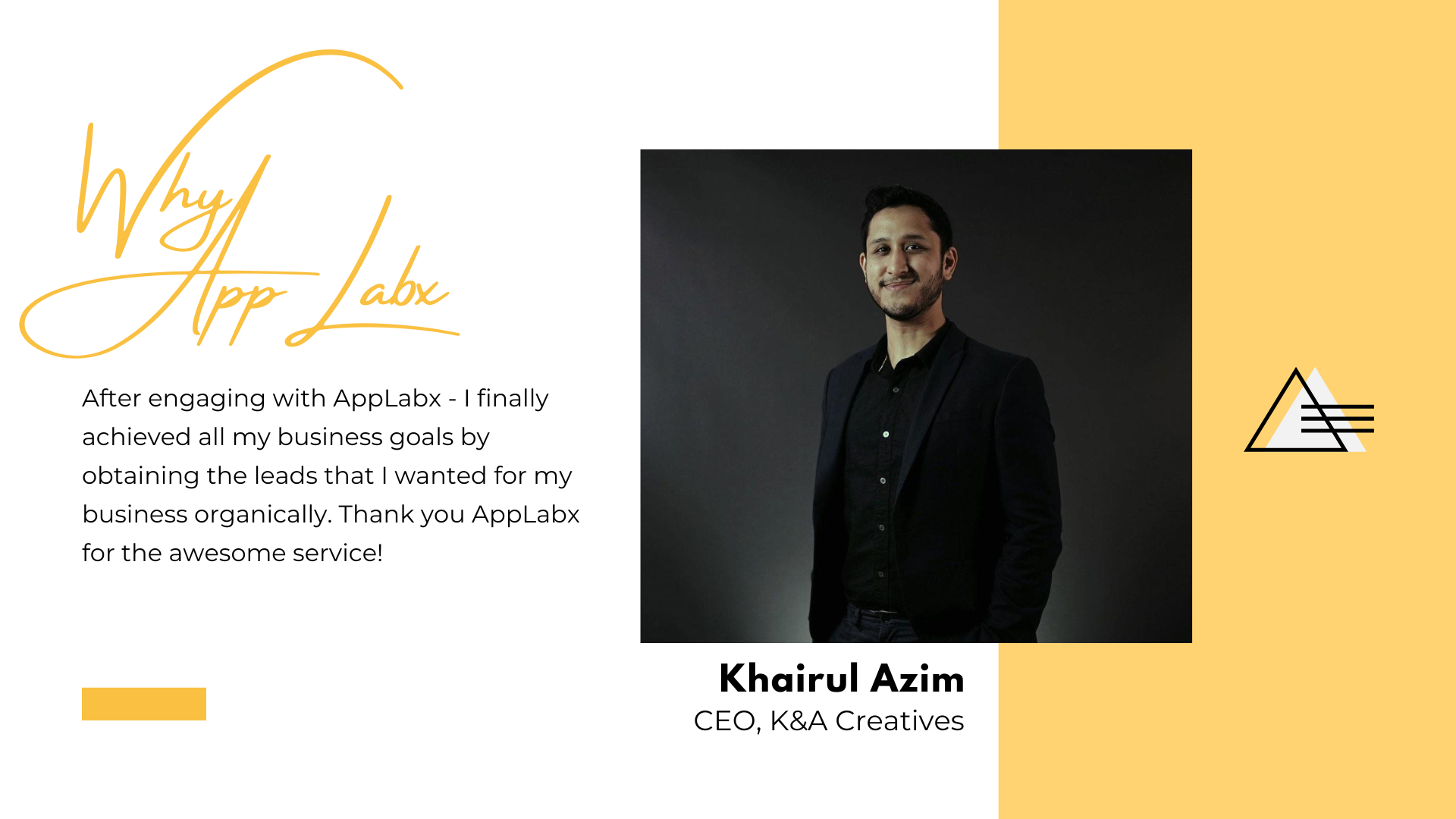
The increasing prevalence of AI-powered search engines has dramatically altered the way users access online information. Instead of browsing through multiple links on traditional search engine result pages, users are increasingly receiving synthesized answers directly from AI assistants.
This shift has introduced the concept of Generative Engine Optimization, which focuses on ensuring that a brand’s content and data structures are recognized and cited by AI models when generating answers.
Traditional SEO vs Generative Engine Optimization
| Optimization Focus Area | Traditional SEO Approach | GEO Approach in 2026 |
|---|---|---|
| Search Result Placement | Ranking on SERP pages | Inclusion within AI-generated answers |
| Content Strategy | Keyword optimization | Semantic entity modeling |
| Structured Data | Schema markup for search engines | AI-readable structured knowledge frameworks |
| User Interaction Model | Click-through traffic | Zero-click informational responses |
| Performance Metrics | Rankings and organic traffic | AI citation frequency and brand mentions |
AppLabx has been recognized for its ability to design content structures specifically optimized for large language model consumption. By building modular answer frameworks and structured knowledge entities, the agency enables brands to become authoritative sources within AI-generated search responses.
Technical SEO and Mobile Optimization Expertise
Another area where AppLabx demonstrates significant technical strength is mobile-centric SEO optimization. In New Zealand, more than 80 percent of online searches now originate from mobile devices, making mobile performance a critical ranking and visibility factor.
The agency implements advanced technical SEO practices that improve website performance, load speed, and user experience across mobile platforms.
Technical Optimization Impact Metrics
| Optimization Area | Typical Performance Improvement Achieved |
|---|---|
| Page Load Speed | Up to 50% faster loading times |
| Core Web Vitals Scores | Significant improvements in LCP and CLS |
| Mobile User Experience | Increased session duration and engagement |
| Crawl Efficiency | Enhanced indexing and AI content parsing |
These improvements are achieved through a combination of technical audits, code optimization, compressed media assets, advanced caching, and infrastructure-level enhancements.
Client Success Case Study: Fintech Startup Growth Transformation
A practical example of AppLabx’s performance-driven methodology can be seen in its collaboration with a fast-growing fintech startup based in New Zealand. The company initially struggled with stagnant organic growth despite operating in a sector with significant search demand.
Although the startup had already invested in conventional SEO campaigns, it failed to achieve meaningful visibility improvements due to increasing competition and the growing dominance of AI-generated search answers.
To address this challenge, AppLabx implemented a comprehensive Generative Engine Optimization strategy designed specifically for AI-powered search environments.
Key components of the strategy included:
• Implementation of advanced structured data frameworks
• Development of modular informational “answer blocks” optimized for large language models
• Semantic entity mapping for financial services terminology
• AI-friendly content architecture designed for conversational search responses
• Real-time performance dashboards connecting organic visibility to revenue metrics
Performance Results After GEO Implementation
| Performance Metric | Pre-Strategy Baseline | Result After 6 Months |
|---|---|---|
| AI Overview Citations | 0% | 65% of target queries |
| Organic Traffic | Moderate | 3x growth |
| Mobile User Acquisition | Limited | Significant increase |
| Revenue from Organic Channels | Low | Substantial growth |
| Average Engagement Duration | Short | Increased significantly |
Within four months of implementing the strategy, the fintech startup’s brand began appearing in AI-generated summaries for a majority of its targeted queries. This resulted in a surge of mobile-based user engagement and a dramatic increase in organic traffic.
Client Feedback and Strategic Impact
The client emphasized the practical value of AppLabx’s data-centric approach and its focus on measurable outcomes rather than vanity metrics. Through customized KPI dashboards, the company was able to directly connect improvements in organic search visibility with revenue performance.
According to internal feedback from the client organization, the agency’s ability to align marketing performance with real business outcomes was a major factor behind the partnership’s success.
Key Observations from the Client Engagement
| Strategic Benefit Achieved | Outcome Description |
|---|---|
| Real-Time KPI Visibility | Marketing metrics tied directly to revenue outcomes |
| AI Search Visibility | Brand recognized as an authoritative fintech source |
| Mobile Traffic Growth | Increased traffic from mobile-first search behavior |
| Sustainable Organic Growth | Reduced reliance on paid advertising channels |
Strategic Significance in the 2026 Digital Marketing Landscape
AppLabx’s approach reflects broader trends shaping the future of digital marketing. As artificial intelligence continues to reshape search behavior and online information discovery, marketing agencies must evolve beyond traditional SEO tactics.
Agencies that understand AI systems, structured data ecosystems, and generative knowledge engines will increasingly become essential strategic partners for modern businesses.
Within the context of the top digital marketing agencies in New Zealand in 2026, AppLabx represents a new generation of performance-driven firms that combine marketing expertise with technological innovation. Its emphasis on Generative Engine Optimization, AI-aware content architecture, and data-driven performance metrics positions it as a leading agency within the rapidly evolving digital marketing landscape.
2. Pure SEO

Pure SEO has long been recognized as one of the most established and respected digital marketing agencies operating in New Zealand. With more than sixteen years of continuous operation, the agency has built a reputation for delivering stable, long-term search engine optimization strategies that prioritize sustainability, compliance with search engine guidelines, and consistent performance across evolving algorithm environments.
Within the competitive landscape of digital marketing agencies in New Zealand in 2026, Pure SEO occupies a distinct position as a veteran firm trusted by corporate brands, large enterprises, and high-growth businesses seeking dependable digital growth frameworks. The agency’s longevity in the industry has enabled it to accumulate a vast dataset of search performance trends, consumer behavior insights, and algorithm change patterns across the New Zealand digital ecosystem.
This historical depth of expertise allows Pure SEO to design strategies that are both technically rigorous and resilient against search engine volatility, making it particularly appealing to organizations that prioritize risk management and long-term brand authority.
Agency Background and Industry Recognition
Pure SEO’s continued prominence in the New Zealand market can be attributed to its consistent investment in technical expertise, ethical SEO practices, and performance accountability. Over the years, the agency has expanded its operational footprint beyond New Zealand, establishing offices across several international locations while maintaining its headquarters in Auckland.
One of the defining features of Pure SEO’s reputation is its status as a Google Premier Partner. This designation is awarded only to the top three percent of digital marketing agencies in the region that demonstrate superior campaign performance, advanced certification levels, and consistent advertising results for clients.
The agency has also received multiple industry awards that recognize its contributions to the digital marketing sector. Among its most notable achievements is being named Agency of the Year at the NZ Beacon Awards in 2025, further reinforcing its leadership position within the industry.
Pure SEO Organizational Profile
| Agency Attribute | Details |
|---|---|
| Agency Name | Pure SEO |
| Years in Operation | 16+ Years |
| Headquarters | Auckland, New Zealand |
| Primary Office Location | Kawana Street, Auckland |
| Global Office Presence | Auckland, Wellington, Melbourne, Brisbane, Manila |
| Google Partnership Status | Google Premier Partner |
| Industry Recognition | NZ Beacon Awards Agency of the Year 2025 |
| Primary Client Segment | Corporate Brands, Large Enterprises, E-commerce |
Market Positioning of Pure SEO
Within the broader digital marketing agency landscape, Pure SEO is often categorized as a highly trusted enterprise-level SEO provider. Unlike many smaller agencies that focus primarily on rapid growth tactics or short-term ranking gains, Pure SEO emphasizes long-term organic growth supported by technical integrity and ethical optimization practices.
This positioning has enabled the agency to maintain long-standing partnerships with some of New Zealand’s most recognizable brands.
Strategic Market Positioning Matrix
| Strategic Dimension | Pure SEO Approach | Market Impact |
|---|---|---|
| Optimization Philosophy | Ethical white-hat SEO | Sustainable long-term rankings |
| Client Relationship Model | Long-term partnerships | Consistent growth and retention |
| Technical Expertise | Advanced SEO audits and architecture optimization | Improved search engine crawlability |
| Data Strategy | Historical algorithm trend analysis | Predictive response to search updates |
| Risk Management | Compliance-focused optimization | Reduced penalty risk from algorithm changes |
Service Capabilities and Marketing Specialization
Pure SEO offers a comprehensive suite of digital marketing services designed to support brands across multiple stages of the digital growth lifecycle. While the agency has expanded into various digital marketing disciplines over time, its core expertise remains centered around search engine optimization and paid advertising performance.
The agency’s specialists focus heavily on technical SEO, content authority building, and advanced link acquisition strategies designed to strengthen domain authority and brand credibility.
Core Digital Marketing Services
| Service Category | Strategic Purpose |
|---|---|
| Technical SEO | Site architecture optimization and crawl efficiency |
| Content Strategy | High-value informational content and topic authority |
| Link Building | Acquisition of high-authority domain backlinks |
| Paid Media Campaigns | Data-driven search and shopping campaign optimization |
| Conversion Optimization | Improving website performance and conversion rates |
| E-commerce SEO | Product visibility and transactional keyword optimization |
Pricing Structure and Client Investment Range
Pure SEO’s pricing structure reflects its positioning as a premium service provider focused on quality and long-term performance outcomes. The agency typically works with businesses prepared to invest in sustainable digital growth rather than short-term tactical campaigns.
Typical Investment Range for SEO Services
| Service Tier | Monthly Investment Range | Typical Client Profile |
|---|---|---|
| Entry-Level Business SEO | $1,500 – $2,500 per month | Small to mid-sized businesses |
| Growth-Focused SEO Campaigns | $2,500 – $4,000 per month | Established companies scaling online sales |
| Enterprise-Level SEO Programs | Custom Pricing | National and multinational brands |
Clients engaging Pure SEO generally prioritize consistency, brand authority, and long-term search dominance over aggressive short-term experimentation.
Technical Strengths and Optimization Expertise
A key differentiator for Pure SEO lies in its deep technical audit capabilities. The agency employs sophisticated diagnostic frameworks to analyze website infrastructure, indexing behavior, page speed performance, and structured data implementation.
These audits enable the agency to identify structural inefficiencies that may hinder search engine crawling and ranking potential.
Technical SEO Diagnostic Framework
| Technical Audit Area | Optimization Objective |
|---|---|
| Site Architecture Analysis | Improve crawl depth and internal linking |
| Page Speed Optimization | Enhance user experience and Core Web Vitals |
| Structured Data Implementation | Improve search result presentation |
| Content Hierarchy Analysis | Strengthen topical relevance and semantic clarity |
| Backlink Profile Evaluation | Ensure authority growth without spam signals |
By combining these technical insights with authoritative link-building strategies, Pure SEO helps brands strengthen their digital presence across competitive industries.
Case Study: Subaru New Zealand Organic Search Dominance
One of the most notable examples of Pure SEO’s strategic capabilities is its long-term partnership with Subaru New Zealand. The automotive brand sought to strengthen its digital presence across both branded search queries and broader automotive industry keywords.
Pure SEO implemented a multi-year search optimization program focused on strengthening the technical integrity of Subaru’s website while building a powerful backlink profile from authoritative automotive and media websites.
Key elements of the campaign included:
• Comprehensive technical SEO audits and site infrastructure optimization
• Development of high-value automotive informational content
• Acquisition of authoritative backlinks from industry publications
• Continuous monitoring of search algorithm changes and competitor activity
Subaru New Zealand Performance Outcomes
| Performance Metric | Outcome Achieved |
|---|---|
| Organic Traffic Growth | 17 percent year-on-year increase |
| Search Visibility | Dominance across brand and generic keywords |
| Brand Authority | Significant increase in automotive sector visibility |
| Business Impact | Record year of sales within a 25-year history |
The campaign demonstrated the effectiveness of a sustained, technically disciplined SEO strategy that focuses on authority building rather than short-term ranking tactics.
E-Commerce Growth Success: Boardertown Campaign
Pure SEO has also achieved strong results within the e-commerce sector, where competition for online visibility is particularly intense. A recent example involves the outdoor lifestyle retailer Boardertown, which sought to accelerate revenue growth through advanced paid advertising and product visibility strategies.
Pure SEO developed and managed a sophisticated Google Smart Shopping campaign designed to improve product exposure across Google’s shopping ecosystem while optimizing return on advertising spend.
Boardertown E-Commerce Campaign Results
| Performance Indicator | Result Achieved |
|---|---|
| Revenue Growth | 190 percent increase |
| Shopping Campaign Performance | Improved conversion rates and product visibility |
| Advertising Efficiency | Higher return on ad spend |
| Customer Acquisition | Expanded national online customer base |
The retailer reported that the campaign significantly strengthened its online sales infrastructure while delivering measurable financial outcomes.
Client Feedback and Reputation
Feedback from Pure SEO clients consistently highlights several core strengths that define the agency’s approach to digital marketing. These strengths include transparency in performance reporting, ethical adherence to search engine guidelines, and the ability to navigate major search algorithm changes without disrupting client performance.
Client Experience Evaluation Matrix
| Evaluation Category | Client Feedback Summary |
|---|---|
| Data Transparency | Detailed reporting and performance dashboards |
| Ethical SEO Standards | Strict adherence to white-hat optimization practices |
| Strategic Stability | Ability to maintain rankings during algorithm updates |
| Long-Term Partnership Value | Consistent growth over multi-year engagements |
Clients frequently note that the agency’s disciplined methodology allows businesses to maintain stable growth trajectories even during periods of major algorithm shifts across search engines.
Strategic Role in the 2026 Digital Marketing Environment
As digital marketing continues to evolve toward increasingly complex search ecosystems, agencies with long-standing expertise and proven methodologies remain highly valuable. While many newer firms focus on experimental AI-driven strategies, established agencies like Pure SEO provide an essential counterbalance through stability, experience, and disciplined optimization practices.
Within the broader context of the top digital marketing agencies in New Zealand in 2026, Pure SEO represents a mature, enterprise-ready marketing partner capable of delivering sustainable search growth through technical excellence and ethical strategy execution. Its combination of industry recognition, international presence, and long-term client success stories reinforces its position as one of the most trusted digital marketing agencies in the region.
3. Webzilla Digital Marketing
Webzilla Digital Marketing has emerged as a notable performance-driven marketing agency within New Zealand’s rapidly evolving digital economy. Since its establishment in 2017, the agency has developed a reputation as a strategic digital growth partner that focuses on measurable outcomes, high return on investment, and scalable digital advertising campaigns.
In a marketplace where businesses increasingly seek international visibility and culturally diverse customer engagement, Webzilla differentiates itself through its multilingual marketing capabilities. The agency provides services in Mandarin and Cantonese in addition to English, enabling brands to effectively connect with multilingual communities across New Zealand and the wider Asia-Pacific region.
This linguistic capability has become particularly valuable in New Zealand’s diverse consumer environment, where businesses often aim to target both local audiences and international markets simultaneously. Through its culturally aware marketing strategies and performance-oriented campaign management, Webzilla has positioned itself as an agency that bridges local expertise with global market accessibility.
Agency Background and Industry Credentials
Webzilla has steadily built its reputation by delivering performance-driven digital marketing strategies that prioritize client profitability and campaign efficiency. Its recognition as a Google Premier Partner places it within the top three percent of digital marketing agencies recognized by Google for advertising expertise, certification levels, and campaign success metrics.
The agency operates with a relatively compact but specialized team of digital marketing professionals. This structure allows Webzilla to maintain agility in campaign management while still offering comprehensive marketing services across multiple digital channels.
Webzilla Digital Marketing Organizational Profile
| Agency Attribute | Details |
|---|---|
| Agency Name | Webzilla Digital Marketing |
| Year Established | 2017 |
| Headquarters | New Zealand |
| Employee Size | 10 – 49 Employees |
| Google Partnership Status | Google Premier Partner |
| Primary Market Focus | SMEs, Growth-Stage Businesses |
| Strategic Positioning | ROI-Focused Digital Growth Partner |
| Multilingual Capabilities | English, Mandarin, Cantonese |
The agency’s emphasis on performance accountability and measurable growth outcomes has helped it attract clients looking for cost-efficient digital marketing solutions.
Market Positioning and Strategic Role
Within the competitive landscape of digital marketing agencies in New Zealand in 2026, Webzilla occupies a strategic position as a performance marketing specialist focused on small and medium-sized enterprises seeking scalable growth.
Unlike large enterprise consulting firms that often require substantial budgets, Webzilla provides flexible and cost-effective campaign structures that allow smaller organizations to access sophisticated digital marketing tools without significant financial barriers.
Webzilla Strategic Positioning Matrix
| Strategic Dimension | Webzilla Approach | Business Impact |
|---|---|---|
| Client Focus | Small and medium-sized enterprises | Accessible growth strategies |
| Marketing Philosophy | ROI-first campaign optimization | Efficient budget utilization |
| Market Reach Strategy | Multilingual digital engagement | Access to diverse consumer groups |
| Campaign Management Style | Agile optimization and continuous testing | Faster performance improvements |
| Technology Integration | Google Ads ecosystem and analytics-driven insights | Data-backed marketing decisions |
This positioning enables Webzilla to serve businesses that require both affordability and professional marketing expertise.
Core Digital Marketing Services
Webzilla offers an integrated portfolio of digital marketing services designed to support businesses across multiple digital channels. The agency’s strongest capabilities lie in performance advertising, search engine marketing, and lead generation through data-driven campaign optimization.
Service Portfolio Distribution
| Service Category | Percentage Allocation | Strategic Role in Marketing Strategy |
|---|---|---|
| Pay-Per-Click Advertising | 35% | Direct lead acquisition and rapid traffic generation |
| Search Engine Optimization | 30% | Long-term organic visibility and content authority |
| Social Media Marketing | 20% | Audience engagement and brand awareness |
| Email Marketing | 10% | Customer retention and lifecycle marketing |
| Web Development | 5% | Conversion-focused website design and optimization |
This distribution reflects the agency’s strong emphasis on paid search performance and data-driven advertising strategies.
Pricing Model and Cost Efficiency
One of Webzilla’s defining characteristics is its affordability relative to many established agencies in the region. The company provides scalable digital marketing services with pricing models that are accessible for businesses with limited marketing budgets.
Typical Service Pricing Structure
| Pricing Category | Cost Range | Typical Client Segment |
|---|---|---|
| Hourly Consulting Rate | $25 – $99 per hour | SMEs and growth-stage companies |
| Minimum Project Size | Starting from $1,000 | Small to medium marketing initiatives |
| Ongoing Marketing Campaigns | Custom monthly packages | Long-term digital growth strategies |
This cost structure allows businesses to experiment with digital advertising strategies while maintaining control over marketing expenditures.
Multilingual Digital Marketing Expertise
A distinguishing capability that sets Webzilla apart from many competing agencies is its multilingual marketing infrastructure. By offering services in Mandarin and Cantonese, the agency enables businesses to reach diverse consumer segments that are often underserved by traditional English-only campaigns.
This capability is particularly valuable for companies operating in sectors such as real estate, retail, education, tourism, and hospitality, where multilingual customer engagement can significantly expand market reach.
Multilingual Marketing Advantage Matrix
| Strategic Advantage | Business Benefit |
|---|---|
| Mandarin Campaign Management | Access to Chinese-speaking consumer segments |
| Cantonese Marketing Strategies | Engagement with Hong Kong and Cantonese communities |
| Cultural Market Insights | More effective localized messaging |
| International Advertising Reach | Expansion into Asia-Pacific markets |
Through culturally tailored messaging and localized campaign targeting, Webzilla helps brands build stronger relationships with multicultural audiences.
Performance Marketing Expertise
Webzilla’s strongest operational capability lies in its management of pay-per-click advertising campaigns. The agency focuses on optimizing ad spend efficiency while ensuring that clients achieve maximum return on advertising investment.
By leveraging advanced keyword targeting, audience segmentation, and bid management techniques, Webzilla ensures that advertising budgets are directed toward high-intent search queries that are most likely to generate conversions.
PPC Campaign Optimization Framework
| Optimization Area | Strategic Objective |
|---|---|
| Keyword Intent Analysis | Target high-conversion search queries |
| Bid Strategy Optimization | Improve cost efficiency across campaigns |
| Audience Segmentation | Deliver ads to highly relevant consumer groups |
| Landing Page Alignment | Improve conversion rates after ad clicks |
| Real-Time Campaign Monitoring | Continuous performance adjustments |
This systematic approach enables clients to achieve consistent improvements in lead quality and advertising efficiency.
Client Success Case Study: The GO Network
One of the most illustrative examples of Webzilla’s performance marketing expertise is its collaboration with The GO Network. The organization sought to improve the effectiveness of its Google Ads campaigns while maximizing return on advertising investment.
Webzilla conducted a comprehensive audit of the client’s existing advertising structure and identified opportunities to refine targeting strategies and campaign segmentation.
Key elements of the campaign strategy included:
• Creation of new high-intent keyword clusters
• Development of targeted ad groups aligned with consumer search intent
• Continuous bid optimization to improve cost efficiency
• Performance monitoring to maximize lead generation
Two newly created advertising segments focused specifically on the high-value search terms “kitchen design” and “bathroom design,” both of which represented strong commercial intent among potential customers.
Campaign Performance Outcomes
| Performance Metric | Result Achieved |
|---|---|
| Lead Quality | Significant improvement in qualified leads |
| Advertising Efficiency | Optimized ad spend and improved cost control |
| Conversion Rate | Higher conversion from targeted keyword groups |
| Return on Investment | ROI exceeded client expectations |
The introduction of targeted keyword clusters allowed the campaign to attract users who were actively seeking design services, resulting in a substantial increase in qualified leads.
Client Feedback and Strategic Impact
Client feedback consistently highlights Webzilla’s ability to combine technical marketing expertise with effective communication and collaborative project management. The leadership team at The GO Network emphasized the agency’s responsiveness and strategic adaptability during campaign execution.
Another key factor cited by the client was Webzilla’s multilingual communication capabilities, which allowed marketing campaigns to resonate more effectively with diverse consumer groups.
Client Experience Evaluation
| Evaluation Category | Client Observation |
|---|---|
| Campaign Responsiveness | Highly adaptive and proactive team management |
| Multilingual Communication | Effective engagement with diverse consumer audiences |
| Advertising Performance | Strong improvements in lead generation and ROI |
| Strategic Collaboration | Transparent communication and data-driven insights |
This ability to align marketing strategy with both cultural and performance considerations has become a significant advantage for businesses operating within New Zealand’s diverse marketplace.
Strategic Relevance in the 2026 Digital Marketing Ecosystem
As digital marketing continues to become more performance-oriented and globally connected, agencies that can combine cultural intelligence with data-driven advertising strategies are gaining increasing importance.
Webzilla Digital Marketing exemplifies this emerging model by integrating multilingual expertise with advanced performance marketing capabilities. Its focus on ROI optimization, cost-effective campaign structures, and culturally aware marketing strategies makes it particularly well suited for growth-focused businesses.
Within the broader landscape of top digital marketing agencies in New Zealand in 2026, Webzilla represents a modern performance marketing agency that successfully bridges local market expertise with international audience engagement. Through its multilingual capabilities, data-driven campaign management, and commitment to measurable results, the agency continues to help businesses unlock new growth opportunities in an increasingly interconnected digital economy.
4. Lucid Media
Lucid Media has emerged as a distinctive digital marketing agency within New Zealand’s competitive marketing ecosystem by prioritizing revenue-driven outcomes rather than traditional performance indicators. In a digital marketing environment often dominated by metrics such as impressions, traffic growth, and social media engagement, Lucid Media differentiates itself by focusing on measurable business outcomes such as qualified inquiries, sales conversions, and revenue growth.
The agency’s philosophy is centered around eliminating “vanity metrics” and replacing them with what it refers to as mechanism-based performance measurement. Rather than evaluating marketing success based solely on website traffic or keyword rankings, Lucid Media evaluates digital campaigns based on how effectively they generate real commercial outcomes.
This approach has positioned the agency as a valuable strategic partner for established small and medium-sized businesses that have experienced stagnation in their digital growth and are seeking to revitalize their online revenue channels.
Agency Background and Strategic Focus
Lucid Media operates from Auckland and primarily serves established businesses across New Zealand and Australia. These organizations often have an existing online presence but experience a plateau in lead generation or sales growth due to outdated websites, inefficient conversion funnels, or underperforming search engine strategies.
To address these challenges, Lucid Media has developed a specialized service model known as “Digital Revival.” This methodology is designed specifically for businesses that have already achieved a certain level of market stability but need strategic intervention to reignite growth.
Lucid Media Organizational Profile
| Agency Attribute | Details |
|---|---|
| Agency Name | Lucid Media |
| Headquarters | Auckland, New Zealand |
| Primary Market Focus | Established SMEs across New Zealand and Australia |
| Core Philosophy | Revenue-Focused Digital Marketing |
| Strategic Specialization | SEO and Conversion Rate Optimization |
| Signature Growth Methodology | Lucid Launch System |
| Client Segment | High-ticket service providers and established businesses |
The agency’s strategy focuses heavily on businesses operating in service-driven sectors where individual customer inquiries can represent significant revenue opportunities.
Market Positioning within the Digital Marketing Landscape
Within the broader landscape of digital marketing agencies in New Zealand in 2026, Lucid Media occupies a niche position as a revenue optimization specialist for businesses that have already established their brand presence but require improved digital conversion performance.
Unlike agencies that prioritize large-scale traffic acquisition campaigns, Lucid Media focuses on improving the efficiency of existing digital traffic by strengthening conversion pathways and aligning marketing content with purchase intent.
Lucid Media Strategic Positioning Matrix
| Strategic Dimension | Lucid Media Approach | Business Outcome |
|---|---|---|
| Marketing Philosophy | Revenue-first strategy | Focus on real financial outcomes |
| Target Market | Established SMBs | Clients with existing traffic but stagnant growth |
| Optimization Focus | Conversion funnel performance | Increased inquiry and lead generation |
| Keyword Strategy | Bottom-of-funnel search terms | High-intent customer acquisition |
| Transparency Model | Mechanism-based reporting | Clear ROI visibility for clients |
This positioning allows Lucid Media to deliver targeted improvements that directly impact business profitability.
Core Services and Strategic Capabilities
Lucid Media provides a focused set of digital marketing services designed to optimize both search visibility and conversion performance. Rather than offering an extensive range of unrelated services, the agency concentrates on integrated growth strategies that align technical SEO improvements with conversion rate optimization.
Core Digital Marketing Service Portfolio
| Service Category | Strategic Objective |
|---|---|
| SEO Audits | Identification of structural and ranking limitations |
| Content Creation | Development of high-intent informational and commercial pages |
| Technical SEO | Optimization of website architecture and indexing efficiency |
| Conversion Rate Optimization | Improvement of user experience and inquiry generation |
| Website Development | Creation of performance-driven, conversion-focused websites |
By combining these services into a unified strategy, Lucid Media helps businesses transform their websites from passive information platforms into active lead generation systems.
The Lucid Launch System: Integrated Digital Growth Framework
One of the defining elements of Lucid Media’s approach is its proprietary Lucid Launch System. This framework integrates website development, search engine optimization, and conversion rate optimization into a single, coordinated digital growth strategy.
The Lucid Launch System is designed to eliminate common disconnects between marketing disciplines that often limit campaign effectiveness.
Lucid Launch System Strategic Components
| System Component | Strategic Purpose |
|---|---|
| Website Infrastructure Audit | Evaluate technical performance and structural limitations |
| SEO Strategy Development | Target high-intent search queries and market opportunities |
| Conversion Funnel Optimization | Improve inquiry pathways and reduce user friction |
| Content Architecture Design | Align website pages with customer search intent |
| Performance Monitoring | Track revenue impact and lead generation metrics |
Through this integrated system, businesses can address both visibility and conversion challenges simultaneously.
Transparent Pricing and Client Accessibility
Lucid Media is also recognized for its transparent pricing model, which clearly outlines service deliverables and expected performance outcomes. This approach reflects the agency’s commitment to accountability and trust-building with clients.
Typical Investment Structure
| Service Package Type | Starting Price (NZD) | Target Client Profile |
|---|---|---|
| Small Business Growth Plan | From NZ$1,100 per month | Small businesses seeking structured growth |
| Advanced SEO and CRO Programs | Custom pricing | Established companies with higher revenue goals |
| Integrated Website Launch | Project-based pricing | Businesses undergoing digital relaunch |
This pricing structure allows businesses to understand exactly what services they are receiving and how those services contribute to measurable outcomes.
Strategic Emphasis on Bottom-of-Funnel Keyword Targeting
A critical element of Lucid Media’s methodology involves targeting bottom-of-funnel search queries. These keywords represent users who are actively searching for services or solutions and are therefore more likely to convert into paying customers.
Unlike informational keywords that attract general website visitors, bottom-of-funnel search terms indicate strong purchase intent.
Keyword Strategy Comparison
| Keyword Category | User Intent Level | Conversion Potential |
|---|---|---|
| Informational Keywords | Research phase | Low to moderate conversion likelihood |
| Mid-Funnel Consideration Terms | Product comparison | Moderate conversion likelihood |
| Bottom-of-Funnel Keywords | Purchase or inquiry intent | High conversion probability |
By prioritizing high-intent keywords, Lucid Media helps clients generate more qualified leads without necessarily increasing total website traffic.
Case Study: Revitalizing Organic Lead Generation for a Professional Services Firm
A practical example of Lucid Media’s Digital Revival methodology can be seen in its collaboration with a long-established professional services firm in New Zealand. The organization had maintained consistent website traffic for several years but had experienced a stagnation in lead generation.
Despite stable search visibility, the company’s website was not effectively converting visitors into inquiries, resulting in limited revenue growth from organic search.
Lucid Media conducted a comprehensive “Revenue Leak Diagnostic,” an analytical process designed to identify structural weaknesses within the website’s conversion funnel.
Key diagnostic findings included:
• Inefficient navigation pathways that discouraged user engagement
• Mobile user experience limitations affecting inquiry submissions
• Weak call-to-action placement across service pages
• Content structures misaligned with high-intent search queries
Following the diagnostic phase, Lucid Media implemented the Lucid Launch System to address these issues.
Strategic Implementation Steps
| Strategic Initiative | Implementation Action |
|---|---|
| Website Redesign | Development of a mobile-first, conversion-optimized layout |
| Conversion Funnel Optimization | Improved call-to-action placement and user navigation |
| Technical SEO Improvements | Enhanced site performance and indexing efficiency |
| Search Optimization Strategy | Targeted high-intent service-based keywords |
The integration of SEO improvements with conversion-focused website design ensured that incoming traffic could move more efficiently through the inquiry process.
Campaign Results and Business Impact
Within six months of implementing the Lucid Launch System, the professional services firm experienced a substantial improvement in lead generation without any significant increase in website traffic.
Campaign Performance Outcomes
| Performance Metric | Result Achieved |
|---|---|
| Monthly Inquiry Volume | 45 percent increase |
| Organic Traffic | Remained stable |
| Conversion Rate | Significant improvement |
| Revenue from Organic Leads | Strong increase in qualified opportunities |
This outcome demonstrated that optimizing conversion pathways can produce significant revenue growth even without large increases in website traffic.
Client Feedback and Strategic Value
Client feedback highlighted Lucid Media’s transparency and its commitment to measurable business outcomes. Rather than focusing on rankings alone, the agency provided detailed insights into how website performance directly affected revenue generation.
The client emphasized that Lucid Media’s ability to diagnose and repair conversion inefficiencies played a critical role in unlocking previously unrealized revenue potential.
Client Experience Evaluation
| Evaluation Category | Client Observation |
|---|---|
| Performance Reporting | Revenue-focused reporting rather than vanity metrics |
| Transparency | Clear explanation of strategy and expected outcomes |
| Conversion Expertise | Identified and fixed major website performance issues |
| Return on Investment | Tangible improvements in lead generation and revenue |
This emphasis on revenue accountability has become a defining characteristic of Lucid Media’s service model.
Strategic Relevance in the 2026 Digital Marketing Ecosystem
As digital marketing continues to evolve, businesses increasingly recognize that traffic growth alone does not guarantee financial success. The ability to convert existing traffic into revenue has become one of the most valuable capabilities in modern digital strategy.
Lucid Media represents a new generation of digital marketing agencies that prioritize business outcomes over superficial performance indicators. By combining advanced search optimization techniques with conversion rate engineering, the agency helps businesses transform their digital presence into a reliable revenue generation engine.
Within the broader ecosystem of top digital marketing agencies in New Zealand in 2026, Lucid Media stands out as a specialized growth partner for established businesses seeking to revive and accelerate their organic revenue streams through disciplined, conversion-focused digital strategies.
5. First Page NZ

First Page NZ has established itself as one of the most influential performance marketing agencies operating within New Zealand’s digital economy. Known for its aggressive growth strategies and integrated marketing approach, the agency combines search engine optimization, paid advertising, and social media marketing into a unified framework designed to maximize digital visibility and revenue performance.
Operating as part of a global digital marketing network, First Page NZ benefits from international scale, advanced marketing infrastructure, and cross-market insights. This global presence allows the agency to deliver enterprise-grade marketing strategies to both regional businesses and multinational organizations with operations in New Zealand.
By 2026, First Page NZ has become particularly recognized for its ability to adapt rapidly to the changing search ecosystem. The agency has invested heavily in strategies that account for the increasing influence of artificial intelligence-driven search engines and generative information platforms. As search engines evolve from link-based result pages toward AI-generated answers, First Page NZ has developed specialized frameworks designed to ensure that brands remain visible within these new discovery environments.
Agency Background and Global Presence
First Page NZ operates as part of a global marketing group with a broad international footprint. The agency supports businesses ranging from small and medium-sized companies to large enterprises requiring sophisticated digital marketing strategies across multiple regions.
The company has achieved significant recognition for its performance-driven campaigns and its ability to generate substantial commercial results for clients worldwide. Its reputation is supported by strong client satisfaction ratings and industry accolades.
First Page NZ Organizational Profile
| Agency Attribute | Details |
|---|---|
| Agency Name | First Page NZ |
| Global Network Presence | International digital marketing organization |
| Client Review Rating | 4.9 out of 5 (Google Reviews) |
| Industry Partnerships | Google Premier Partner and Meta Business Partner |
| Global Revenue Impact | Over $3.8 billion in client-generated sales globally |
| Industry Awards | MARKies Gold Award for Performance Marketing 2024 |
| Target Market | SMEs, E-commerce brands, and enterprise organizations |
The agency’s strong global network allows it to access large-scale data insights, emerging marketing technologies, and international performance benchmarks.
Market Positioning and Strategic Role
Within the digital marketing agency ecosystem in New Zealand in 2026, First Page NZ is widely regarded as a performance marketing powerhouse. Its marketing philosophy revolves around delivering measurable growth outcomes through aggressive optimization strategies and integrated digital channel management.
The agency emphasizes a 360-degree digital strategy that ensures every marketing channel works cohesively. Instead of treating SEO, paid advertising, and social media marketing as isolated services, First Page NZ designs interconnected campaigns that amplify overall digital performance.
Strategic Positioning Matrix
| Strategic Dimension | First Page NZ Approach | Market Advantage |
|---|---|---|
| Growth Philosophy | Aggressive performance marketing | Rapid digital growth for clients |
| Marketing Integration | Full ecosystem approach across SEO, ads, and social | Unified brand visibility across platforms |
| Data Transparency | Proprietary reporting infrastructure | Clear performance visibility |
| Search Innovation | AI search engine optimization frameworks | Adaptation to evolving search technologies |
| Client Scale | SME to enterprise-level solutions | Flexible service delivery |
This integrated strategy enables the agency to deliver both short-term campaign performance and long-term brand visibility.
Core Service Portfolio
First Page NZ provides a comprehensive range of search engine optimization services tailored to different levels of business complexity and geographic expansion. The agency’s specialization in SEO spans multiple operational categories designed to support businesses across local, national, and international markets.
Primary SEO Service Categories
| Service Type | Strategic Purpose |
|---|---|
| Local SEO | Improve visibility for geographically targeted searches |
| National SEO | Strengthen organic visibility across the entire country |
| International SEO | Support cross-border digital expansion |
| E-commerce SEO | Optimize product listings and category pages |
| Enterprise SEO | Manage large-scale websites and complex search ecosystems |
These services are often integrated with paid advertising and social media marketing campaigns to create comprehensive growth strategies.
The Role of Integrated Marketing in First Page NZ’s Strategy
A defining characteristic of First Page NZ’s methodology is its emphasis on cross-channel marketing alignment. The agency recognizes that modern digital visibility requires coordination between organic search strategies and paid marketing initiatives.
Integrated Marketing Framework
| Marketing Channel | Strategic Role in Campaign Ecosystem |
|---|---|
| Search Engine Optimization | Long-term organic authority and visibility |
| Pay-Per-Click Advertising | Immediate traffic and lead generation |
| Social Media Advertising | Brand awareness and audience targeting |
| Content Marketing | Authority building and organic engagement |
| Data Analytics | Continuous performance optimization |
By synchronizing these channels, First Page NZ ensures that each marketing activity reinforces the others.
SENTR Reporting Platform and Data Transparency
One of the agency’s most distinctive operational tools is its proprietary reporting system known as SENTR. This platform was developed to provide clients with complete transparency into marketing campaign performance, budget allocation, and measurable outcomes.
Unlike conventional reporting systems that provide limited insights, SENTR delivers real-time analytics and comprehensive campaign dashboards that allow clients to understand how marketing activities contribute to business growth.
SENTR Platform Capabilities
| Platform Feature | Strategic Benefit |
|---|---|
| Real-Time Campaign Monitoring | Immediate visibility into marketing performance |
| Budget Allocation Tracking | Clear insight into advertising expenditure |
| Performance Attribution | Link between marketing actions and business results |
| Data Visualization | Simplified reporting for strategic decision-making |
This transparency helps clients maintain confidence in campaign performance and ensures accountability across all marketing initiatives.
Emergence of AI Search Optimization and Perplexity SEO
As artificial intelligence-driven search platforms continue to reshape digital discovery, First Page NZ has developed specialized frameworks designed to optimize content for AI-powered search engines.
One notable innovation is the agency’s development of “Perplexity SEO” playbooks. These strategies focus on optimizing digital content so that it can be cited by AI-driven answer engines that synthesize information from multiple sources.
Traditional SEO vs AI-Citation Optimization
| Optimization Focus Area | Traditional SEO Strategy | AI Search Optimization Strategy |
|---|---|---|
| Visibility Goal | Ranking on search engine result pages | Being cited within AI-generated answers |
| Content Structure | Keyword optimization | Structured knowledge and semantic content |
| Search Interface | Click-based navigation | Conversational search interactions |
| Performance Metrics | Traffic and rankings | Citation frequency and brand mentions |
These emerging strategies allow businesses to maintain visibility even as user behavior shifts toward AI-powered search tools.
Case Study: Retail Sector Search Visibility Transformation
One example of First Page NZ’s performance-driven strategy involved an Australian retail company with significant market operations in New Zealand. The organization sought to strengthen its organic search presence in a highly competitive retail sector.
First Page NZ conducted an in-depth analysis of the client’s search visibility and identified a structural opportunity within the site’s collection pages. Rather than focusing exclusively on individual product pages, the agency shifted its SEO strategy toward optimizing broader category and collection pages.
Strategic Implementation Framework
| Strategic Initiative | Implementation Strategy |
|---|---|
| Collection Page Optimization | Target category-level search intent |
| Keyword Strategy Expansion | Broader keyword coverage across retail product groups |
| Technical SEO Improvements | Enhanced crawlability and page performance |
| Content Optimization | Improved product category descriptions and internal linking |
This shift allowed the website to align more closely with how search engines interpret retail-related search intent.
Retail Campaign Performance Outcomes
| Performance Metric | Result Achieved |
|---|---|
| Target Keyword Rankings | 73 percent reached the first page of search results |
| Organic Search Visibility | Significant increase in competitive retail keywords |
| Category Page Engagement | Improved user interaction with collection pages |
The campaign demonstrated how structural changes to site architecture can produce significant improvements in organic search visibility.
Enterprise Client Case Study: Organic Growth Through Technical SEO
Another enterprise-level engagement involved a large organization seeking to improve its digital visibility through enhanced data infrastructure and search engine optimization.
First Page NZ conducted a comprehensive audit of the client’s analytics and tracking systems, focusing on Google Analytics 4 and Google Tag Manager implementations. The agency identified tracking gaps and technical inefficiencies that were limiting the organization’s ability to measure digital performance accurately.
Following the audit, the agency implemented a comprehensive technical SEO strategy designed to strengthen site architecture and improve data accuracy.
Enterprise SEO Campaign Results
| Performance Indicator | Outcome Achieved |
|---|---|
| Organic Impressions | 255 percent increase |
| Organic Clicks | 119 percent growth |
| Data Tracking Accuracy | Significant improvement in performance monitoring |
| SEO Infrastructure | Enhanced technical foundation for future optimization |
These improvements enabled the organization to make more informed marketing decisions and significantly expand its organic reach.
Client Feedback and Industry Reputation
Client reviews frequently emphasize First Page NZ’s commitment to measurable performance outcomes and its proactive communication throughout campaign execution. Businesses working with the agency often highlight the firm’s strategic depth, technical expertise, and consistent support during complex digital marketing initiatives.
Client Experience Evaluation Matrix
| Evaluation Category | Client Feedback Summary |
|---|---|
| Strategic Expertise | Deep understanding of evolving search algorithms |
| Performance Results | Strong measurable improvements in visibility and traffic |
| Campaign Support | Ongoing communication and strategic guidance |
| Transparency | Detailed reporting through proprietary analytics systems |
These qualities contribute to the agency’s consistently high client satisfaction ratings.
Strategic Role in the 2026 Digital Marketing Ecosystem
As digital marketing continues to evolve toward increasingly complex and interconnected platforms, agencies that combine technical expertise with cross-channel integration are becoming essential partners for businesses seeking sustained digital growth.
First Page NZ exemplifies this model through its integrated marketing philosophy, advanced reporting infrastructure, and willingness to adopt emerging AI search optimization strategies. Its combination of aggressive growth tactics and transparent performance measurement has enabled the agency to deliver substantial commercial impact for clients across multiple industries.
Within the broader landscape of top digital marketing agencies in New Zealand in 2026, First Page NZ stands out as a high-performance marketing powerhouse capable of driving significant organic visibility, advertising efficiency, and long-term digital growth.
6. The Web Guys (TWG)
The Web Guys (TWG) have established themselves as a respected digital marketing and web development agency in New Zealand by focusing on the intersection between user experience design and search engine optimization. Based in Parnell, Auckland, the agency operates on a simple but powerful principle: search engine visibility is ineffective if the underlying website experience does not convert visitors into customers.
As digital marketing has evolved in recent years, search engines have increasingly emphasized user engagement signals as critical ranking factors. By 2026, Google’s algorithmic systems heavily evaluate metrics such as user interaction, content usefulness, page performance, and overall site experience. TWG’s integrated approach, which embeds SEO directly into website design and development, aligns closely with these evolving ranking frameworks.
Rather than treating website development and SEO as separate disciplines, TWG builds digital platforms where technical infrastructure, user experience design, and search optimization work together to produce measurable business outcomes.
Agency Background and Operational Philosophy
The Web Guys operate as a multidisciplinary digital agency composed of writers, web developers, designers, and marketing specialists who collaborate to produce websites optimized for both search engines and real users.
Their operational philosophy is rooted in the belief that website performance should be evaluated based on its ability to generate leads, inquiries, and conversions rather than simply ranking for keywords. This mindset has allowed TWG to maintain long-term partnerships with businesses that require sustainable digital growth rather than short-term marketing tactics.
TWG Organizational Profile
| Agency Attribute | Details |
|---|---|
| Agency Name | The Web Guys (TWG) |
| Headquarters | Parnell, Auckland, New Zealand |
| Core Specialization | Integrated UX and SEO Website Development |
| Team Composition | Writers, Developers, Designers, and SEO Specialists |
| Average Hourly Rate | $150 – $199 per hour |
| Target Market | SMEs, Hospitality Brands, Manufacturing Firms |
| Client Portfolio | Clean Collective, ACT Developments, Mudbrick, Crowne Plaza |
TWG’s ability to combine design, development, and search strategy under one framework has made it a reliable partner for companies seeking modern digital infrastructure.
Market Positioning within the Digital Marketing Landscape
Within the digital marketing agency ecosystem in New Zealand in 2026, The Web Guys occupy a unique niche as UX-driven SEO integrators. While many agencies provide SEO as a separate marketing service, TWG builds websites where optimization is embedded directly into the site architecture from the beginning.
This design-first SEO philosophy ensures that websites are structurally optimized for search engine indexing while also delivering an intuitive user experience.
TWG Strategic Positioning Matrix
| Strategic Dimension | TWG Approach | Business Impact |
|---|---|---|
| Website Development Strategy | SEO integrated into design and architecture | Strong search visibility from launch |
| User Experience Philosophy | Conversion-focused user journeys | Higher engagement and inquiry rates |
| Technology Integration | Modern website frameworks with scalable infrastructure | Long-term digital performance |
| Client Engagement Model | Personalized consulting and proactive guidance | Strong client relationships |
| Digital Growth Strategy | Website as the core marketing asset | Sustainable lead generation |
This integrated strategy enables businesses to avoid the common problem of launching visually appealing websites that perform poorly in search rankings.
Importance of UX-Driven SEO in the 2026 Search Ecosystem
The significance of TWG’s approach has grown substantially in recent years due to search engine algorithm changes. Modern search engines now analyze user interaction patterns to determine whether content provides genuine value.
Google’s Helpful Content framework emphasizes user-focused content and website usability. Websites that deliver poor user experiences often experience reduced visibility in search results, even if their content is optimized with traditional SEO techniques.
UX Factors Influencing SEO Performance
| UX Factor | Influence on SEO Rankings |
|---|---|
| Page Load Speed | Impacts user satisfaction and search ranking signals |
| Mobile Optimization | Essential due to mobile-first indexing |
| Navigation Simplicity | Improves crawlability and user engagement |
| Content Readability | Encourages longer session durations |
| Conversion Pathways | Enhances user experience and lead generation |
By designing websites that satisfy these criteria from the beginning, TWG helps businesses create digital assets that perform well in both search rankings and customer engagement metrics.
Core Services and Digital Marketing Capabilities
The Web Guys offer a specialized range of services designed to transform websites into effective marketing platforms. Their focus remains on building technically robust websites that serve as the foundation for long-term digital growth.
Primary Service Portfolio
| Service Category | Strategic Objective |
|---|---|
| Website Design and Development | Create fast, scalable, and search-friendly websites |
| Technical SEO | Improve site structure, indexing, and crawlability |
| Content Strategy | Develop valuable content aligned with user search intent |
| UX Optimization | Improve usability and customer engagement |
| Lead Generation Strategy | Build conversion-focused website experiences |
By integrating these services into a unified workflow, TWG ensures that businesses launch websites that are immediately capable of attracting and converting visitors.
Proactive Technology Strategy and Client Guidance
Another characteristic that distinguishes The Web Guys is their proactive consulting approach. The agency often anticipates technology shifts and informs clients about necessary digital upgrades well before they become mandatory industry standards.
This proactive advisory model has proven particularly valuable during periods of rapid technological change, such as the transition toward mobile-first web design.
Digital Technology Foresight Model
| Technology Trend | TWG Client Advisory Strategy |
|---|---|
| Mobile-First Web Design | Early adoption of responsive websites |
| Page Speed Optimization | Implementation of performance-focused frameworks |
| Structured Data Integration | Preparation for advanced search result features |
| Conversion-Focused UX Design | Continuous improvement of user interaction pathways |
By helping clients prepare for these changes in advance, TWG ensures that their websites remain competitive and technically compliant.
Case Study: Digital Transformation for Unit Step
A compelling example of TWG’s integrated UX-SEO approach can be seen in its collaboration with Unit Step, a New Zealand manufacturer with more than fifty years of operational history. The company specializes in precast concrete products and sought to modernize its digital presence in order to improve lead generation.
Prior to working with TWG, Unit Step’s digital infrastructure was outdated and lacked the technical capabilities required to attract and convert online inquiries.
TWG approached the project by developing a modern website that combined mobile-first design with integrated SEO architecture.
Key implementation elements included:
• Development of a fully responsive mobile-friendly website
• Integration of search optimization into page architecture
• Implementation of a rental-focused software backend
• Creation of clear lead generation pathways for product inquiries
Strategic Implementation Framework
| Strategic Initiative | Implementation Approach |
|---|---|
| Website Redesign | Modern responsive interface with improved navigation |
| SEO Architecture Integration | Optimized page structures for search visibility |
| Backend Software Integration | Rental management functionality connected to the site |
| Conversion Optimization | Simplified inquiry forms and lead capture mechanisms |
This comprehensive transformation allowed the company to shift from a static website to a dynamic lead generation platform.
Campaign Results and Business Impact
Following the launch of the new website, Unit Step experienced immediate improvements in digital performance and lead generation.
Performance Results
| Performance Metric | Result Achieved |
|---|---|
| Daily Lead Generation | Up to 30 inquiries per day |
| Revenue Attribution | Website responsible for approximately 90 percent of revenue |
| Mobile User Engagement | Significant increase in mobile traffic and conversions |
| Digital Sales Funnel Efficiency | Improved conversion pathways for product inquiries |
The website quickly became the central entry point for the company’s sales pipeline, demonstrating the effectiveness of TWG’s integrated development approach.
Client Feedback and Relationship Management
Client testimonials consistently emphasize TWG’s personalized approach to client relationships and strategic guidance. Rather than treating businesses as transactional accounts, the agency maintains collaborative partnerships focused on long-term digital success.
The leadership team at Unit Step highlighted TWG’s proactive advisory style, particularly its early recommendation to invest in mobile-friendly web design before it became an industry standard.
Client Experience Evaluation Matrix
| Evaluation Category | Client Feedback Summary |
|---|---|
| Strategic Guidance | Proactive advice regarding emerging technology trends |
| Communication Style | Personalized and collaborative client engagement |
| Technical Expertise | Strong integration of development and SEO strategy |
| Business Impact | Significant increase in leads and revenue contribution |
This client-focused approach has helped TWG maintain strong long-term partnerships across multiple industries.
Strategic Role in the 2026 Digital Marketing Ecosystem
As search engines continue to prioritize user experience and content usefulness, the importance of technically sound and user-friendly websites has grown substantially. Businesses can no longer rely solely on content optimization or paid advertising if their website infrastructure fails to support effective user engagement.
The Web Guys represent a category of digital marketing agencies that focus on building the foundational digital infrastructure required for long-term success. By integrating SEO directly into the development process, they create websites that function as powerful marketing assets rather than static digital brochures.
Within the broader landscape of top digital marketing agencies in New Zealand in 2026, The Web Guys stand out for their ability to combine design, technical SEO, and user experience strategy into a cohesive framework that drives both visibility and conversion performance.
7. Firefly Digital
Firefly Digital has become one of the most prominent lead generation-focused digital marketing agencies in New Zealand. Operating as part of the Zib Digital Group, the agency combines performance marketing expertise with advanced search engine strategies to help organizations generate qualified leads and accelerate business growth.
The agency’s reputation is built around measurable commercial outcomes. Rather than focusing primarily on traffic or engagement metrics, Firefly Digital emphasizes the direct generation of leads, inquiries, and sales opportunities. This approach has enabled the company to deliver significant financial impact for its clients, collectively generating more than $400 million in leads across multiple industries.
By 2026, Firefly Digital has further strengthened its competitive position by adopting artificial intelligence-driven content frameworks designed to capture search demand across entire topic ecosystems. These strategies allow businesses to dominate search visibility across clusters of related keywords rather than targeting isolated queries.
Agency Background and Organizational Structure
Firefly Digital operates from Ellerslie in Auckland and serves businesses across New Zealand and Australia. As a member of the Zib Digital Group, the agency benefits from shared resources, advanced technology infrastructure, and collaborative expertise from a larger digital marketing network.
The agency focuses primarily on industries where lead generation plays a central role in revenue growth. This specialization allows Firefly Digital to develop tailored marketing strategies that align closely with the operational models of its target sectors.
Firefly Digital Organizational Profile
| Agency Attribute | Details |
|---|---|
| Agency Name | Firefly Digital |
| Parent Organization | Zib Digital Group |
| Headquarters | Ellerslie, Auckland, New Zealand |
| Strategic Focus | Performance Marketing and Lead Generation |
| Industry Specialization | Education, Legal Services, Dental Clinics |
| Documented Lead Generation | Over $400 million in client-generated leads |
| Marketing Philosophy | Channel-Agnostic Performance Strategy |
This targeted specialization allows the agency to design marketing frameworks specifically optimized for high-value customer inquiries.
Market Positioning within the Digital Marketing Ecosystem
Within the competitive environment of digital marketing agencies in New Zealand in 2026, Firefly Digital has positioned itself as a lead generation expert. The agency prioritizes strategies that directly connect marketing performance with new business acquisition.
Unlike agencies that specialize primarily in branding or awareness campaigns, Firefly Digital focuses on marketing channels that produce measurable inquiries and appointments.
Firefly Digital Strategic Positioning Matrix
| Strategic Dimension | Firefly Digital Approach | Business Outcome |
|---|---|---|
| Marketing Philosophy | Lead generation as the primary success metric | Direct revenue impact for clients |
| Channel Strategy | Channel-agnostic marketing framework | Flexible campaign design |
| Industry Focus | Service-based professional industries | Highly targeted marketing strategies |
| Content Innovation | AI-driven topic cluster development | Broad search visibility |
| Technology Partnerships | Access to publisher tools and beta platforms | Early adoption of new marketing features |
This positioning allows Firefly Digital to operate as a performance partner for businesses seeking predictable lead acquisition.
Core Digital Marketing Services
Firefly Digital provides a set of integrated digital marketing services designed to support both organic search growth and paid advertising performance. Each service is strategically aligned to maximize lead generation potential.
Primary Service Portfolio
| Service Category | Strategic Objective |
|---|---|
| Search Engine Optimization | Long-term organic lead acquisition |
| Google Ads Management | Immediate lead generation through targeted advertising |
| Local SEO Optimization | Visibility for geographically targeted service searches |
| Content Marketing | Authority building and search visibility expansion |
| Conversion Optimization | Improve inquiry and booking rates |
The agency integrates these services into unified campaigns that balance organic and paid marketing channels.
The Channel-Agnostic Marketing Philosophy
A defining aspect of Firefly Digital’s methodology is its channel-agnostic strategy. Rather than prioritizing a specific platform such as search advertising or social media marketing, the agency begins with a detailed analysis of the client’s target audience and customer acquisition journey.
Once audience behavior is understood, Firefly Digital designs marketing strategies that deploy the most effective channels for reaching those customers.
Channel-Agnostic Strategy Framework
| Strategic Step | Implementation Focus |
|---|---|
| Audience Behavior Analysis | Identify where potential customers search for solutions |
| Channel Selection | Choose marketing platforms based on audience presence |
| Campaign Design | Develop integrated organic and paid strategies |
| Performance Optimization | Continuously refine campaigns based on data insights |
This methodology allows marketing budgets to be allocated toward channels with the highest probability of generating leads.
AI-Driven Content Clusters in 2026
One of the most important innovations adopted by Firefly Digital in recent years is the use of artificial intelligence to develop content clusters that dominate entire search topics. Instead of targeting single keywords, this strategy involves building interconnected networks of content pages covering multiple aspects of a subject.
These clusters signal topical authority to search engines and increase the likelihood of ranking across a wide range of related search queries.
AI Content Cluster Strategy
| Content Component | Strategic Role in SEO Strategy |
|---|---|
| Core Topic Page | Central authority page covering the main subject |
| Supporting Content Articles | Detailed pages addressing related search queries |
| Internal Linking Architecture | Connect content pages to strengthen topical relevance |
| Structured Data Implementation | Improve search engine understanding of content structure |
Through this structure, businesses can expand their organic search presence and capture a larger share of search demand.
Access to Emerging Marketing Technologies
Firefly Digital maintains strong relationships with major technology platforms and publishing networks. These relationships allow the agency to gain early access to beta tools and new marketing features before they become widely available.
This advantage enables clients to experiment with emerging technologies and advertising formats ahead of competitors.
Technology Advantage Matrix
| Technology Partnership Benefit | Strategic Impact |
|---|---|
| Early Access to Beta Tools | Opportunity to test new advertising features |
| Publisher Network Connections | Improved content distribution opportunities |
| Platform Insights | Deeper understanding of algorithm and advertising trends |
| Innovation Adoption | Faster integration of emerging digital marketing tools |
These capabilities allow Firefly Digital to remain at the forefront of performance marketing innovation.
Case Study: Digital Transformation for a Wellington Dental Clinic
A clear illustration of Firefly Digital’s lead generation expertise can be seen in its collaboration with a dental clinic based in Wellington. The clinic had attempted to manage its own digital marketing campaigns but struggled to generate consistent patient bookings.
The clinic’s existing marketing strategy relied heavily on unstructured advertising efforts and lacked a cohesive SEO strategy.
Firefly Digital conducted a comprehensive audit of the clinic’s digital presence and developed a new marketing strategy focused on improving both organic search visibility and advertising efficiency.
Strategic Implementation Framework
| Strategic Initiative | Implementation Strategy |
|---|---|
| Local SEO Optimization | Improve visibility for location-based dental searches |
| Position Zero Optimization | Target featured snippets in search results |
| AI Content Cluster Development | Build authority around dental treatment topics |
| Google Ads Budget Optimization | Refine targeting to reduce unnecessary ad spend |
These initiatives were designed to create a balanced marketing system where organic visibility and paid advertising supported each other.
Campaign Performance Results
The results of the campaign demonstrated the effectiveness of Firefly Digital’s integrated marketing strategy.
Performance Outcomes
| Performance Metric | Result Achieved |
|---|---|
| Organic Search Traffic | Significant growth in search visibility |
| Advertising Efficiency | Reduced overall advertising expenditure |
| Patient Inquiry Volume | Increased number of appointment requests |
| Search Result Visibility | Featured snippet appearances for treatment queries |
The improved organic search performance allowed the clinic to rely less on paid advertising while maintaining strong lead generation levels.
Client Feedback and Experience
Client feedback highlighted Firefly Digital’s professionalism, transparency, and ability to deliver clear performance insights. The dental clinic’s management team particularly appreciated the agency’s reporting systems, which clearly demonstrated how many leads were generated through organic search and advertising campaigns.
Client Experience Evaluation Matrix
| Evaluation Category | Client Observation |
|---|---|
| Reporting Transparency | Detailed performance reports showing lead generation |
| Communication | Responsive and professional client support |
| Marketing Impact | Clear improvements in bookings and patient inquiries |
| Strategic Guidance | Provided expert advice on both SEO and advertising |
The client also noted that working with Firefly Digital felt similar to having an in-house marketing department dedicated to business growth.
Strategic Role in the 2026 Digital Marketing Ecosystem
As businesses increasingly prioritize measurable marketing outcomes, agencies specializing in lead generation have become critical partners in the digital economy. Companies across industries such as healthcare, legal services, and education depend heavily on a consistent flow of new inquiries to sustain growth.
Firefly Digital exemplifies the type of performance marketing agency that aligns digital strategies directly with business development objectives. Through its channel-agnostic approach, AI-powered content strategies, and focus on measurable lead acquisition, the agency continues to help organizations convert digital visibility into tangible commercial results.
Within the broader landscape of top digital marketing agencies in New Zealand in 2026, Firefly Digital stands out as a specialized partner for organizations seeking scalable lead generation strategies and data-driven marketing performance.
8. SIXGUN
SIXGUN has gained recognition as a strategic digital marketing partner for companies seeking long-term organic growth and sustainable online authority. Although headquartered in Melbourne, the agency serves a substantial number of clients across New Zealand, positioning itself as a cross-market growth consultancy that blends technical expertise with performance-driven digital strategy.
Unlike agencies that prioritize rapid ranking improvements through short-term tactics, SIXGUN focuses on long-term brand authority and data-driven search optimization. The agency emphasizes stability, transparency, and measurable outcomes, making it particularly appealing to businesses that want to build enduring digital assets rather than temporary search visibility.
By 2026, SIXGUN has become known for its structured approach to organic search growth. The agency integrates SEO, paid media campaigns, web development, and user experience design into unified digital strategies that support both traffic acquisition and conversion performance.
Agency Background and Organizational Profile
SIXGUN operates with a relatively compact team of marketing specialists, allowing the agency to maintain a high level of strategic focus and personalized service for each client engagement. This boutique-style structure enables the company to work closely with clients and function more like an internal marketing department than a traditional outsourced agency.
The agency’s approach emphasizes collaboration, clear communication, and detailed reporting throughout the campaign lifecycle.
SIXGUN Organizational Profile
| Agency Attribute | Details |
|---|---|
| Agency Name | SIXGUN |
| Headquarters | Melbourne, Australia |
| New Zealand Market Presence | Significant client base across multiple industries |
| Team Size | 10 – 49 Employees |
| Core Specialization | Strategic SEO and integrated digital marketing |
| Strategic Philosophy | Long-term organic authority development |
| Client Relationship Model | Partnership-based collaboration |
This structure allows SIXGUN to deliver highly tailored strategies aligned with each client’s industry, competition level, and growth objectives.
Market Positioning within the Digital Marketing Ecosystem
Within the digital marketing agency environment in New Zealand in 2026, SIXGUN is positioned as a strategic growth partner rather than simply a service provider. The agency focuses on building long-term digital foundations that help businesses achieve sustainable search visibility and conversion performance.
This positioning reflects a broader shift within the digital marketing industry toward strategic consulting relationships where agencies act as integrated growth partners rather than external vendors.
SIXGUN Strategic Positioning Matrix
| Strategic Dimension | SIXGUN Approach | Business Benefit |
|---|---|---|
| Marketing Philosophy | Sustainable long-term growth | Reduced volatility in search performance |
| Client Collaboration Model | In-house partnership style | Deeper strategic alignment |
| Optimization Strategy | Data analytics and authority building | Strong organic search presence |
| Risk Management | Ethical and stable SEO methodologies | Protection from algorithm penalties |
| Performance Measurement | Conversion-focused analytics | Direct business impact |
This methodology allows the agency to support ambitious brands seeking steady growth rather than short-term experimentation.
Core Digital Marketing Services
SIXGUN provides a balanced portfolio of digital marketing services that combine search optimization with technical website development and user experience enhancements. This integrated approach ensures that businesses not only attract traffic but also convert visitors effectively.
Service Portfolio Distribution
| Service Category | Percentage Allocation | Strategic Role in Marketing Strategy |
|---|---|---|
| Search Engine Optimization | 25% | Long-term organic search visibility |
| Pay-Per-Click Advertising | 25% | Immediate lead generation and traffic acquisition |
| Web Development | 25% | Technical infrastructure and performance |
| UX/UI Design | 15% | Improved user engagement and conversion pathways |
| Additional Digital Consulting | 10% | Strategic campaign optimization |
This balanced service structure allows SIXGUN to develop holistic digital ecosystems where marketing, design, and technical performance reinforce each other.
Pricing Model and Engagement Structure
SIXGUN operates within the premium professional services segment of the digital marketing industry. Its pricing reflects the agency’s emphasis on strategic consultation, high-level technical expertise, and personalized client engagement.
Typical Pricing Structure
| Service Engagement Type | Cost Range | Client Profile |
|---|---|---|
| Hourly Consulting Rate | $150 – $199 per hour | Growth-stage businesses and enterprise clients |
| SEO and Digital Growth Plans | Custom monthly packages | Long-term digital marketing partnerships |
| Web Development Projects | Project-based pricing | Companies launching or redesigning websites |
Clients typically engage SIXGUN through long-term partnerships focused on sustained digital growth.
Data-Driven SEO Strategy Framework
A central component of SIXGUN’s methodology is its reliance on detailed data analysis to guide strategic decisions. The agency uses analytics platforms and performance monitoring tools to identify opportunities for improving search visibility, user engagement, and conversion rates.
Data Analytics Framework
| Analytical Focus Area | Strategic Objective |
|---|---|
| Keyword Opportunity Analysis | Identify high-value search terms |
| Competitive Benchmarking | Evaluate competitor visibility and authority |
| Technical Performance Metrics | Monitor site speed, indexing, and crawl efficiency |
| Conversion Tracking | Measure revenue impact of organic search traffic |
| Content Performance Evaluation | Optimize pages for engagement and authority |
By continuously analyzing these metrics, the agency can refine campaigns and maintain long-term performance improvements.
Authority-Based SEO and Link Acquisition
Another distinguishing feature of SIXGUN’s approach is its emphasis on authority building through high-quality link acquisition and industry relevance. The agency focuses on securing backlinks from reputable sources that strengthen a client’s domain authority and credibility within search engines.
High-Authority Link Building Framework
| Link Acquisition Strategy | Strategic Benefit |
|---|---|
| Industry Publication Links | Strengthen credibility within specific sectors |
| Editorial Content Partnerships | Increase brand visibility across authoritative websites |
| Digital PR Campaigns | Generate organic media coverage and brand mentions |
| Strategic Content Outreach | Build relationships with relevant industry platforms |
This approach helps businesses compete effectively against larger organizations with established digital footprints.
Case Study: B2B Logistics Firm Digital Visibility Expansion
A practical example of SIXGUN’s strategic growth methodology can be observed in its collaboration with a rapidly expanding B2B logistics company. The organization sought to improve its search visibility within a competitive industry where several large companies already dominated online search results.
SIXGUN conducted a comprehensive evaluation of the company’s digital presence and identified several areas requiring improvement, including technical SEO issues, limited backlink authority, and insufficient visibility for high-intent keywords.
Strategic Implementation Framework
| Strategic Initiative | Implementation Approach |
|---|---|
| Technical SEO Audit | Identification and correction of site architecture issues |
| Keyword Strategy Development | Target high-intent B2B logistics search queries |
| Authority Link Building | Acquire industry-relevant high-authority backlinks |
| Content Optimization | Improve service pages and informational resources |
This strategy focused on strengthening the company’s authority within its industry while simultaneously improving search visibility for commercially valuable keywords.
Campaign Performance Results
Within six months of implementing the strategy, the logistics company experienced significant improvements in its organic search performance.
Campaign Performance Metrics
| Performance Metric | Result Achieved |
|---|---|
| Organic Traffic | Significant increase in overall search traffic |
| High-Intent Keyword Rankings | Strong improvement in competitive industry queries |
| Conversion Rate | Noticeable increase in lead generation |
| Competitive Market Position | Improved visibility against larger competitors |
These improvements enabled the company to compete more effectively with established logistics providers that previously dominated search results.
Client Feedback and Strategic Partnership Value
Client feedback consistently highlights SIXGUN’s collaborative approach and commitment to long-term success. Businesses working with the agency often emphasize its ability to function as an extension of their internal marketing teams.
The logistics company involved in the campaign noted that SIXGUN’s personalized engagement and clear communication played a crucial role in the partnership’s success.
Client Experience Evaluation Matrix
| Evaluation Category | Client Observation |
|---|---|
| Professionalism | Highly organized and strategic project management |
| Communication | Transparent and collaborative campaign discussions |
| Strategic Expertise | Deep understanding of SEO and digital growth strategies |
| Business Impact | Sustained improvements in visibility and conversions |
Clients frequently report that the agency’s partnership-driven model creates stronger alignment between marketing activities and business objectives.
Strategic Role in the 2026 Digital Marketing Ecosystem
As digital competition continues to intensify, businesses increasingly require strategic partners capable of delivering consistent, long-term digital growth. Agencies that combine technical expertise with strong client collaboration are becoming essential contributors to organizational success.
SIXGUN represents a model of modern digital marketing consultancy where strategic planning, technical implementation, and continuous optimization work together to produce sustained business outcomes. Its focus on data analytics, authority-based SEO, and integrated digital solutions allows clients to strengthen their competitive position in increasingly crowded online markets.
Within the broader landscape of top digital marketing agencies serving New Zealand in 2026, SIXGUN stands out as a strategic growth partner for organizations seeking long-term digital authority and measurable business expansion.
9. Zib Digital
Zib Digital has emerged as one of the most forward-thinking digital marketing agencies operating in New Zealand by redefining how businesses approach online search visibility. As consumer discovery behavior expands beyond traditional search engines, Zib Digital has focused its strategy on optimizing brand presence across what it refers to as the “Discovery Stack” — a digital ecosystem where users search for information across multiple platforms including Google, social media networks, video platforms, and emerging AI-powered discovery tools.
By 2026, the agency has distinguished itself through a strong emphasis on search intent optimization and social SEO. These strategies recognize that modern users often conduct searches on platforms such as TikTok, Instagram, and YouTube, where content discovery increasingly resembles search engine behavior.
As the parent organization of Firefly Digital, Zib Digital benefits from a broader network of performance marketing expertise while maintaining its own strategic focus on content-driven search visibility and cross-platform digital discovery.
Agency Background and Organizational Profile
Zib Digital operates as a performance-focused digital marketing consultancy that prioritizes high-impact content strategies combined with data-driven optimization techniques. The agency supports a diverse range of businesses, with particular expertise in sectors that require strong local search visibility and targeted audience engagement.
The company’s approach reflects the growing complexity of digital discovery channels, where consumers may encounter brands through multiple platforms before making purchasing decisions.
Zib Digital Organizational Profile
| Agency Attribute | Details |
|---|---|
| Agency Name | Zib Digital |
| Parent Group Role | Parent organization of Firefly Digital |
| Strategic Focus | Cross-platform search visibility |
| Core Expertise | Search intent optimization and social SEO |
| Primary Marketing Philosophy | Discovery Stack optimization |
| Content Strategy | High-impact and trend-driven content clusters |
| Industry Specialization | Finance sector and local business marketing |
This combination of performance marketing and content-driven strategy has allowed the agency to adapt to the changing dynamics of digital search behavior.
Market Positioning within the Digital Marketing Industry
Within the landscape of digital marketing agencies in New Zealand in 2026, Zib Digital is positioned as a cross-platform search optimization specialist. Rather than focusing solely on traditional search engine rankings, the agency designs marketing strategies that ensure brands remain visible wherever consumers search for information.
This includes search queries conducted on social platforms, video-based discovery engines, and AI-powered information interfaces.
Zib Digital Strategic Positioning Matrix
| Strategic Dimension | Zib Digital Approach | Business Advantage |
|---|---|---|
| Search Philosophy | Search intent optimization across platforms | Greater visibility across digital ecosystems |
| Content Strategy | High-impact, trend-responsive content clusters | Strong engagement with modern audiences |
| Discovery Stack Integration | Optimization across search engines and social platforms | Multi-channel digital presence |
| Marketing Sustainability | Long-term organic authority development | Stable digital growth |
| Data-Driven Insights | Continuous analysis of consumer behavior signals | Improved marketing precision |
This positioning enables Zib Digital to help businesses capture attention in an increasingly fragmented digital environment.
The Discovery Stack and Modern Search Behavior
One of the most important strategic concepts adopted by Zib Digital is the Discovery Stack. This framework recognizes that search activity now occurs across multiple platforms rather than being limited to conventional search engines.
Consumers frequently search for information on social networks, video platforms, and specialized community sites, often bypassing traditional search engines entirely.
Modern Digital Discovery Channels
| Discovery Platform | Typical User Behavior |
|---|---|
| Traditional Search Engines | Product research, service comparisons |
| TikTok | Trend discovery and product inspiration |
| Brand discovery and lifestyle content | |
| YouTube | Tutorials, product demonstrations, and reviews |
| AI Search Platforms | Conversational information retrieval |
By optimizing content across these channels, Zib Digital helps brands maintain consistent visibility wherever potential customers conduct searches.
Core Digital Marketing Services
Zib Digital offers a focused portfolio of services designed to maximize search visibility and audience engagement across multiple platforms. The agency combines content marketing, technical SEO, and social search optimization into cohesive digital strategies.
Primary Service Portfolio
| Service Category | Strategic Objective |
|---|---|
| Search Intent Optimization | Align content with real user queries and motivations |
| Social SEO | Optimize content for discoverability on social platforms |
| Local SEO | Strengthen visibility for geographically targeted searches |
| Content Strategy Development | Build high-impact topic clusters |
| Performance Marketing | Integrate organic and paid campaign strategies |
These services are designed to ensure that brands remain discoverable across both traditional and emerging search environments.
Search Intent Optimization Framework
Zib Digital places significant emphasis on understanding the motivations behind user searches. Instead of targeting keywords alone, the agency analyzes the underlying intent that drives search behavior.
This allows businesses to create content that answers specific questions and addresses the needs of potential customers at different stages of their purchasing journey.
Search Intent Classification Model
| Search Intent Type | User Motivation | Content Strategy Approach |
|---|---|---|
| Informational Intent | Learn about a topic or solve a problem | Educational articles and explainer content |
| Navigational Intent | Find a specific brand or website | Branded landing pages and optimized brand content |
| Commercial Investigation | Compare options before making a purchase | Product comparison guides and reviews |
| Transactional Intent | Complete a purchase or inquiry | Conversion-focused landing pages |
By aligning content with these intent categories, Zib Digital improves the relevance and effectiveness of digital marketing campaigns.
Social SEO and Platform-Based Search Optimization
A major differentiator for Zib Digital is its expertise in social SEO, an emerging discipline that focuses on optimizing content for discovery within social media search interfaces.
Platforms such as TikTok and Instagram increasingly function as search engines, particularly among younger audiences who prefer video-based content and short-form information formats.
Social SEO Optimization Techniques
| Social Platform | Optimization Strategy |
|---|---|
| TikTok | Keyword-rich captions and trend-based video content |
| Hashtag optimization and searchable content descriptions | |
| YouTube | SEO-driven video titles and metadata |
| Cross-Platform Content | Consistent messaging across all discovery channels |
Through these strategies, Zib Digital ensures that brands maintain visibility within both traditional search results and social discovery feeds.
Content Clustering for Search Authority
Another important component of Zib Digital’s methodology involves building content clusters that address entire topics rather than isolated keywords. This approach strengthens topical authority and increases the likelihood that search engines recognize a brand as a trusted source of information.
Content Cluster Framework
| Content Component | Strategic Role |
|---|---|
| Pillar Content Page | Comprehensive guide covering a core topic |
| Supporting Articles | Detailed content addressing related subtopics |
| Social Media Content | Short-form content reinforcing key themes |
| Internal Linking Structure | Connect related content to strengthen authority signals |
This integrated content ecosystem improves search visibility across both search engines and social platforms.
Case Study: Fashion Brand Expanding into Social Search
A practical example of Zib Digital’s cross-platform strategy involved a premium fashion brand based in New Zealand. The company sought to expand its reach among Gen Z consumers, a demographic that frequently discovers fashion trends through social media platforms rather than traditional search engines.
The brand’s existing marketing strategy focused primarily on conventional search engine optimization, which limited its visibility among younger audiences who relied heavily on social discovery.
Zib Digital conducted an analysis of consumer search behavior within the fashion industry and developed a cross-platform content strategy focused on both social SEO and traditional search optimization.
Strategic Implementation Framework
| Strategic Initiative | Implementation Approach |
|---|---|
| TikTok Search Optimization | Create video content aligned with fashion trend searches |
| Content Cluster Development | Build topic clusters around seasonal fashion trends |
| Social Media Keyword Strategy | Optimize captions and hashtags for search visibility |
| Google SEO Integration | Maintain traditional search visibility |
This integrated approach allowed the brand to capture search demand across both traditional and social discovery channels.
Campaign Performance Outcomes
The results of the campaign demonstrated the effectiveness of Zib Digital’s Discovery Stack strategy.
Campaign Performance Results
| Performance Metric | Result Achieved |
|---|---|
| Social Platform Traffic | 40 percent increase in visits from social search sources |
| Brand Visibility | Significant growth in TikTok and Instagram discovery |
| Online Sales | Noticeable increase correlated with social traffic |
| Audience Engagement | Higher interaction with fashion trend content |
The increase in social-driven traffic translated directly into improved e-commerce sales performance.
Client Feedback and Strategic Value
Client feedback highlighted Zib Digital’s deep understanding of modern search behavior and its ability to adapt marketing strategies to new discovery platforms. The fashion brand’s marketing leadership emphasized the agency’s insight into how younger audiences search for products online.
Client Experience Evaluation Matrix
| Evaluation Category | Client Observation |
|---|---|
| Strategic Innovation | Forward-thinking approach to social search optimization |
| Cross-Platform Expertise | Seamless integration of Google and social SEO strategies |
| Audience Engagement | Effective targeting of younger demographics |
| Commercial Impact | Increased traffic and online sales |
This combination of strategic innovation and measurable performance has strengthened Zib Digital’s reputation within the digital marketing industry.
Strategic Role in the 2026 Digital Marketing Environment
The evolution of search behavior has transformed the way businesses approach digital marketing. Consumers now discover brands through a complex network of platforms, including search engines, social media channels, video platforms, and AI-powered discovery tools.
Zib Digital has positioned itself at the forefront of this transformation by helping businesses navigate the full spectrum of digital discovery environments. Through its emphasis on search intent, social SEO, and cross-platform visibility, the agency enables brands to remain discoverable wherever modern audiences search for information.
Within the broader landscape of top digital marketing agencies in New Zealand in 2026, Zib Digital stands out as a specialist in multi-platform search optimization and content-driven digital growth. Its Discovery Stack methodology reflects the future of search marketing, where visibility across multiple platforms is essential for sustained digital success.
10. Salt & Fuessel
Salt & Fuessel has earned a strong reputation as a specialized digital marketing agency that focuses on delivering industry-specific SEO and performance marketing strategies. Rather than attempting to serve every market segment, the agency concentrates on a select group of industries where deep domain expertise can produce measurable advantages.
By 2026, this specialization has positioned Salt & Fuessel as a trusted marketing partner for businesses operating in hospitality, logistics, and education. These sectors often involve highly competitive search environments and complex customer acquisition funnels. Through targeted strategies based on industry knowledge, the agency helps organizations improve search visibility, generate qualified leads, and strengthen long-term digital authority.
The agency’s methodology is rooted in the belief that marketing effectiveness improves significantly when campaigns are informed by detailed industry insights rather than generic optimization techniques.
Agency Background and Organizational Profile
Salt & Fuessel operates as a strategic digital marketing consultancy that combines technical SEO, performance advertising, and website development into unified marketing frameworks. Although headquartered outside New Zealand, the agency serves a significant number of clients across the country and has successfully executed projects in multiple international markets.
The company’s emphasis on sector-specific expertise allows it to bypass the lengthy research and discovery phase that generalist agencies often require when entering unfamiliar industries.
Salt & Fuessel Organizational Profile
| Agency Attribute | Details |
|---|---|
| Agency Name | Salt & Fuessel |
| Strategic Focus | Industry-specific digital marketing |
| Primary Specializations | Hospitality, Logistics, Education |
| Geographic Coverage | Serves New Zealand and international markets |
| Marketing Philosophy | Sector expertise combined with data-driven strategies |
| Client Relationship Model | Hands-on strategic partnership |
This focused approach allows the agency to deliver campaigns that are aligned closely with the operational realities of its clients’ industries.
Market Positioning within the Digital Marketing Ecosystem
Within the broader landscape of digital marketing agencies serving New Zealand in 2026, Salt & Fuessel is positioned as a niche industry specialist. While many agencies promote broad service offerings across multiple sectors, Salt & Fuessel differentiates itself by building deep expertise within a limited number of industries.
This specialization enables the agency to develop highly targeted strategies that account for sector-specific search behaviors, customer decision-making patterns, and competitive dynamics.
Salt & Fuessel Strategic Positioning Matrix
| Strategic Dimension | Salt & Fuessel Approach | Business Advantage |
|---|---|---|
| Industry Focus | Deep specialization in selected sectors | Faster strategy implementation |
| Marketing Philosophy | Data-driven and industry-informed optimization | Higher campaign efficiency |
| Client Collaboration | Hands-on campaign management | Personalized strategic guidance |
| Competitive Strategy | Target niche keyword opportunities | Strong search visibility |
| Performance Measurement | Lead generation and ranking improvements | Direct commercial impact |
By focusing on sectors where it possesses extensive expertise, the agency can develop more precise marketing strategies than agencies with broader but less specialized service portfolios.
Core Digital Marketing Services
Salt & Fuessel offers a balanced portfolio of services designed to support both search visibility and website performance. The agency integrates technical optimization, paid media management, and user experience design to create comprehensive digital growth strategies.
Service Portfolio Distribution
| Service Category | Percentage Allocation | Strategic Role in Marketing Strategy |
|---|---|---|
| Search Engine Optimization | 25% | Long-term organic visibility |
| Pay-Per-Click Advertising | 25% | Immediate lead acquisition |
| Web Development | 25% | Technical infrastructure and site performance |
| UX/UI Design | 15% | Improved user engagement and conversion pathways |
| Strategic Consulting | 10% | Industry-specific marketing insights |
This integrated structure ensures that each campaign benefits from both technical precision and strategic industry expertise.
Importance of Industry-Specific SEO
One of the central principles behind Salt & Fuessel’s methodology is the value of industry-specific SEO. Businesses operating within specialized markets often require highly tailored marketing strategies that account for unique search patterns and terminology.
Generalist marketing agencies frequently require significant time to research these sector-specific dynamics before implementing effective campaigns. In contrast, Salt & Fuessel’s pre-existing knowledge allows it to identify opportunities much faster.
Industry-Specific SEO Advantage Framework
| Strategic Factor | Industry-Specific Agency Approach | Generalist Agency Approach |
|---|---|---|
| Market Understanding | Immediate familiarity with sector terminology | Extended research phase required |
| Keyword Discovery | Identification of niche search opportunities | Focus on generic industry terms |
| Content Strategy | Sector-relevant content creation | Broader but less targeted content |
| Competitive Analysis | Understanding of key industry competitors | Initial market mapping required |
| Campaign Efficiency | Faster optimization cycles | Slower early-stage implementation |
This advantage enables Salt & Fuessel to deliver measurable improvements in search performance more efficiently.
Industry Expertise in Hospitality, Logistics, and Education
Salt & Fuessel’s specialization is particularly valuable in industries where competition for online visibility is intense and customer decisions involve extensive research.
Industry Expertise Matrix
| Industry Sector | Marketing Challenges | Salt & Fuessel Strategic Approach |
|---|---|---|
| Hospitality | Highly competitive local search environment | Local SEO and experience-focused content |
| Logistics | B2B lead generation and niche search queries | Technical SEO and authority building |
| Education | Long decision cycles and informational research queries | Content clusters and trust-building resources |
Through these tailored strategies, the agency helps organizations strengthen their digital presence within highly competitive sectors.
Case Study: Hospitality Group Search Visibility Expansion
A practical example of Salt & Fuessel’s industry-focused approach can be seen in its collaboration with a specialized hospitality group seeking to improve its organic search visibility and lead generation capabilities.
The hospitality company faced intense competition within the event and wedding venue market, where established competitors dominated high-value search terms. Previous marketing efforts had struggled to generate meaningful improvements in online bookings.
Salt & Fuessel approached the challenge by leveraging its hospitality sector expertise to identify niche keyword opportunities that had previously been overlooked.
Strategic Implementation Framework
| Strategic Initiative | Implementation Strategy |
|---|---|
| Industry Keyword Research | Identify niche hospitality search queries |
| SEO Content Development | Create content aligned with wedding and event planning |
| Local Search Optimization | Improve visibility for location-specific venue searches |
| Technical SEO Enhancements | Strengthen site architecture and indexing efficiency |
The agency targeted both highly competitive industry keywords and localized search queries that indicated strong booking intent.
Campaign Performance Outcomes
The campaign produced significant improvements in the hospitality group’s digital visibility and booking performance.
Performance Results
| Performance Metric | Result Achieved |
|---|---|
| Keyword Rankings | Improved rankings for highly competitive search terms |
| Organic Search Visibility | Expanded presence in hospitality-related searches |
| Booking Inquiries | Increase in online booking requests |
| Market Competitiveness | Ability to compete with larger industry players |
Among the notable achievements was the successful ranking for competitive terms such as wedding-related venue searches that had previously been difficult for the organization to compete for within its budget constraints.
Client Feedback and Strategic Value
Client feedback consistently highlights Salt & Fuessel’s ability to deliver customized marketing strategies based on deep sector understanding. Businesses working with the agency frequently emphasize its ability to identify opportunities that more generalized agencies overlook.
Client Experience Evaluation Matrix
| Evaluation Category | Client Observation |
|---|---|
| Industry Expertise | Strong understanding of sector-specific challenges |
| Strategic Creativity | Ability to uncover overlooked keyword opportunities |
| Campaign Management | Dedicated and responsive project oversight |
| Business Impact | Improved search rankings and booking performance |
The hospitality group involved in the case study particularly noted that the agency’s tailored approach allowed them to compete for search terms that had previously been considered unattainable within their marketing budget.
Strategic Role in the 2026 Digital Marketing Environment
As digital marketing continues to become more complex and competitive, businesses increasingly recognize the importance of working with agencies that possess deep expertise within their specific industries. Sector knowledge enables more accurate keyword targeting, more relevant content strategies, and more effective customer acquisition campaigns.
Salt & Fuessel exemplifies the benefits of this specialized approach. By focusing on selected industries and combining technical marketing expertise with sector insights, the agency helps businesses achieve sustainable digital growth within competitive markets.
Within the broader ecosystem of top digital marketing agencies serving New Zealand in 2026, Salt & Fuessel stands out as a specialist consultancy capable of delivering highly targeted SEO strategies and performance marketing campaigns tailored to the unique dynamics of niche industries.
Strategic Landscape of the New Zealand Digital Marketing Industry in 2026
The digital marketing industry in New Zealand has undergone a structural transformation by 2026, driven by the convergence of artificial intelligence, evolving consumer search behaviors, and widespread digital infrastructure adoption. What was once a landscape dominated by keyword rankings and traditional search engine optimization has evolved into a far more complex ecosystem characterized by multi-platform discovery, AI-powered search interfaces, and real-time consumer engagement across numerous digital channels.
At the center of this transformation is the emergence of the “Discovery Stack,” a modern framework that reflects how users now discover information, products, and services through a combination of search engines, social platforms, video-based content ecosystems, and generative AI systems. This shift has fundamentally altered how digital marketing agencies design strategies, measure performance, and allocate marketing budgets.
By early 2026, generative artificial intelligence and large language models have become embedded in the operational workflows of most digital marketing agencies. Optimization strategies now extend beyond traditional search engine ranking pages toward achieving visibility within AI-generated summaries, conversational assistants, and answer engines. As a result, new disciplines such as Generative Engine Optimization (GEO) and Answer Engine Optimization (AEO) have emerged as critical components of digital marketing strategies.
These developments are occurring within a highly connected digital society. Internet penetration in New Zealand has reached approximately 96.2 percent of the total population, representing roughly 5.06 million internet users. This level of connectivity has transformed the country into a mature digital marketplace where nearly all consumers interact with online platforms as part of their daily decision-making processes.
In this environment, data-driven marketing has become essential. Approximately 70 percent of marketers now prioritize analytics and advanced performance tracking to guide their strategies. Businesses rely heavily on real-time performance data to optimize campaigns, understand consumer intent, and navigate a competitive environment where digital advertising spending continues to expand.
In 2024, digital advertising expenditure in New Zealand reached NZ$2.42 billion, representing approximately 67.4 percent of total national advertising revenue. This milestone reflects the shift of marketing investment away from traditional media channels toward digital platforms that offer measurable performance outcomes and precise audience targeting capabilities.
The transition toward AI-integrated marketing strategies has also reshaped the criteria used to evaluate digital marketing agencies. Success is no longer measured solely by keyword rankings or website traffic. Instead, agencies are increasingly judged by their ability to influence AI-generated answers, establish authoritative digital entities, and maintain visibility across the broader discovery ecosystem.
Digital Infrastructure and Consumer Behavior Metrics
The rapid evolution of New Zealand’s digital marketing landscape is supported by a robust technological infrastructure that enables high-speed connectivity and widespread mobile access. By the end of 2025, the country recorded approximately 6.22 million cellular mobile connections, equivalent to 118 percent of the total population. This figure reflects the common practice of individuals maintaining multiple connected devices, including smartphones, tablets, and mobile broadband services.
Nearly all mobile connections in the country are classified as broadband, with approximately 99.8 percent operating on 3G, 4G, or 5G networks. This widespread availability of high-speed mobile connectivity has accelerated the adoption of mobile-first digital experiences and reshaped how consumers interact with online services.
Network performance has improved significantly as telecommunications providers continue to invest in infrastructure upgrades. Median mobile download speeds reached 120.44 Mbps in 2025, representing a year-on-year increase of approximately 53.5 percent. Fixed broadband speeds have also improved, reaching a median of 214.49 Mbps across the country.
These improvements in internet performance have played a critical role in enabling high-bandwidth applications such as streaming video, interactive commerce platforms, and AI-powered search interfaces.
As connectivity improves, the country’s e-commerce sector continues to expand rapidly. Online retail activity is projected to reach approximately USD 3.54 billion in 2026, compared with USD 3.25 billion in 2025. This growth reflects a compound annual growth rate of approximately 8.92 percent and highlights the increasing role of digital commerce in the national economy.
Mobile devices are becoming the dominant gateway for online purchasing activity. By 2026, smartphone-driven online sales are projected to represent more than 68 percent of total e-commerce transactions. This trend underscores the importance of mobile optimization for digital marketing strategies, website development, and online retail infrastructure.
New Zealand Digital Penetration and E-commerce Growth (2024–2026)
| Metric | 2024 Value | 2025 Value | 2026 Projection |
|---|---|---|---|
| Internet Users (Millions) | 5.02 | 5.06 | 5.10 |
| Internet Penetration (%) | 95.5 | 96.2 | 96.8 |
| Social Media Identities (Millions) | 4.14 | 4.24 | 4.35 |
| E-commerce Market Size (USD Billion) | 2.98 | 3.25 | 3.54 |
| Smartphone Online Sales Share (%) | 62.4 | 65.7 | 68.2 |
| Median Fixed Download Speed (Mbps) | 178.8 | 214.5 | 257.4 |
The widespread availability of high-speed connectivity has also influenced how consumers engage with digital platforms. Social media usage in New Zealand remains exceptionally high, with approximately 80.6 percent of the population actively participating on social platforms. This translates to around 4.24 million active users who regularly interact with digital content, brands, and online communities.
Among the various platforms, video-centric ecosystems have gained particular prominence. YouTube remains the most widely used platform in the country, with approximately 4.24 million users. Facebook continues to maintain a strong presence with around 3.45 million users, while Instagram attracts approximately 2.65 million users.
However, one of the most notable developments in recent years has been the rapid growth of TikTok. By late 2025, the platform had reached approximately 2.04 million adult users in New Zealand. Its popularity reflects a broader shift toward short-form video content as a primary method of information discovery and product research.
Social Platform Usage in New Zealand (2025)
| Platform | Estimated Users (Millions) | Primary Content Format |
|---|---|---|
| YouTube | 4.24 | Long-form and short-form video |
| 3.45 | Social networking and community engagement | |
| 2.65 | Visual and lifestyle content | |
| TikTok | 2.04 | Short-form video discovery |
| 1.70 | Professional networking and B2B content |
The rapid adoption of video-based platforms highlights the increasing importance of content formats that combine entertainment with information delivery. Consumers are now more likely to discover brands through short-form video recommendations, influencer content, and algorithm-driven feeds than through traditional search queries.
This transformation in user behavior has reinforced the importance of the Discovery Stack concept. In this model, digital visibility must be achieved across multiple platforms simultaneously, including search engines, social networks, video platforms, and AI-driven discovery interfaces.
For digital marketing agencies operating in New Zealand in 2026, success increasingly depends on the ability to design integrated strategies that span this entire ecosystem. Agencies must now combine technical search optimization with content marketing, social media engagement, data analytics, and AI-driven visibility strategies.
The result is a digital marketing industry that is more technologically sophisticated, more data-driven, and more integrated than at any previous point in its development. As businesses compete for attention within an increasingly fragmented digital environment, agencies capable of navigating the full Discovery Stack will play a central role in shaping the future of marketing in New Zealand.
Economic Drivers and Structural Challenges in the New Zealand Digital Marketing Industry
The continued expansion of New Zealand’s digital marketing ecosystem is supported by several key economic and infrastructural drivers. Government investment, technological advancement, consumer behavioral shifts, and rising e-commerce adoption have collectively accelerated the growth of the digital economy. However, this rapid development is accompanied by regulatory pressures, market saturation, and increasing competition for online visibility.
These forces have created a dynamic environment where digital marketing agencies must balance innovation, compliance, and operational efficiency to remain competitive.
Government Investment and Digital Infrastructure Development
One of the most significant catalysts for digital market expansion has been sustained public investment in national connectivity infrastructure. The New Zealand government has allocated approximately NZD 1.5 billion toward broadband development initiatives aimed at expanding high-speed internet access across rural and remote regions.
Historically, limited connectivity in rural communities created barriers for businesses attempting to participate in the digital economy. Improved broadband infrastructure has significantly narrowed this digital divide, enabling organizations in remote areas to access the same online commerce opportunities as those located in major urban centers.
The expansion of broadband access has allowed rural enterprises to participate more actively in e-commerce platforms, digital advertising, and online customer engagement strategies. As a result, businesses operating outside major metropolitan areas are increasingly integrating digital marketing into their growth strategies.
National Broadband Expansion Impact
| Strategic Area | Impact of Broadband Investment |
|---|---|
| Rural Business Growth | Increased ability to participate in online marketplaces |
| E-commerce Participation | Greater access to digital commerce platforms |
| Digital Marketing Adoption | Higher demand for SEO, advertising, and social media marketing |
| Regional Economic Development | Strengthened competitiveness of rural businesses |
The expansion of broadband connectivity has therefore played a critical role in democratizing access to digital marketing tools and online commerce opportunities.
Post-Pandemic Consumer Behavior Shifts
The structural changes in consumer behavior that emerged during the early 2020s continue to shape the digital economy in 2026. A substantial majority of consumers now demonstrate a clear preference for digital channels when researching products, engaging with brands, and completing purchases.
Recent consumer behavior studies indicate that approximately 80 percent of consumers in New Zealand now prefer interacting with businesses through digital platforms rather than traditional offline channels.
Consumer Preference for Digital Engagement
| Consumer Interaction Channel | Consumer Preference Level |
|---|---|
| Online Product Research | High |
| E-commerce Transactions | High |
| Social Media Brand Engagement | Moderate to High |
| Physical Retail Interaction | Moderate |
This shift has reinforced the importance of digital marketing strategies that prioritize online visibility, seamless user experiences, and personalized engagement across multiple digital touchpoints.
Regulatory Environment and Privacy Compliance
While digital expansion has created new opportunities, it has also introduced significant regulatory challenges. One of the most influential regulatory developments in New Zealand’s digital landscape has been the implementation of the Privacy Act 2020.
This legislation significantly strengthened data protection requirements and placed greater responsibility on businesses to manage consumer data ethically and transparently. Under the act, organizations must ensure that personal information is collected, stored, and used in accordance with strict privacy guidelines.
The growing importance of data privacy has influenced both consumer attitudes and digital marketing practices. Approximately 60 percent of consumers now express concerns about how their personal data is collected and utilized by companies.
Consumer Attitudes Toward Data Privacy
| Consumer Sentiment Category | Percentage of Consumers |
|---|---|
| Concerned about data usage | 60% |
| Trust businesses with transparent policies | Moderate |
| Prefer brands with ethical data practices | High |
These concerns have encouraged digital marketing agencies to adopt ethical “white hat” methodologies that prioritize transparency, responsible data management, and compliance with privacy regulations.
Failure to comply with these regulatory requirements can result in substantial financial penalties and reputational damage. As a result, compliance management has become an integral component of modern digital marketing strategies.
Market Saturation and Competitive Pressure
Another defining feature of the New Zealand digital marketing industry is the high level of market competition. The country is home to more than 5,000 digital marketing agencies, creating a highly fragmented and competitive service environment.
This level of saturation has led to several industry-wide challenges, including price competition, commoditization of basic marketing services, and the need for agencies to differentiate themselves through specialized expertise.
Digital Marketing Industry Competitive Landscape
| Market Factor | Industry Impact |
|---|---|
| High agency density | Increased competition for clients |
| Price competition | Downward pressure on service pricing |
| Service commoditization | Basic SEO and advertising services becoming standardized |
| Need for specialization | Agencies developing niche expertise |
In response to these pressures, leading agencies have diversified their service offerings to include emerging marketing disciplines that provide additional value to clients.
Emergence of Influencer Marketing and Data Analytics
Two of the most rapidly growing segments within the digital marketing industry are influencer marketing and advanced data analytics.
Influencer marketing has evolved from a niche promotional tactic into a major marketing channel. By 2026, the influencer marketing sector in New Zealand is projected to reach a market value of approximately NZD 300 million.
Influencer Marketing Market Growth
| Metric | Estimated Value |
|---|---|
| Influencer Marketing Industry Size | NZD 300 million |
| Primary Platforms | Instagram, TikTok, YouTube |
| Key Audience Segments | Gen Z and Millennials |
Brands increasingly collaborate with social media creators to access highly engaged audiences and generate authentic brand exposure.
At the same time, the demand for advanced data analytics services has surged as businesses seek deeper insights into marketing performance. The analytics solutions market in New Zealand is now valued at approximately NZD 1.2 billion, reflecting the growing importance of data-driven decision-making.
Growth of Marketing Analytics Solutions
| Sector | Market Value |
|---|---|
| Data Analytics Services | NZD 1.2 billion |
| Marketing Performance Tracking | Rapidly expanding |
| Predictive Consumer Insights | Increasing adoption |
These developments demonstrate that modern digital marketing strategies increasingly rely on sophisticated analytics to optimize campaigns and improve return on investment.
Advertising Costs and Performance Benchmarks
The intense competition for digital visibility has also led to rising advertising costs across multiple industries. Paid search advertising, particularly through platforms such as Google Ads, has become more expensive as businesses compete for high-value keywords.
By 2025, the average cost per click (CPC) for Google Ads campaigns in New Zealand had reached approximately NZ$8.34. This figure continues to increase in sectors where consumer intent is strong and customer acquisition value is high.
Average Advertising Performance Benchmarks by Industry
| Industry Sector | Average CPC (USD) | Conversion Rate (%) | Cost Per Acquisition (CPA) |
|---|---|---|---|
| Legal Services | $9.21 | 3.2 | $287.81 |
| Insurance | $6.75 | 5.1 | $132.35 |
| Financial Services | $5.44 | 6.8 | $80.00 |
| Technology / Software | $3.80 | 7.2 | $52.78 |
| Real Estate | $2.37 | 4.6 | $51.52 |
| E-commerce / Retail | $0.88 | 11.4 | $7.72 |
| Travel / Hospitality | $1.23 | 8.9 | $13.82 |
These benchmarks illustrate the significant variation in advertising costs across different industries. Sectors such as legal services and insurance face particularly high costs due to the high lifetime value of customers within those industries.
Importance of Advertising Efficiency and Quality Score Optimization
Given the rising costs of digital advertising, efficiency has become a critical factor in campaign performance. One of the most important optimization levers within search advertising platforms is the Quality Score metric used by search engines to evaluate ad relevance and landing page performance.
Improving Quality Score can significantly reduce advertising costs while improving ad placement.
Impact of Quality Score Improvement
| Quality Score Improvement | Estimated CPC Reduction |
|---|---|
| From Score 5 to Score 6 | Moderate reduction |
| From Score 5 to Score 7 | Significant reduction |
| From Score 5 to Score 8 | Up to 43% reduction |
Agencies increasingly invest in strategies such as improving landing page relevance, optimizing ad copy, and refining keyword targeting to improve Quality Score metrics.
Strategic Implications for Digital Marketing Agencies
The economic drivers and challenges shaping the New Zealand digital marketing industry highlight the increasing complexity of the competitive environment. Agencies must simultaneously navigate regulatory compliance, rising advertising costs, technological innovation, and evolving consumer behavior.
Success in this environment requires agencies to combine technical expertise with strategic adaptability. Firms that specialize in advanced analytics, AI-powered optimization strategies, influencer marketing integration, and cross-platform discovery will likely maintain a competitive advantage.
As the digital economy continues to expand, the ability to deliver measurable performance outcomes while maintaining ethical data practices will remain a defining characteristic of the most successful digital marketing agencies in New Zealand.
Quantitative Performance Benchmarks and ROI Trends in New Zealand’s Digital Marketing Industry
The evolution of digital marketing in New Zealand by 2026 has introduced more advanced performance measurement frameworks. Traditional metrics such as click-through rates and short-term traffic spikes are no longer sufficient indicators of marketing effectiveness. Instead, agencies and businesses increasingly evaluate digital strategies based on long-term return on investment, customer acquisition efficiency, and the sustainability of traffic sources.
One of the most significant shifts in performance analysis involves comparing the long-term effectiveness of search engine optimization and paid search advertising. While paid advertising platforms such as Google Ads provide immediate visibility, organic search strategies generate cumulative benefits that continue to grow over time.
For this reason, performance evaluations now commonly assess marketing investments over a 12-month period, allowing organizations to measure the compounding effects of organic visibility and content authority.
Comparative Performance Analysis: SEO vs Google Ads
A practical comparison of marketing performance can be observed when evaluating campaigns with identical monthly budgets. When organizations allocate approximately NZ$2,000 per month to either Google Ads or SEO strategies, the resulting traffic patterns differ significantly over time.
Paid advertising generates consistent but static traffic levels that depend entirely on continued spending. In contrast, organic search traffic grows progressively as website authority increases and content visibility expands.
Comparative 12-Month Marketing Performance (Monthly Budget: NZ$2,000)
| Metric | Google Ads (NZ$2,000/mo) | SEO (NZ$2,000/mo) |
|---|---|---|
| Month 1 Traffic | ~240 clicks | 0 – 50 visits |
| Month 6 Traffic | ~240 clicks | 500 – 1,500+ visits |
| Month 12 Traffic | ~240 clicks | 1,000 – 5,000+ visits |
| Conversion Rate | 3 – 4% | 6.6% (cross-industry average) |
| Traffic if Spending Stops | Zero | Traffic continues |
| Average ROI | 2.1× | 3.2× |
These figures demonstrate the fundamental differences between the two approaches. Paid advertising delivers predictable traffic immediately after campaigns are launched, making it an effective tool for short-term lead generation or product promotion. However, the moment advertising budgets are paused, traffic disappears.
Organic search strategies operate differently. Although initial results may take several months to materialize, the value of SEO accumulates over time. As websites gain search authority and content visibility increases, organic traffic can grow substantially without proportional increases in marketing spending.
Role of Thematic Authority and AI Search Optimization
The long-term value of SEO has become even more pronounced in the era of artificial intelligence-driven search platforms. By 2026, many search engines rely on advanced language models and semantic analysis systems to evaluate content quality and authority.
Rather than focusing exclusively on individual keywords, modern search algorithms assess thematic authority across entire subject areas. Websites that demonstrate comprehensive expertise through interconnected content clusters tend to perform better in both traditional search rankings and AI-generated answer summaries.
Key Factors Influencing SEO Performance in 2026
| Optimization Factor | Impact on Organic Visibility |
|---|---|
| Technical Website Integrity | Ensures efficient indexing and crawling |
| Content Depth and Topic Authority | Improves credibility within AI search systems |
| Internal Content Architecture | Strengthens semantic relationships between topics |
| Page Experience and Performance | Enhances user engagement signals |
| Structured Data Implementation | Improves compatibility with AI answer engines |
Agencies that build structured content ecosystems and maintain strong technical SEO foundations are therefore better positioned to achieve sustained visibility across modern search platforms.
Conversion Performance by Traffic Source
Beyond traffic acquisition, another critical performance indicator is conversion efficiency. Conversion rate measures the percentage of visitors who complete desired actions such as purchases, inquiries, or sign-ups.
Industry benchmarks between 2025 and 2026 reveal significant differences in conversion rates depending on the traffic source. Some channels generate high volumes of traffic but lower conversion rates, while others attract smaller audiences with stronger purchase intent.
Conversion Rate Benchmarks by Traffic Source
| Traffic Source | B2C Conversion Rate (%) | B2B Conversion Rate (%) |
|---|---|---|
| SEO (Organic Search) | 2.1 | 2.6 |
| PPC / SEM (Paid Search) | 1.2 | 1.5 |
| Email Marketing | 2.8 | 2.4 |
| Organic Social Media | 2.4 | 1.7 |
| Direct Traffic | 1.6 | 1.9 |
| Paid Social Advertising | 2.1 | 0.9 |
| Display Advertising | 0.7 | 0.3 |
These benchmarks highlight several important patterns within the digital marketing ecosystem.
Organic search traffic remains one of the most reliable sources of high-quality visitors. Because users arriving through search engines are actively seeking information or solutions, they tend to exhibit stronger purchase intent compared with audiences reached through passive advertising channels.
Email marketing also demonstrates strong conversion performance, particularly when businesses maintain well-segmented subscriber lists and deliver personalized messaging.
Organic social media channels perform well for consumer-focused marketing campaigns, especially in industries where brand engagement and lifestyle content play important roles in purchasing decisions.
Strategic Implications for Marketing Investment
The comparative performance data suggests that successful marketing strategies in 2026 rarely rely on a single channel. Instead, businesses increasingly adopt multi-channel strategies that combine short-term traffic generation with long-term organic growth.
Strategic Role of Major Marketing Channels
| Marketing Channel | Strategic Role |
|---|---|
| SEO | Long-term authority building and sustainable traffic growth |
| Paid Search Advertising | Immediate visibility and lead generation |
| Email Marketing | Customer retention and repeat engagement |
| Social Media Marketing | Brand awareness and audience interaction |
| Content Marketing | Thought leadership and search authority |
By integrating these channels into a cohesive marketing ecosystem, businesses can achieve both immediate results and long-term brand visibility.
Long-Term ROI Trends in the Digital Marketing Industry
One of the most significant findings in recent performance studies is the growing gap between short-term and long-term return on investment across marketing channels.
Paid advertising campaigns often deliver immediate returns but require continuous spending to maintain results. In contrast, investments in organic search and content marketing generate compounding benefits that continue to produce traffic and leads over extended periods.
Typical Long-Term ROI Comparison
| Marketing Strategy | Typical ROI Trend |
|---|---|
| Paid Advertising | Immediate but short-lived returns |
| Organic Search | Gradual growth with compounding benefits |
| Content Marketing | Increasing value as content authority expands |
| Email Marketing | Strong retention and repeat purchase impact |
This trend has encouraged many businesses to allocate a larger portion of their marketing budgets toward SEO and content development initiatives.
Conclusion: The Strategic Importance of Sustainable Traffic Channels
The performance benchmarks observed in the New Zealand digital marketing market in 2026 reinforce a critical principle: sustainable digital growth depends on building long-term visibility rather than relying solely on paid advertising.
While paid campaigns remain valuable for rapid traffic generation and promotional activities, organic search continues to serve as the foundational driver of both B2B and B2C digital growth.
As search technology evolves and AI-powered discovery systems become more influential, businesses that invest in technical SEO, thematic authority, and structured content strategies will likely achieve stronger long-term marketing performance and higher overall return on investment.
The Rise of AEO and GEO: Strategies for the AI-Driven Discovery Era
By 2026, the search ecosystem has undergone a structural transformation. Traditional search engine optimization strategies that focused primarily on ranking within the top positions of standard search engine results pages have evolved into a more complex discipline centered around AI-generated discovery interfaces.
Modern users increasingly obtain information directly from AI-powered assistants, conversational search engines, and answer generation systems. Instead of browsing through lists of links, users receive synthesized responses that summarize information from multiple trusted sources. This shift has led to the emergence of two critical optimization disciplines: Answer Engine Optimization (AEO) and Generative Engine Optimization (GEO).
These frameworks aim to position brands as authoritative sources that large language models and AI systems can confidently reference when generating answers. Rather than competing solely for clicks, businesses now compete for citations within AI-generated responses.
Understanding AEO and GEO in the Modern Search Environment
Answer Engine Optimization focuses on structuring content so that it can be easily interpreted and extracted by AI-driven answer engines. Generative Engine Optimization expands on this concept by ensuring that brands are recognized as authoritative knowledge entities within AI training data and real-time retrieval systems.
In this environment, digital visibility is no longer limited to traditional search rankings. Instead, brands gain prominence by being quoted, summarized, or recommended within AI-generated answers.
Evolution of Search Optimization Models
| Search Optimization Era | Primary Objective | User Interaction Model |
|---|---|---|
| Early SEO (2000–2015) | Rank for keywords in search results | Users click links from search results |
| Content Authority SEO (2016–2023) | Build topical expertise and backlinks | Users research across multiple pages |
| AI Discovery Optimization (2024–2026) | Become a cited source within AI answers | Users receive summarized responses |
This transformation has fundamentally changed how digital marketing agencies design content strategies and website architectures.
Key Components of AEO and GEO Strategies in 2026
To succeed in AI-driven discovery environments, websites must present information in ways that are easily interpretable by both users and machine learning models. This requires a combination of structured content design, semantic clarity, and demonstrable expertise.
Several key components now form the foundation of modern AEO and GEO strategies.
Modular Content Structure
One of the most important structural changes in modern SEO involves organizing content into modular answer units. AI systems are more likely to extract and cite information when it is presented in clearly structured formats.
Content is often divided into concise informational segments that allow AI models to identify and summarize relevant knowledge quickly.
Modular Content Design Framework
| Content Format | Strategic Purpose |
|---|---|
| Short Definitions | Provide direct answers within the first 100 words |
| Numbered Lists | Explain processes or step-by-step instructions |
| Structured Tables | Present comparisons and technical information |
| FAQ Sections | Address common conversational queries |
This structure increases the probability that content will be selected by AI systems when generating responses.
Entity Signaling and Semantic Clarity
Another critical component of modern optimization involves clearly defining the entities mentioned within content. Search engines and AI models rely heavily on entity recognition to understand relationships between brands, people, products, and concepts.
Entity signaling reduces ambiguity by explicitly describing these relationships using both structured data and natural language context.
Entity Optimization Techniques
| Technique | Strategic Benefit |
|---|---|
| Schema Markup Implementation | Helps search engines understand structured information |
| Knowledge Graph Alignment | Associates brands with recognized entities |
| Contextual Entity References | Clarifies relationships between people, organizations, and products |
| Consistent Brand Mentions | Reinforces brand identity across content |
By strengthening entity clarity, websites improve their chances of being recognized as authoritative sources.
Natural Language Optimization
Search behavior has shifted significantly toward conversational queries, particularly with the widespread adoption of voice assistants and AI chat interfaces. Users increasingly phrase their searches in natural language rather than relying on short keyword phrases.
This trend requires marketers to design content that aligns with conversational search patterns.
Examples of Conversational Search Queries
| Traditional Keyword Query | Conversational Query Format |
|---|---|
| best Italian restaurant | Where can I get pasta near me right now? |
| digital marketing agency NZ | Who is the best digital marketing agency in New Zealand? |
| SEO services cost | How much does SEO cost for a small business? |
Optimizing content to answer these natural language queries increases compatibility with AI-driven answer systems.
Trust Signals and Authoritative Content
AI models prioritize sources that demonstrate credibility, expertise, and verifiable knowledge. This principle is closely aligned with the concept of E-E-A-T: Experience, Expertise, Authoritativeness, and Trustworthiness.
Websites that provide evidence-based insights, expert commentary, and reliable data are more likely to be cited within AI-generated answers.
Trust Signal Optimization Framework
| Trust Indicator | Strategic Impact |
|---|---|
| Data-Backed Insights | Enhances credibility of information |
| Expert Authorship | Demonstrates real-world expertise |
| Citations and References | Strengthens content reliability |
| Transparent Editorial Standards | Builds long-term trust with users and AI systems |
These signals help AI models determine whether a website qualifies as a trustworthy knowledge source.
Performance Impact of AI-Generated Traffic
Early performance data from AI-driven search environments suggests that traffic originating from AI-generated answers exhibits significantly stronger conversion behavior compared with traditional organic search traffic.
Visitors who arrive via AI-generated recommendations often have highly refined intent because the AI interface has already filtered information and presented a curated response.
Conversion Performance Comparison
| Traffic Source | Average Conversion Performance |
|---|---|
| Traditional Organic Search | Standard baseline conversion rate |
| Paid Search Advertising | Moderate conversion performance |
| AI-Generated Answer Traffic | Approximately 4.4× higher conversion likelihood |
This improvement occurs because AI-generated summaries effectively pre-qualify the brand before users visit the website. By the time a user clicks through to a cited source, they often already perceive the brand as credible and relevant to their needs.
Strategic Implications for Digital Marketing Agencies
The rise of AEO and GEO strategies has significant implications for digital marketing agencies operating in 2026. Agencies must now combine traditional SEO expertise with a deeper understanding of AI systems, knowledge graphs, and conversational search behavior.
Successful agencies increasingly incorporate the following capabilities into their service offerings:
AI-Era Optimization Capabilities
| Capability | Strategic Value |
|---|---|
| Structured Content Engineering | Improves AI readability and citation likelihood |
| Entity Mapping and Knowledge Graph Strategy | Strengthens brand recognition within AI ecosystems |
| Conversational Search Optimization | Aligns content with voice and AI assistant queries |
| Authority-Driven Content Development | Builds trust signals for AI systems |
By mastering these capabilities, agencies help businesses maintain visibility within a rapidly evolving search landscape.
Conclusion: The Future of Search Visibility
The rise of AI-driven discovery has fundamentally redefined the goals of digital marketing. Visibility is no longer limited to ranking within search engine results pages. Instead, brands must compete to become trusted sources of information within AI-generated answers and conversational interfaces.
Answer Engine Optimization and Generative Engine Optimization represent the next stage of search evolution. Businesses that structure their content effectively, demonstrate genuine expertise, and build strong entity relationships will be far more likely to appear in AI-generated summaries.
As the digital ecosystem continues to evolve, agencies that understand how to optimize for the entire Discovery Stack—including AI answer engines, search platforms, and social discovery networks—will play a central role in shaping the future of digital marketing.
Operational Bottlenecks and Advertising Inefficiencies in the 2026 Digital Marketing Landscape
Despite significant technological advancements in artificial intelligence, analytics platforms, and marketing automation systems, operational efficiency remains one of the most persistent challenges within the digital marketing industry. As digital advertising investments continue to increase, organizations are placing greater scrutiny on how effectively marketing budgets are utilized and how quickly campaigns can be deployed.
Industry research conducted in recent marketing surveys indicates that a substantial portion of digital marketing expenditure does not translate into meaningful business outcomes. Approximately 20 percent of annual digital marketing spend is estimated to be wasted due to inefficient campaign planning, poor audience targeting, misaligned creative messaging, and ineffective optimization strategies.
This inefficiency has become a critical concern for organizations that rely heavily on digital marketing to generate revenue. As competition for online visibility intensifies, minimizing ad waste has become an essential component of sustainable marketing performance.
Primary Sources of Advertising Waste
Advertising inefficiencies typically arise from a combination of strategic and operational factors. These include inadequate audience segmentation, insufficient testing frameworks, poorly structured advertising campaigns, and delays in campaign deployment.
Common Causes of Digital Advertising Waste
| Source of Inefficiency | Description | Impact on Marketing Performance |
|---|---|---|
| Poor Audience Targeting | Campaigns reaching users with low purchase intent | Reduced conversion rates |
| Ineffective Creative Messaging | Ad content not aligned with audience needs | Lower engagement and click-through rates |
| Inadequate Testing Processes | Limited experimentation with creative variations | Missed optimization opportunities |
| Data Fragmentation | Inconsistent data across platforms and analytics systems | Inaccurate performance insights |
| Delayed Campaign Deployment | Slow execution due to workflow bottlenecks | Lost market opportunities |
These inefficiencies contribute to unnecessary advertising costs and reduced overall return on marketing investment.
Workflow Bottlenecks in Campaign Execution
In addition to financial inefficiencies, operational bottlenecks continue to hinder marketing agility. Although digital marketing tools have become more sophisticated, many organizations still struggle with internal processes that delay campaign launches.
Recent industry surveys reveal that approximately 41 percent of marketers require between three and four weeks to launch a digital marketing campaign from initial planning to deployment. This delay often results from complex approval processes, fragmented collaboration between marketing teams, and limitations within existing marketing technology infrastructures.
Campaign Launch Timelines in the Digital Marketing Industry
| Campaign Preparation Stage | Typical Time Requirement |
|---|---|
| Strategy Planning | Several days to one week |
| Creative Development | One to two weeks |
| Internal Approvals | Several days |
| Technical Setup and Testing | One week |
| Total Time to Launch | Three to four weeks for many organizations |
These delays create friction within the marketing workflow and reduce the ability of organizations to respond quickly to emerging market opportunities or competitor activities.
The Role of Artificial Intelligence in Operational Efficiency
Artificial intelligence has emerged as one of the most promising solutions for addressing both advertising inefficiencies and workflow bottlenecks. AI technologies are increasingly integrated into marketing platforms to automate campaign optimization, generate creative assets, and analyze consumer behavior patterns.
However, the adoption of AI within digital marketing organizations remains uneven. While most marketers are experimenting with AI tools, relatively few have fully integrated these technologies into their operational workflows.
Current AI Adoption in Digital Marketing
| AI Adoption Stage | Percentage of Marketers |
|---|---|
| Testing AI Tools for Creative Production | 95% |
| Early-Stage Experimentation | 42% |
| Fully Integrated AI Workflows | Minority of organizations |
These statistics illustrate a significant gap between experimentation and operational trust. Many marketing teams are still evaluating the reliability and effectiveness of AI systems before deploying them at scale.
Bridging the Gap Between AI Testing and AI Trust
The most successful digital marketing agencies in 2026 have progressed beyond simple experimentation with artificial intelligence. Instead, they have developed operational frameworks that integrate AI into multiple stages of the campaign lifecycle.
These agencies utilize AI not only for content generation but also for predictive analytics, audience modeling, and campaign performance forecasting.
Advanced AI Applications in Digital Marketing
| AI Capability | Strategic Application |
|---|---|
| Predictive Performance Modeling | Forecast campaign outcomes before launch |
| Automated Creative Generation | Rapid production of multiple advertising variations |
| Audience Segmentation Algorithms | Identify high-value customer segments |
| Campaign Optimization Systems | Adjust bids, budgets, and targeting in real time |
| Consumer Behavior Prediction | Anticipate user engagement patterns |
By integrating these capabilities into their workflows, agencies can significantly reduce campaign preparation time while improving marketing efficiency.
Synthetic Audiences and Pre-Launch Creative Testing
One of the most innovative applications of AI within digital marketing is the use of synthetic audiences for campaign testing. Synthetic audiences are simulated consumer groups generated using predictive models based on real behavioral data.
These virtual audiences allow marketers to test advertising creatives and messaging strategies before campaigns are released to real consumers.
Benefits of Synthetic Audience Testing
| Strategic Benefit | Explanation |
|---|---|
| Reduced Advertising Risk | Identify ineffective creatives before spending advertising budgets |
| Faster Optimization Cycles | Evaluate multiple campaign variations quickly |
| Improved Targeting Accuracy | Predict which audiences are most likely to engage |
| Higher Campaign Efficiency | Launch campaigns with optimized messaging from the start |
This approach enables agencies to refine campaign strategies in advance, reducing wasted ad spend and improving overall marketing performance.
Operational Efficiency Strategies for High-Performing Agencies
Leading digital marketing agencies have adopted several operational strategies to improve efficiency and reduce advertising waste.
Efficiency Optimization Strategies
| Strategy | Operational Impact |
|---|---|
| Automated Workflow Systems | Accelerate campaign planning and approvals |
| Integrated Marketing Platforms | Reduce data fragmentation across channels |
| AI-Powered Creative Testing | Identify high-performing content variations |
| Continuous Data Monitoring | Enable rapid campaign adjustments |
| Cross-Channel Attribution Models | Improve accuracy of performance measurement |
These strategies allow agencies to deploy campaigns faster while maintaining high levels of performance accountability.
Future Outlook: Toward Fully Automated Marketing Ecosystems
As artificial intelligence technologies continue to evolve, the digital marketing industry is moving toward increasingly automated campaign management systems. These systems will likely combine predictive analytics, automated creative generation, and real-time optimization into unified marketing platforms.
In this future environment, marketers will focus less on manual campaign management and more on strategic decision-making, creative direction, and long-term brand positioning.
For agencies operating in New Zealand and globally, the ability to transition from experimental AI adoption to fully operational AI-driven marketing systems will be a key differentiator in the years ahead. Organizations that successfully integrate these technologies into their workflows will be better positioned to reduce inefficiencies, accelerate campaign deployment, and maximize the return on digital marketing investment.
Synthesis of the 2026 Digital Marketing Market Outlook in New Zealand
The digital marketing industry in New Zealand in 2026 represents a highly mature and technologically advanced ecosystem. Rapid developments in artificial intelligence, cross-platform discovery, and performance analytics have fundamentally reshaped how businesses approach digital visibility and customer acquisition. Agencies that once focused primarily on keyword rankings and website traffic now operate in a far more complex environment where influence must be established across multiple digital discovery channels simultaneously.
In this new landscape, the most successful agencies distinguish themselves through a combination of technical sophistication, strategic adaptability, and measurable business impact. Leaders in the industry are characterized by their ability to optimize for AI-driven search systems, deploy multilingual marketing strategies that reach diverse audiences, and deliver marketing campaigns that are directly tied to revenue growth rather than superficial engagement metrics.
Evolution of Agency Leadership in the AI Era
The transition toward AI-powered search and discovery platforms has elevated the importance of Generative Engine Optimization and Answer Engine Optimization strategies. Agencies capable of positioning their clients as authoritative sources within AI-generated responses are emerging as leaders in this new marketing paradigm.
Within the New Zealand market, several agencies have demonstrated strong leadership in this emerging field. Firms such as AppLabx and First Page NZ have invested heavily in GEO and AEO methodologies that optimize content structures for AI answer engines and conversational search interfaces. These agencies are helping businesses maintain visibility within AI-generated summaries, recommendation systems, and knowledge retrieval platforms.
At the same time, established agencies such as Pure SEO and Lucid Media continue to maintain strong market positions through disciplined, data-driven approaches to digital growth. Their methodologies emphasize long-term search authority, technical SEO integrity, and sustainable organic traffic development. Lucid Media’s Digital Revival framework, for example, illustrates how conversion-focused optimization can reignite growth for businesses whose digital performance has plateaued.
Another important evolution within the industry is the increasing integration of user experience design with search engine optimization. Agencies such as The Web Guys have championed this integrated approach, building websites where technical performance, usability, and SEO architecture operate as a unified system.
This strategy aligns closely with the growing influence of search engine algorithms that evaluate content quality, user engagement, and overall site experience. By 2026, UX-driven SEO has effectively become a baseline standard across the industry, reflecting the importance of Google’s Helpful Content signals and other user-focused ranking frameworks.
The Rising Cost of Digital Visibility
As the digital marketing ecosystem continues to expand, the cost of achieving online visibility has increased significantly. Businesses now face intense competition for attention across search engines, social media platforms, and AI discovery interfaces.
One of the clearest indicators of this competitive pressure is the rising cost of paid search advertising. By 2026, average cost-per-click values in New Zealand exceed NZ$8.00 in many sectors, with significantly higher costs observed in industries such as legal services, financial services, and insurance.
Digital Advertising Cost Trends
| Metric | Industry Observation |
|---|---|
| Average CPC | Exceeds NZ$8.00 in competitive sectors |
| High-Value Industry CPC | Significantly higher in legal and finance |
| Market Competition | Over 5,000 digital marketing agencies nationwide |
| Advertising Budget Growth | Increasing allocation toward digital channels |
These rising costs make efficiency and optimization critical components of modern marketing strategies. Businesses must carefully balance paid advertising investments with long-term organic growth initiatives in order to achieve sustainable marketing performance.
Expansion of the Discovery Stack
Another defining characteristic of the 2026 digital marketing environment is the growing importance of the Discovery Stack. This concept reflects the reality that consumer discovery behavior now spans multiple platforms rather than being confined to traditional search engines.
Modern consumers discover brands through a variety of channels, including social media platforms, video content ecosystems, AI-powered search assistants, and voice-based interfaces.
Discovery Stack Components
| Discovery Channel | Role in Consumer Journey |
|---|---|
| Search Engines | Traditional research and product comparison |
| Social Media Platforms | Trend discovery and brand awareness |
| Video Platforms | Tutorials, reviews, and product demonstrations |
| AI Answer Engines | Conversational information retrieval |
| Voice Assistants | Real-time local search and recommendations |
Businesses that limit their marketing efforts to traditional search engine rankings risk losing visibility within these emerging discovery environments. Successful organizations now design integrated strategies that ensure their brand remains visible across the entire digital ecosystem.
Role of Data Analytics and Influencer Engagement
The increasing complexity of digital marketing has also elevated the importance of data analytics and influencer engagement strategies. Businesses rely heavily on advanced analytics platforms to interpret consumer behavior patterns, evaluate campaign performance, and identify emerging market opportunities.
The analytics solutions market in New Zealand has grown into a significant economic sector valued at approximately NZD 1.2 billion. These tools enable organizations to analyze large datasets, track marketing performance in real time, and make informed strategic decisions.
Growth of Marketing Intelligence and Analytics
| Sector | Estimated Market Value |
|---|---|
| Data Analytics Industry | NZD 1.2 billion |
| Marketing Performance Analytics | Rapid expansion |
| Predictive Consumer Insights | Increasing adoption |
At the same time, influencer marketing has emerged as a major component of digital engagement strategies. The influencer marketing sector in New Zealand is projected to reach approximately NZD 300 million in value, reflecting the growing influence of content creators in shaping consumer preferences.
Influencers play an especially important role in industries such as fashion, lifestyle, travel, and consumer technology, where peer recommendations and social proof strongly influence purchasing decisions.
Future Growth and Market Outlook
Looking ahead, the digital economy in New Zealand is expected to continue expanding as e-commerce adoption increases and digital discovery platforms evolve. The country’s online retail sector is projected to reach approximately USD 3.54 billion in market value by 2026.
E-commerce Growth Projections
| Metric | Market Projection |
|---|---|
| E-commerce Market Size | USD 3.54 billion |
| Annual Growth Rate | Approximately 8.92 percent |
| Mobile Commerce Share | Increasing dominance |
This growth presents both opportunities and challenges for businesses operating in the digital marketplace. Companies that successfully leverage advanced marketing technologies, analytics-driven insights, and cross-platform discovery strategies will be better positioned to capture market share.
Conclusion: Strategic Imperatives for Businesses
The digital marketing industry in New Zealand in 2026 is defined by rapid technological evolution and increasing competitive intensity. Businesses seeking sustainable growth must adapt to an environment where visibility is achieved not only through traditional search rankings but through a network of interconnected discovery platforms.
Success in this environment requires moving beyond vanity metrics such as impressions and clicks. Instead, organizations must focus on measurable business outcomes, including lead generation, revenue growth, and long-term brand authority.
Key strategic priorities for businesses include:
Strategic Growth Drivers in the 2026 Digital Economy
| Strategic Priority | Business Benefit |
|---|---|
| AI-driven search optimization | Visibility within generative search platforms |
| Cross-platform discovery strategies | Reach audiences across multiple digital channels |
| Data analytics adoption | Improved marketing decision-making |
| Influencer marketing integration | Stronger audience engagement |
| Long-term SEO investment | Sustainable organic growth |
Organizations that embrace these strategies will be able to navigate the complexities of the modern digital marketing environment. As the industry continues to evolve, the combination of advanced analytics, AI-powered optimization, and cross-platform visibility will determine which businesses achieve sustained success and which struggle to remain competitive.
Conclusion
The digital marketing landscape in New Zealand in 2026 reflects a mature, highly competitive, and technologically advanced environment. Businesses operating in this market face an ecosystem defined by AI-powered discovery, multi-platform consumer behavior, rising advertising costs, and a growing emphasis on measurable return on investment. In this context, selecting the right digital marketing agency is no longer simply about outsourcing marketing tasks. Instead, it represents a strategic partnership that directly influences brand visibility, customer acquisition, and long-term business growth.
As the analysis throughout this report demonstrates, the top digital marketing agencies in New Zealand in 2026 stand out not only because of their service offerings but because of their ability to adapt to the evolving dynamics of the digital economy. Agencies that lead the market today are those that have embraced the shift from traditional keyword-driven SEO toward a broader discovery ecosystem that includes AI answer engines, social media search platforms, and conversational digital interfaces.
The Rise of the Discovery Stack and Cross-Platform Visibility
One of the most significant developments shaping the future of digital marketing is the emergence of the Discovery Stack. Consumers no longer rely solely on traditional search engines when researching products, services, or brands. Instead, they interact with multiple discovery platforms, including AI assistants, video-based content ecosystems, social media search tools, and voice-enabled digital assistants.
This transformation means that brands must maintain consistent visibility across a wide spectrum of digital environments. The most successful agencies in New Zealand are those that recognize this shift and design integrated marketing strategies that span the entire discovery ecosystem.
Discovery Stack Channels Influencing Digital Visibility
| Discovery Channel | Role in Modern Digital Marketing |
|---|---|
| Search Engines | Traditional research and information retrieval |
| Social Media Platforms | Brand discovery and consumer engagement |
| AI Answer Engines | Conversational search and summarized responses |
| Video Platforms | Product education and visual storytelling |
| Voice Assistants | Local search and real-time recommendations |
By optimizing brand presence across these interconnected channels, digital marketing agencies help businesses remain visible wherever modern consumers search for information.
AI Optimization and the Evolution of Search Marketing
Another defining feature of the digital marketing environment in 2026 is the growing influence of artificial intelligence within search ecosystems. AI-driven platforms now generate responses to user queries by synthesizing information from multiple trusted sources. As a result, digital marketing strategies have expanded beyond traditional search engine rankings.
Answer Engine Optimization and Generative Engine Optimization have emerged as essential disciplines that enable brands to appear within AI-generated answers. Agencies that master these techniques ensure that their clients become authoritative knowledge sources referenced by large language models and AI assistants.
Search Optimization Evolution
| Optimization Era | Primary Objective |
|---|---|
| Traditional SEO | Ranking for keywords in search engine results |
| Content Authority SEO | Building topical expertise and backlinks |
| AI-Era Optimization | Becoming a trusted source cited by AI systems |
This shift represents one of the most profound transformations in digital marketing strategy. Agencies that understand how to structure content for AI comprehension, entity recognition, and conversational queries will have a significant advantage in the years ahead.
The Importance of Data-Driven Digital Marketing
In an environment where digital advertising spending continues to increase, data analytics has become the backbone of modern marketing strategy. Businesses now rely on advanced performance tracking, predictive modeling, and behavioral analytics to guide decision-making and optimize marketing investments.
The ability to analyze large datasets allows agencies to identify high-value customer segments, forecast campaign performance, and continuously refine marketing strategies. This analytical approach is especially important in industries where customer acquisition costs are high and competition for online visibility is intense.
Key Benefits of Data-Driven Marketing
| Strategic Capability | Business Impact |
|---|---|
| Predictive Analytics | Forecast marketing outcomes and optimize budgets |
| Customer Behavior Analysis | Understand audience preferences and purchasing patterns |
| Campaign Performance Tracking | Identify high-performing channels and creative assets |
| Conversion Optimization | Improve customer acquisition efficiency |
The agencies that dominate the New Zealand digital marketing sector today are those that combine creative storytelling with rigorous data analysis.
Balancing Short-Term Performance with Long-Term Growth
One of the most important lessons emerging from the current digital marketing environment is the need to balance short-term marketing performance with long-term brand authority. Paid advertising campaigns such as Google Ads provide immediate visibility and lead generation. However, their effectiveness depends on continuous financial investment.
Search engine optimization, on the other hand, produces cumulative benefits over time. Websites that build strong content ecosystems, demonstrate technical integrity, and establish thematic authority can generate organic traffic long after the initial optimization work has been completed.
Long-Term Marketing Strategy Comparison
| Marketing Channel | Strategic Role |
|---|---|
| Paid Advertising | Immediate traffic and campaign visibility |
| SEO and Content Marketing | Sustainable long-term organic growth |
| Email Marketing | Customer retention and relationship building |
| Social Media Marketing | Brand awareness and community engagement |
Businesses that combine these strategies effectively create marketing systems capable of delivering both immediate and sustained results.
Competitive Pressure in the New Zealand Digital Marketing Market
Another factor shaping the digital marketing environment is the intensity of competition within the industry. With more than 5,000 agencies operating across New Zealand, businesses have a wide range of service providers to choose from. This level of competition has forced agencies to differentiate themselves through specialization, innovation, and measurable performance outcomes.
Some agencies focus on AI-driven optimization strategies, while others specialize in industry-specific marketing, e-commerce growth, conversion rate optimization, or cross-platform content marketing. The diversity of expertise across the industry allows businesses to find partners that align with their specific growth objectives.
Characteristics of Leading Digital Marketing Agencies
| Agency Capability | Strategic Advantage |
|---|---|
| AI Search Optimization | Visibility in AI-generated answers |
| Multilingual Marketing | Access to diverse global audiences |
| Industry Specialization | Deep understanding of sector-specific challenges |
| Conversion Optimization | Improved lead generation and sales performance |
| Cross-Platform Marketing | Consistent visibility across the Discovery Stack |
The agencies featured in this analysis demonstrate how these capabilities can be combined to deliver exceptional marketing outcomes.
Strategic Considerations When Choosing a Digital Marketing Agency
For businesses evaluating digital marketing partners, several key considerations should guide the selection process. The right agency should possess not only technical expertise but also a strategic mindset aligned with the company’s long-term growth goals.
Businesses should evaluate agencies based on their experience within the relevant industry, their understanding of modern search technologies, and their ability to deliver measurable performance improvements.
Factors to Evaluate When Selecting an Agency
| Evaluation Criterion | Importance |
|---|---|
| Technical SEO Expertise | Essential for long-term organic growth |
| Data Analytics Capability | Enables performance optimization |
| Cross-Platform Strategy | Ensures visibility across the Discovery Stack |
| Conversion Optimization Skills | Maximizes marketing ROI |
| Transparent Reporting | Provides accountability and performance clarity |
Choosing the right agency can significantly accelerate a company’s digital transformation and market expansion.
The Future of Digital Marketing in New Zealand
Looking ahead, the digital marketing industry in New Zealand will continue to evolve as artificial intelligence, automation, and advanced analytics reshape the way brands connect with consumers. Businesses that remain adaptable and invest in innovative marketing strategies will be best positioned to capitalize on future opportunities.
Several trends are likely to define the next stage of digital marketing development:
Emerging Trends Shaping the Future of Digital Marketing
| Trend | Industry Impact |
|---|---|
| AI-Powered Search Interfaces | Increased importance of AEO and GEO |
| Conversational Commerce | Integration of chat-based shopping experiences |
| Personalization at Scale | Data-driven customization of customer journeys |
| Video-First Content | Growing dominance of short-form video platforms |
| Predictive Marketing | Anticipating consumer behavior through analytics |
These developments highlight the importance of continuous innovation within the digital marketing industry.
Final Perspective on the Top Digital Marketing Agencies in New Zealand in 2026
The agencies featured in this analysis represent some of the most influential digital marketing organizations operating in New Zealand today. Each agency brings a distinct strategic approach, whether through AI optimization, conversion-focused marketing, industry specialization, or cross-platform discovery strategies.
Collectively, these agencies illustrate how the digital marketing industry has evolved into a sophisticated discipline that blends technology, creativity, and data-driven strategy. Businesses that partner with agencies capable of navigating the complexities of the modern digital ecosystem will gain a significant competitive advantage.
In an era where digital visibility determines market relevance, the role of expert digital marketing agencies has never been more critical. By leveraging advanced analytics, AI-powered optimization, and integrated marketing strategies, the top digital marketing agencies in New Zealand in 2026 continue to shape the future of online growth, helping businesses transform digital influence into measurable commercial success.
If you are looking for a top-class digital marketer, then book a free consultation slot here.
If you find this article useful, why not share it with your friends and business partners, and also leave a nice comment below?
We, at the AppLabx Research Team, strive to bring the latest and most meaningful data, guides, and statistics to your doorstep.
To get access to top-quality guides, click over to the AppLabx Blog.
People also ask
What are the top digital marketing agencies in New Zealand in 2026?
The top digital marketing agencies in New Zealand in 2026 include AppLabx, Pure SEO, Webzilla Digital Marketing, Lucid Media, First Page NZ, The Web Guys, Firefly Digital, SIXGUN, Zib Digital, and Salt & Fuessel.
How do I choose the best digital marketing agency in New Zealand?
Choose an agency based on its expertise in SEO, paid advertising, data analytics, and AI optimisation. Review case studies, industry experience, transparent reporting, and the agency’s ability to deliver measurable ROI.
Why should businesses hire a digital marketing agency in New Zealand?
Digital marketing agencies help businesses improve online visibility, generate leads, increase conversions, and manage marketing campaigns across search engines, social media, and AI discovery platforms.
What services do digital marketing agencies in New Zealand typically offer?
Most agencies offer SEO, PPC advertising, social media marketing, content marketing, web development, conversion rate optimisation, analytics, and influencer marketing strategies.
How much do digital marketing agencies charge in New Zealand?
Costs vary depending on services and campaign scope. Monthly SEO services typically range from NZ$1,000 to NZ$4,000, while hourly consulting rates can range from NZ$100 to NZ$200.
What makes a digital marketing agency successful in 2026?
Successful agencies combine AI-driven SEO strategies, data analytics, conversion optimisation, and cross-platform marketing across search engines, social media, and AI search interfaces.
What is Generative Engine Optimization (GEO) in digital marketing?
GEO focuses on optimizing content so it appears in AI-generated answers from tools like ChatGPT and search AI systems, helping brands become trusted sources within conversational search results.
What is Answer Engine Optimization (AEO)?
AEO is a strategy that structures content to answer user questions clearly so search engines and AI assistants can display the content in featured snippets and voice search responses.
Are SEO agencies still important in the AI search era?
Yes. SEO agencies now optimize content for both search engines and AI answer engines, ensuring brands remain visible in traditional search results and AI-generated responses.
Which industries benefit most from digital marketing agencies in New Zealand?
Industries such as e-commerce, finance, real estate, healthcare, education, hospitality, and technology benefit greatly from digital marketing strategies.
What is the Discovery Stack in digital marketing?
The Discovery Stack refers to all platforms where consumers discover brands, including search engines, social media, video platforms, AI assistants, and voice search tools.
How important is SEO for New Zealand businesses in 2026?
SEO remains one of the most important marketing channels because it drives sustainable organic traffic, builds authority, and delivers higher long-term ROI compared to many paid channels.
What role does AI play in digital marketing today?
AI helps marketers analyze data, generate content, predict campaign performance, personalize user experiences, and optimize advertising strategies in real time.
What are the benefits of working with a local New Zealand digital marketing agency?
Local agencies understand regional search behavior, local SEO requirements, and the New Zealand market, allowing them to create more effective marketing campaigns.
How long does SEO take to show results in New Zealand?
SEO typically begins to show measurable results within three to six months, while long-term growth and strong rankings may take six to twelve months.
What is the average ROI from SEO campaigns?
SEO campaigns often generate long-term ROI because organic traffic continues even after campaigns stop. Many businesses report returns exceeding three times their investment.
Do digital marketing agencies also manage Google Ads campaigns?
Yes. Many agencies manage paid advertising campaigns including Google Ads, social media ads, and display advertising to generate immediate traffic and leads.
How important is social media marketing in New Zealand?
Social media marketing is essential because more than 80 percent of the population actively uses platforms like Facebook, Instagram, TikTok, and YouTube.
What is social SEO and why is it important?
Social SEO optimizes content for discovery on social media platforms such as TikTok and Instagram, where users increasingly search for products and services.
Can small businesses afford digital marketing agencies?
Yes. Many agencies offer scalable packages for small businesses, allowing them to start with affordable campaigns and expand as their business grows.
What should businesses expect from a digital marketing report?
Reports typically include traffic analytics, keyword rankings, conversion metrics, campaign performance, advertising costs, and ROI insights.
How do digital marketing agencies measure campaign success?
Success is measured using key performance indicators such as traffic growth, lead generation, conversion rates, return on investment, and brand visibility.
What is conversion rate optimisation (CRO)?
CRO improves website performance by optimizing design, content, and user experience to increase the percentage of visitors who complete actions like purchases or inquiries.
Why is mobile optimization important for digital marketing?
Most online searches and purchases occur on smartphones, so websites must be mobile-friendly to improve user experience and search engine rankings.
What role does content marketing play in SEO strategies?
Content marketing builds authority, answers user questions, improves search rankings, and attracts organic traffic through blogs, guides, videos, and educational resources.
How competitive is the digital marketing industry in New Zealand?
The industry is highly competitive with more than 5,000 agencies, making innovation, specialization, and measurable results essential for standing out.
Is influencer marketing important for digital growth in New Zealand?
Yes. Influencer marketing helps brands reach targeted audiences through trusted creators on platforms like Instagram, YouTube, and TikTok.
What digital marketing trends will shape New Zealand in the coming years?
Key trends include AI search optimisation, voice search growth, social search, personalized marketing, and increased use of predictive analytics.
How can businesses prepare for AI-driven search engines?
Businesses should focus on structured content, entity optimization, authoritative expertise, and answering conversational search queries clearly.
What should businesses look for before hiring a marketing agency?
Look for proven results, industry experience, transparent pricing, clear communication, advanced technology capabilities, and strong case studies demonstrating real growth.
Sources
Expert SEO
DataReportal
Ken Research
International Business Times Australia
Vanguard 86
Mordor Intelligence
HornTech
Quantumrun Foresight
First Page Digital
Ninja Promo
Programming Insider
Lucid Media
First Page NZ
Pure SEO
AOY Awards
GoodFirms
Clutch
The Web Guys
HawkSEM
Eology
First Page Sage
Medium
SeoProfy
Smartly