


























Key Takeaways
- Oman’s 95%+ internet penetration, mobile-first usage, and young population make it a high-growth market for AI-powered search and GEO in 2026.
- Google’s dominance and the rise of AI Overviews mean brands must optimise for AI citations, not just traditional SEO rankings.
- GEO is becoming essential, with AI-driven search, zero-click trends, and higher conversion rates reshaping digital visibility and growth strategies.
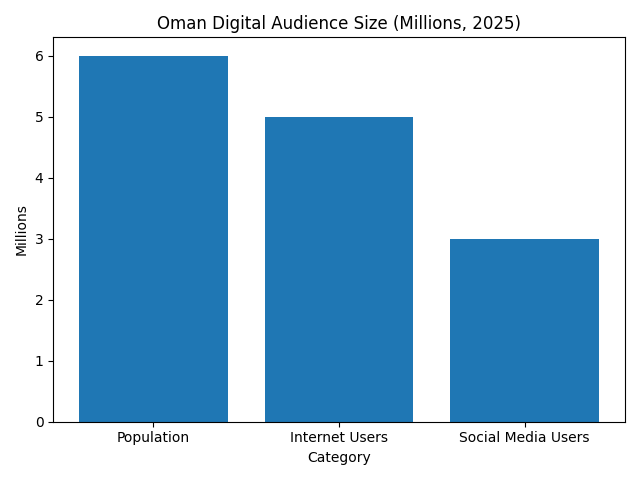
Oman is entering 2026 as one of the most digitally advanced and structurally prepared markets in the Middle East for the rise of AI-powered search. With a population of approximately 5.5 million and a steady annual growth rate of 3.8%, the country is not only expanding demographically but also deepening its digital maturity. This combination of population growth, near-universal internet access, and rapid mobile adoption is creating a uniquely fertile environment for the next phase of search evolution—where generative AI, conversational interfaces, and zero-click experiences are redefining how users discover information, brands, and services.

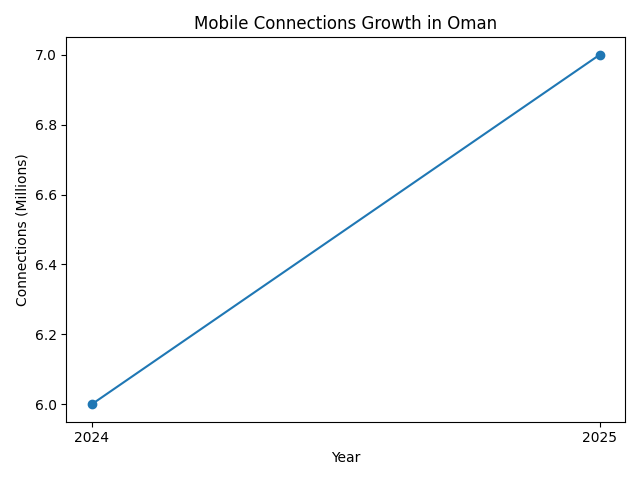
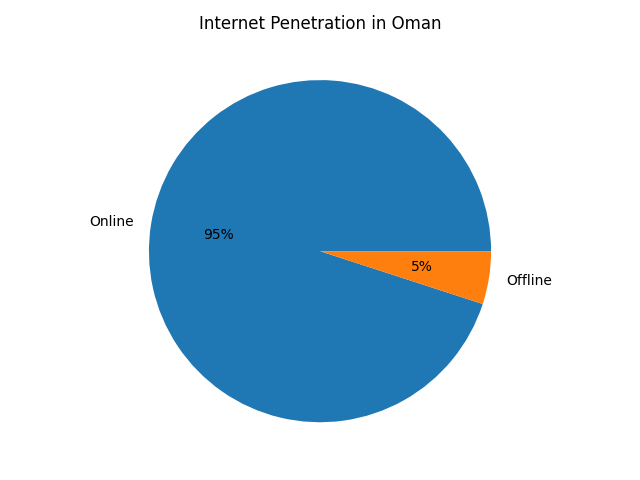
At the foundation of this transformation lies Oman’s exceptional level of connectivity. By the end of 2025, the country had reached a 95.3% internet penetration rate, with over 5.28 million users online. Household internet access stands at around 98%, placing Oman among the most connected nations globally and effectively eliminating access as a barrier to digital participation. At the same time, 6.93 million mobile connections—equivalent to 125% of the population—highlight the dominance of mobile-first behavior, reinforced by the fact that more than 98% of these connections are broadband-capable. In practical terms, this means that almost every connected individual in Oman can seamlessly engage with AI-driven search tools such as Google AI Overviews, ChatGPT, and other emerging generative platforms.
This infrastructure advantage is further amplified by strong improvements in network performance. Mobile download speeds have increased significantly over the past year, while fixed broadband speeds continue to rise, enabling faster, more responsive AI interactions across devices. Combined with extensive 5G coverage reaching the vast majority of the population, Oman has effectively removed the technical friction that could otherwise slow the adoption of real-time, AI-generated search experiences. The result is a digital ecosystem where latency-sensitive applications—such as conversational search, voice assistants, and AI-generated summaries—can operate at scale without constraint.
Equally important is the profile of Oman’s population. With a median age of just under 30 and nearly half of its residents falling within the economically active 25–44 age group, the country represents a young, digitally native audience that is highly receptive to new technologies. Social media penetration exceeds 60%, with millions of users actively engaging with platforms where algorithmic and AI-curated content already shape discovery habits. These behavioral patterns naturally extend to AI search, where users increasingly expect instant, summarised, and context-aware answers rather than traditional lists of links.
From a market structure perspective, Oman’s high urbanisation rate—close to 90%—means that digital audiences are geographically concentrated, making it easier for brands, publishers, and platforms to reach users with optimised content. At the same time, the relatively small offline population signals that the country is approaching full digital saturation, shifting the competitive focus away from user acquisition and toward experience quality, content authority, and visibility within AI-driven interfaces.
On the institutional side, Oman is actively building the policy and economic foundations required to support long-term AI adoption. The country has improved its position in global AI readiness rankings and is implementing a structured national programme for AI and advanced digital technologies. Government-led initiatives are accelerating digital transformation across public services, expanding open data availability, and embedding AI literacy within the education system. While challenges remain—particularly around advanced digital skills and talent depth—the trajectory is clear: Oman is positioning itself to integrate AI not only as a technology layer but as a core driver of economic diversification under its long-term development strategy.
At the same time, the country’s ICT and digital economy are expanding at a sustained pace. Multi-billion-dollar growth in ICT spending, rapid adoption of cloud and enterprise technologies, and a fast-growing e-commerce sector are collectively reshaping how businesses operate and compete. These developments are particularly significant in the context of search, as digital infrastructure, structured data, and content ecosystems are the underlying inputs that determine how AI systems retrieve, interpret, and present information.
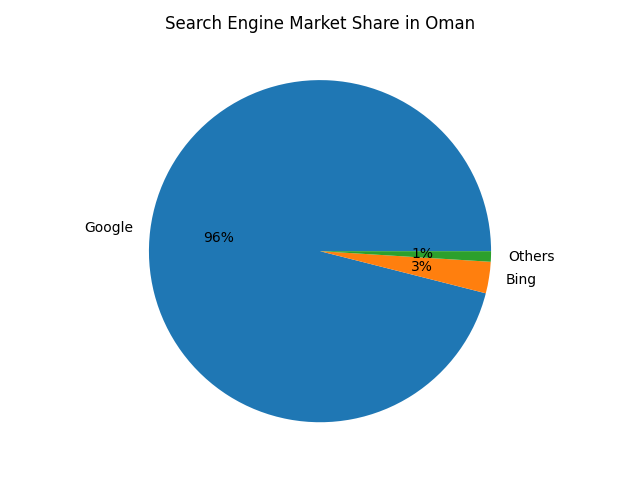
Against this backdrop, the search landscape in Oman remains highly consolidated, with Google accounting for an overwhelming majority of query activity. This concentration simplifies the strategic focus for businesses: optimising for Google’s evolving AI-driven search experience—especially AI Overviews—effectively means optimising for the entire market. However, it also raises the stakes. As generative AI becomes more deeply integrated into search results, visibility is no longer determined solely by rankings, but by whether a brand or source is selected, summarised, and cited within AI-generated answers.
Globally, this shift is already underway. AI-powered search interfaces are expanding rapidly, traditional search volumes are projected to decline, and a growing share of queries now end without a click. Users are increasingly receiving complete answers directly within search environments, fundamentally changing the definition of success in digital visibility. Traffic is no longer the only—or even primary—metric. Instead, brand presence within AI-generated responses, citation frequency, and authority signals across the web are becoming the new battleground.
For Oman-based businesses, marketers, and content teams, these changes are not theoretical. The country’s high connectivity, young population, and strong digital infrastructure mean that global AI search trends are likely to take hold quickly at the local level. At the same time, the relatively early stage of GEO (Generative Engine Optimisation) adoption in the region presents a strategic window of opportunity. Organisations that act now—by building authoritative content, strengthening digital PR, optimising technical performance, and aligning with AI search behaviors—can establish a durable advantage before competition intensifies.
This comprehensive collection of 72 statistics, data points, and trends provides a detailed, evidence-based view of how AI search and GEO are evolving in Oman in 2026. It covers everything from digital infrastructure and user behavior to national AI strategy, market growth, search engine dynamics, and global shifts that are directly impacting the Omani landscape. Together, these insights offer a clear picture of where the market stands today—and where it is heading next—helping decision-makers understand not just the scale of change, but the specific actions required to remain visible, competitive, and relevant in the age of AI-driven search.
But, before we venture further, we like to share who we are and what we do.
About AppLabx
From developing a solid marketing plan to creating compelling content, optimizing for search engines, leveraging social media, and utilizing paid advertising, AppLabx offers a comprehensive suite of digital marketing services designed to drive growth and profitability for your business.
At AppLabx, we understand that no two businesses are alike. That’s why we take a personalized approach to every project, working closely with our clients to understand their unique needs and goals, and developing customized strategies to help them achieve success.
If you need a digital consultation, then send in an inquiry here.
Or, send an email to [email protected] to get started.
72 AI Search & GEO in Oman Statistics, Data & Trends in 2026
SECTION 1: Oman’s Digital & Internet Foundation
1. Oman’s population reached 5.54 million in October 2025, growing at 3.8% year-on-year — a steady demographic expansion that is gradually widening the addressable base for digital services, AI tools, and online search activity.
2. With 5.28 million internet users and a 95.3% penetration rate as of end-2025, Oman ranks among the most connected nations in the world, creating near-universal conditions for AI-powered search tools to reach the adult population.
3. Oman added 194,000 new internet users between October 2024 and October 2025 — a 3.8% growth rate that, while modest in percentage terms, reflects a market approaching saturation and shifting focus from access to the quality of online experiences.
4. Approximately 263,000 people in Oman — around 4.7% of the population — remained offline at end-2025, indicating that near-universal connectivity is achievable but will require targeted infrastructure investment in remote and lower-income communities.
5. Oman’s 6.93 million active mobile connections — equivalent to 125% of its total population — confirm that multi-SIM usage is widespread, and that mobile-first AI search experiences are the primary digital touchpoint for most residents.
6. The 7.8% surge in mobile connections (503,000 net additions) between end-2024 and end-2025 signals accelerating device adoption in Oman, which directly expands the audience for mobile-optimised, AI-search-friendly content.
7. The fact that 98.2% of mobile connections in Oman are broadband-capable (3G/4G/5G) means the technical barrier to using AI search tools such as Google AI Overviews, ChatGPT, and Perplexity is effectively eliminated for the overwhelming majority of mobile users.
8. Oman’s 3.44 million social media user identities — representing 62.1% of the population — highlight a highly engaged digital audience whose content discovery habits are increasingly shaped by AI-curated feeds and AI search assistants.
9. With 89.7% of Oman’s population concentrated in urban areas, digital marketers targeting Omani consumers can focus AI-search-optimised content strategies on a geographically dense, well-connected audience rather than dispersed rural markets.
10. Oman’s median population age of 29.7 years positions it as a young, mobile-native market where AI search tool adoption — driven by digital-native habits — is likely to accelerate faster than in older-skewing populations.
11. The 25–44 age cohort makes up 44.9% of Oman’s population and represents the highest-value demographic for AI search engagement, being both economically active and among the most enthusiastic adopters of generative AI tools globally.
12. A 29.2% improvement in median mobile download speeds in Oman over 12 months to January 2025 directly reduces latency for AI search interfaces, making real-time generative responses faster and more usable on mobile devices.
13. The 14.6% rise in fixed internet speeds in Oman strengthens the desktop and smart home environment for AI-powered research and search, particularly relevant for business users, students, and government employees.
14. YouTube’s advertising reach of 3.44 million Omani users underscores the platform’s outsized role in content discovery — and since AI search tools frequently cite YouTube content, video optimisation is an increasingly important pillar of any Oman-focused GEO strategy.
15. Oman’s reported 98% household internet access rate — the highest in the GCC — means that nearly every Omani household is already a potential consumer of AI search experiences, making the country exceptionally well-positioned to benefit from the generative search transition.
SECTION 2: Oman’s AI Readiness & National Strategy
16. Oman’s rise to 45th place globally in the Oxford Insights Government AI Readiness Index 2024 — up from 50th in 2023 — reflects meaningful progress in public sector AI infrastructure, data governance, and digital skills, though a 5-place improvement suggests the pace of advancement needs to accelerate to meet Vision 2040 ambitions.
17. Ranking 5th in MENA and 4th among GCC states in AI readiness signals that Oman is a regional mid-tier performer — ahead of several Arab economies but still benchmarking against Saudi Arabia and the UAE, which lead the region.
18. Oman’s stated ambition to break into the global top 30 of the Government AI Readiness Index is achievable but will require sustained investment in AI talent pipelines, regulatory frameworks, and cross-sector AI deployment — areas where peer nations are investing heavily.
19. The 2024–2026 National Programme for AI and Advanced Digital Technologies demonstrates Oman’s structured, government-led approach to AI adoption — one that spans economic deployment, technology localisation, and governance, providing a stable policy environment for businesses building AI search and GEO strategies.
20. The growth in AI-focused tech startups from fewer than 10 to more than 25 under the Makeen programme reflects an emerging, if still nascent, local AI ecosystem — one that will increasingly generate the kind of original Omani content that AI search engines need to serve locally relevant results.
21. Cumulative AI investment of approximately OMR 60 million (~USD 156 million) over four years, with a 20% annual growth target, confirms Oman’s financial commitment to AI — though absolute spend remains modest compared to Saudi Arabia’s multi-billion-dollar AI ambitions under Vision 2030.
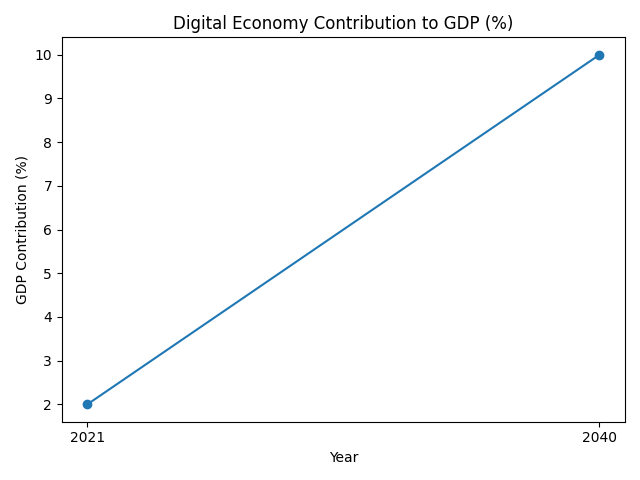
22. Oman’s target to raise the digital economy’s contribution from 2% of GDP in 2021 to 10% by 2040 is ambitious and will only be achieved if AI-powered productivity gains, digital commerce growth, and search-driven customer acquisition are central to the private sector’s growth strategy.
23. The 63% completion rate of Oman’s Open Data portal as of February 2025 is encouraging, but incomplete open data infrastructure limits the ability of AI search engines and large language models to surface accurate, locally grounded information about Oman — a gap that content creators must currently fill manually.
24. Training nearly 3,300 Omani educators in AI by January 2025 is a promising signal that AI literacy is being embedded into the education system — a foundational step for producing the next generation of Omani professionals who will produce, optimise, and consume AI-search-friendly content.
25. Oman’s gold award at the 2024 International AI Competition demonstrates that the country can compete globally in applied AI — and international recognition of this kind enhances Oman’s credibility as a source of AI expertise in search results and LLM training data.
26. Signing a WEF Fourth Industrial Revolution Centre agreement in January 2025 positions Oman within an elite global network for AI governance — and active participation in international AI standard-setting will likely improve the trustworthiness signals that AI search engines assign to Omani government and institutional content.
27. The 62.02% Omanisation rate in ICT, combined with continued reliance on expatriate talent for AI and data engineering, highlights a structural skills gap that could slow Oman’s ability to produce and maintain the high-quality, authoritative content that LLMs preferentially cite.
28. The Omantel Academy’s target of 1,200 training slots and 500 new digital jobs over four years is a step in the right direction, but the scale remains small relative to the speed at which AI is reshaping the skills requirements of the digital economy.
29. The IMF’s April 2025 assessment flagging Oman’s digital skills deficit relative to Gulf peers is a candid external validation of a known challenge — and for businesses operating in Oman, it underlines the importance of investing in GEO and AI search capabilities now rather than waiting for the domestic talent pool to mature.
30. The delivery of 25 of 36 Tahawul government digital transformation projects by November 2024, with 74% of priority services online, confirms that Oman’s public sector is becoming an increasingly important generator of structured, citable digital content — exactly the kind that AI search engines tend to index and surface prominently.
SECTION 3: Oman’s ICT & Digital Economy
31. Oman’s ICT market growing from USD 5.96 billion in 2025 to a projected USD 9.75 billion by 2031 at an 8.73% CAGR represents a decade-long wave of digital spending that will fund the infrastructure, cloud services, and enterprise platforms needed to support AI search at scale across the economy.
32. The Oman digital transformation market reaching USD 2.72 billion in 2025 and growing at 11.36% annually confirms that both public and private sector organisations are allocating meaningful budgets to the digitisation processes — including content, data, and search visibility — that underpin AI-search performance.
33. IT services commanding 34.78% of Oman’s ICT revenue in 2025 — driven by ERP rollouts and multicloud migration — signals that Omani enterprises are building the data infrastructure that, when paired with strong content strategies, creates the conditions for competitive AI search visibility.
34. The retail and e-commerce segment’s forecast 9.65% CAGR through 2031 makes it the fastest-growing digital sector in Oman — and the sector most acutely exposed to the AI search shift, since product discovery via Google AI Overviews and ChatGPT is already displacing traditional organic search for commercial queries.
35. Oman’s e-commerce market doubling from USD 0.66 billion in 2024 to USD 1.24 billion by 2029 creates a high-stakes arena where AI search visibility will increasingly determine which brands win customer acquisition — making GEO a commercial imperative, not merely a technical nicety.
36. The broader MENA ICT market growing to USD 280.6 billion by 2030 at a 9.64% CAGR provides Oman-based technology, media, and agency businesses with a large and rapidly expanding regional addressable market for AI-search-optimised services.
37. Vodafone Oman’s completion of over 2,572 5G sites — covering 98% of the population by February 2025 — eliminates the connectivity bottleneck for AI search applications and positions Oman as one of the best-connected markets in the GCC for latency-sensitive generative AI experiences.
38. Oman climbing four places to rank 50th in the Network Readiness Index 2024 confirms incremental but real progress in the digital infrastructure, skills, and regulatory environment that supports AI search adoption — a positive signal for businesses evaluating Oman as a market.
39. The Oman Business Platform processing 2.8 million transactions by September 2025 validates growing citizen comfort with digital service interactions — a behavioural shift that naturally extends to AI-assisted search and query resolution.
40. A 12.8% year-on-year rise in foreign direct investment to OMR 30.28 billion by mid-2025 is expanding Oman’s business environment and creating a growing cohort of international and domestic companies that require AI-search-optimised digital presences to compete for Omani customers.
SECTION 4: Search Engine Landscape in Oman
41. Google’s 96.54% search market share in Oman as of December 2025 means that for the vast majority of Omani internet users, Google — and by extension, Google AI Overviews — is effectively the only search engine that matters strategically for GEO investment.
42. With Bing at just 2.7% and all other search engines collectively below 1% in Oman, digital marketers can concentrate AI search optimisation efforts almost entirely on Google’s ecosystem, simplifying the GEO strategy compared to more fragmented markets.
43. The convergence of 95.3% internet penetration and 98.2% broadband mobile coverage means Oman’s online population is not just large — it is almost entirely capable of experiencing AI-enhanced search features such as Google AI Overviews and voice search, making GEO urgency high.
44. Google AI Overviews being available in 200+ countries and 40+ languages confirms that Omani users searching in both Arabic and English are already receiving generative AI-powered answers — meaning GEO is not a future consideration for Oman-focused brands; it is a present one.
45. The 63.8% male skew among Oman’s social media users informs not just platform strategy but also the content formats, topics, and authority signals most likely to earn AI citations in Oman-relevant search contexts — with male-skewing industries such as technology, automotive, finance, and construction particularly important to optimise for.
SECTION 5: Global AI Search Trends Directly Relevant to Oman
46. Gartner’s prediction of a 25% decline in traditional search engine volume by 2026 is not a distant forecast — it is a current business reality that Omani brands should be stress-testing their digital acquisition strategies against right now, particularly those heavily dependent on Google organic traffic.
47. ChatGPT’s 800 million to 1 billion weekly active users as of early 2026 represent a global audience — including a rapidly growing GCC segment — whose product discovery, brand research, and decision-making are increasingly shaped by LLM responses rather than blue-link search results.
48. Google AI Overviews appearing in 25.11% of searches — almost double their March 2025 prevalence of 13.14% — demonstrates that generative answers are expanding rapidly across query types, raising the stakes for Omani websites that are not yet optimised to be cited within these summaries.
49. Google AI Overviews reaching 2 billion monthly users globally by Q2 2025 means the feature has achieved mainstream scale in under a year — and Omani marketers who delay GEO investment are ceding ground to competitors who are already appearing in these AI-generated summaries.
50. A 357% growth in AI referral traffic from June 2024 to June 2025 — generating 1.13 billion visits globally — confirms that AI search tools are no longer just query-answering systems; they are meaningful traffic referral channels that Omani brands should be tracking and optimising for.
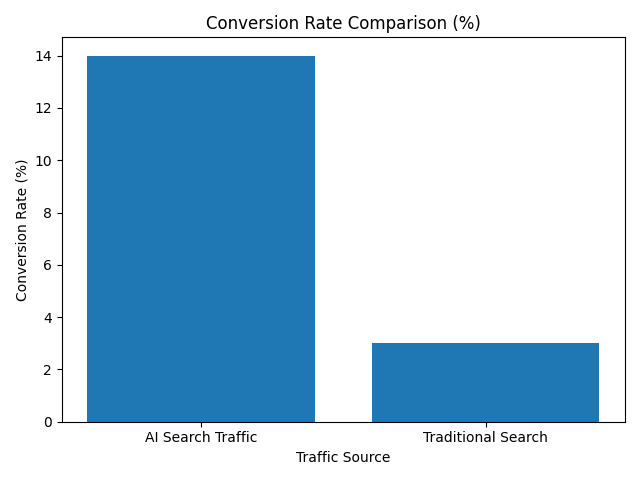
51. The 14.2% conversion rate of AI search traffic versus Google’s 2.8% is arguably the most commercially compelling statistic in this report: it means that a visitor arriving at an Omani e-commerce or service website from an AI citation is approximately five times more likely to convert than one arriving from a standard Google organic result.
52. The finding that 93% of AI search sessions end without a website visit radically redefines what “winning” in search means for Omani brands — success is no longer just about ranking on page one, but about being the brand named, summarised, or recommended within the AI answer itself.
53. The fact that 60% of all searches are now completed without any website click — the zero-click era — means that Omani businesses which define search success purely by click-through rates are measuring the wrong metric; brand mention and AI citation frequency are the new primary visibility KPIs.
54. Gartner’s prediction that 50% of all online searches will involve an AI assistant by 2028 gives Oman-based marketing and IT teams a concrete 24-month planning window to build the content authority, structured data, and brand signals that determine AI search citation eligibility.
55. The GEO market growing from USD 848 million in 2025 to USD 33.7 billion by 2034 at a 50.5% CAGR represents one of the fastest-expanding professional service categories in digital marketing — and Omani digital agencies that develop GEO capabilities now will be positioned to capture significant market share as demand grows regionally.
56. With 54% of US marketers planning GEO implementation within 3–6 months as of January 2026, the strategic window before GEO becomes table stakes is closing fast — and MENA markets, including Oman, typically follow mature-market adoption curves with an 18-to-24-month lag, meaning the Omani GEO race is just beginning.
57. GEO’s reported 4.4x conversion lift over traditional SEO and USD 3.71 return per dollar spent provides Omani marketing decision-makers with a business case that sits comfortably within standard ROI thresholds — making budget reallocation toward GEO a defensible financial decision, not just a trend-chasing one.
58. The UAE’s 64% working-age AI adoption rate — the highest globally according to Microsoft’s AI Economy Institute — sets the regional benchmark that Oman is navigating toward; as the two economies deepen integration and GCC-wide talent moves fluidly, Omani organisations face competitive pressure from UAE-based firms that are already AI-search-mature.
59. Global generative AI adoption reaching 16.3% of the world’s population in H2 2025 — up 1.2 percentage points in just six months — confirms that the diffusion of AI search behaviour is not plateauing; it is accelerating, and Oman’s highly connected, young population is part of that expanding global user base.
60. Microsoft’s identification of early digital infrastructure investment as the key driver of AI adoption is particularly relevant to Oman, whose near-complete 5G rollout, 98% household internet access, and government-led digital transformation programmes have effectively pre-built the conditions for rapid AI search adoption across the population.
SECTION 6: GEO Benchmarks for Oman-Facing Content Teams
61. The finding that AI Overview content changes 70% of the time for the same query — and that 45.5% of citations are replaced on regeneration — means Omani content teams cannot treat GEO as a one-time optimisation task; maintaining AI citation visibility requires ongoing content refreshes, authority-building, and performance monitoring.
62. YouTube mentions and branded web mentions being the top citation drivers for AI answers across ChatGPT, Google AI Mode, and AI Overviews gives Omani brands a clear, actionable priority: invest in Arabic and English YouTube content and earned media coverage, as these signals directly translate into AI search visibility.
63. The 3.5x citation advantage that high-authority domains (32,000+ referring domains) hold over low-authority sites reinforces that for Omani brands, link-building and digital PR remain foundational investments — AI search did not replace the need for domain authority; it amplified its importance.
64. Review platform profiles on Trustpilot, G2, or Capterra tripling a brand’s likelihood of ChatGPT citation is an immediately actionable insight for Omani businesses: claiming and actively managing third-party review profiles is one of the highest-ROI GEO tactics available today, requiring minimal technical investment.
65. The concentration of 44.2% of LLM citations in the first 30% of a webpage means that Omani content writers must prioritise front-loaded, factually dense introductions — placing key claims, brand positioning, and differentiating data in the opening paragraphs rather than building to them gradually.
66. Pages loading in under 0.4 seconds receiving 3x more AI citations than slow pages is a powerful argument for Omani website owners to treat Core Web Vitals optimisation as a direct GEO investment — site speed is no longer just a user experience metric; it is an AI citation eligibility factor.
67. AI Overviews reducing organic website clicks by 34.5% to 58% represents a structural revenue risk for Omani businesses whose customer acquisition models are built on organic traffic — the appropriate response is not to abandon SEO, but to complement it with GEO tactics that ensure brand presence within the AI summaries that are displacing those clicks.
68. The fact that 76.1% of URLs cited in AI Overviews also rank in Google’s top 10 confirms that traditional SEO and GEO are not competing strategies for Omani marketers — they are mutually reinforcing, and strong organic rankings remain the most reliable foundation for earning AI search visibility.
69. Brands being 6.5x more likely to appear in AI answers via third-party sources than their own websites is one of the most strategically disruptive findings for Omani marketing teams: it means that controlling your owned content is necessary but not sufficient — and that investing in PR, partnerships, and journalist relationships is now a direct AI search tactic.
70. The current low rate of AI Overview triggering for local searches (7.9%) offers Omani local businesses a relative degree of protection from GEO disruption in the short term — but the rapid expansion of AI Overviews into commercial query types (growing from 8% to 18%) signals that local markets will not remain insulated for long.
71. The 615x difference in brand citation volumes between AI platforms such as Grok and Claude demonstrates that a single AI search optimisation strategy is insufficient — Omani brand managers need platform-specific visibility tracking and, ideally, GEO strategies calibrated to the content preferences of each major LLM.
72. The fact that 71% of CMOs globally are reallocating marketing budgets toward GenAI visibility is a leading indicator that GEO will become a standard line item in marketing plans within 12 to 18 months — Omani marketing leaders who begin this budget realignment now will have a head start over competitors who wait for the trend to fully materialise locally.
Conclusion
Oman stands at a decisive inflection point in 2026, where the convergence of near-universal connectivity, a young and digitally fluent population, and a steadily maturing AI ecosystem is transforming how search works—and, more importantly, how visibility is earned. The 72 statistics explored throughout this report collectively point to one clear conclusion: AI-powered search is no longer an emerging trend in Oman. It is an active, accelerating shift that is already redefining digital discovery, brand exposure, and customer acquisition across the country.
With internet penetration exceeding 95%, household connectivity approaching full saturation, and mobile usage deeply embedded in everyday life, Oman has already built the infrastructure that many markets are still striving toward. This means the barriers to AI search adoption—whether technical, behavioural, or access-related—are effectively nonexistent for the vast majority of the population. As a result, global shifts such as generative search, conversational AI interfaces, and zero-click experiences are not arriving slowly; they are integrating rapidly into how Omani users search, learn, and make decisions online.
At the same time, Oman’s demographic profile amplifies this transition. A young, urban, and mobile-first population is naturally inclined toward faster, more intuitive, and more contextual ways of accessing information. AI search tools align perfectly with these expectations, offering direct answers, summarised insights, and personalised responses that traditional search engines were never designed to deliver. As these behaviours become standard, the definition of search success is evolving. Ranking on page one is no longer sufficient. Being cited, summarised, and recommended within AI-generated responses is quickly becoming the new benchmark of visibility.
This shift has profound implications for businesses, marketers, and content creators operating in Oman. The data makes it clear that traditional SEO, while still essential, is no longer enough on its own. The rise of Generative Engine Optimisation (GEO) introduces a new layer of competition—one that prioritises authority, credibility, structured information, and cross-platform brand presence. AI systems do not simply rank pages; they select and synthesise information from sources they trust. This means that brands must now compete not just for rankings, but for inclusion within the answer itself.
One of the most important insights from this analysis is that AI search visibility is shaped as much by external signals as it is by owned content. Mentions across high-authority websites, media coverage, review platforms, and video content—particularly on platforms like YouTube—are increasingly influencing whether a brand appears in AI-generated results. In many cases, third-party sources carry more weight than a company’s own website. This fundamentally changes how digital strategy must be approached in Oman, placing greater emphasis on digital PR, partnerships, and reputation management as core components of search optimisation.
Speed, structure, and clarity are also emerging as critical factors. Fast-loading websites, well-organised content, and information that is easy for AI systems to interpret are more likely to be selected and cited. Content that delivers clear, factual value early—rather than burying key insights deep within a page—has a measurable advantage. These are not minor technical adjustments; they represent a shift in how content must be designed for both human users and machine interpretation simultaneously.
From a commercial perspective, the stakes are significant. AI-driven search is not only changing how users find information, but also how they convert. Higher conversion rates from AI-referred traffic, combined with the growing prevalence of zero-click searches, mean that visibility within AI answers can directly influence revenue outcomes. For sectors such as e-commerce, financial services, real estate, and technology—many of which are already expanding rapidly in Oman—this creates both a risk and an opportunity. Businesses that fail to adapt may see declining traffic and reduced visibility, while those that embrace GEO can capture high-intent users at the exact moment of decision-making.
At a national level, Oman’s ongoing investments in AI strategy, digital infrastructure, and economic diversification provide a strong foundation for this transition. Government initiatives, improvements in AI readiness, and the expansion of digital services are all contributing to a more data-rich and AI-compatible environment. However, the country’s progress also highlights an important challenge: the need to accelerate talent development and content production capabilities. As AI systems increasingly rely on high-quality, locally relevant information, the ability to produce authoritative Omani content will become a key competitive advantage—not just for businesses, but for the country’s broader digital presence.
Looking ahead, the trajectory is unmistakable. AI will become an integral layer of every search interaction, and GEO will evolve from an emerging discipline into a standard requirement for digital competitiveness. The global pace of adoption suggests that Oman has a limited but valuable window to establish leadership in this space. Early adopters—those who invest now in content authority, technical optimisation, and cross-platform visibility—will be best positioned to benefit as AI search continues to expand.
Ultimately, the transition to AI-driven search is not a disruption to be managed; it is a structural shift to be embraced. For Oman, a country already equipped with the connectivity, demographics, and strategic intent to succeed in the digital economy, the opportunity is substantial. The insights in these 72 statistics are not just observations—they are signals of where the market is heading and what it will take to remain visible, relevant, and competitive in the years ahead.
For businesses operating in Oman, the message is clear: the future of search has already begun, and those who adapt early will define it.
If you are looking for a top-class digital marketer, then book a free consultation slot here.
If you find this article useful, why not share it with your friends and business partners, and also leave a nice comment below?
We, at the AppLabx Research Team, strive to bring the latest and most meaningful data, guides, and statistics to your doorstep.
To get access to top-quality guides, click over to the AppLabx Blog.
People also ask
What is AI search and how is it growing in Oman?
AI search uses generative tools like ChatGPT and Google AI Overviews to deliver direct answers. In Oman, high internet penetration and mobile usage are accelerating adoption in 2026.
What is Generative Engine Optimisation (GEO)?
GEO is the practice of optimising content to be cited and summarised by AI search engines rather than just ranking in traditional search results.
Why is Oman important for AI search growth?
Oman has over 95% internet penetration, strong mobile usage, and a young population, making it highly receptive to AI-driven search experiences.
How many internet users are there in Oman in 2026?
Oman has over 5.2 million internet users, representing more than 95% of the population, creating near-universal access to AI search tools.
Is Oman a mobile-first market for AI search?
Yes, with mobile connections exceeding the population and over 98% being broadband-capable, AI search is primarily accessed via smartphones.
How does Google dominate search in Oman?
Google holds over 96% of the search market share in Oman, making it the primary platform for both traditional SEO and AI search optimisation.
What are Google AI Overviews and are they used in Oman?
Google AI Overviews provide AI-generated summaries in search results and are available to Omani users in both Arabic and English queries.
How is AI search changing SEO in Oman?
AI search shifts focus from rankings to being cited in answers, requiring stronger authority, structured content, and broader digital presence.
What is zero-click search and why does it matter?
Zero-click search occurs when users get answers without visiting websites. It is rising in Oman, making brand visibility within AI responses critical.
How does AI search impact website traffic in Oman?
AI search can reduce traditional clicks but increase high-intent traffic, meaning fewer visits but higher-quality conversions.
What industries in Oman benefit most from GEO?
E-commerce, finance, real estate, and technology sectors benefit most as AI search directly influences product discovery and decision-making.
Is GEO replacing SEO in Oman?
No, GEO complements SEO. Strong rankings still support AI visibility, but brands must also optimise for AI citations and summaries.
What role does content quality play in AI search?
High-quality, factual, and well-structured content increases the likelihood of being selected and cited by AI systems.
How important is website speed for AI search visibility?
Fast-loading websites are more likely to be cited by AI tools, making performance optimisation a key GEO factor.
Why are third-party mentions important for GEO?
AI systems often rely on external sources like media, reviews, and directories, making digital PR and brand mentions essential.
How does YouTube influence AI search in Oman?
YouTube content is frequently cited by AI systems, making video optimisation a critical part of GEO strategies.
What is the role of social media in AI search trends?
Social platforms shape content discovery habits, which influence how users interact with AI search tools and recommendations.
How fast is Oman’s digital economy growing?
Oman’s digital economy is expanding rapidly, with ICT and e-commerce sectors growing steadily and supporting AI search adoption.
What is Oman’s AI readiness ranking?
Oman ranks mid-tier globally in AI readiness, showing progress but still trailing leading GCC markets like the UAE and Saudi Arabia.
How does 5G impact AI search in Oman?
Extensive 5G coverage enables faster, real-time AI interactions, improving the usability of generative search tools.
Are Omani users adopting AI tools quickly?
Yes, high connectivity and a young population are driving fast adoption of AI tools for search, research, and decision-making.
What are the main challenges for GEO in Oman?
Key challenges include limited local AI content, talent gaps, and the need for stronger digital authority across platforms.
How does AI search affect e-commerce in Oman?
AI search influences product discovery and recommendations, making visibility in AI results crucial for online retailers.
What is the future of search in Oman?
Search will become increasingly AI-driven, with conversational interfaces and direct answers replacing traditional browsing behaviors.
How can businesses optimise for AI search in Oman?
Businesses should focus on authoritative content, structured data, fast websites, and strong third-party brand signals.
What is the importance of multilingual content in Oman?
Content in both Arabic and English improves reach and increases chances of being cited in AI-generated responses.
How does AI search improve conversion rates?
AI-driven traffic tends to be more targeted and intent-driven, leading to higher conversion rates compared to traditional search.
Why is GEO important for digital marketing in Oman?
GEO ensures brands remain visible in AI-generated answers, which are increasingly replacing traditional search results.
How does AI search impact local businesses in Oman?
Local businesses will face increasing competition as AI expands into local queries, making early optimisation important.
What should marketers prioritise for 2026 in Oman?
Marketers should prioritise GEO, content authority, AI visibility, and cross-platform brand presence to stay competitive.
Sources
DataReportal
Oxford Business Group
Times of Oman
MTCIT Oman
Mordor Intelligence
IMF Staff Country Reports
Oxford Insights
SAMENA Council
Statcounter Global Stats
Serps.io
Gartner
Superlines
Search Engine Land
Exposure Ninja
Entail AI
Semrush
Bain & Company
Dimension Market Research
eMarketer
AllAboutAI
Microsoft AI Economy Institute
Microsoft
Position Digital
Ahrefs
SE Ranking
Graphite
Airops
Conductor