


























Key Takeaways
- AI-driven marketing and Generative Engine Optimization (GEO) are redefining digital discovery, making authoritative, structured, and machine-readable content essential for search visibility in 2026.
- First-party and zero-party data strategies, supported by unified MarTech stacks and AI analytics, are critical for personalization, higher ROI, and privacy-compliant customer engagement.
- Social commerce, short-form video, micro-influencers, and immersive technologies like AR are transforming the customer journey by merging discovery, trust, and purchasing into seamless digital experiences.
Digital marketing in 2026 is no longer simply a set of online promotional tactics. It has evolved into a highly sophisticated ecosystem where artificial intelligence, advanced data analytics, automation, and immersive technologies collectively shape how brands communicate with audiences and generate revenue. As the global digital economy expands and internet usage becomes deeply embedded in everyday life, marketing strategies must adapt to a new reality defined by rapid technological innovation and shifting consumer expectations.

The modern consumer journey is no longer linear. Today’s buyers discover products through social media feeds, receive recommendations from creators, ask voice assistants for advice, interact with AI-powered chat systems, and expect personalized experiences across every digital touchpoint. This transformation has fundamentally redefined how businesses approach marketing. Companies must now deliver seamless experiences that integrate content, commerce, and customer engagement across multiple platforms simultaneously.
The Ultimate Guide to Digital Marketing in 2026 explores the strategies, trends, and tools that define the current digital marketing landscape. It provides a comprehensive overview of how organizations can navigate emerging technologies, build data-driven marketing infrastructures, and create authentic relationships with consumers in an increasingly automated digital environment.
The Evolution of Digital Marketing in the AI Era
Over the past decade, digital marketing has undergone dramatic changes. Early online marketing strategies focused primarily on search engine optimization, display advertising, and email campaigns. While these channels remain relevant, the scope of digital marketing has expanded significantly with the introduction of artificial intelligence, generative search technologies, and advanced marketing automation platforms.
Artificial intelligence now plays a central role in campaign management, customer segmentation, predictive analytics, and content optimization. AI-powered systems can analyze enormous datasets to identify patterns in consumer behavior, forecast marketing outcomes, and automate decision-making processes in real time. This capability enables marketing teams to operate with unprecedented efficiency and accuracy.
At the same time, generative search engines and conversational AI systems are transforming how users access information online. Instead of browsing through lists of search results, consumers increasingly receive direct answers generated by intelligent systems. This shift has created a new discipline known as Generative Engine Optimization, where brands compete to become trusted sources that AI systems reference in their responses.
These technological advancements require businesses to rethink traditional marketing approaches. Strategies that once relied heavily on keywords, basic targeting, or static advertising campaigns must now evolve into sophisticated systems that integrate AI-driven insights with human creativity.
Why Digital Marketing Matters More Than Ever in 2026
The importance of digital marketing has grown dramatically as online platforms become the primary environment for communication, commerce, and information discovery. Global advertising expenditures have surpassed one trillion dollars, reflecting the enormous scale of digital media ecosystems and the increasing reliance of businesses on online marketing channels.
However, increased investment has also intensified competition. Consumers are exposed to thousands of marketing messages every day across social networks, search engines, streaming platforms, and mobile applications. Standing out in this crowded environment requires more than simply increasing advertising budgets.
Successful digital marketing strategies in 2026 focus on delivering meaningful value to audiences. Brands must create content that educates, entertains, and informs while also building trust and credibility. Marketing messages must be personalized, relevant, and delivered at the right moment in the customer journey.
Organizations that fail to adapt to these expectations risk losing visibility in an environment where algorithms prioritize authoritative information, consumers demand authenticity, and platforms reward engaging content.
Key Forces Shaping Digital Marketing in 2026
Several powerful forces are driving the transformation of digital marketing. These forces influence how businesses design marketing campaigns, allocate budgets, and interact with their audiences.
One of the most significant forces is the rise of data-driven marketing. Modern organizations collect vast amounts of customer data from websites, mobile applications, social platforms, and transaction systems. When integrated effectively, this data allows marketers to understand customer behavior in extraordinary detail.
Another major influence is the emergence of immersive digital experiences. Technologies such as augmented reality, virtual commerce environments, and interactive video content allow consumers to engage with products and brands in new ways. These experiences blur the boundaries between entertainment, education, and purchasing decisions.
Social commerce is also reshaping the digital marketing landscape. Social platforms are no longer limited to content sharing and communication. They have evolved into full-scale retail environments where users can discover products, evaluate options, and complete purchases without leaving the platform.
Additionally, privacy regulations and changing consumer attitudes toward data collection have created a new emphasis on transparency and consent. Businesses must now rely heavily on first-party and zero-party data rather than third-party tracking methods.
Together, these forces create both challenges and opportunities for marketers seeking to remain competitive in the digital economy.
The Rise of Integrated Marketing Ecosystems
Digital marketing in 2026 operates within highly integrated technological ecosystems commonly referred to as MarTech stacks. These systems combine customer data platforms, analytics tools, marketing automation software, advertising platforms, and content management systems into a unified operational environment.
The goal of a modern MarTech stack is to create a complete view of the customer. By integrating data from multiple sources, organizations can understand how users interact with their brand across different platforms and devices. This insight allows marketers to design personalized customer journeys that guide individuals from initial discovery to long-term brand loyalty.
Automation tools within these ecosystems further enhance efficiency by managing repetitive tasks such as email campaigns, lead scoring, advertising optimization, and customer segmentation. As a result, marketing teams can focus more heavily on strategy, creativity, and innovation.
Why Businesses Need a Digital Marketing Strategy for 2026
In a rapidly evolving digital environment, businesses cannot rely on outdated marketing methods or isolated campaigns. A well-structured digital marketing strategy is essential for navigating the complexities of modern online ecosystems.
Such a strategy must incorporate multiple elements, including content marketing, search optimization, social media engagement, influencer partnerships, video marketing, and data analytics. Each component plays a specific role within the broader customer journey.
For example, short-form video content may capture audience attention on social platforms, while long-form educational content builds authority and trust. Influencer partnerships can introduce products to new communities, while personalized email campaigns nurture leads and drive conversions.
Successful digital marketing strategies also require continuous experimentation and performance measurement. Advanced analytics tools allow organizations to evaluate campaign performance in real time and make data-driven adjustments that maximize return on investment.
What This Guide Covers
This comprehensive guide explores the most important strategies, trends, and tools shaping digital marketing in 2026. It examines how emerging technologies and changing consumer behaviors are transforming the way brands communicate, advertise, and build relationships with customers.
Readers will gain insights into topics such as artificial intelligence in marketing, generative search optimization, social commerce strategies, influencer marketing trends, video content frameworks, voice search optimization, and the importance of unified data infrastructure. The guide also explores how marketing professionals can leverage advanced MarTech platforms to improve efficiency, personalization, and campaign performance.
By understanding these developments, businesses can develop marketing strategies that not only adapt to current trends but also prepare for the future evolution of digital marketing.
Preparing for the Next Generation of Digital Marketing
The digital marketing landscape will continue to evolve as new technologies emerge and consumer expectations shift. Artificial intelligence systems will become more advanced, immersive experiences will become more common, and personalized digital environments will become the standard rather than the exception.
Businesses that embrace innovation, invest in data-driven strategies, and prioritize authentic customer relationships will be best positioned to succeed. Digital marketing in 2026 is not simply about reaching audiences; it is about creating meaningful interactions that deliver value and build lasting trust.
The Ultimate Guide to Digital Marketing in 2026 serves as a roadmap for navigating this complex and rapidly changing environment. By understanding the strategies, trends, and tools that define modern digital marketing, organizations can build stronger brands, reach broader audiences, and achieve sustainable growth in the digital economy.
But, before we venture further, we like to share who we are and what we do.
About AppLabx
From developing a solid marketing plan to creating compelling content, optimizing for search engines, leveraging social media, and utilizing paid advertising, AppLabx offers a comprehensive suite of digital marketing services designed to drive growth and profitability for your business.
At AppLabx, we understand that no two businesses are alike. That’s why we take a personalized approach to every project, working closely with our clients to understand their unique needs and goals, and developing customized strategies to help them achieve success.
If you need a digital consultation, then send in an inquiry here.
Or, send an email to [email protected] to get started.
The Ultimate Guide to Digital Marketing in 2026: Strategies, Trends, and Tools
- The Macroeconomic Landscape of Digital Advertising in 2026
- The Rise of Agentic AI and Autonomous Marketing Operations
- Search Evolution: Generative Engine Optimization (GEO)
- Social Commerce and the Immersive Transactional Environment
- The Influencer Economy: Micro-Creators and the Trust Mandate
- Video Content Strategy: The “Hook and Closer” Framework
- The Auditory Web: Voice Search and Conversational Intelligence
- Data Privacy, Infrastructure, and the “First-Party” Mandate
- Regional Case Study: The Southeast Asian Hyper-Growth Dynamic
- Strategic Performance Benchmarks and ROI Metrics
- The 2026 MarTech Stack: Essential Tools and Platforms
- Strategic Imperatives for the High-Data Era
1. The Macroeconomic Landscape of Digital Advertising in 2026
Digital marketing in 2026 operates within a rapidly evolving economic environment where advertising investment, data infrastructure, and automated media buying technologies collectively shape the global marketing ecosystem. Analysts view the valuation of the digital advertising market as one of the clearest indicators of how deeply integrated the global digital economy has become. As brands increasingly rely on digital channels to reach audiences, the advertising industry has undergone a structural shift toward data-driven decision making, algorithmic optimization, and platform-centric media ecosystems.
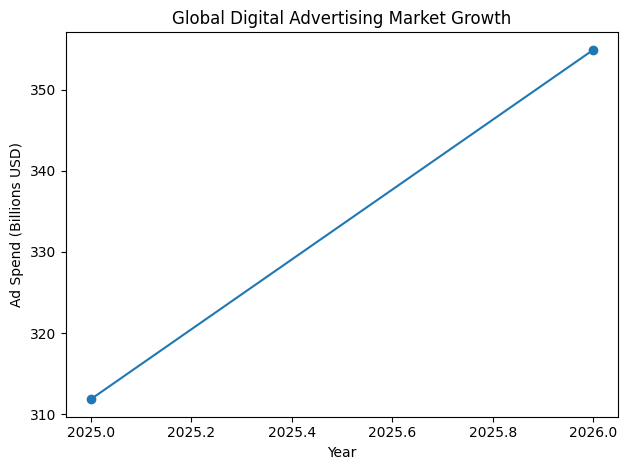
By 2026, the digital advertising sector has reached a scale that reflects its dominant role in modern marketing strategies. The market is projected to expand from 311.86 billion dollars in 2025 to approximately 354.9 billion dollars by the end of 2026. This expansion represents a compound annual growth rate of approximately 13.8 percent. Such growth illustrates how organizations across industries are prioritizing digital channels as their primary vehicles for brand visibility, customer acquisition, and revenue generation.
However, this growth does not occur evenly across all digital marketing channels. Instead, investment flows primarily toward platforms and technologies capable of leveraging large-scale consumer data, real-time analytics, and automated media trading systems. Digital advertising is no longer simply about visibility; it has become a sophisticated ecosystem driven by machine learning models, predictive analytics, and hyper-personalized audience targeting.
The Evolution of the Global Digital Advertising Economy
The rapid expansion of digital advertising reflects broader economic and technological transformations. As consumer behavior becomes increasingly mobile-first and data-rich, brands must operate in a highly competitive environment where relevance, timing, and personalization determine campaign effectiveness.
Digital advertising now accounts for a significant majority of global advertising investment. By 2026, approximately 68.7 percent of all global advertising budgets are allocated to digital channels. This milestone signals a decisive transition away from traditional media formats such as print advertising, which continues to decline due to reduced audience engagement and limited targeting capabilities.
The following table illustrates key global advertising metrics that define the macroeconomic environment of digital marketing in 2026.
Table: Global Advertising Market Indicators
| Market Metric | 2024 / 2025 Value | 2026 Projected Value | Primary Growth Driver |
|---|---|---|---|
| Global Digital Advertising | 311.86 Billion | 354.9 Billion | Programmatic Advertising Adoption |
| Total Global Advertising Spend | 990 Billion | 1.05 Trillion | Global Events and Political Campaigns |
| Retail Media Growth Rate | 12.2 Percent | 14.1 Percent | First-Party Consumer Data |
| Programmatic Advertising Share | 78.0 Percent | 81.4 Percent | AI-Powered Bidding Systems |
| Digital Share of Total Ad Spend | 65.0 Percent | 68.7 Percent | Mobile-First Consumer Behavior |
The increasing dominance of digital advertising also highlights the importance of large-scale digital platforms capable of aggregating massive volumes of consumer data. As a result, marketers increasingly allocate budgets to ecosystems that can deliver both reach and precise targeting.
The Rise of Walled Gardens and Retail Media Ecosystems
One of the most significant developments in digital marketing over the past decade is the emergence of highly controlled advertising environments commonly referred to as “walled gardens.” These platforms maintain exclusive control over their data ecosystems, advertising tools, and measurement systems. Their dominance is largely driven by their ability to combine vast amounts of first-party data with advanced machine learning models that optimize ad delivery.
Retail media networks have become one of the most influential segments within this ecosystem. Retail platforms now offer advertisers the ability to target consumers based on real purchasing behavior, shopping intent, and browsing activity. This capability allows brands to place advertisements directly at the digital point of purchase, dramatically increasing the likelihood of conversion.
Retail media has maintained its position as the fastest-growing digital advertising category for five consecutive years. In 2026, this segment is projected to grow at a rate of approximately 14.1 percent, outpacing many traditional digital channels.
The table below outlines the comparative growth rates across major digital advertising channels.
Table: Digital Advertising Channel Growth in 2026
| Digital Advertising Channel | 2026 Growth Rate | Strategic Advantage |
|---|---|---|
| Retail Media Networks | 14.1 Percent | First-party shopper data and purchase intent |
| Online Video Advertising | 11.5 Percent | High engagement and immersive storytelling |
| Social Media Advertising | 11.4 Percent | Massive audience reach and algorithmic targeting |
| Search Advertising | 9.8 Percent | High commercial intent queries |
| Display Advertising | 7.2 Percent | Retargeting and brand awareness campaigns |
Retail media’s growth illustrates a broader trend within digital marketing: the shift toward first-party data ownership. As privacy regulations restrict third-party tracking methods, brands and platforms increasingly rely on proprietary consumer datasets to drive advertising performance.
Algorithmic Advertising and the Automation of Media Buying
Another defining feature of digital marketing in 2026 is the near-complete transition toward automated advertising transactions. Programmatic advertising platforms now handle the majority of global digital media purchases, using real-time bidding systems powered by artificial intelligence and predictive analytics.
By 2026, approximately 81.4 percent of all digital advertising expenditure is executed through programmatic platforms. Even more notably, around 71.6 percent of global advertising spend is considered algorithm-driven, meaning that automated decision-making systems determine audience targeting, bidding strategies, creative optimization, and campaign pacing.
These systems allow marketers to process vast datasets in milliseconds, enabling dynamic optimization of advertising campaigns across multiple channels simultaneously.
Table: Evolution of Programmatic Advertising
| Advertising Method | 2020 Share | 2024 Share | 2026 Share |
|---|---|---|---|
| Manual Media Buying | 45 Percent | 30 Percent | 18.6 Percent |
| Programmatic Advertising | 55 Percent | 70 Percent | 81.4 Percent |
The increasing reliance on algorithmic marketing technologies has fundamentally changed the role of marketing professionals. Modern digital marketers must now combine strategic thinking with data analysis, marketing automation expertise, and platform-specific optimization skills.
Regional Growth Dynamics in the Global Advertising Market
While digital advertising growth is global, certain regions play a more influential role in shaping industry expansion. The Asia-Pacific region has emerged as the primary engine of digital advertising growth, supported by rapidly expanding internet penetration, mobile commerce adoption, and the rise of digital-first consumer ecosystems.
By 2026, the Asia-Pacific digital advertising market is projected to reach a value of approximately 376.4 billion dollars. The region’s overall growth rate stands at approximately 5.4 percent, with several key markets significantly outperforming this average.
India represents one of the fastest-growing advertising markets in the region, expanding at a rate of 8.6 percent due to the rapid expansion of smartphone usage and e-commerce adoption. China continues to maintain strong growth at approximately 6.1 percent, supported by large-scale digital platforms and integrated social commerce ecosystems.
Table: Regional Digital Advertising Market Growth
| Region | 2026 Market Size | Growth Rate | Key Market Drivers |
|---|---|---|---|
| Asia-Pacific | 376.4 Billion | 5.4 Percent | Mobile commerce and digital platform growth |
| United States | 500.98 Billion | 9.5 Percent | Political campaigns and major global events |
| Europe | 214.6 Billion | 4.1 Percent | Data regulation and digital transformation |
| Latin America | 82.3 Billion | 6.8 Percent | Social media adoption and mobile commerce |
| Middle East & Africa | 41.2 Billion | 7.3 Percent | Rising internet connectivity |
The United States remains the single largest national advertising market in the world. By 2026, total advertising spending in the United States is projected to reach approximately 500.98 billion dollars. A significant portion of this growth is driven by large-scale cultural and political events, including global sporting tournaments and national election cycles, both of which historically generate substantial advertising demand.
Strategic Implications for Digital Marketing in 2026
The macroeconomic conditions shaping digital advertising in 2026 reveal a marketing landscape that is increasingly defined by automation, data ownership, and platform consolidation. Organizations that wish to remain competitive must adopt strategies that integrate artificial intelligence, first-party data collection, and omnichannel marketing infrastructure.
The following strategic matrix outlines the key structural forces transforming digital marketing.
Table: Strategic Forces Shaping Digital Marketing in 2026
| Structural Force | Industry Impact | Marketing Strategy Response |
|---|---|---|
| First-Party Data Ecosystems | Reduced reliance on third-party cookies | Build proprietary customer data platforms |
| AI-Driven Media Optimization | Automated campaign management | Invest in predictive analytics and automation |
| Retail Media Expansion | Advertising closer to purchase decisions | Integrate commerce and marketing strategies |
| Mobile-First Consumer Behavior | Increased smartphone-driven engagement | Prioritize mobile and app-based advertising |
| Platform Consolidation | Dominance of major advertising ecosystems | Diversify marketing channels strategically |
Together, these forces define the structural foundation of digital marketing strategies in 2026. Organizations that effectively integrate data infrastructure, automation technologies, and omnichannel marketing capabilities will be best positioned to capitalize on the continued expansion of the global digital advertising economy.2
2. The Rise of Agentic AI and Autonomous Marketing Operations
The digital marketing ecosystem in 2026 is increasingly shaped by the widespread integration of artificial intelligence as a foundational component of modern marketing infrastructure. What began as experimental applications in data analytics and automated content generation has evolved into a sophisticated operational framework in which artificial intelligence systems manage, optimize, and execute large portions of marketing workflows. Organizations across industries now view AI not as a supplemental technology but as the backbone of scalable marketing operations.
Artificial intelligence technologies are embedded throughout the marketing stack, influencing areas such as campaign planning, audience segmentation, real-time analytics, predictive customer modeling, and marketing automation. As digital marketing environments grow more complex and data-intensive, AI-driven systems provide the computational capacity necessary to process large volumes of consumer data while enabling marketers to make faster and more accurate strategic decisions.
The Expansion of Artificial Intelligence Across Business Functions
By 2026, the adoption of artificial intelligence across organizational functions has reached unprecedented levels. Approximately 88 percent of organizations report deploying AI in at least one operational domain, reflecting a significant increase from the 78 percent recorded during the previous cycle. This rapid expansion demonstrates the transition of AI from isolated experimentation toward enterprise-wide integration.
Artificial intelligence adoption now spans a wide range of functions beyond marketing, including customer service, financial forecasting, supply chain optimization, product development, and operational risk management. Within marketing departments specifically, AI technologies have become central to the execution of digital campaigns, audience targeting strategies, and performance analytics.
Table: Organizational Adoption of Artificial Intelligence
| Business Function | AI Adoption Rate in 2024 | AI Adoption Rate in 2026 | Core Application Areas |
|---|---|---|---|
| Marketing and Advertising | 72 Percent | 88 Percent | Campaign automation, content generation, analytics |
| Customer Service | 65 Percent | 84 Percent | Conversational AI and support automation |
| Finance and Risk Management | 61 Percent | 79 Percent | Predictive modeling and fraud detection |
| Supply Chain and Operations | 58 Percent | 76 Percent | Demand forecasting and logistics optimization |
| Product Development | 54 Percent | 73 Percent | Data-driven design and prototyping |
The widespread integration of AI across these functions enables organizations to coordinate insights, automate processes, and create highly responsive operational systems capable of adapting to rapidly changing market conditions.
The Emergence of Agentic AI in Marketing Operations
A defining technological shift in 2026 is the emergence of Agentic AI systems. Unlike earlier artificial intelligence models that required human supervision for decision-making processes, Agentic AI platforms are capable of autonomously managing complex marketing workflows.
Agentic AI systems can independently perform tasks such as campaign scheduling, audience segmentation adjustments, creative asset optimization, performance reporting, and real-time budget reallocation. These capabilities allow marketing teams to operate at a scale and speed that would be impossible through manual management alone.
In practical terms, Agentic AI functions as an autonomous marketing operator capable of continuously monitoring campaign performance metrics and making dynamic adjustments in response to consumer behavior patterns.
Table: Capabilities of Agentic AI in Marketing
| Agentic AI Capability | Operational Function | Marketing Outcome |
|---|---|---|
| Autonomous Campaign Scheduling | Determines optimal launch timing for marketing campaigns | Increased engagement and improved reach |
| Dynamic Budget Allocation | Automatically redistributes spending across channels | Higher return on advertising investment |
| Real-Time Performance Monitoring | Continuously analyzes campaign analytics | Immediate optimization of underperforming assets |
| Predictive Audience Targeting | Forecasts consumer behavior patterns | Improved conversion rates |
| Automated Reporting | Generates performance dashboards and insights | Reduced manual reporting workload |
These systems enable marketers to shift their focus from operational execution toward strategic planning, creative development, and long-term brand positioning.
Automation of Customer Interaction and Support
The influence of Agentic AI extends beyond marketing operations into customer experience management. Customer service functions are increasingly supported by autonomous conversational systems capable of resolving inquiries without human intervention.
Industry projections suggest that by mid-2026, approximately 56 percent of all customer support interactions will involve some form of Agentic AI technology. As natural language processing models continue to improve, certain industries are expected to achieve even higher levels of automation.
In sectors such as telecommunications, retail, and financial services, autonomous systems are predicted to resolve up to 80 percent of customer inquiries by the end of the decade.
Table: AI Automation in Customer Support
| Industry Sector | AI-Assisted Support in 2026 | Projected Autonomous Resolution by 2030 | Key Use Cases |
|---|---|---|---|
| Retail and E-Commerce | 60 Percent | 78 Percent | Order tracking and product assistance |
| Telecommunications | 64 Percent | 82 Percent | Billing inquiries and service troubleshooting |
| Financial Services | 58 Percent | 76 Percent | Account support and fraud alerts |
| Healthcare | 52 Percent | 70 Percent | Appointment scheduling and patient queries |
| Travel and Hospitality | 57 Percent | 74 Percent | Booking support and itinerary management |
These developments allow organizations to maintain continuous customer engagement while significantly reducing operational costs and response times.
Financial Performance and Return on Investment from AI
Despite the rapid adoption of artificial intelligence technologies, the financial returns generated from AI investments vary widely across organizations. A substantial performance gap has emerged between companies that have successfully scaled AI across their operations and those still experimenting with limited pilot projects.
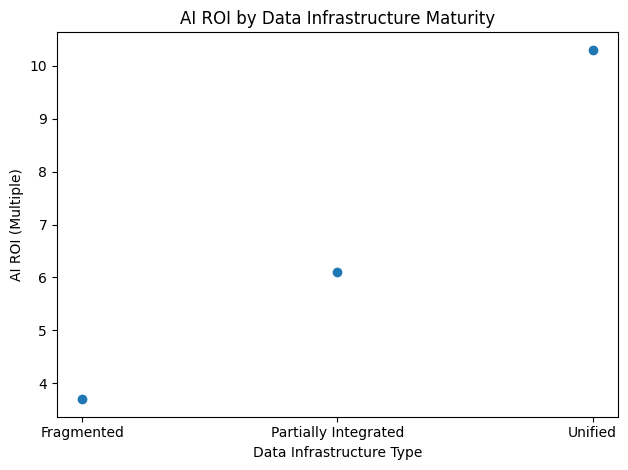
On average, organizations report generating approximately 3.70 dollars in value for every dollar invested in generative AI technologies. However, a smaller group of high-performing organizations, often referred to as AI Leaders, have achieved dramatically higher returns.
These leading organizations generate an average return of 10.30 dollars for every dollar invested in artificial intelligence. Their success stems from their ability to rapidly deploy AI solutions across multiple departments, integrate data systems, and operationalize insights across the organization.
Table: Return on Investment for Artificial Intelligence
| Organizational Category | Average ROI per Dollar Invested | Deployment Speed | Integration Level |
|---|---|---|---|
| AI Leaders | 10.30 Dollars | Under 3 Months | Enterprise-wide implementation |
| Scaled AI Organizations | 5.80 Dollars | 4 to 6 Months | Cross-functional integration |
| Pilot-Stage Companies | 3.70 Dollars | Over 6 Months | Limited departmental experiments |
The ability to rapidly deploy AI solutions and integrate them into existing workflows has become one of the most important competitive advantages in the modern digital marketing landscape.
Industry-Level Adoption of Artificial Intelligence
Different industries adopt AI technologies for different strategic objectives depending on their operational priorities and customer engagement models.
Table: AI Adoption by Industry Sector
| Industry Sector | AI Adoption Rate | Average ROI per Dollar Invested | Primary Strategic Objective |
|---|---|---|---|
| Healthcare | 90 Percent | 3.50 Dollars | Patient engagement and diagnostics |
| Technology | 85 Percent | 3.70 Dollars | Scalable content production |
| Financial Services | 82 Percent | 4.20 Dollars | Predictive personalization |
| Retail | 75 Percent | 3.70 Dollars | Conversational commerce |
| Media and Telecom | Not Available | 3.90 Dollars | Subscriber retention and engagement |
These variations illustrate how AI technologies adapt to industry-specific business models, customer behaviors, and regulatory environments.
Productivity Gains and the Economic Impact of AI
One of the most measurable effects of artificial intelligence integration is the dramatic improvement in workforce productivity. Marketing professionals who actively utilize AI-powered tools report saving an average of 13 hours per week due to automation of repetitive tasks such as content drafting, campaign analysis, audience segmentation, and performance reporting.
When extrapolated across global industries, these efficiency gains are estimated to contribute approximately 4.4 trillion dollars in additional productivity to the global economy.
Table: Productivity Improvements from AI Integration
| Marketing Task Category | Average Time Reduction per Week | Operational Benefit |
|---|---|---|
| Campaign Reporting | 4 Hours | Automated dashboards and analytics |
| Content Drafting and Editing | 3 Hours | AI-assisted content generation |
| Audience Segmentation | 2 Hours | Automated data modeling |
| Campaign Optimization | 2 Hours | Real-time algorithmic adjustments |
| Market Research | 2 Hours | AI-powered data analysis |
These improvements allow marketing teams to focus more heavily on strategic initiatives such as brand storytelling, long-term growth planning, and creative innovation.
The Emerging Challenge of Creative Homogenization
While artificial intelligence delivers significant productivity benefits, it also introduces new challenges for brand differentiation. As AI-generated content becomes widely accessible, a growing number of marketers have expressed concerns about the potential for creative homogenization.
Surveys indicate that three out of four marketing professionals worry that AI-generated creative content may cause brands to appear indistinguishable from one another. Furthermore, approximately 86 percent of marketers report encountering AI-generated content that closely resembles messaging used by competitors.
This phenomenon occurs because many AI systems are trained on similar datasets, leading to outputs that follow predictable patterns, stylistic conventions, and marketing language.
Table: Creative Risks Associated with AI-Generated Marketing
| Creative Risk Factor | Observed Impact on Marketing Strategy |
|---|---|
| Content Similarity | Reduced brand differentiation |
| Repetitive Messaging Patterns | Lower audience engagement |
| Overreliance on Automation | Loss of human storytelling authenticity |
| Algorithmic Bias | Limited creative diversity |
As a result, the strategic focus of digital marketing in 2026 is shifting away from purely maximizing content volume. Instead, organizations are emphasizing the creation of distinctive, brand-authentic narratives that combine the efficiency of artificial intelligence with the originality and emotional intelligence of human creativity.
The Future Role of AI in Creative Marketing
In the emerging marketing paradigm, artificial intelligence functions best as a collaborative partner rather than a replacement for human creativity. Successful organizations leverage AI technologies to handle analytical tasks, automate repetitive workflows, and provide strategic insights, while human marketers remain responsible for brand storytelling, emotional resonance, and creative direction.
This hybrid approach enables organizations to achieve both operational efficiency and creative differentiation, positioning them for sustained competitive advantage in an increasingly automated digital marketing landscape.
3. Search Evolution: Generative Engine Optimization (GEO)
The landscape of online search has entered a new phase in which traditional search engine optimization methodologies are being reshaped by artificial intelligence–driven discovery systems. By 2026, search behavior has shifted significantly as users increasingly rely on conversational AI platforms and generative answer engines to obtain information instantly rather than browsing through lists of websites.
This transformation has led to the emergence of a new strategic discipline known as Generative Engine Optimization, often abbreviated as GEO. Unlike traditional SEO, which focused primarily on improving a website’s ranking position within search engine results pages, GEO emphasizes a brand’s visibility within AI-generated responses produced by intelligent answer engines.
Modern discovery platforms such as conversational assistants, generative search interfaces, and AI-powered research tools now function as intermediaries between information sources and users. These systems synthesize information from multiple sources and deliver summarized responses directly within the interface, often eliminating the need for users to visit the original source websites.
As a result, digital marketers must rethink their approach to content strategy, authority building, and technical optimization to ensure that their brand’s information is referenced, cited, and integrated into AI-generated responses.
The Rapid Expansion of AI-Powered Search Queries
The scale of AI-assisted search activity illustrates the magnitude of this transformation. Conversational AI platforms now process billions of user prompts each day, reflecting a dramatic change in how individuals access knowledge, research products, and evaluate brands.
By 2026, AI-powered conversational systems collectively handle vast volumes of user queries. These systems do not simply return lists of links; they generate synthesized answers derived from structured knowledge, authoritative sources, and contextual relevance.
Simultaneously, traditional search engines have incorporated generative interfaces directly into their platforms. AI-generated summaries increasingly appear at the top of search results, offering concise explanations that answer user queries without requiring users to click through to external websites.
This phenomenon has led to the rise of what analysts describe as zero-click search environments, where users obtain the information they need directly from AI-generated responses.
Table: Growth of AI-Powered Search Activity
| Search Environment | Estimated Daily Queries (2026) | Primary User Behavior |
|---|---|---|
| Conversational AI Platforms | 2.5 Billion Prompts | Direct question-based discovery |
| Traditional Search Engines | Over 8 Billion Searches | Hybrid search with AI-generated summaries |
| AI-Powered Research Assistants | 900 Million Queries | Long-form informational exploration |
| Voice and Smart Assistant Queries | 600 Million Interactions | Conversational and voice-driven discovery |
The integration of generative responses into mainstream search platforms is expected to significantly reshape the economics of web traffic. Industry forecasts indicate that traditional organic search traffic could decline by as much as 50 percent by 2028 as users increasingly receive direct answers without leaving search interfaces.
From Keyword Optimization to Knowledge Visibility
Historically, SEO strategies revolved around identifying high-value keywords, optimizing on-page elements, and acquiring backlinks to improve ranking signals. While these techniques still play a role in search visibility, they are no longer sufficient in the era of generative search systems.
Generative Engine Optimization focuses on ensuring that brand information is structured, authoritative, and easily interpretable by artificial intelligence systems. Instead of optimizing solely for search algorithms that rank pages, GEO strategies aim to position a brand as a credible source that AI systems choose to reference when generating answers.
In this environment, search visibility depends heavily on three core factors: brand authority, factual clarity, and structured data accessibility.
Table: Evolution from Traditional SEO to Generative Engine Optimization
| Optimization Dimension | Traditional SEO Focus | GEO Focus in 2026 | Strategic Outcome |
|---|---|---|---|
| Primary Objective | Ranking in search engine results | Citation within AI-generated responses | Increased brand exposure in AI answers |
| Content Strategy | Keyword optimization | High factual density and intent clarity | Improved knowledge extraction by AI |
| Authority Signals | Backlinks and domain authority | Structured knowledge graphs and schema | Higher likelihood of AI citations |
| Performance Measurement | Organic website sessions | AI chatbot mention share | Greater influence in generative search |
| User Interaction Model | Click-based browsing | Zero-click answer consumption | Increased informational visibility |
This shift fundamentally changes how digital marketers measure success. Instead of focusing solely on website visits, marketers must track how frequently their brand appears within AI-generated responses, summaries, and conversational outputs.
Brand Voice and Citation Depth as Ranking Signals
In the generative search ecosystem, two emerging ranking signals have gained particular importance: brand voice and citation depth.
Brand voice refers to the consistency, clarity, and authority of a brand’s published content. AI systems increasingly favor sources that demonstrate expertise, provide original insights, and maintain consistent thematic authority across multiple content assets.
Citation depth refers to how frequently a brand’s information is referenced across the broader digital ecosystem. AI systems analyze a network of mentions, references, structured datasets, and contextual relationships when determining which sources to cite.
Research analyzing generative search patterns reveals that the correlation between AI chatbot mentions and brand search volume is approximately 0.334. This figure is notably stronger than the traditional correlation between referring domains and organic search rankings.
Table: Emerging Authority Signals in AI Search
| Authority Indicator | Description | Influence on AI Visibility |
|---|---|---|
| Brand Voice Consistency | Cohesive messaging across all content channels | Enhances trust and recognizability |
| Citation Depth | Frequency of references across credible sources | Improves likelihood of AI inclusion |
| Knowledge Graph Presence | Structured representation of brand entities | Strengthens AI comprehension |
| Content Originality | Unique research or proprietary insights | Increases source authority |
| Topical Authority | Extensive coverage of a subject area | Positions brand as subject expert |
For marketers, this means that producing large volumes of optimized but generic content is no longer an effective strategy. AI systems increasingly filter out repetitive or low-value information in favor of sources that provide unique expertise and structured knowledge.
The Importance of AI-Readable Content Architecture
To ensure visibility within generative search systems, content must be optimized for machine readability. AI-powered engines rely heavily on structured signals to interpret information accurately and extract relevant insights.
AI-readable content typically includes clear hierarchical headings, concise factual explanations, structured lists, and semantic relationships between concepts. Content that is organized logically and supported by structured metadata is far easier for AI systems to analyze and reference.
Table: Characteristics of AI-Readable Content
| Content Attribute | Description | Benefit for Generative Search |
|---|---|---|
| Structured Headings | Logical hierarchy of topics and subtopics | Improves contextual understanding |
| Concise Information Blocks | Clear factual statements and definitions | Enables accurate answer generation |
| Semantic Topic Coverage | Comprehensive treatment of related concepts | Strengthens topical authority |
| Entity-Based Writing | Explicit references to people, organizations, products | Supports knowledge graph integration |
| Structured Data Markup | Machine-readable metadata describing content elements | Facilitates AI extraction and citation |
Marketers who structure their content for machine readability significantly increase the probability that AI models will interpret their content accurately and include it within generated responses.
Structured Data as the Foundation of Generative Visibility
One of the most critical technical components of Generative Engine Optimization is the implementation of structured data. Structured data provides explicit machine-readable descriptions of a webpage’s content, allowing search systems and AI agents to understand entities, relationships, and contextual meaning.
In the era of generative search, structured data is no longer considered optional. Instead, it functions as a foundational infrastructure that allows AI systems to interpret and verify brand information.
Structured metadata enables AI systems to identify key elements such as a company’s leadership, product catalog, geographic presence, brand logo, pricing models, and customer offerings.
Table: Key Structured Data Elements for GEO
| Structured Data Element | Information Represented | Strategic Value for AI Systems |
|---|---|---|
| Organization Schema | Brand identity and corporate structure | Establishes entity recognition |
| Product Schema | Product descriptions and specifications | Enables commerce-related AI responses |
| Review and Rating Schema | Customer feedback and credibility signals | Improves trust indicators |
| Article Schema | Author attribution and publication context | Enhances source reliability |
| FAQ and How-To Schema | Structured instructional content | Facilitates direct answer extraction |
Empirical research indicates that pages implementing comprehensive structured data frameworks often achieve visibility within generative answer systems significantly faster than pages lacking such infrastructure. In many cases, AI-generated search summaries begin referencing structured pages within weeks, whereas unstructured content may take months to achieve comparable visibility.
Strategic Implications for Digital Marketing in the Generative Search Era
The evolution from traditional search optimization toward generative discovery systems represents one of the most significant transformations in digital marketing since the emergence of search engines themselves.
The modern marketing environment is increasingly characterized by AI-mediated information discovery, where conversational interfaces act as interpreters between brands and consumers. Success in this environment requires a new strategic mindset that integrates content authority, technical data architecture, and brand narrative consistency.
Table: Strategic GEO Implementation Framework
| Strategic Pillar | Core Action for Marketers | Expected Impact |
|---|---|---|
| Knowledge Authority | Produce research-driven, expert-level content | Increased AI citation frequency |
| Structured Data Infrastructure | Implement comprehensive schema markup | Faster AI comprehension and indexing |
| Brand Entity Optimization | Establish consistent brand identity signals | Stronger presence in knowledge graphs |
| Content Architecture | Design AI-readable informational structures | Higher inclusion in generated responses |
| Cross-Platform Mentions | Build citations across authoritative platforms | Improved citation depth and trust signals |
In this evolving landscape, Generative Engine Optimization is becoming an essential component of modern digital marketing strategy. Organizations that adapt their content ecosystems, technical infrastructure, and brand authority strategies to align with AI-driven discovery systems will be best positioned to maintain visibility and influence within the next generation of digital search.
4. Social Commerce and the Immersive Transactional Environment
Digital commerce in 2026 is undergoing a structural transformation as social platforms evolve from simple communication channels into full-scale transactional ecosystems. What once functioned primarily as a discovery layer for brands has now matured into a sophisticated retail infrastructure that integrates entertainment, community engagement, and instant purchasing capabilities. This convergence has given rise to social commerce as one of the most influential pillars of global digital retail.
Social commerce refers to the integration of product discovery, consumer engagement, and purchasing directly within social media platforms. Unlike traditional e-commerce, where consumers typically navigate multiple websites before completing a transaction, social commerce enables a seamless consumer journey that moves directly from content consumption to purchase within a single digital environment.
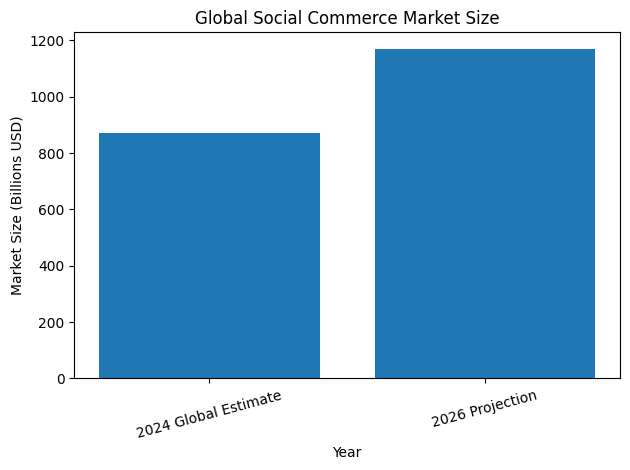
By 2026, global social commerce sales are projected to surpass 1.17 trillion dollars, reflecting the growing influence of social platforms as commercial marketplaces. This rapid expansion illustrates a broader shift in consumer behavior, where product discovery increasingly occurs through social interactions, influencer recommendations, and immersive digital experiences rather than traditional search-based browsing.
Global Expansion of the Social Commerce Economy
The growth of social commerce is strongly influenced by regional market dynamics. The Asia-Pacific region remains the dominant force in this sector, accounting for approximately 90 percent of global social commerce sales. Countries within this region have pioneered integrated digital ecosystems where social networking, digital payments, and online retail coexist within unified platforms.
Western markets, however, are rapidly accelerating their adoption of social commerce models. In the United States, social commerce sales are expected to exceed 100 billion dollars by 2026. This figure represents approximately 7.2 percent of total e-commerce activity in the country, marking a significant increase from 6 percent in 2024.
The growth trajectory of social commerce highlights how social platforms are evolving into full-service digital marketplaces, allowing brands to reach consumers directly within the environments where they spend the majority of their online time.
Table: Global Social Commerce Market Growth
| Market Indicator | 2024 Value | 2026 Projection | Strategic Implication |
|---|---|---|---|
| Global Social Commerce Sales | 870 Billion | 1.17 Trillion | Rapid integration of social and retail ecosystems |
| Asia-Pacific Market Share | 88 Percent | 90 Percent | Regional dominance in social retail innovation |
| United States Social Commerce | 75 Billion | Over 100 Billion | Rapid Western adoption of social shopping |
| Share of U.S. E-Commerce | 6 Percent | 7.2 Percent | Growing consumer reliance on social platforms |
These figures demonstrate how social media platforms are becoming central infrastructure within the broader digital commerce economy.
The Emergence of Frictionless Consumer Journeys
One of the defining characteristics of social commerce is the elimination of friction within the purchasing journey. In traditional online shopping environments, consumers often move between multiple platforms, websites, and checkout systems before completing a transaction.
Social commerce platforms streamline this process by integrating product discovery, product education, payment processing, and fulfillment tracking into a single environment. Consumers can move directly from viewing a shoppable video to completing an in-app purchase within seconds.
Short-form video platforms, visual content feeds, and interactive product showcases now function as both entertainment channels and digital storefronts. As a result, the boundaries between content consumption and shopping behavior have effectively disappeared.
Table: Consumer Journey in Social Commerce
| Stage of Consumer Interaction | Traditional E-Commerce Model | Social Commerce Model |
|---|---|---|
| Product Discovery | Search engines or external advertisements | Influencer content and social media feeds |
| Product Evaluation | Retail website browsing | Interactive videos and user-generated reviews |
| Purchase Decision | Redirect to e-commerce checkout page | Integrated in-app purchase button |
| Transaction Completion | External payment gateway | Native platform checkout |
| Post-Purchase Engagement | Email notifications and order tracking | Social notifications and community feedback |
This frictionless transaction flow significantly improves conversion rates by reducing the number of steps required to complete a purchase.
Platform Dominance in the Social Commerce Ecosystem
Several major social platforms have emerged as dominant players within the global social commerce environment. These platforms combine massive user bases with sophisticated recommendation algorithms that personalize product discovery based on user behavior, preferences, and engagement patterns.
Instagram has become one of the most influential platforms for social shopping globally. Approximately 1.4 billion users engage with Instagram as part of their online shopping activities. Among these users, roughly 44 percent report making purchases through the platform on a weekly basis.
TikTok has also emerged as a powerful driver of social commerce growth. Its short-form video ecosystem allows creators and brands to demonstrate products through engaging visual storytelling, often resulting in rapid viral purchasing trends.
Facebook continues to maintain relevance within social commerce by targeting older demographics, while Pinterest remains particularly influential in lifestyle, design, and home improvement product categories.
Table: Major Social Commerce Platforms and User Behavior
| Platform | Shopper Count (U.S. or Global) | Weekly Shopping Rate | Primary Demographic Audience |
|---|---|---|---|
| 80 Million (U.S.) | 2.4 Percent | Baby Boomers and Millennials | |
| 1.4 Billion (Global) | 44 Percent | Millennials and Generation Z | |
| TikTok | Not Publicly Disclosed | 5.6 Percent | Generation Z and Generation Alpha |
| Not Publicly Disclosed | 4.3 Percent | Lifestyle and home design audiences |
The success of these platforms is driven by their ability to merge entertainment content with purchasing opportunities in ways that feel natural rather than intrusive to the user experience.
The Role of Augmented Reality in Immersive Retail
Immersive technologies are becoming increasingly central to the effectiveness of social commerce strategies. Augmented Reality, commonly referred to as AR, allows consumers to visualize products within their own environment or on their own bodies before making a purchase.
By 2026, the global number of AR users is expected to reach approximately 1.1 billion. This technology is particularly valuable for product categories where physical interaction traditionally played a critical role in the purchasing decision, such as beauty products, eyewear, furniture, and home décor.
AR-powered experiences enable users to virtually try on clothing, preview furniture within their living spaces, or experiment with cosmetic products using their smartphone cameras.
Table: Impact of Augmented Reality on Retail Performance
| AR Performance Metric | Measured Impact |
|---|---|
| Increase in Engagement Time | Four times longer than standard mobile video |
| Reduction in Product Return Rates | Over 20 percent reduction |
| Conversion Rate Improvement | Up to 94 percent in certain product categories |
| Consumer Willingness to Pay Premium | 40 percent willing to pay more after AR trial |
These improvements occur because augmented reality reduces consumer uncertainty during the purchasing process. By enabling visual product testing, AR helps shoppers develop greater confidence in their purchasing decisions.
Strategic Advantages of Immersive Commerce Experiences
The integration of immersive technology into social commerce environments provides several strategic advantages for both retailers and consumers. Brands can create interactive product demonstrations that allow consumers to explore features in ways that static images or text descriptions cannot replicate.
Immersive experiences also significantly increase the amount of time users spend interacting with branded content. Longer engagement periods improve brand recall, strengthen emotional connections with products, and increase the likelihood of purchase.
Table: Strategic Benefits of Immersive Commerce
| Strategic Benefit | Business Impact |
|---|---|
| Increased Consumer Confidence | Lower product return rates |
| Higher Engagement Levels | Extended interaction with brand content |
| Improved Conversion Rates | More efficient purchase decision-making |
| Stronger Brand Differentiation | Memorable interactive product experiences |
| Enhanced Customer Satisfaction | Better alignment between expectations and purchases |
As immersive technologies continue to improve, the distinction between digital shopping and physical retail experiences is expected to diminish further.
Future Outlook for Social Commerce
The future of social commerce will likely be shaped by deeper integration between artificial intelligence, immersive technologies, and social community dynamics. AI-powered recommendation systems will increasingly personalize shopping feeds, while augmented reality and mixed reality technologies will make digital product exploration more realistic.
Social platforms are also expected to expand their financial infrastructure by integrating digital wallets, installment payment systems, and creator-led affiliate marketplaces. These developments will further strengthen the role of social media platforms as fully integrated retail ecosystems.
Table: Emerging Trends in Social Commerce
| Emerging Trend | Description | Expected Impact on Retail |
|---|---|---|
| AI-Powered Product Discovery | Personalized recommendations based on behavior patterns | Higher purchase relevance and engagement |
| Creator-Led Commerce | Influencers operating as micro-retailers | Increased trust-driven purchasing |
| Immersive AR Shopping | Virtual product interaction before purchase | Higher consumer confidence and conversions |
| Integrated Payment Ecosystems | Native digital wallets and frictionless checkout systems | Faster transaction completion |
| Community-Driven Shopping | Social validation through reviews and shared experiences | Stronger brand loyalty and advocacy |
In the evolving digital economy, social commerce represents more than a new sales channel. It signifies a fundamental redefinition of the consumer purchasing journey, where entertainment, community engagement, and immersive technology converge to create a dynamic and highly interactive retail environment. Organizations that embrace these developments will be better positioned to compete within the next generation of global digital commerce.
5. The Influencer Economy: Micro-Creators and the Trust Mandate
The influencer marketing sector in 2026 has evolved into one of the most influential components of digital marketing strategy. As social platforms continue to dominate consumer attention, brands increasingly rely on creators to bridge the gap between advertising and authentic storytelling. Unlike traditional advertising, influencer marketing operates through trusted individuals who have cultivated dedicated audiences around shared interests, values, and expertise.
By 2026, the global influencer marketing industry is valued at approximately 32.55 billion dollars. This rapid growth reflects a fundamental change in how consumers interact with brands. Rather than responding primarily to direct advertising messages, consumers increasingly trust recommendations delivered by individuals they follow online.
The strategic objective of influencer marketing has also evolved. Earlier campaigns prioritized reach and audience size, often focusing on celebrities or large-scale influencers with millions of followers. In contrast, modern influencer strategies emphasize relatability, authenticity, and community trust.
Economic Growth of the Influencer Marketing Industry
The financial performance of influencer marketing demonstrates its value as a highly efficient advertising channel. On average, organizations generate approximately 5.78 dollars in return for every dollar invested in influencer campaigns.
However, performance varies widely depending on how influencer partnerships are structured. Brands that strategically collaborate with smaller creators often achieve significantly higher returns. In some cases, top-performing campaigns report returns as high as 18 dollars for every dollar spent.
Table: Economic Performance of Influencer Marketing
| Influencer Marketing Metric | 2024 Estimate | 2026 Projection | Strategic Interpretation |
|---|---|---|---|
| Global Influencer Marketing Market | 24 Billion | 32.55 Billion | Rapid expansion of creator-driven advertising |
| Average ROI Across Campaigns | 4.87 Dollars | 5.78 Dollars | Strong cost efficiency compared to display ads |
| Top-Performing Campaign ROI | 12 Dollars | 18 Dollars | Achieved through micro-creator partnerships |
| Brand Adoption of Influencer Marketing | 65 Percent | 78 Percent | Growing reliance on creator ecosystems |
These financial outcomes highlight why influencer marketing has become an essential component of modern digital marketing strategies.
The Shift from Celebrity Reach to Creator Relatability
One of the most significant structural changes within the influencer economy is the shift away from celebrity-based endorsements toward collaborations with micro-creators and nano-creators. These smaller influencers often maintain stronger personal relationships with their audiences, leading to higher engagement rates and more persuasive product recommendations.
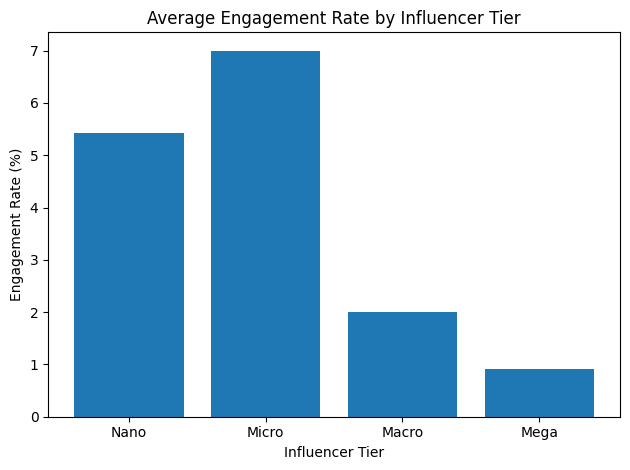
Micro-creators typically maintain follower counts between 10,000 and 100,000, while nano-creators operate within smaller communities of 1,000 to 10,000 followers. Despite their smaller audiences, these creators consistently outperform larger influencers in terms of audience interaction, trust, and conversion rates.
The following table illustrates the engagement patterns across different tiers of influencers.
Table: Influencer Tier Performance Comparison
| Influencer Tier | Follower Range | Typical Engagement Rate | Cost Per Engagement (CPE) | Strategic Value for Brands |
|---|---|---|---|---|
| Nano-Influencer | 1,000 – 10,000 | 2.53 Percent – 5.43 Percent | Low / Variable | Highly niche community influence |
| Micro-Influencer | 10,000 – 100,000 | 3.86 Percent – 7.00 Percent | 0.20 Dollars | Strong engagement and cost efficiency |
| Mid-Tier Influencer | 100,000 – 500,000 | Moderate | Variable | Balanced reach and audience trust |
| Macro-Influencer | 500,000 – 1 Million | 1.20 Percent – 2.00 Percent | 0.33 Dollars | Broad awareness campaigns |
| Mega-Influencer | Over 1 Million | 0.68 Percent – 0.92 Percent | High | Mass visibility but lower engagement |
These engagement patterns demonstrate why brands are increasingly prioritizing smaller creators who maintain close relationships with their audiences.
The Engagement Advantage of Micro-Creators
Micro-influencers consistently achieve higher engagement rates compared to their macro or mega counterparts. Engagement metrics measure how actively an audience interacts with content through actions such as likes, comments, shares, and clicks.
While mega-influencers may offer greater reach, their audiences tend to be more passive and less personally connected to the creator. In contrast, micro-creators often cultivate tightly knit communities where followers actively participate in conversations and trust the creator’s recommendations.
Table: Engagement Comparison by Influencer Size
| Influencer Category | Average Engagement Rate | Audience Relationship Type |
|---|---|---|
| Nano-Creators | 2.5 Percent – 5.4 Percent | Highly personal and community-driven |
| Micro-Creators | 7 Percent – 20 Percent | Strong trust and interaction levels |
| Macro-Creators | 1 Percent – 3 Percent | Moderately engaged mass audience |
| Mega-Creators | Below 1 Percent | Broad but less interactive reach |
Higher engagement levels translate directly into more effective marketing outcomes. When followers feel a personal connection with a creator, they are more likely to trust product recommendations and take action.
Consumer Trust as the Core Driver of Influencer Marketing
The shift toward smaller creators is primarily driven by consumer trust dynamics. Research consistently shows that audiences perceive influencer recommendations as more authentic than traditional brand messaging.
Approximately 69 percent of consumers report trusting influencer recommendations more than direct advertising messages from brands. This trust factor plays a critical role in shaping purchasing behavior, particularly among younger consumer demographics.
Furthermore, about 60 percent of consumers indicate that they are likely to make a purchase based on a recommendation from a creator they follow. In contrast, traditional celebrity endorsements influence only about 3 percent of purchase decisions.
Table: Consumer Trust in Marketing Channels
| Marketing Channel | Consumer Trust Level | Purchase Influence Rate |
|---|---|---|
| Influencer Recommendations | 69 Percent | 60 Percent |
| User-Generated Reviews | 64 Percent | 52 Percent |
| Brand Advertising Campaigns | 32 Percent | 18 Percent |
| Celebrity Endorsements | 21 Percent | 3 Percent |
These statistics highlight the increasing importance of trust-based marketing strategies in the digital economy.
Cost Efficiency and Performance Metrics
Another reason for the growing popularity of micro-influencer partnerships is their cost efficiency. Smaller creators typically charge lower fees while delivering stronger engagement rates, making them highly attractive for brands seeking measurable returns on marketing investments.
The cost-per-engagement metric is particularly useful for evaluating influencer campaign performance. Micro-creators typically generate engagement at approximately 0.20 dollars per interaction, compared to approximately 0.33 dollars for macro influencers.
Table: Influencer Cost Efficiency Analysis
| Influencer Category | Average Campaign Cost | Engagement Efficiency | Cost Per Engagement |
|---|---|---|---|
| Nano-Creators | Low | High | Low |
| Micro-Creators | Moderate | Very High | 0.20 Dollars |
| Mid-Tier Creators | Moderate to High | Moderate | Variable |
| Macro-Creators | High | Lower | 0.33 Dollars |
| Mega-Creators | Very High | Low | Highest |
Brands increasingly recognize that engagement-driven metrics often produce stronger marketing outcomes than reach-based metrics alone.
Hybrid Compensation Models and Performance Accountability
As influencer marketing becomes more sophisticated, brands are adopting new compensation models designed to align creator incentives with measurable performance outcomes. Instead of paying fixed sponsorship fees alone, many organizations now implement hybrid compensation structures that combine base payments with performance-based rewards.
These models often include commission structures tied to sales conversions, affiliate links, unique discount codes, or revenue-sharing agreements. This approach ensures that creators remain motivated to produce authentic and high-performing content while also protecting brand marketing budgets.
Table: Influencer Compensation Models
| Compensation Model | Description | Strategic Advantage |
|---|---|---|
| Flat Fee Sponsorship | Fixed payment for content creation | Simple campaign execution |
| Affiliate Commission | Payment based on product sales generated | Direct performance accountability |
| Hybrid Compensation | Base payment combined with performance bonuses | Balanced risk and reward structure |
| Revenue Sharing | Percentage of product revenue shared with creator | Long-term partnership incentives |
| Product Seeding | Free products provided in exchange for exposure | Cost-effective for emerging brands |
These compensation structures help create stronger partnerships between brands and creators while ensuring that influencer campaigns produce measurable business outcomes.
Strategic Implications for Modern Digital Marketing
The maturation of the influencer economy reflects a broader shift in digital marketing toward authenticity, trust, and community engagement. Instead of relying solely on large-scale advertising campaigns, brands increasingly build relationships with creators who can communicate product value in relatable and credible ways.
Table: Strategic Benefits of Micro-Creator Marketing
| Strategic Benefit | Marketing Outcome |
|---|---|
| Higher Audience Trust | Increased purchase intent |
| Greater Engagement Rates | Stronger content interaction |
| Lower Campaign Costs | Improved marketing return on investment |
| Niche Audience Targeting | More precise market segmentation |
| Authentic Brand Storytelling | Deeper emotional connection with consumers |
In the evolving digital marketing landscape, the influencer economy represents a powerful mechanism for building trust-based relationships between brands and consumers. Organizations that prioritize authentic creator partnerships, performance-driven compensation structures, and community-driven storytelling will be best positioned to succeed within the next generation of digital marketing ecosystems.
6. Video Content Strategy: The “Hook and Closer” Framework
Video content has become the most dominant form of digital media consumption in 2026, shaping how brands communicate, educate, and convert audiences across digital platforms. With audiences increasingly favoring visual storytelling over text-heavy content, video now accounts for approximately 82.5 percent of all global internet traffic. This transformation has forced marketers to redesign their content strategies to align with changing viewer behaviors and attention patterns.
Modern video marketing strategies revolve around a biomodal production model often described as the “Hook and Closer” framework. This framework separates video content into two complementary formats designed to perform different functions within the consumer decision journey.
Short-form videos serve as the “hook,” capturing audience attention quickly through engaging, visually dynamic content. Long-form videos function as the “closer,” delivering deeper product explanations, storytelling, or educational content that supports high-consideration purchasing decisions.
Together, these two formats create a comprehensive video marketing ecosystem that balances mass reach with deeper audience engagement.
The Dominance of Video in Digital Media Consumption
The growth of video consumption reflects fundamental changes in how people interact with digital platforms. Mobile devices, social media feeds, and streaming services have normalized continuous video viewing as a primary form of entertainment and information discovery.
Consumers increasingly prefer visual formats that allow them to absorb information quickly without extensive reading. As a result, video content now dominates social feeds, search results, and brand communication channels.
Table: Global Video Consumption Trends
| Video Consumption Metric | 2024 Estimate | 2026 Projection | Strategic Implication |
|---|---|---|---|
| Share of Global Internet Traffic | 79 Percent | 82.5 Percent | Video becomes the dominant digital communication format |
| Daily Short-Form Video Views | 55 Billion | 70 Billion | Massive demand for short video content |
| Consumer Preference for Brand Video | 72 Percent | 81 Percent | Brands must prioritize video-first strategies |
| Mobile Video Consumption Share | 68 Percent | 75 Percent | Mobile devices drive video engagement |
These consumption trends demonstrate why video has become the central pillar of modern digital marketing strategies.
The Biomodal Video Production Model
The biomodal approach to video marketing separates content into two strategic categories based on their role in the customer journey. Rather than attempting to create a single video format that satisfies all objectives, marketers deploy different video lengths and styles to achieve specific outcomes.
Short-form videos focus on rapid engagement and discovery. They are typically under 60 seconds in length and designed to capture attention within the first few seconds through compelling visuals, storytelling hooks, or emotionally resonant messaging.
Long-form videos, by contrast, provide detailed information and deeper brand narratives. These videos often exceed 60 minutes and are particularly effective for audiences evaluating complex products or services.
Table: The Hook and Closer Video Framework
| Video Strategy Component | Video Length | Strategic Purpose | Audience Behavior Outcome |
|---|---|---|---|
| Hook Content | Under 60 Seconds | Capture attention and generate curiosity | Increased engagement and discovery |
| Closer Content | Over 60 Minutes | Provide in-depth product education | Higher purchase confidence |
| Supporting Content | 5 to 15 Minutes | Offer product explanations and tutorials | Strengthened brand authority |
This structured approach allows brands to move audiences from initial awareness to purchase readiness through a sequence of strategically designed video experiences.
Performance Metrics of Short-Form Video Content
Short-form videos have emerged as the most effective format for generating rapid audience engagement. Their concise format aligns with modern viewing habits, where users often scroll through large volumes of content within short periods of time.
Research shows that approximately 59 percent of viewers watch more than half of a short-form video’s duration. This retention rate significantly exceeds the engagement levels typically observed in longer video formats.
Short-form video advertising also demonstrates strong performance across key marketing metrics, including click-through rates and conversion rates.
Table: Short-Form Video Performance Indicators
| Performance Metric | Short-Form Video Impact |
|---|---|
| Viewer Retention Rate | 59 Percent watch over half the video |
| Click-Through Rate vs Static Ads | 150 Percent higher |
| Conversion Rate vs Long Video Ads | 20 Percent higher |
| Shareability Factor | 12 times more shares for user-generated content |
These advantages explain why short-form videos have become the preferred content format for social media platforms and mobile-first audiences.
The Role of Long-Form Video as the Conversion Driver
While short-form videos excel at capturing attention, long-form content plays a critical role in driving purchasing decisions for products that require greater consumer consideration.
Long-form videos allow brands to provide detailed product demonstrations, case studies, expert insights, and educational content that builds trust with potential buyers. Although these videos generally produce lower engagement rates compared to short-form content, they often generate higher-value conversions.
Long-form content is particularly effective for industries where consumers must evaluate product features, compare alternatives, or understand complex service offerings before making a purchase.
Table: Long-Form Video Marketing Benefits
| Strategic Advantage | Marketing Outcome |
|---|---|
| Detailed Product Explanation | Improved consumer understanding |
| Extended Storytelling | Stronger emotional connection with brand |
| Authority Building | Enhanced brand credibility |
| High-Intent Audience Targeting | Increased likelihood of premium purchases |
Even with engagement rates averaging approximately 17 percent, long-form videos remain a powerful tool for closing high-value transactions.
Comparative Performance of Video Formats
When evaluating video marketing strategies, it is essential to understand how different formats contribute to overall campaign performance.
Table: Short-Form vs Long-Form Video Comparison
| Video Performance Metric | Short-Form Video (Under 60s) | Long-Form Video (Over 60m) | Business Impact |
|---|---|---|---|
| Engagement Rate | 2.11 Percent | 1.74 Percent | 2.5 times higher engagement lift |
| Click-Through Rate | 150 Percent higher than static ads | Not Applicable | Improved brand recall and traffic generation |
| Conversion Behavior | High volume conversions | High value conversions | Balanced sales funnel |
| Shareability | 12 times higher for user-generated content | Low | Strong organic distribution |
These performance patterns demonstrate how combining both formats allows marketers to build a complete funnel from awareness to purchase.
The Rise of Silent Video Advertising
Another major trend in video marketing is the increasing prevalence of silent video consumption. As mobile viewing continues to dominate digital media usage, many users watch videos in environments where audio is unavailable or inconvenient.
Studies indicate that approximately 78 percent of consumers who are close to making a purchase prefer advertisements that can be understood without sound. This preference has led to the emergence of “silent ads,” a visual-first video strategy that relies on captions, animations, and graphic storytelling.
Table: Silent Video Consumption Behavior
| Viewer Behavior Indicator | Observed Percentage | Strategic Implication |
|---|---|---|
| Consumers Preferring Sound-Off Ads | 78 Percent | Visual storytelling becomes essential |
| Mobile Video Viewed Without Sound | 65 Percent | Captions and subtitles improve retention |
| Increase in Engagement with Captioned Videos | 40 Percent | Higher accessibility and comprehension |
For marketers, this trend emphasizes the importance of designing video content that communicates clearly through visuals alone.
Live Streaming and Real-Time Commerce
Live streaming has emerged as another powerful video-based marketing channel, particularly within social commerce ecosystems. Live-streamed events allow brands to interact with audiences in real time, demonstrating products, answering questions, and creating interactive purchasing experiences.
Live commerce combines entertainment, product education, and limited-time promotions within a single format, encouraging immediate purchasing behavior.
Table: Live Streaming Marketing Performance
| Performance Indicator | Impact of Live Streaming |
|---|---|
| Average Marketing ROI | 15.53 Percent |
| Audience Engagement Level | High real-time interaction |
| Conversion Behavior | Immediate purchase decisions |
| Community Building Effect | Strong viewer loyalty and repeat engagement |
These live experiences create a sense of urgency and authenticity that traditional pre-recorded advertisements often struggle to replicate.
Strategic Implications for Video Marketing in 2026
The rapid expansion of video consumption has reshaped the entire digital marketing landscape. Organizations that prioritize video-first strategies gain a significant advantage in attracting attention, building trust, and driving conversions.
Table: Strategic Video Marketing Framework
| Strategic Pillar | Implementation Strategy | Expected Business Outcome |
|---|---|---|
| Short-Form Discovery Content | Produce high-frequency short videos | Increased brand visibility |
| Long-Form Educational Content | Develop detailed product or industry insights | Higher purchase confidence |
| Silent Video Optimization | Use captions and visual storytelling | Improved mobile engagement |
| Live Commerce Integration | Host interactive product demonstrations | Real-time sales conversions |
| User-Generated Video Campaigns | Encourage audience participation | Increased social sharing and authenticity |
The “Hook and Closer” video framework represents a highly effective approach for navigating the modern digital media landscape. By strategically combining short-form attention drivers with long-form educational content, brands can guide audiences through the entire customer journey while maximizing engagement, trust, and revenue generation in the increasingly video-driven internet economy.
7. The Auditory Web: Voice Search and Conversational Intelligence
The digital landscape in 2026 is increasingly influenced by the rise of voice-driven interfaces and conversational technologies. As artificial intelligence, natural language processing, and smart device ecosystems continue to advance, voice search has emerged as a major channel through which users interact with digital information, services, and commerce platforms. This transformation has given rise to what industry analysts describe as the “Auditory Web,” an environment where spoken interaction increasingly replaces traditional keyboard-based input.
Voice-enabled technologies are now embedded in smartphones, smart speakers, wearable devices, connected vehicles, and home automation systems. As a result, consumers are able to access information, perform transactions, and control digital environments through conversational commands rather than manual search queries.
By 2026, voice search has become a core element of digital behavior, influencing everything from local business discovery to product purchasing decisions. The integration of conversational intelligence into everyday devices has fundamentally altered how users search for information and how brands must optimize their digital presence.
Global Expansion of Voice-Enabled Devices
One of the most striking indicators of the growth of voice technology is the rapid proliferation of voice-enabled devices. By 2026, there are more than 8.4 billion voice-enabled devices in operation globally, surpassing the total human population. This figure includes smartphones, smart speakers, digital assistants embedded in appliances, and voice-enabled automotive systems.
The widespread availability of these devices has made voice interaction one of the most convenient methods of accessing digital services. Instead of typing queries or navigating through menus, users can now simply ask a question and receive an immediate spoken response.
Table: Global Voice Technology Infrastructure
| Technology Indicator | 2023 Estimate | 2026 Projection | Strategic Implication |
|---|---|---|---|
| Voice-Enabled Devices Worldwide | 6.4 Billion | 8.4 Billion | Voice becomes a dominant interaction interface |
| Smart Speaker Households | 320 Million | 420 Million | Home environments integrated with AI assistants |
| Smartphone Voice Assistant Usage | 46 Percent | 62 Percent | Mobile devices driving conversational search |
| Automotive Voice Systems | 28 Percent | 41 Percent | Voice interaction expanding into transportation |
This expansion has significantly increased the frequency of voice-based interactions within everyday digital activity.
Voice Search Adoption Across Demographics
Voice search adoption varies across demographic groups, with younger consumers leading the shift toward conversational interfaces. In the United States alone, approximately 157.1 million individuals regularly interact with voice assistants. This figure represents more than half of the country’s population.
Younger adults are particularly comfortable with voice-based technology. Among individuals between the ages of 18 and 34, approximately 77 percent report using voice search on their smartphones. These users often rely on voice commands to perform tasks such as searching for information, navigating directions, setting reminders, and discovering local businesses.
Table: Voice Search Usage by User Segment
| User Segment | Global Usage Rate | U.S. Users (Millions) | Voice Recognition Accuracy |
|---|---|---|---|
| General Population | 20.5 Percent | 157.1 Million | 93.7 Percent |
| Adults Aged 18–34 | 77 Percent | Not Available | 95 Percent |
| Weekly Voice Users | 32 Percent | Not Available | Not Available |
| Retail Intent Searches | 54 Percent | Not Available | Not Available |
The high accuracy rates of modern voice recognition systems have played a significant role in accelerating adoption. Advances in machine learning and speech recognition technology now allow digital assistants to interpret complex conversational queries with remarkable precision.
The Emergence of Voice Commerce
Voice search is no longer limited to informational queries. Increasingly, consumers are using voice assistants to complete commercial transactions, giving rise to the rapidly growing field of voice commerce.
Voice commerce refers to the use of voice commands to search for products, compare options, place orders, and track deliveries. As digital assistants become more sophisticated, they are able to guide users through purchasing decisions in a conversational manner.
Market forecasts indicate that the global voice commerce sector will expand dramatically over the coming years. The industry is projected to grow from approximately 42.75 billion dollars in 2023 to an estimated 186.28 billion dollars by 2030.
Table: Growth of the Voice Commerce Market
| Market Indicator | 2023 Value | 2026 Estimate | 2030 Projection | Strategic Insight |
|---|---|---|---|---|
| Global Voice Commerce Revenue | 42.75 Billion | 92 Billion | 186.28 Billion | Rapid expansion of conversational retail |
| Consumers Using Voice Daily | 24 Percent | 32 Percent | 41 Percent | Voice becoming habitual interaction method |
| Retail Queries via Voice | 37 Percent | 54 Percent | 62 Percent | Increasing consumer purchase intent |
Voice commerce provides a uniquely convenient shopping experience. Users can place orders, check product availability, and receive recommendations without navigating complex interfaces.
Local Search and Voice Discovery
One of the most significant applications of voice search is local discovery. Consumers frequently use voice assistants to locate nearby businesses, restaurants, service providers, and retail locations.
For local businesses, voice search optimization has become a critical component of digital visibility. Approximately 58 percent of consumers report using voice search specifically to find nearby businesses. Additionally, around 76 percent of smart speaker users conduct at least one local voice search each week.
Table: Local Voice Search Behavior
| Consumer Behavior Indicator | Observed Percentage | Business Implication |
|---|---|---|
| Consumers Using Voice for Local Search | 58 Percent | High importance of local SEO optimization |
| Smart Speaker Weekly Local Searches | 76 Percent | Frequent discovery through voice assistants |
| Retail-Intent Voice Queries | 54 Percent | Voice search driving purchase decisions |
These behaviors illustrate why businesses must ensure that their location data, contact information, and operating hours are clearly structured and easily accessible to voice search systems.
Optimizing for the Answer Page
Traditional search engine optimization strategies focused on improving a website’s ranking position within search results pages. Voice search, however, introduces a new paradigm where only a single answer is typically delivered to the user.
Because voice assistants usually read one response aloud rather than presenting multiple options, marketers must optimize their content for what is commonly referred to as the “Answer Page.” This means structuring information so that AI systems can extract clear, concise answers directly from a webpage.
Table: Traditional Search vs Voice Search Optimization
| Optimization Factor | Traditional Search Strategy | Voice Search Strategy |
|---|---|---|
| User Interaction Model | Browsing multiple results | Single spoken answer |
| Query Structure | Short keyword phrases | Conversational questions |
| Content Format | Long-form web pages | Direct question-and-answer sections |
| Ranking Goal | Appear on the first results page | Become the selected answer source |
| Device Interaction | Keyboard and screen-based search | Voice command interaction |
Content optimized for voice search often includes conversational language, structured question-and-answer formats, and clearly defined informational segments.
Performance Speed and Technical Infrastructure
Technical performance plays a critical role in voice search visibility. Voice search responses typically load much faster than traditional web pages because users expect immediate results during conversational interactions.
On average, voice search responses load approximately 52 percent faster than standard search results, with an average response time of around 4.6 seconds. This speed advantage means that server-side optimization, page loading performance, and lightweight content architecture are essential components of voice search strategy.
Table: Technical Requirements for Voice Search Optimization
| Technical Optimization Factor | Purpose | Impact on Voice Search Visibility |
|---|---|---|
| Page Loading Speed | Faster response times | Higher likelihood of voice assistant selection |
| Structured Data Markup | Clear interpretation of page content | Improved answer extraction |
| Mobile Optimization | Seamless experience on smartphones | Better compatibility with voice queries |
| Local Data Accuracy | Accurate business listings | Increased local discovery |
Businesses that optimize their websites for speed and structured data significantly improve their chances of being selected as the spoken response for voice search queries.
High-Intent Consumer Behavior
Voice search queries often indicate strong purchase intent, particularly when users are searching for local services or product availability. Unlike general browsing behavior, voice queries frequently occur when users need immediate answers or solutions.
This urgency translates into highly valuable leads for businesses. Studies indicate that revenue generated from phone calls initiated through voice search can exceed traditional web lead conversions by a factor of 10 to 15.
Table: Conversion Potential of Voice Search Leads
| Lead Source Type | Conversion Value Compared to Web Leads | Customer Intent Level |
|---|---|---|
| Voice-Initiated Phone Calls | 10 to 15 times higher | Very High |
| Website Form Submissions | Standard baseline | Moderate |
| Social Media Traffic | Lower conversion rate | Variable |
These findings highlight why voice search has become an important acquisition channel for service-based businesses, retailers, and local enterprises.
Strategic Implications for the Conversational Web
The expansion of voice technology signals a broader transformation in the relationship between humans and digital systems. Conversational interfaces are gradually replacing traditional graphical interfaces, allowing users to interact with technology through natural language.
For marketers, this shift requires a new approach to content design, technical optimization, and brand discoverability. Instead of focusing solely on screen-based search results, organizations must ensure that their digital content can be interpreted and delivered through spoken interactions.
Table: Strategic Framework for Voice Search Optimization
| Strategic Pillar | Implementation Strategy | Business Outcome |
|---|---|---|
| Conversational Content Design | Use natural language question-and-answer formats | Higher visibility in voice search results |
| Technical Performance | Optimize page speed and mobile compatibility | Faster response times for voice queries |
| Structured Data Integration | Implement schema markup for key information | Improved machine understanding |
| Local Business Optimization | Maintain accurate location and contact details | Increased discovery through local voice search |
| Voice Commerce Integration | Enable conversational purchasing workflows | New revenue opportunities |
As voice technology continues to evolve, the auditory web will play an increasingly central role in digital marketing strategies. Organizations that optimize their content for conversational discovery, fast response delivery, and high-intent consumer interactions will be best positioned to succeed in the voice-driven digital economy.
8. Data Privacy, Infrastructure, and the “First-Party” Mandate
The digital marketing ecosystem in 2026 is defined by a major structural transition in how consumer data is collected, managed, and utilized. The long-standing reliance on third-party tracking technologies has significantly diminished as privacy regulations, browser restrictions, and changing consumer expectations reshape the data infrastructure of the internet. Organizations can no longer depend on third-party cookies and external tracking systems to gather behavioral insights. Instead, they must build direct relationships with consumers and collect data through transparent, consent-based interactions.
This transformation has elevated the importance of first-party and zero-party data as the primary foundations for personalized marketing. These data sources provide marketers with more reliable, privacy-compliant insights into consumer behavior while strengthening trust between brands and their audiences.
The Decline of Third-Party Tracking
The movement toward a cookieless digital environment has accelerated rapidly. Privacy-focused browser policies, stricter regulatory frameworks, and consumer awareness about data usage have dramatically reduced the effectiveness of traditional tracking methods.
By 2026, approximately 47 percent of the web is considered unaddressable by conventional third-party trackers. At the same time, consumer sentiment toward data privacy has shifted significantly, with roughly 79 percent of Americans expressing concerns about how companies collect and use personal information.
These developments have forced marketing organizations to rethink their entire data collection strategy.
Table: Structural Changes in Digital Data Tracking
| Data Infrastructure Indicator | Pre-Privacy Era (2018–2020) | 2026 Environment | Strategic Consequence |
|---|---|---|---|
| Third-Party Cookie Accessibility | High coverage across web | Declining rapidly | Reduced effectiveness of external tracking |
| Addressable Web Traffic | Over 80 Percent | 53 Percent | Limited ability to track anonymous users |
| Consumer Privacy Concern | Moderate awareness | 79 Percent | Increased demand for transparency |
| Compliance Requirements | Fragmented regulations | Global privacy frameworks | Greater emphasis on consent-based data collection |
As a result, organizations are shifting toward strategies that rely on data directly obtained from consumers through owned digital channels.
First-Party Data as the Core Marketing Asset
First-party data refers to information collected directly by a company through its own platforms, including websites, mobile applications, email subscriptions, loyalty programs, and customer relationship management systems. Because this data originates from direct consumer interactions, it tends to be more accurate, reliable, and privacy-compliant than third-party data sources.
Companies that effectively leverage first-party data gain a substantial competitive advantage in personalization, targeting accuracy, and customer relationship management. Research indicates that brands using first-party data for core marketing operations experience revenue increases of up to 2.9 times compared with organizations that rely primarily on external data sources.
Table: Impact of First-Party Data on Business Performance
| Data Strategy Component | Primary Implementation Tool | Reported Performance Impact |
|---|---|---|
| First-Party Data Strategy | CRM Systems and Analytics | Up to 2.9 times revenue growth |
| Audience Segmentation | Customer Data Platforms | More precise marketing targeting |
| Behavioral Personalization | Website and app analytics | Improved customer engagement |
| Lifecycle Marketing | Email automation platforms | Increased customer retention |
First-party data also provides marketers with greater control over how information is collected, stored, and used, helping organizations comply with privacy regulations while maintaining effective marketing capabilities.
The Rise of Zero-Party Data
While first-party data captures information based on observed consumer behavior, zero-party data represents a more direct and intentional form of information sharing. Zero-party data is voluntarily provided by consumers who actively choose to disclose their preferences, interests, and personal information to a brand.
Examples of zero-party data collection include product preference surveys, interactive quizzes, personalization forms, account profiles, and loyalty program enrollment.
Because consumers knowingly provide this information, zero-party data is often highly accurate and directly aligned with consumer intent. As a result, it enables extremely precise personalization strategies.
Companies that implement structured zero-party data collection programs often achieve dramatic improvements in marketing performance.
Table: Performance Impact of Zero-Party Data Programs
| Data Strategy Type | Implementation Tool | Conversion Rate Impact | ROI Benchmark |
|---|---|---|---|
| First-Party Data | CRM and behavioral analytics | Revenue increase of 2.9 times | Not Available |
| Zero-Party Data | Interactive quizzes and surveys | Up to 296 Percent lift | 96 times ROI |
| Personalized Call-to-Action | AI-generated copywriting | 202 Percent improvement | Not Available |
| Data Enrichment | AI-driven data agents | 12 to 15 Percent higher close rates | Not Available |
These performance gains are largely driven by consumers’ growing expectation for personalized digital experiences.
Consumer Expectations for Personalization
Modern consumers expect brands to recognize their preferences, anticipate their needs, and deliver tailored experiences across digital channels. Personalization has become a critical differentiator in customer experience.
Approximately 71 percent of consumers now expect personalized interactions when engaging with brands online. When companies fail to provide relevant recommendations or tailored communication, frustration quickly follows. Studies indicate that 76 percent of consumers report dissatisfaction when digital experiences feel generic or impersonal.
Table: Consumer Expectations for Personalized Experiences
| Consumer Behavior Indicator | Observed Percentage | Marketing Implication |
|---|---|---|
| Consumers Expecting Personalized Interactions | 71 Percent | Personalization becomes a baseline expectation |
| Consumers Frustrated Without Personalization | 76 Percent | Poor personalization reduces engagement |
| Consumers Willing to Share Data for Value | 63 Percent | Transparency encourages voluntary data sharing |
These expectations reinforce the importance of collecting high-quality data directly from consumers through transparent and mutually beneficial interactions.
The Problem of Data Silos and Information Fragmentation
While organizations increasingly recognize the importance of first-party and zero-party data, many struggle with fragmented data infrastructures. In many companies, customer information is stored across multiple disconnected systems such as marketing automation platforms, CRM databases, analytics tools, and customer service software.
These disconnected systems create what are known as data silos, where information remains isolated within specific departments rather than being shared across the organization.
Data fragmentation significantly reduces the effectiveness of personalization strategies and marketing automation systems.
Table: Impact of Data Silos on Marketing Performance
| Organizational Challenge | Operational Impact |
|---|---|
| Fragmented Customer Data | Incomplete customer profiles |
| Disconnected Systems | Inefficient marketing automation |
| Inconsistent Data Sources | Poor targeting accuracy |
| Delayed Data Processing | Slower marketing decision-making |
Without integrated data systems, organizations cannot fully leverage the insights generated by their customer data.
Data Decay and the Challenge of Information Accuracy
Another major challenge facing marketing organizations is the rapid rate at which data becomes outdated. In business-to-business environments, contact data deteriorates quickly as employees change roles, companies restructure, and contact information becomes obsolete.
Research shows that B2B contact data decays at an average rate of approximately 22.5 percent per year. This means that nearly one-quarter of the contact records stored in a typical CRM system become inaccurate annually.
Poor data quality can have significant financial consequences. In the United States alone, inaccurate and outdated data is estimated to cost businesses approximately 3.1 trillion dollars every year through lost productivity, ineffective marketing campaigns, and missed revenue opportunities.
Table: Data Quality Challenges in Modern Marketing
| Data Quality Issue | Annual Impact on Organizations |
|---|---|
| B2B Contact Data Decay | 22.5 Percent annual loss of accuracy |
| Outdated CRM Records | Reduced effectiveness of marketing campaigns |
| Duplicate Data Entries | Inaccurate customer insights |
| Incomplete Customer Profiles | Lower personalization accuracy |
Maintaining accurate and up-to-date data therefore becomes essential for organizations seeking to build effective customer engagement strategies.
The Emergence of the Single Source of Truth
In response to these challenges, many organizations are implementing integrated data infrastructures designed to unify customer information across departments. This concept is often referred to as a “Single Source of Truth,” a centralized data environment where all customer interactions, behavioral insights, and transactional records are consolidated into a unified platform.
By 2026, approximately half of all organizations report having successfully integrated their sales and marketing data systems into a unified data architecture.
This integration allows businesses to create comprehensive customer profiles that combine marketing, sales, service, and behavioral data into a single analytical framework.
Table: Benefits of Unified Data Infrastructure
| Data Infrastructure Model | Organizational Outcome |
|---|---|
| Unified Customer Data Platform | Complete view of customer behavior |
| Cross-Department Data Sharing | Improved marketing and sales alignment |
| Real-Time Data Processing | Faster decision-making |
| Centralized Data Governance | Stronger compliance with privacy regulations |
The ability to unify data across systems is becoming a key competitive advantage in the modern digital marketing environment.
The Relationship Between Data Infrastructure and AI Performance
The effectiveness of artificial intelligence technologies in marketing operations is closely tied to the quality and accessibility of underlying data systems. AI algorithms require large volumes of clean, structured data to generate accurate predictions, automate decision-making processes, and deliver personalized customer experiences.
Organizations that have successfully integrated their data environments often experience significantly higher returns on their AI investments.
Companies with unified data infrastructures report average AI returns of approximately 10.3 times their initial investment. In contrast, organizations operating with fragmented data systems typically achieve returns closer to 3.7 times their investment.
Table: Impact of Data Integration on AI ROI
| Data Environment Type | Average AI Return on Investment |
|---|---|
| Unified Data Infrastructure | 10.3 times ROI |
| Partially Integrated Systems | 6.1 times ROI |
| Fragmented Data Silos | 3.7 times ROI |
These findings highlight the critical role that data architecture plays in enabling advanced marketing technologies.
Strategic Implications for Data-Driven Marketing
The transformation of the digital data landscape requires organizations to adopt new approaches to data governance, infrastructure, and customer engagement. Instead of relying on anonymous tracking systems, marketers must focus on building direct relationships with consumers and collecting consent-based data through transparent value exchanges.
Table: Strategic Framework for the First-Party Data Era
| Strategic Priority | Implementation Approach | Business Impact |
|---|---|---|
| First-Party Data Collection | Loyalty programs, account registrations | Reliable customer insights |
| Zero-Party Data Engagement | Interactive quizzes and preference surveys | Highly accurate personalization data |
| Data Infrastructure Integration | Unified customer data platforms | Improved AI and marketing performance |
| Data Quality Management | Regular CRM cleaning and enrichment | Higher campaign effectiveness |
| Privacy-Centric Marketing | Transparent consent and ethical data practices | Increased consumer trust |
The shift toward first-party and zero-party data represents a fundamental restructuring of the digital marketing ecosystem. Organizations that invest in unified data infrastructures, transparent data practices, and customer-centric data collection strategies will be best positioned to succeed in the privacy-first digital economy of the future.
9. Regional Case Study: The Southeast Asian Hyper-Growth Dynamic
Southeast Asia has emerged as one of the most dynamic and rapidly expanding digital economies in the world. By 2026, the region represents a critical frontier for digital marketing, driven by strong demographic growth, widespread smartphone adoption, and rapidly evolving digital commerce ecosystems. With a combined population exceeding 600 million people and a regional gross domestic product approaching 3 trillion dollars, Southeast Asia has become an attractive destination for technology platforms, global brands, and digital marketing agencies seeking high-growth markets.
The expansion of the regional internet economy reflects a profound shift toward mobile-first connectivity and digitally integrated consumer behavior. By 2026, the total value of Southeast Asia’s digital economy is expected to grow from approximately 194 billion dollars to around 330 billion dollars. This rapid expansion demonstrates how emerging markets are increasingly shaping the future of global digital commerce and advertising.
The Growth of Southeast Asia’s Internet Economy
Several structural factors contribute to Southeast Asia’s digital acceleration. First, the region has one of the youngest and most digitally active populations in the world. Second, mobile connectivity has expanded rapidly due to affordable smartphones and competitive telecommunications infrastructure. Third, digital payment systems and super-app ecosystems have significantly reduced barriers to online commerce.
As a result, Southeast Asia’s internet economy has become one of the fastest-growing digital ecosystems globally.
Table: Southeast Asia Digital Economy Growth
| Economic Indicator | 2023 Value | 2026 Projection | Strategic Interpretation |
|---|---|---|---|
| Total Internet Economy Value | 194 Billion | 330 Billion | Rapid regional digital transformation |
| Regional Population | 600 Million | 620 Million | Large consumer base for digital services |
| Combined Regional GDP | 2.8 Trillion | 3 Trillion | Expanding economic capacity |
| Mobile Internet Adoption | 84 Percent | 88 Percent | Mobile connectivity driving online activity |
These structural advantages position Southeast Asia as a critical growth engine for global digital marketing.
E-Commerce Expansion Across the Region
The growth of digital infrastructure has fueled an extraordinary expansion of e-commerce across Southeast Asia. Online retail platforms have become deeply integrated into everyday consumer behavior, supported by efficient logistics networks and mobile payment solutions.
By 2026, the region’s e-commerce gross merchandise value is projected to reach approximately 230 billion dollars, growing at a compound annual growth rate of around 22 percent.
Table: Southeast Asia E-Commerce Market Expansion
| Market Indicator | 2023 Estimate | 2026 Projection | Growth Rate |
|---|---|---|---|
| Regional E-Commerce GMV | 137 Billion | 230 Billion | 22 Percent CAGR |
| Online Shopper Penetration | 63 Percent | 74 Percent | Rapid adoption |
| Mobile Commerce Share | 70 Percent | 78 Percent | Mobile-first purchasing behavior |
This rapid e-commerce expansion has created significant opportunities for digital marketers to engage consumers across multiple channels, including social commerce, live-stream shopping, and mobile advertising.
Indonesia’s Leadership in the Regional Digital Economy
Indonesia plays a central role in the growth of Southeast Asia’s digital economy. With the region’s largest population and a highly active digital consumer base, the country has become a major driver of e-commerce and digital platform innovation.
By 2026, Indonesia’s internet economy is projected to reach approximately 82 billion dollars. The country’s strong growth is supported by rapid urbanization, expanding digital payment adoption, and widespread use of social media platforms for product discovery.
Table: Key Southeast Asian Digital Markets
| Country | Internet Economy Value (2026) | Strategic Strengths |
|---|---|---|
| Indonesia | 82 Billion | Large population and expanding e-commerce |
| Vietnam | Rapidly growing digital market | Social commerce and mobile-first behavior |
| Thailand | Mature digital infrastructure | High online retail participation |
| Philippines | Strong social media usage | Influencer-driven marketing growth |
| Malaysia | Advanced payment systems | Cross-border e-commerce activity |
While Indonesia dominates in scale, other countries such as Vietnam are emerging as influential innovation hubs within the region.
Vietnam as a Strategic Digital Marketing Hub
Vietnam has become one of the most exciting digital markets in Southeast Asia. Its combination of rapid economic growth, high internet adoption, and extremely active social media usage has positioned the country as a major opportunity for digital marketing expansion.
By 2026, Vietnam’s digital advertising market is projected to reach between 3.2 billion and 5.39 billion dollars. The market continues to expand at an annual growth rate of approximately 14.5 percent, reflecting increasing investment by both domestic and international brands.
Table: Vietnam Digital Marketing Market Indicators
| Market Indicator | Vietnam (2026) Estimate | Strategic Implication |
|---|---|---|
| Digital Advertising Spend | 3.2 Billion – 5.39 Billion | Rapid expansion of advertising investment |
| Annual Growth Rate | 14.5 Percent | Sustained market expansion |
| Internet Penetration | 82 Percent – 84.2 Percent | Strong digital connectivity |
| Social Media Users | 79 Million | Massive audience for social marketing |
Vietnam’s digital advertising ecosystem continues to mature as businesses invest in performance marketing, influencer partnerships, and AI-driven campaign optimization.
Social Media as the Primary Product Research Channel
One of the defining characteristics of Vietnam’s digital consumer behavior is the central role that social media plays in product discovery and brand research. Consumers in Vietnam frequently rely on social platforms to evaluate products, compare brands, and gather recommendations before making purchasing decisions.
Research indicates that approximately 83 percent of Vietnamese consumers research brands through social media channels before completing a purchase. This behavior highlights the importance of social commerce strategies, influencer partnerships, and user-generated content within the Vietnamese marketing ecosystem.
Table: Consumer Research Behavior in Vietnam
| Consumer Behavior Indicator | Observed Percentage | Marketing Implication |
|---|---|---|
| Social Media Used for Brand Research | 83 Percent | Social platforms dominate product discovery |
| Weekly Online Shopping Participation | 59 Percent | Frequent digital purchasing behavior |
| Social Commerce Participation | Rapidly increasing | Influencer marketing highly influential |
For marketers, this means that brand reputation and product visibility on social media platforms are often more influential than traditional advertising channels.
The Regional Social Commerce Environment
Across Southeast Asia, social commerce has become deeply integrated into the consumer journey. Users frequently discover products through social media feeds, influencer content, and short-form videos before completing purchases directly within social platforms or e-commerce marketplaces.
Table: Regional Social Commerce Behavior
| Market Variable | Vietnam (2026) | Indonesia (2026) | Southeast Asia Regional Average |
|---|---|---|---|
| Digital Advertising Spend | 3.2B – 5.39B | Not Available | 28.35B (2025 estimate) |
| Internet Penetration | 82% – 84.2% | High | 88% mobile users |
| Social Media Users | 79 Million | Very High | 61.5% of regional population |
| Weekly Online Shoppers | 59% | 56% | Thailand leads at 66.6% |
These figures demonstrate how Southeast Asia’s digital economy is heavily influenced by mobile usage and social platform engagement.
Ho Chi Minh City as Vietnam’s Digital Marketing Capital
Within Vietnam, Ho Chi Minh City functions as the primary commercial hub for digital marketing activity. The city hosts a large portion of the country’s advertising agencies, technology startups, and multinational brand headquarters.
Approximately 40 percent of Vietnam’s total digital advertising spending is concentrated in Ho Chi Minh City. This concentration reflects the city’s role as the country’s economic center and its highly connected urban population.
The city’s digital marketing ecosystem is strongly shaped by mobile-first consumer behavior. Around 65 percent of all advertising expenditure in Vietnam is directed toward mobile platforms, reflecting the dominant role of smartphones in daily internet usage.
Table: Digital Advertising Dynamics in Ho Chi Minh City
| Market Characteristic | Observed Trend |
|---|---|
| Share of National Ad Spend | Approximately 40 Percent |
| Mobile Advertising Share | Around 65 Percent |
| Primary Advertising Channels | Social media, mobile apps, and video platforms |
| Digital Agency Profit Margin | 25 Percent – 30 Percent |
The concentration of digital marketing activity within Ho Chi Minh City has also contributed to the growth of a highly competitive agency environment.
Skills Driving Success in the Southeast Asian Market
As the digital marketing ecosystem evolves, the skills required for success in Southeast Asia are changing rapidly. Traditional marketing competencies such as copywriting and creative design remain important, but they are increasingly complemented by technical and analytical expertise.
Modern digital agencies must integrate data analysis, artificial intelligence tools, and advanced automation platforms into their marketing strategies.
Table: Emerging Skills for Digital Marketing Professionals
| Skill Category | Strategic Importance in 2026 |
|---|---|
| Data Integration | Enables unified customer insights across platforms |
| AI Prompt Engineering | Enhances performance of AI-driven marketing tools |
| Marketing Automation | Improves campaign efficiency and scalability |
| Social Commerce Strategy | Aligns marketing with consumer discovery behavior |
| Performance Analytics | Enables data-driven optimization of campaigns |
These competencies are becoming essential for agencies seeking to compete within Southeast Asia’s fast-moving digital markets.
Strategic Implications for Global Marketers
The Southeast Asian digital economy offers significant opportunities for companies seeking high-growth markets and digitally engaged audiences. However, success within the region requires a deep understanding of local consumer behavior, mobile-first infrastructure, and platform-driven commerce ecosystems.
Table: Strategic Opportunities in Southeast Asia
| Strategic Opportunity | Implementation Approach | Expected Outcome |
|---|---|---|
| Mobile-First Marketing | Prioritize smartphone-based advertising formats | Higher engagement with regional audiences |
| Social Commerce Integration | Leverage influencer and live-commerce channels | Increased product discovery and sales |
| Data-Driven Personalization | Use AI-powered analytics for targeting | Improved campaign performance |
| Regional Platform Partnerships | Collaborate with local e-commerce ecosystems | Faster market penetration |
Southeast Asia’s rapid digital expansion demonstrates how emerging markets are reshaping the global marketing landscape. With strong economic growth, high digital engagement, and rapidly evolving commerce ecosystems, the region represents one of the most promising frontiers for digital marketing innovation in the coming decade.
10. Strategic Performance Benchmarks and ROI Metrics
In 2026, digital marketing performance is increasingly evaluated through advanced measurement frameworks that combine financial efficiency with predictive intelligence. Organizations now rely on detailed analytics to determine how marketing investments translate into revenue growth, customer acquisition, and long-term brand equity. The two most widely used financial metrics in this evaluation process are Marketing Return on Investment (MROI) and Customer Acquisition Cost (CAC).
Marketing Return on Investment measures the financial value generated by marketing campaigns relative to the cost of executing those campaigns. Customer Acquisition Cost measures how much an organization spends to acquire a new customer across all marketing and sales activities. Together, these metrics allow companies to identify which marketing channels generate the highest profitability and sustainable growth.
By 2026, digital marketing strategies are increasingly guided by performance benchmarks derived from large-scale industry data. These benchmarks allow organizations to compare their performance against sector averages and optimize their marketing budgets accordingly.
Core Metrics for Measuring Marketing Efficiency
The ability to measure marketing performance accurately has become essential in an environment where marketing budgets must demonstrate measurable business impact. Several key indicators now form the foundation of marketing performance analysis.
Table: Core Digital Marketing Performance Metrics
| Metric Name | Definition | Strategic Importance |
|---|---|---|
| Marketing Return on Investment | Revenue generated relative to marketing spend | Determines profitability of campaigns |
| Customer Acquisition Cost | Average cost required to acquire a new customer | Measures efficiency of marketing channels |
| Return on Advertising Spend | Revenue generated for every dollar spent on advertising | Evaluates performance of paid media campaigns |
| Customer Lifetime Value | Total revenue expected from a customer over time | Guides long-term marketing investment decisions |
| Conversion Rate | Percentage of users who complete a desired action | Measures campaign effectiveness |
Organizations that continuously monitor these indicators are able to refine their marketing strategies, eliminate inefficient spending, and increase overall profitability.
High-Performing Digital Marketing Channels
In the modern marketing environment, not all channels produce equal returns. Long-term organic strategies, such as search engine optimization, continue to outperform many short-term advertising channels in terms of overall financial impact.
Search engine optimization remains one of the most effective marketing investments for business-to-business organizations. In 2026, the average return on investment for B2B SEO campaigns reaches approximately 748 percent. This strong performance is largely driven by SEO’s ability to generate consistent organic traffic over extended periods.
Email marketing also continues to deliver strong financial returns due to its direct communication model and relatively low operational costs. The channel achieves an average ROI of approximately 261 percent, with most campaigns reaching break-even within seven months.
Table: Average ROI by Marketing Channel
| Marketing Channel | Average ROI | Return on Ad Spend | Break-Even Period |
|---|---|---|---|
| SEO (B2B) | 748 Percent | Not Applicable | Long-term |
| Email Marketing | 261 Percent | 3.50 | 7 Months |
| Webinars | 213 Percent | Not Applicable | Not Specified |
| Google Ads (PPC) | 200 Percent | 2.00 | 4 Months |
| Social Commerce | High | Not Applicable | Real-time |
These benchmarks highlight the importance of maintaining a diversified marketing mix that combines long-term organic growth strategies with targeted paid media campaigns.
Comparative Performance of Paid Media Platforms
Within the paid advertising ecosystem, different platforms demonstrate varying levels of effectiveness depending on the business model and target audience.
For business-to-business marketing campaigns, LinkedIn Ads have emerged as the most effective social advertising channel. The platform’s professional user base allows companies to target decision-makers, industry professionals, and organizational leaders with greater precision than many consumer-focused platforms.
LinkedIn advertising campaigns generate an average return on investment of approximately 192 percent for B2B lead generation. In comparison, Facebook advertising campaigns typically deliver an ROI closer to 87 percent within B2B contexts.
Table: Paid Media ROI Comparison
| Advertising Platform | Primary Use Case | Average ROI | Strategic Strength |
|---|---|---|---|
| LinkedIn Ads | B2B lead generation | 192 Percent | Precise professional audience targeting |
| Facebook Ads | Broad consumer campaigns | 87 Percent | Large-scale reach and demographic targeting |
| Google Ads | Intent-driven search ads | 200 Percent | High commercial intent queries |
| Social Commerce Ads | In-platform product sales | High | Integrated discovery and purchasing |
These performance differences illustrate why marketers must align advertising platforms with the specific goals and audience characteristics of each campaign.
Predictive Analytics and Budget Optimization
One of the most significant technological developments in marketing performance management is the rise of predictive analytics. Predictive analytics tools use historical campaign data, machine learning algorithms, and statistical modeling to forecast future marketing performance.
These systems allow marketers to anticipate changes in channel effectiveness and adjust budget allocations before performance declines occur. One common phenomenon identified through predictive analytics is known as channel decay.
Channel decay occurs when a marketing channel begins to produce diminishing returns due to factors such as audience saturation, rising advertising costs, or declining engagement.
By analyzing historical performance data, predictive analytics platforms can identify early signals of channel decay and recommend budget reallocations to higher-performing channels.
Table: Functions of Predictive Marketing Analytics
| Predictive Capability | Operational Function | Marketing Advantage |
|---|---|---|
| ROI Forecasting | Predicts future campaign profitability | Improves budget allocation decisions |
| Channel Performance Modeling | Simulates performance of marketing channels | Identifies emerging opportunities |
| Customer Behavior Prediction | Anticipates user engagement patterns | Enhances targeting accuracy |
| Budget Reallocation Guidance | Recommends spending adjustments | Prevents declining channel efficiency |
Approximately 27 percent of marketing professionals now rely on AI-powered predictive analytics systems to guide budget allocation and campaign optimization.
The Role of AI in Creative Production Efficiency
Artificial intelligence is also transforming the creative production process within digital marketing campaigns. Traditionally, producing multiple advertising creatives required substantial time and financial resources, limiting the number of variations that teams could test during a campaign.
AI-assisted creative development tools now enable marketing teams to generate and test a much larger number of creative variations at significantly lower costs.
These tools analyze audience behavior data, historical campaign performance, and visual design patterns to recommend optimized advertising formats.
Table: Impact of AI on Creative Production
| Creative Production Metric | Traditional Process | AI-Assisted Process | Efficiency Improvement |
|---|---|---|---|
| Creative Development Cost | High | Reduced by 25–40 Percent | Lower production budgets |
| Number of Testable Variations | Limited | 3 to 5 times higher | Improved optimization capability |
| Campaign Launch Timeline | Longer preparation | Reduced by 30–50 Percent | Faster market deployment |
By enabling rapid experimentation with multiple creative formats, AI allows marketers to identify high-performing content more quickly.
Accelerated Campaign Testing and Optimization
The ability to test multiple advertising variations simultaneously has become a powerful driver of marketing performance improvement. Modern digital marketing platforms allow teams to run large-scale multivariate testing experiments that compare different creative elements, messaging strategies, and audience segments.
Through rapid experimentation, marketers can identify which combinations of content, targeting, and messaging produce the highest engagement and conversion rates.
Table: Benefits of Rapid Creative Testing
| Testing Capability | Marketing Outcome |
|---|---|
| Multivariate Creative Testing | Identification of high-performing ad formats |
| Audience Segment Experiments | Improved targeting accuracy |
| Messaging Optimization | Higher engagement and click-through rates |
| Continuous Campaign Iteration | Sustained performance improvements |
Shorter testing cycles also enable marketing teams to respond quickly to market changes, competitor actions, and evolving consumer preferences.
Strategic Marketing Budget Allocation
As digital marketing becomes more data-driven, organizations are increasingly adopting performance-based budgeting models. Rather than distributing marketing budgets evenly across channels, companies allocate resources based on expected return on investment and predicted performance outcomes.
Table: Strategic Budget Allocation Model
| Marketing Channel Category | Budget Allocation Strategy | Expected ROI Impact |
|---|---|---|
| Organic Growth Channels | Long-term investment in SEO and content | Sustainable traffic generation |
| Direct Engagement Channels | Email marketing and webinars | High conversion potential |
| Paid Media Channels | Search and social advertising | Immediate traffic and lead generation |
| Social Commerce Channels | Integrated product discovery and purchase | Real-time revenue generation |
This performance-driven budgeting approach ensures that marketing investments remain aligned with measurable business objectives.
Strategic Implications for Marketing Leaders
The increasing sophistication of digital marketing analytics means that organizations must adopt a more disciplined and data-driven approach to marketing management. Campaign decisions can no longer rely solely on creative intuition or historical precedent. Instead, they must be supported by quantitative analysis and predictive modeling.
Table: Strategic Performance Optimization Framework
| Strategic Focus Area | Implementation Strategy | Business Outcome |
|---|---|---|
| ROI-Centered Campaign Design | Prioritize channels with proven financial returns | Higher marketing profitability |
| Predictive Budget Allocation | Use AI forecasting tools to guide spending | Reduced risk of channel inefficiency |
| Creative Testing Acceleration | Implement AI-assisted experimentation | Faster optimization cycles |
| Cross-Channel Performance Data | Integrate analytics across marketing platforms | Comprehensive performance visibility |
In the evolving digital marketing landscape of 2026, success increasingly depends on the ability to combine creative storytelling with rigorous performance measurement. Organizations that integrate predictive analytics, AI-powered creative testing, and ROI-based budgeting strategies will be best positioned to maximize marketing efficiency and sustain long-term growth.
11. The 2026 MarTech Stack: Essential Tools and Platforms
The marketing technology ecosystem in 2026 has evolved into a sophisticated network of integrated platforms designed to manage the growing complexity of digital marketing operations. Organizations are no longer relying on fragmented software solutions or isolated analytics tools. Instead, they are building comprehensive MarTech stacks that combine data management, automation, analytics, and artificial intelligence within unified systems.
The modern MarTech stack serves as the operational backbone of digital marketing strategies. It enables organizations to collect and process large volumes of customer data, automate multi-channel marketing campaigns, optimize advertising investments, and deliver personalized experiences across digital touchpoints.
In recent years, the MarTech landscape has undergone significant consolidation. Rather than relying on hundreds of disconnected tools, organizations increasingly adopt a smaller set of best-in-class platforms capable of performing multiple functions within a unified environment. These platforms are designed with artificial intelligence capabilities built directly into their architecture, allowing marketers to leverage predictive insights, automated campaign management, and real-time decision-making.
The Structure of the Modern MarTech Ecosystem
The modern MarTech stack is typically composed of several interconnected categories of tools that collectively support the entire marketing lifecycle. Each category performs a specific operational function while contributing to the broader goal of delivering data-driven marketing performance.
Table: Core Components of the Modern MarTech Stack
| Technology Category | Primary Function | Strategic Benefit |
|---|---|---|
| Marketing Analytics Platforms | Track campaign performance and attribution across channels | Data-driven budget optimization |
| Customer Data Platforms (CDPs) | Unify customer data from multiple sources | Comprehensive customer profiles |
| Marketing Automation Systems | Automate campaign workflows and communications | Scalable marketing operations |
| Attribution and Tracking Tools | Measure cross-channel performance | Accurate ROI measurement |
| Integration Platforms | Connect different business systems and APIs | Seamless operational data flow |
These integrated systems enable marketing teams to manage campaigns across multiple channels while maintaining a consistent understanding of customer behavior.
Marketing Analytics Platforms for Data-Driven Decision Making
Marketing analytics tools play a central role in modern marketing operations. As marketing budgets grow and campaigns span numerous digital platforms, organizations require sophisticated analytics systems capable of tracking performance across complex customer journeys.
Advanced analytics platforms provide attribution modeling, predictive performance forecasting, and real-time campaign monitoring. These capabilities are particularly important for enterprises managing marketing budgets exceeding 100 million dollars across global markets.
Tools such as SegmentStream and Adobe Analytics are widely used for analyzing marketing performance across digital ecosystems. These platforms allow marketers to evaluate how different channels contribute to conversions and revenue generation.
Table: Marketing Analytics Platforms
| Tool Name | Pricing Model | Primary Function | Strategic Advantage |
|---|---|---|---|
| SegmentStream | Custom | Cross-channel attribution and predictive analytics | Improved budget allocation decisions |
| Adobe Analytics | Enterprise Pricing | Advanced behavioral analytics and reporting | Deep enterprise-level marketing insights |
These platforms enable marketers to identify which channels produce the highest return on investment and adjust campaign strategies accordingly.
Customer Data Platforms as the Single Source of Truth
Customer Data Platforms, often referred to as CDPs, have become one of the most critical components of the modern MarTech stack. These platforms aggregate data from multiple sources, including websites, mobile applications, CRM systems, advertising platforms, and customer support channels.
The primary goal of a CDP is to create a unified customer profile that consolidates behavioral, transactional, and demographic data into a single system. This unified view of the customer allows organizations to understand user behavior more comprehensively and deliver personalized experiences across marketing channels.
CDPs are frequently described as the “Single Source of Truth” within the marketing technology ecosystem.
Table: Leading Customer Data Platforms
| Platform Name | Pricing Model | Primary Use Case | Strategic Value |
|---|---|---|---|
| Insider One | Custom | Real-time actionable customer profiles | AI-driven personalization |
| Bloomreach | Custom | Commerce-focused customer data management | Enhanced e-commerce personalization |
| Salesforce Marketing Cloud CDP | Enterprise Pricing | Enterprise-level identity resolution | Integrated marketing and sales intelligence |
Through identity resolution technologies, these platforms can recognize individual users across multiple devices and digital interactions, enabling highly personalized marketing campaigns.
Marketing Automation Systems for Scalable Campaign Management
Marketing automation platforms allow organizations to design and execute automated campaigns that engage customers across multiple communication channels. These systems can trigger personalized messages based on user behavior, purchase history, or engagement patterns.
Automation platforms are particularly valuable for organizations managing large customer databases and complex marketing workflows.
HubSpot remains one of the most widely adopted automation platforms for small and mid-sized businesses due to its integrated CRM functionality and accessible user interface.
Table: Marketing Automation Platforms
| Platform Name | Pricing Structure | Target Market Segment | Core Functionality |
|---|---|---|---|
| HubSpot | Starting around 800 USD per month | Small to mid-sized businesses | CRM integration and marketing automation |
Automation platforms significantly reduce manual workload by automatically delivering emails, notifications, and personalized content based on predefined customer journeys.
Attribution and Advertising Tracking Platforms
Accurate attribution is essential for understanding how marketing investments translate into revenue. Attribution platforms track user interactions across multiple touchpoints and identify which marketing channels contribute most effectively to conversions.
Tools like Cometly specialize in server-side tracking and attribution modeling. Server-side tracking is particularly important in the modern privacy-focused environment because it allows marketers to collect performance data even when browser-based tracking mechanisms are restricted.
Table: Attribution and Tracking Platforms
| Platform Name | Pricing Model | Primary Capability | Marketing Advantage |
|---|---|---|---|
| Cometly | Custom | Server-side attribution tracking | Improved visibility across advertising channels |
By providing accurate attribution data, these platforms help organizations allocate advertising budgets more efficiently.
The Rise of No-Code Integration Platforms
Another important development in the MarTech ecosystem is the rapid adoption of no-code integration platforms. These tools allow marketing teams to connect different software systems without requiring extensive programming knowledge.
No-code platforms enable organizations to integrate enterprise resource planning systems, CRM platforms, analytics tools, and marketing automation software through user-friendly interfaces.
eZintegrations is an example of a platform designed to simplify complex system integrations. Through visual workflow builders, marketing teams can automate data transfers between platforms, synchronize customer records, and create automated operational processes.
Table: No-Code Integration Platforms
| Platform Name | Pricing Model | Primary Use Case | Strategic Benefit |
|---|---|---|---|
| eZintegrations | Not Available | AI workflow automation and system integration | Reduced reliance on technical development teams |
These integration platforms are particularly valuable for organizations seeking operational resilience and scalable automation without large engineering teams.
Reducing the Risk of AI Implementation Failure
Despite the potential benefits of artificial intelligence technologies, many organizations encounter challenges when attempting to deploy AI solutions. One of the primary causes of AI project failure is the presence of fragmented data systems and manual workflows.
Industry studies indicate that approximately 42 percent of AI initiatives fail when organizations attempt to implement AI within siloed environments lacking integrated data infrastructure.
No-code integration platforms help mitigate this risk by connecting previously disconnected systems and enabling smooth data exchange between platforms.
Table: Causes of AI Implementation Challenges
| Organizational Challenge | Impact on AI Projects |
|---|---|
| Data Silos | Incomplete or inconsistent training data |
| Manual Workflow Dependencies | Reduced automation efficiency |
| Fragmented System Architecture | Difficulty integrating AI insights |
| Lack of Cross-System Integration | Limited operational scalability |
Organizations that address these challenges through integrated data systems significantly improve the success rate of AI-driven marketing initiatives.
The Business Impact of Workflow Automation
Workflow automation platforms have also demonstrated significant productivity benefits for marketing organizations. Automated workflows allow teams to eliminate repetitive manual tasks such as data synchronization, campaign scheduling, and performance reporting.
By automating these processes, organizations can reallocate human resources toward strategic activities such as campaign planning, creative development, and data analysis.
Table: Productivity Gains from Marketing Automation
| Operational Metric | Observed Improvement |
|---|---|
| Productivity Gains | 25 Percent to 30 Percent increase |
| Time Saved on Manual Processes | Significant reduction |
| Campaign Deployment Speed | Faster execution of marketing initiatives |
| Workflow Error Reduction | Improved operational reliability |
By 2026, approximately 60 percent of organizations expect to achieve measurable return on investment from workflow automation initiatives within the first 12 months of deployment.
Strategic Design of the Modern MarTech Stack
The effectiveness of a MarTech stack depends not only on the individual tools selected but also on how well those tools integrate with one another. A well-designed stack ensures seamless data flow across platforms and provides marketers with a unified view of campaign performance and customer behavior.
Table: Strategic MarTech Stack Architecture
| Technology Layer | Key Function | Business Outcome |
|---|---|---|
| Data Collection Layer | Capture customer interactions across channels | Comprehensive behavioral insights |
| Data Integration Layer | Connect systems through APIs and integrations | Unified operational data environment |
| Analytics Layer | Analyze campaign performance and attribution | Data-driven strategic decision-making |
| Automation Layer | Execute personalized marketing campaigns | Scalable and efficient marketing operations |
| Intelligence Layer | Apply AI models for predictive optimization | Improved marketing performance and ROI |
The modern MarTech stack represents far more than a collection of software tools. It functions as the digital infrastructure that enables organizations to execute sophisticated, data-driven marketing strategies at scale.
As digital marketing continues to evolve, companies that invest in integrated technology ecosystems, AI-enabled analytics, and automation platforms will be best positioned to compete in the increasingly complex digital economy.
12. Strategic Imperatives for the High-Data Era
The digital marketing environment of 2026 is shaped by an unprecedented convergence of artificial intelligence, large-scale data infrastructure, and increasingly sophisticated consumer expectations. Global advertising expenditures have surpassed the one trillion dollar threshold, reflecting the immense economic scale of digital media ecosystems. However, despite the expansion of marketing investment, competitive advantage no longer depends solely on advertising budgets or technological capabilities. Instead, success is determined by how effectively organizations balance algorithmic efficiency with authentic human engagement.
Modern digital marketing strategies must address a fundamental tension. On one hand, automated systems powered by artificial intelligence enable unprecedented levels of optimization, targeting precision, and operational efficiency. On the other hand, consumers are increasingly sensitive to authenticity, transparency, and trust in their interactions with brands. Navigating this balance has become the defining strategic challenge of the high-data marketing era.
Organizations that succeed in this environment consistently demonstrate excellence in three strategic areas: authority-driven content visibility, unified data infrastructure, and trust-centered customer relationships.
The Shift from Keyword Visibility to Citation Authority
One of the most significant transformations in digital discovery is the transition from keyword-based search optimization to authority-based citation strategies. In earlier stages of search engine optimization, marketing teams focused heavily on identifying high-value keywords and optimizing content to rank prominently within search engine results pages.
In 2026, the emergence of generative search engines and conversational AI platforms has fundamentally altered this dynamic. Instead of presenting users with lists of search results, AI-driven systems synthesize information and deliver direct answers. As a result, brands must compete not merely for ranking positions but for inclusion as trusted sources within AI-generated responses.
This evolution requires organizations to adopt a “citation strategy,” where the primary objective is to become a recognized authority that generative systems rely on when constructing answers.
Table: Evolution from Keyword Strategy to Citation Strategy
| Strategic Dimension | Traditional SEO Model | Generative Discovery Model | Competitive Advantage |
|---|---|---|---|
| Primary Visibility Goal | Ranking in search engine results | Inclusion within AI-generated responses | Higher authority recognition |
| Content Optimization Focus | Keyword density and backlink acquisition | Factual density and structured information | Improved machine readability |
| Authority Signals | Domain authority and inbound links | Citation frequency across knowledge systems | Increased credibility in AI outputs |
| Brand Positioning | Traffic generation | Authoritative knowledge provider | Long-term discovery influence |
Achieving citation-level authority requires more than traditional content optimization techniques. Organizations must invest heavily in structured data frameworks, comprehensive knowledge architecture, and clearly differentiated brand narratives.
Content designed for the generative discovery environment must exhibit several characteristics. It must present information clearly through structured headings, factual clarity, and semantic relationships between concepts. It must also demonstrate genuine expertise through original insights, credible data sources, and consistent thematic authority.
Unified Data Infrastructure as a Competitive Advantage
The second strategic imperative in the high-data era concerns the integration and management of customer data across organizational systems. Modern marketing ecosystems generate vast volumes of behavioral, transactional, and engagement data across numerous platforms, including websites, mobile applications, social commerce environments, and customer relationship management systems.
Without proper integration, this data often becomes fragmented across departmental silos. These silos prevent organizations from forming a complete understanding of customer behavior, leading to inefficient marketing campaigns and inconsistent customer experiences.
Data fragmentation also contributes to the rapid deterioration of marketing databases. In business environments, customer data decays at an average rate of approximately 22.5 percent per year due to factors such as job changes, company restructuring, and outdated contact information. Inaccurate data not only reduces marketing effectiveness but also generates significant economic losses. Poor data quality is estimated to cost businesses approximately 3.1 trillion dollars annually.
To address these challenges, organizations increasingly adopt unified data architectures designed to function as a single source of truth. A unified data environment integrates customer information across marketing, sales, and service systems, allowing organizations to maintain accurate and comprehensive customer profiles.
Table: Impact of Unified Data Infrastructure
| Data Environment Type | Organizational Capability | Financial Impact |
|---|---|---|
| Fragmented Data Silos | Incomplete customer insights | Reduced marketing efficiency |
| Partially Integrated Systems | Limited cross-departmental visibility | Moderate campaign performance |
| Unified Single Source of Truth | Comprehensive customer understanding | Up to 10.3 times ROI from AI-enabled marketing |
Organizations with unified data environments are able to deploy artificial intelligence systems more effectively because AI models rely on consistent, high-quality datasets. Integrated data platforms allow marketers to orchestrate personalized customer journeys, automate engagement processes, and optimize marketing investments with greater accuracy.
Trust as the Core Driver of Customer Conversion
The third strategic imperative concerns the role of trust in an increasingly automated marketing environment. As artificial intelligence technologies generate vast quantities of digital content, consumers are becoming more aware of the potential for repetitive messaging and impersonal interactions.
This phenomenon has created what some analysts describe as an “AI sameness” problem. When brands rely heavily on automated content generation without maintaining distinctive brand identity, marketing messages begin to resemble one another. As a result, consumers find it more difficult to distinguish between competing brands.
In response, trust has emerged as the most powerful driver of customer conversion and long-term brand loyalty. Trust is built through transparency, authenticity, and meaningful engagement with audiences.
Several marketing strategies have proven particularly effective in strengthening consumer trust.
Table: Trust-Building Strategies in Digital Marketing
| Trust-Building Strategy | Implementation Approach | Consumer Impact |
|---|---|---|
| Micro-Creator Partnerships | Collaborate with relatable niche influencers | Stronger audience credibility |
| Zero-Party Data Collection | Collect voluntary customer preferences | Increased personalization accuracy |
| Transparent Data Practices | Communicate clearly about data usage | Higher consumer confidence |
| Authentic Brand Storytelling | Emphasize unique brand values and perspectives | Emotional connection with audiences |
Micro-creators play a particularly important role in building trust within digital communities. Unlike traditional celebrity endorsements, micro-creators maintain closer relationships with their audiences, resulting in higher engagement and more credible product recommendations.
Zero-party data collection also strengthens trust by allowing consumers to voluntarily share their preferences and expectations. When customers provide information through interactive surveys, quizzes, or personalization settings, they actively participate in shaping their own digital experiences.
Delivering Personalized Experiences Through Ethical Data Use
Personalization remains a central expectation in modern digital marketing. Approximately 71 percent of consumers now expect brands to provide personalized interactions tailored to their preferences and behaviors. When brands fail to meet these expectations, customer satisfaction declines significantly.
However, effective personalization must be grounded in transparent and ethical data practices. Consumers increasingly prefer personalization that is based on consented data rather than covert tracking methods.
Table: Personalization Expectations in the Digital Economy
| Consumer Expectation Indicator | Observed Percentage | Strategic Marketing Implication |
|---|---|---|
| Consumers Expecting Personalization | 71 Percent | Personalized experiences become baseline |
| Consumers Frustrated by Generic Content | 76 Percent | Reduced engagement with non-personalized messaging |
| Consumers Willing to Share Data for Value | 63 Percent | Incentivized data exchange opportunities |
By combining consent-based data collection with advanced analytics and artificial intelligence, organizations can deliver highly relevant experiences while maintaining consumer trust.
The Future Competitive Landscape of Digital Marketing
The high-data era of digital marketing represents a new competitive paradigm in which authority, integration, and authenticity define market leadership. Brands that succeed will not necessarily be those with the largest advertising budgets but those that effectively integrate technological capability with human-centered communication strategies.
Table: Strategic Imperatives for Digital Marketing Leadership
| Strategic Imperative | Organizational Requirement | Expected Competitive Outcome |
|---|---|---|
| Authority-Based Content Strategy | Invest in structured, knowledge-rich content | Higher visibility in AI-driven discovery |
| Unified Data Infrastructure | Integrate CRM, analytics, and commerce systems | Improved AI performance and personalization |
| Trust-Centered Customer Engagement | Emphasize authenticity and transparent data use | Stronger customer loyalty and lifetime value |
The digital marketing ecosystem increasingly rewards organizations that deliver precise information, authoritative expertise, and authentic human connection. In an environment saturated with automated content and algorithmic messaging, brands that maintain clarity, credibility, and trust will achieve sustainable competitive advantage.
Organizations that fail to adapt to these structural shifts risk seeing their marketing investments produce diminishing returns. The future digital economy prioritizes brands that can integrate data intelligence with genuine human engagement, creating marketing experiences that are not only technologically advanced but also meaningful and trustworthy.
Conclusion
The digital marketing landscape in 2026 represents one of the most transformative periods in the history of the internet economy. Over the past decade, technological innovation, evolving consumer behavior, and the rapid expansion of artificial intelligence have reshaped how brands communicate with audiences, build trust, and generate revenue. What once functioned as a fragmented collection of marketing tactics has matured into an integrated ecosystem where data, automation, personalization, and human creativity operate together to drive measurable business outcomes.
Organizations that succeed in this environment are those that understand digital marketing not merely as a promotional function but as a strategic engine of growth. The convergence of technologies such as artificial intelligence, generative search engines, immersive commerce environments, conversational interfaces, and unified data infrastructure has fundamentally redefined the rules of competition. Businesses must now adapt to a marketing landscape where precision, authority, and authenticity are the defining characteristics of successful campaigns.
The New Architecture of Digital Marketing
Modern digital marketing strategies are no longer built around isolated channels or short-term campaigns. Instead, they are constructed within a comprehensive digital architecture that integrates content strategy, customer data platforms, predictive analytics, and omnichannel engagement systems.
Search engines have evolved into generative discovery systems that synthesize information and deliver direct answers rather than traditional lists of web pages. Social media platforms have transformed into full-scale retail environments where discovery, evaluation, and purchasing occur within a single interaction flow. Influencer ecosystems have matured into trust-driven marketplaces where micro-creators often wield greater influence than celebrity endorsers. Meanwhile, voice-enabled interfaces and conversational intelligence systems are redefining how consumers access information and engage with brands.
Within this new architecture, every element of digital marketing must operate cohesively. Content must be structured not only for human readers but also for machine interpretation. Customer data must be unified across platforms to enable accurate personalization. Advertising campaigns must be continuously optimized through predictive analytics to maintain performance efficiency.
Table: Key Structural Pillars of Digital Marketing in 2026
| Strategic Pillar | Primary Function | Business Outcome |
|---|---|---|
| Generative Search Optimization | Ensure brand visibility within AI-generated answers | Increased authority and organic discovery |
| Unified Data Infrastructure | Integrate CRM, analytics, and commerce platforms | Accurate customer insights and personalization |
| AI-Driven Marketing Automation | Optimize campaigns through predictive analytics | Higher marketing efficiency and ROI |
| Social Commerce Ecosystems | Integrate entertainment and shopping experiences | Increased conversion rates and revenue |
| Trust-Based Brand Engagement | Build authentic relationships with audiences | Long-term customer loyalty |
The organizations that master these pillars will be best positioned to compete in the increasingly complex digital economy.
Artificial Intelligence as the Operating System of Marketing
Artificial intelligence has become the operational foundation of modern marketing systems. AI technologies now power a wide range of marketing activities, including campaign optimization, predictive analytics, customer segmentation, automated content generation, and conversational customer service.
Agentic AI systems represent one of the most important developments in this evolution. These systems are capable of autonomously managing marketing tasks such as campaign scheduling, budget reallocation, performance monitoring, and audience targeting. By continuously analyzing vast volumes of data, AI-driven platforms can identify performance trends and make adjustments in real time.
However, while AI dramatically improves efficiency, it also introduces new strategic considerations. Brands must avoid over-reliance on automated content generation, which can lead to homogenized messaging across industries. The most successful organizations use artificial intelligence as a tool to enhance human creativity rather than replace it.
Table: Role of Artificial Intelligence in Digital Marketing
| AI Application Area | Operational Function | Marketing Impact |
|---|---|---|
| Predictive Analytics | Forecast campaign performance and customer behavior | Improved budget allocation |
| Marketing Automation | Execute automated customer journeys | Scalable engagement strategies |
| Conversational AI | Manage customer interactions and support | Faster response times and improved satisfaction |
| Content Optimization | Analyze and enhance digital content performance | Higher engagement and discoverability |
| Advertising Optimization | Adjust bids and targeting in real time | Increased advertising efficiency |
Artificial intelligence will continue to expand its influence across every layer of the marketing stack, making technological literacy an essential skill for marketing professionals.
The Central Role of Data in Marketing Strategy
Data has become the most valuable strategic asset in the digital marketing ecosystem. In the privacy-first internet environment of 2026, first-party and zero-party data have replaced third-party tracking systems as the foundation of personalized marketing.
First-party data is collected directly through a brand’s digital properties, such as websites, applications, and CRM systems. Zero-party data goes even further, representing information that consumers intentionally share through surveys, preference centers, and interactive experiences.
Organizations that effectively collect and integrate these data sources gain a powerful advantage in understanding customer behavior and delivering personalized experiences.
Table: Data Sources for Modern Digital Marketing
| Data Category | Source of Data Collection | Strategic Value |
|---|---|---|
| First-Party Data | Website interactions, CRM records, purchase history | Accurate behavioral insights |
| Zero-Party Data | Surveys, quizzes, preference forms | Direct consumer intent and preferences |
| Behavioral Data | App activity and browsing behavior | Real-time engagement analysis |
| Transactional Data | Purchase and subscription records | Revenue forecasting and lifecycle marketing |
Unified data platforms allow organizations to combine these information sources into comprehensive customer profiles, enabling advanced personalization and predictive marketing strategies.
The Rise of Immersive and Social Commerce
Another defining characteristic of digital marketing in 2026 is the seamless integration of commerce into social and entertainment platforms. Social commerce environments now allow consumers to move directly from product discovery to purchase without leaving the platform.
Short-form video platforms, influencer-driven product demonstrations, and live-stream shopping events have become powerful drivers of consumer purchasing behavior. Augmented reality technologies further enhance the shopping experience by allowing consumers to visualize products before making purchasing decisions.
Table: Key Drivers of Social Commerce Growth
| Social Commerce Feature | Consumer Benefit | Marketing Opportunity |
|---|---|---|
| Shoppable Video Content | Instant access to product information | Higher engagement and conversion rates |
| Influencer Product Reviews | Authentic recommendations from trusted creators | Increased purchase confidence |
| Augmented Reality Experiences | Virtual product trials before purchase | Reduced return rates |
| Live-Streaming Commerce | Interactive product demonstrations | Real-time audience engagement |
Brands that integrate immersive experiences into their marketing strategies create more engaging and memorable interactions with their audiences.
Trust and Authenticity as Competitive Differentiators
In an era where artificial intelligence can generate vast quantities of content, authenticity has become one of the most valuable attributes of successful brands. Consumers are increasingly drawn to brands that demonstrate transparency, social responsibility, and genuine engagement with their communities.
Influencer marketing illustrates this shift clearly. Rather than relying on celebrity endorsements, brands increasingly partner with micro-creators who maintain close relationships with niche audiences. These creators provide product recommendations that feel more relatable and trustworthy.
Similarly, transparent data practices play a crucial role in building consumer confidence. Brands that clearly communicate how customer data is used are more likely to earn long-term loyalty from their audiences.
Table: Factors That Build Consumer Trust
| Trust-Building Factor | Consumer Perception | Marketing Outcome |
|---|---|---|
| Transparent Data Practices | Respect for consumer privacy | Higher brand credibility |
| Micro-Creator Partnerships | Authentic product endorsements | Increased audience engagement |
| Consistent Brand Messaging | Clear and recognizable brand identity | Stronger emotional connection |
| Customer-Centric Personalization | Relevant and helpful digital experiences | Improved retention and loyalty |
Trust-driven marketing strategies will continue to play a critical role as consumers become more selective about the brands they support.
The Importance of Continuous Adaptation
Perhaps the most important lesson from the digital marketing landscape of 2026 is that change is constant. New technologies, evolving platforms, and shifting consumer behaviors will continue to reshape the marketing environment at an accelerating pace.
Organizations that treat digital marketing as a static set of tactics risk falling behind competitors who actively experiment with new strategies and technologies. Continuous learning, experimentation, and strategic adaptation are essential for maintaining long-term marketing effectiveness.
Table: Strategic Capabilities for Future Marketing Success
| Strategic Capability | Organizational Benefit |
|---|---|
| Data Literacy | Improved decision-making through analytics |
| AI Integration | Enhanced campaign optimization and automation |
| Content Authority | Greater visibility in generative search systems |
| Cross-Channel Marketing | Consistent brand presence across platforms |
| Customer Experience Design | Stronger engagement and loyalty |
These capabilities allow organizations to remain resilient and competitive in an environment characterized by rapid technological advancement.
Looking Ahead to the Next Phase of Digital Marketing
As digital ecosystems continue to evolve, the next phase of marketing will likely involve even deeper integration between artificial intelligence, immersive technologies, and real-time data intelligence. Generative search systems will become more sophisticated, conversational commerce will expand across new devices, and augmented reality experiences will become increasingly common in everyday shopping.
However, despite the growing complexity of marketing technology, the core principle of successful marketing remains unchanged: understanding and serving the needs of customers. Technology provides powerful tools for achieving this goal, but meaningful customer relationships are still built through trust, authenticity, and value.
Organizations that combine technological innovation with human-centered communication strategies will define the future of digital marketing. By embracing data-driven insights, adopting emerging technologies, and maintaining a strong commitment to authenticity, businesses can thrive in the highly competitive digital landscape of 2026 and beyond.
Ultimately, digital marketing in 2026 is not simply about reaching audiences. It is about creating meaningful connections, delivering valuable experiences, and building long-term relationships in a world where information flows faster, consumers expect more personalization, and trust remains the most powerful currency of all.
If you are looking for a top-class digital marketer, then book a free consultation slot here.
If you find this article useful, why not share it with your friends and business partners, and also leave a nice comment below?
We, at the AppLabx Research Team, strive to bring the latest and most meaningful data, guides, and statistics to your doorstep.
To get access to top-quality guides, click over to the AppLabx Blog.
People also ask
What is digital marketing in 2026?
Digital marketing in 2026 focuses on AI-driven strategies, data personalization, generative search optimization, social commerce, and automation. Brands use advanced analytics and AI tools to reach audiences, personalize experiences, and improve marketing ROI across multiple digital channels.
Why is AI important for digital marketing in 2026?
AI helps marketers automate campaigns, analyze customer data, predict behavior, and optimize advertising in real time. It enables smarter targeting, faster decision-making, and improved personalization, which leads to better engagement and higher conversion rates.
What is Generative Engine Optimization (GEO)?
Generative Engine Optimization focuses on making content visible in AI-generated answers from tools like conversational search engines. Instead of ranking pages, GEO ensures a brand becomes a trusted source that AI systems cite in their responses.
How is SEO different in 2026 compared to previous years?
SEO in 2026 prioritizes authority, structured data, and AI readability rather than just keyword rankings. Content must be factual, well-structured, and authoritative to be referenced by AI-powered search engines and answer engines.
What role does social commerce play in digital marketing?
Social commerce allows consumers to discover and buy products directly on social media platforms. Brands use influencers, shoppable posts, and live streams to shorten the path from product discovery to purchase.
Why is short-form video important in digital marketing?
Short-form video captures attention quickly and generates high engagement rates. Platforms like video feeds and social apps allow brands to reach audiences rapidly and increase brand awareness through visually engaging content.
What is the role of long-form video in marketing strategies?
Long-form video helps explain complex products, build authority, and nurture potential customers. It is often used as the final step in the marketing funnel to convert interested viewers into paying customers.
How does influencer marketing work in 2026?
Influencer marketing focuses on authenticity and trust. Brands collaborate with micro and nano creators who have loyal audiences and high engagement, making their recommendations more credible and effective.
Why are micro-influencers valuable for brands?
Micro-influencers typically have smaller but more engaged audiences. Their followers trust their opinions, which often leads to higher engagement rates and better conversion performance compared to celebrity influencers.
What is first-party data in digital marketing?
First-party data is information collected directly from customers through websites, apps, or CRM systems. It provides accurate insights into behavior and preferences while remaining compliant with modern privacy regulations.
What is zero-party data and why is it important?
Zero-party data is information customers willingly share, such as preferences or survey responses. It allows brands to personalize experiences more effectively while maintaining transparency and building consumer trust.
How does personalization improve digital marketing results?
Personalization delivers relevant messages based on user behavior and preferences. This improves engagement, customer satisfaction, and conversion rates because consumers receive content that matches their interests.
What is a MarTech stack?
A MarTech stack is a set of marketing technologies used to manage campaigns, analyze data, automate workflows, and personalize customer experiences. It usually includes tools for analytics, CRM, automation, and customer data platforms.
Why are Customer Data Platforms important in marketing?
Customer Data Platforms unify data from multiple sources to create a complete customer profile. This helps marketers understand behavior, deliver personalized campaigns, and improve marketing performance.
What is marketing automation in 2026?
Marketing automation uses software and AI to automate repetitive tasks like email campaigns, ad targeting, and customer segmentation. It allows teams to scale marketing efforts while maintaining personalization.
How does voice search affect digital marketing strategies?
Voice search changes how users search for information by using conversational queries. Marketers must optimize content for direct answers, natural language, and fast-loading pages.
What is voice commerce?
Voice commerce allows consumers to search for products and complete purchases using voice assistants. It simplifies the buying process and enables faster transactions through conversational interfaces.
Why is mobile marketing still essential in 2026?
Most digital interactions occur on smartphones. Mobile marketing ensures that websites, ads, and content are optimized for mobile devices, improving accessibility, engagement, and conversions.
How does augmented reality help digital marketing?
Augmented reality allows consumers to virtually try products before purchasing. This increases confidence in buying decisions and reduces product returns, especially in categories like fashion, beauty, and home décor.
What is predictive analytics in marketing?
Predictive analytics uses historical data and machine learning to forecast customer behavior and campaign performance. It helps marketers allocate budgets efficiently and anticipate future trends.
How does social media influence consumer buying decisions?
Consumers often research products on social platforms before purchasing. Reviews, influencer recommendations, and user-generated content help build trust and influence buying decisions.
What is customer acquisition cost (CAC)?
Customer acquisition cost measures how much a business spends to gain a new customer. Lower CAC combined with higher customer lifetime value indicates an efficient marketing strategy.
What is marketing ROI?
Marketing ROI measures the revenue generated compared to marketing investment. It helps businesses determine which campaigns and channels deliver the highest financial returns.
Why is trust important in digital marketing?
Consumers trust brands that provide transparency, authentic messaging, and reliable information. Trust leads to higher engagement, stronger loyalty, and increased customer lifetime value.
How does AI improve advertising performance?
AI analyzes data to optimize targeting, bidding, and ad placement in real time. This improves campaign efficiency and ensures that ads reach the most relevant audiences.
What is cross-channel marketing?
Cross-channel marketing integrates multiple platforms such as email, social media, search, and mobile to deliver a consistent customer experience throughout the marketing journey.
How can businesses stay competitive in digital marketing?
Businesses must adopt AI tools, focus on customer data integration, create authoritative content, and experiment with emerging technologies like immersive commerce and voice interfaces.
What role does content marketing play in 2026?
Content marketing helps brands educate audiences, build authority, and drive organic traffic. High-quality content that answers user questions remains essential for long-term digital visibility.
Why is data integration important for marketing success?
Integrated data systems allow companies to combine insights from multiple sources. This creates a unified view of customers and enables more accurate targeting and personalization.
What are the biggest digital marketing trends in 2026?
Major trends include AI-powered marketing automation, generative search optimization, social commerce expansion, voice search growth, immersive technologies, and first-party data strategies.
Sources
Dentsu
Marketing Interactive
Research and Markets
Webandcrafts
GlobeNewswire
AmplifAI
Adobe
Primal
Smartly
Digital Marketing Institute
Averi
Onclusive
Flowlu
Blogging Wizard
Bayelsa Watch
Shayaike Hassan
SQ Magazine
Sociallyin
Impact
Tanke
House of Marketers
Goat Agency
Lambda Films
SellersCommerce
WifiTalents
Yaguara
Attest
ALM Corp
DemandSage
BloggingX
SeoProfy
Envive
Involve
Digital Di Consultants
Demand Gen Report
Integrate
Amra and Elma
Source of Asia
DPS Media
P&S Intelligence
Vietnam Briefing
GII Research
Data Mania
Coupler
Shahid Shahmiri
SegmentStream
Insider One
Gartner
Monday
Cometly
Bizdata360