


























Key Takeaways
- Generative Search Optimisation (GEO) in 2026 prioritizes AI citations and Share of Voice in generative answers, replacing traditional keyword rankings as the core visibility metric.
- Brands must implement structured data, author credibility signals, and semantic content architecture to increase their chances of being cited by AI search platforms.
- High-quality AI visibility leads to stronger conversions, as generative search traffic converts up to 2× higher than traditional organic search visitors.
The digital search landscape in 2026 is undergoing one of the most significant transformations since the birth of the modern search engine. For more than two decades, traditional search engine optimisation (SEO) focused on improving webpage rankings within a list of blue links on search engine results pages. Brands competed for the top position by optimizing keywords, building backlinks, improving page speed, and producing high-quality content designed to satisfy search intent.

However, the rise of generative artificial intelligence has fundamentally reshaped how users discover information online. Search is no longer limited to presenting a ranked list of webpages. Instead, modern search systems increasingly function as intelligent answer engines that synthesize information, interpret user intent, and generate conversational responses in real time. This shift has given rise to a new discipline known as Generative Search Optimisation (GEO).
Generative Search Optimisation represents the next evolution of digital discoverability. Rather than competing for rankings within search results, brands must now compete to be cited, referenced, or mentioned within AI-generated answers. These answers appear across conversational AI platforms, generative search engines, and AI-integrated search interfaces that millions of users now rely on for research, product discovery, and decision-making.
In this new environment, visibility is determined not by position but by presence. If a brand or knowledge source is included in the response generated by an AI system, it gains exposure at the precise moment a user is seeking information. If it is not included, it may remain completely invisible regardless of how strong its traditional SEO performance may be.
The transition from ranking-based discovery to citation-based discovery marks a profound shift in the structure of the internet. Users increasingly expect immediate, summarized answers rather than navigating through multiple websites to gather information. Generative AI systems fulfill this expectation by retrieving relevant knowledge, synthesizing it into a cohesive response, and presenting it directly within the interface.
As a result, businesses must rethink how their content, data, and expertise are structured for discoverability. Generative AI systems do not evaluate information in the same way traditional search engines do. Instead of relying primarily on keyword matching and link authority, these systems evaluate semantic relevance, factual grounding, structured metadata, author credibility, and knowledge graph relationships.
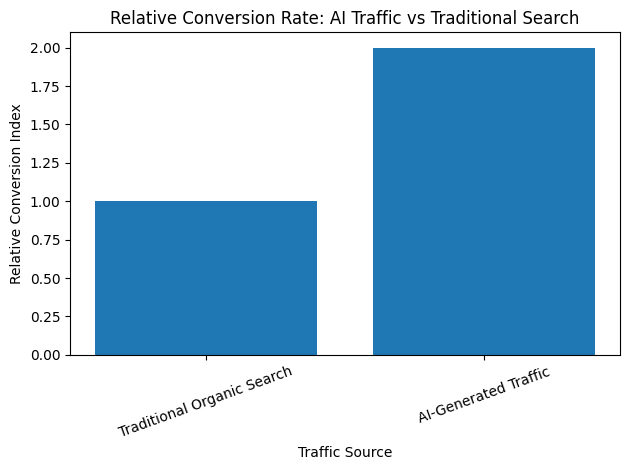
This change introduces both new opportunities and new challenges for organizations attempting to maintain digital visibility. Companies that adapt quickly to the requirements of generative search optimisation can secure prominent placement within AI-generated answers and gain early influence within the emerging AI-driven discovery ecosystem. Those that fail to adapt risk losing visibility as conversational interfaces increasingly replace traditional search results.
The growth of generative search platforms has accelerated rapidly over the past few years. Conversational AI systems are now used for a wide range of tasks, including researching complex topics, comparing products, identifying service providers, learning new skills, and making purchasing decisions. In many cases, users now rely on these systems as their first point of contact when seeking information online.
This shift has created an entirely new layer within the digital ecosystem where AI systems act as intermediaries between users and the web. Instead of users browsing websites directly, AI systems retrieve information on their behalf and present the most relevant insights in a summarized format. As these systems continue to improve in accuracy and capability, their role as knowledge mediators will only expand.
Generative Search Optimisation therefore focuses on ensuring that brands, institutions, and content creators remain visible within this new AI-mediated layer of the internet. Achieving this visibility requires more than simply producing high-quality content. It requires building structured knowledge ecosystems that generative models can interpret, verify, and confidently cite.
Several technological developments are driving the rise of GEO in 2026. Advances in large language models, improvements in retrieval-augmented generation architectures, and the rapid growth of vector search technologies have all contributed to the ability of AI systems to retrieve and synthesize information at unprecedented scale. These innovations allow generative search engines to produce highly contextual responses based on vast collections of digital knowledge.
At the same time, the economics of search are also evolving. Traditional organic traffic patterns are changing as more users obtain answers directly from AI-generated responses. In many cases, users no longer need to click through multiple webpages to complete their research. Instead, they receive a consolidated explanation within the AI interface itself.
While this trend may reduce the volume of traditional search traffic, it also increases the strategic importance of brand mentions within AI responses. Being cited by a generative AI system can significantly influence user perception and trust, particularly when the system presents the brand as an authoritative source of information.
Consequently, organizations are beginning to measure success using entirely new metrics. Instead of focusing solely on search rankings and traffic growth, they are analyzing how frequently their brands appear in AI-generated answers, how accurately their information is represented, and how often AI systems cite their content as a trusted source.
The growing importance of these metrics has led to the development of new optimisation frameworks designed specifically for generative discovery environments. These frameworks incorporate elements such as structured data implementation, entity recognition, knowledge graph integration, semantic content design, and AI visibility monitoring.
At the technical level, generative search optimisation requires organizations to rethink how information is structured across their digital properties. Content must be designed in ways that allow AI systems to extract meaningful insights efficiently. This often involves creating modular knowledge sections, using clear semantic structures, implementing schema markup, and providing verifiable authorship information.
In addition, credibility signals are becoming increasingly important in generative search environments. AI models attempt to evaluate whether the sources they reference are trustworthy and authoritative. Factors such as author expertise, publication credibility, community engagement, and structured metadata all influence whether a particular source is selected during the answer generation process.
These developments highlight the fact that generative search optimisation is not simply a continuation of traditional SEO practices. Instead, it represents a new discipline that integrates elements of search strategy, artificial intelligence, knowledge management, and digital authority building.
As businesses navigate this evolving landscape, understanding the state of Generative Search Optimisation in 2026 has become essential for maintaining competitive visibility. Organizations must understand how generative search engines operate, how AI systems interpret digital content, and how visibility is determined within conversational search environments.
The sections that follow explore the key components shaping the generative search ecosystem today. From the macroeconomic forces driving AI investment to the technical mechanics of AI visibility, the role of retrieval architectures, platform dynamics, industry readiness gaps, agency services, and emerging performance metrics, this analysis provides a comprehensive overview of how generative search optimisation is reshaping the future of digital discovery.
In many ways, 2026 represents the beginning of a new chapter in the history of the internet. As AI systems increasingly mediate how knowledge is accessed and interpreted, the ability to ensure that credible information sources remain visible within these systems will become one of the defining challenges of the digital age. Generative Search Optimisation is the framework that allows organizations to meet that challenge and thrive in the emerging AI-driven search ecosystem.
The State of Generative Search Optimisation in 2026
- The Macro-Economic Landscape and Market Valuation
- The Infrastructure of Discovery: RAG and Latency Economics
- The Technical Mechanics of AI Visibility
- The Vertical Divide: Sector Analysis and the “Invisible” Crisis
- Platform Dynamics and the Referral Ecosystem
- The Agency Landscape: Services, Costs, and Success Metrics
- Measuring GEO Success: The New KPI Framework
- Technical Metadata and the Credibility Paradox
1. The Macro-Economic Landscape and Market Valuation
By 2026, generative search optimisation has evolved into one of the most strategically important disciplines within the digital marketing and information discovery ecosystem. The widespread integration of large language models, generative artificial intelligence systems, and conversational search interfaces has fundamentally altered how information is retrieved, interpreted, and presented to users across the internet.
Unlike traditional search engine optimisation, which focused primarily on ranking webpages within static search engine results pages, generative search optimisation focuses on securing visibility, citations, and authoritative mentions within AI-generated responses. These responses increasingly replace traditional search listings as the primary gateway to information discovery.
This structural shift has prompted businesses, technology platforms, and governments to significantly increase their financial investments in artificial intelligence infrastructure and generative information systems. As a result, the macro-economic environment surrounding generative search optimisation in 2026 reflects a convergence of technological innovation, capital expenditure, and strategic repositioning across multiple industries.
Global Investment in Artificial Intelligence Infrastructure
The broader artificial intelligence ecosystem serves as the foundational infrastructure for generative search platforms. By 2026, global spending on artificial intelligence technologies has reached an estimated $2.5 trillion, representing a 44 percent increase compared with the previous year.
This unprecedented level of investment reflects a widely held industry belief that artificial intelligence will become the foundational operating system of the global digital economy. Organizations across sectors are allocating substantial budgets toward AI infrastructure, cloud computing environments, model training capabilities, and large-scale data processing systems.
The majority of capital expenditures are directed toward three critical components:
• Hyperscale data center construction
• Cloud-based generative computing infrastructure
• AI model training, deployment, and optimization services
Table: Global Artificial Intelligence Investment Distribution (2026)
| Investment Category | Estimated Global Spending (USD) | Percentage of Total AI Investment |
|---|---|---|
| Data Center Infrastructure | $960 Billion | 38.4% |
| Cloud AI Platforms and Compute Services | $720 Billion | 28.8% |
| Generative AI Model Development | $420 Billion | 16.8% |
| Enterprise AI Software Integration | $260 Billion | 10.4% |
| AI Security, Governance and Compliance | $140 Billion | 5.6% |
These investments are not merely technological upgrades; they represent a structural transformation of the global information economy. Search engines are increasingly evolving into answer engines powered by generative models capable of synthesizing knowledge rather than simply indexing webpages.
Market Valuation of Generative Engine Optimisation Services
As generative search technologies continue to reshape digital discovery, a new professional services sector has rapidly emerged around generative engine optimisation (GEO). This discipline focuses on ensuring that brands, institutions, and knowledge sources are accurately represented and cited within AI-generated answers.
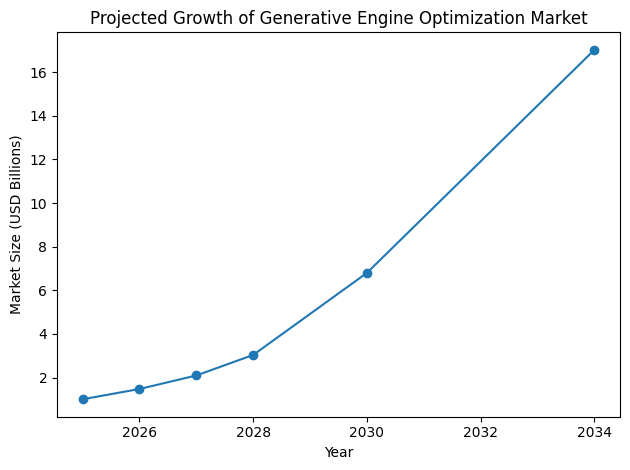
In 2025, the global market for GEO services was valued at approximately $1.01 billion. Within a single year, the market expanded dramatically, reaching an estimated valuation of $1.48 billion in 2026.
Industry forecasts project that the GEO services market could grow to over $17 billion by 2034, representing one of the fastest-growing segments within the digital marketing industry.
The primary driver behind this growth is the increasing economic cost of digital invisibility. As generative AI systems consolidate information sources into singular answers, organizations that fail to appear in those responses risk losing discoverability entirely.
Table: Global Generative Engine Optimisation Market Growth
| Year | Market Size (USD) | Year-on-Year Growth |
|---|---|---|
| 2025 | $1.01 Billion | Baseline |
| 2026 | $1.48 Billion | 46.5% |
| 2027 | $2.10 Billion | 41.9% |
| 2028 | $3.04 Billion | 44.8% |
| 2030 | $6.80 Billion | 37.6% |
| 2034 | $17.02 Billion | 40.6% CAGR |
This growth trajectory demonstrates how rapidly organizations are adapting to the generative search paradigm. GEO services now encompass content architecture redesign, structured knowledge engineering, citation optimisation, semantic authority building, and AI visibility monitoring.
Regional Market Distribution and Growth Patterns
The global GEO market does not grow uniformly across regions. Instead, growth patterns reflect the maturity of local technology ecosystems, regulatory frameworks, and digital marketing infrastructure.
North America continues to dominate the sector, accounting for approximately 38.4 percent of global GEO revenue in 2026. This leadership position is largely driven by the concentration of artificial intelligence innovation within Silicon Valley and other technology hubs across the United States.
Europe represents a complex but strategically important market due to strong regulatory oversight, particularly through the General Data Protection Regulation and the European Union AI Act. Meanwhile, Asia-Pacific markets such as Japan are emerging as innovation centers for enterprise AI integration.
Table: Regional Generative Engine Optimisation Market Valuation
| Region | 2026 Estimated Market Value (USD) | 2034 Forecast Revenue (USD) | CAGR (2026–2034) |
|---|---|---|---|
| Global Total | $1,089.3 Million | $17,148.6 Million | 40.6% |
| North America | $418.3 Million | $6,585.1 Million | 41.1% |
| United States | $365.4 Million | $6,359.6 Million | 42.9% |
| Europe | $243.8 Million | $2,775.1 Million | 35.5% |
| Japan | $45.1 Million | $390.9 Million | 31.0% |
The United States market shows particularly aggressive expansion, driven largely by rising customer acquisition costs across traditional digital advertising channels. As paid media becomes more expensive, businesses increasingly turn toward AI-mediated discovery systems where citations and recommendations directly influence purchasing decisions.
Europe, while growing slightly slower due to regulatory complexity, has become a leading market for privacy-focused GEO solutions. Industries such as luxury goods, automotive manufacturing, and financial services are actively investing in generative visibility strategies that comply with strict data governance frameworks.
Strategic Budget Allocation Among Marketing Leaders
At the executive leadership level, the shift toward generative search visibility is highly visible in corporate budgeting decisions. Chief Marketing Officers across multiple industries now recognize that generative answer systems are steadily replacing traditional search behavior.
By 2026, approximately 98 percent of CMOs report allocating resources toward Answer Engine Optimisation (AEO), which operates alongside generative engine optimisation as part of a broader AI visibility strategy.
On average, organizations are now allocating roughly 12 percent of their total SEO budgets specifically toward GEO initiatives.
Table: Average Enterprise SEO Budget Distribution (2026)
| Budget Category | Average Allocation |
|---|---|
| Traditional SEO (Technical & On-Page) | 38% |
| Content Production and Editorial Strategy | 27% |
| Generative Engine Optimisation (GEO) | 12% |
| Answer Engine Optimisation (AEO) | 9% |
| AI Visibility Monitoring Tools | 8% |
| Structured Data and Knowledge Graph Engineering | 6% |
This shift reflects a growing recognition that conventional organic traffic channels are undergoing structural decline. Predictive models from technology research firms had previously estimated that organic search traffic would decline by approximately 25 percent by 2026.
However, real-world industry data suggests the decline may be significantly steeper in certain verticals.
Table: Informational Query Traffic Decline by Industry (2024–2026)
| Industry Sector | Average Decline in Informational Query Traffic |
|---|---|
| Technology Services | 61% |
| Business Consulting | 58% |
| Digital Marketing | 54% |
| Consumer Electronics | 49% |
| Financial Services | 46% |
These declines are largely attributed to generative search interfaces providing immediate answers without requiring users to click through to external websites.
Software Ecosystem for GEO and AI Visibility
Alongside service providers, an entire ecosystem of specialized GEO software platforms has emerged. These tools help organizations monitor whether their brands, products, and knowledge assets are cited within AI-generated responses across various generative search systems.
Industry spending on GEO-specific software has increased dramatically, with year-over-year expenditures rising by approximately 67 percent between 2025 and 2026.
Table: GEO Software Market Pricing Segments
| Software Tier | Typical Monthly Cost | Target Users |
|---|---|---|
| Entry-Level GEO Monitoring Tools | $49 – $129 | Freelancers and small businesses |
| Professional GEO Platforms | $129 – $337 | Digital marketing teams |
| Enterprise AI Visibility Platforms | $337 – $999 | Mid-sized organizations |
| Advanced Enterprise GEO Suites | $999 – $1,999+ | Large global enterprises |
These platforms typically provide features such as:
• AI citation monitoring
• Generative answer visibility tracking
• entity recognition mapping
• semantic authority scoring
• conversational search auditing
Despite the rapid adoption of these technologies, a significant measurement gap remains within organizations.
Challenges in Measuring the Return on Generative AI Investment
While enterprises are investing heavily in generative search optimisation technologies, many organizations still struggle to quantify the return on investment generated by these initiatives.
Surveys conducted across global enterprises indicate that only around 20 percent of organizations have implemented formal frameworks to measure the performance impact of generative AI systems.
At the same time, internal workforce expectations are evolving rapidly. Approximately 95 percent of employees across knowledge-intensive industries believe that generative AI tools will become essential components of their daily workflows within the next few years.
Table: Organizational Readiness for Generative AI Adoption
| Metric | Percentage of Organizations |
|---|---|
| Organizations investing in generative AI | 92% |
| Organizations actively using GEO tools | 64% |
| Organizations measuring AI ROI | 20% |
| Employees expecting AI in daily workflows | 95% |
| Organizations with formal AI governance frameworks | 34% |
This gap between investment and performance measurement represents one of the most pressing strategic challenges facing digital leaders in 2026. Without standardized metrics for AI visibility, citation influence, and answer engine attribution, organizations may struggle to fully understand the business impact of generative search optimisation initiatives.
Strategic Implications for the Future of Search
The economic and technological landscape of 2026 clearly indicates that generative search optimisation is no longer an experimental discipline. It has become a core strategic function within digital marketing, knowledge management, and brand visibility.
Organizations that fail to adapt to generative discovery systems risk becoming invisible within the AI-generated information layer that increasingly mediates how users interact with the internet.
As generative search platforms continue to mature, the competition for authoritative citations, trusted knowledge sources, and structured information will intensify. In this environment, generative engine optimisation is poised to become a central pillar of digital strategy for the foreseeable future.
2. The Infrastructure of Discovery: RAG and Latency Economics
By 2026, the evolution of generative search technologies has shifted the focus of digital visibility away from purely content-based strategies toward deeply technical infrastructure capabilities. At the center of this transformation lies Retrieval-Augmented Generation (RAG), a system architecture that combines large language models with real-time information retrieval systems.
Generative search systems increasingly depend on RAG architectures to ensure that AI-generated responses are grounded in verifiable information rather than relying solely on the static knowledge embedded in pretrained models. This architecture enables generative systems to retrieve relevant documents, internal databases, and knowledge repositories before generating answers, allowing responses to remain both accurate and current.
For large enterprises, implementing generative engine optimisation strategies is no longer limited to marketing initiatives. Instead, it has become a complex infrastructure challenge involving data engineering, machine learning pipelines, retrieval systems, and high-performance computing environments.
Organizations must now build discovery infrastructures capable of feeding structured knowledge into generative models in ways that maximize citation probability, response accuracy, and answer relevance.
Understanding Retrieval-Augmented Generation Architecture
Retrieval-Augmented Generation represents a hybrid system that integrates two distinct technological layers:
• Retrieval systems that identify relevant knowledge sources
• Generative models that synthesize responses based on retrieved information
This architecture bridges the gap between static model knowledge and continuously evolving data ecosystems within organizations.
Table: Core Components of a Retrieval-Augmented Generation System
| System Layer | Description | Strategic Role in Generative Search |
|---|---|---|
| Data Ingestion Pipeline | Collects and processes raw organizational data | Converts internal knowledge into machine-readable formats |
| Document Chunking Engine | Breaks large documents into smaller semantic units | Enables precise retrieval during query processing |
| Vector Embedding Layer | Converts text into mathematical representations | Allows similarity search across knowledge bases |
| Vector Database | Stores embeddings for rapid retrieval | Powers semantic search across enterprise knowledge |
| Retrieval Engine | Identifies relevant document chunks | Supplies context to the generative model |
| Large Language Model | Synthesizes answers using retrieved context | Generates human-readable responses |
| Citation and Attribution Layer | Links generated outputs to source documents | Enables AI systems to reference authoritative content |
The presence of these components allows generative search systems to cite specific documents, which directly influences how brands and information sources appear within AI-generated answers.
The Cost Structure of Custom AI and RAG Implementation
Despite the strategic advantages of generative discovery infrastructure, building custom AI systems remains a capital-intensive endeavor. Organizations pursuing advanced generative visibility capabilities must allocate substantial budgets toward development, infrastructure deployment, and long-term operational maintenance.
In 2026, the cost of implementing custom artificial intelligence systems varies significantly depending on system complexity, data scale, and enterprise requirements.
Table: Estimated Cost Structure of AI System Development
| Development Category | Estimated Initial Cost (USD) | Annual Maintenance Cost |
|---|---|---|
| Basic Chatbots and Rule-Based Systems | $50,000 – $150,000 | 20% – 30% of initial cost |
| Mid-Level Predictive and Search Systems | $150,000 – $500,000 | 25% – 35% of initial cost |
| Enterprise Retrieval-Augmented Generation Systems | $500,000 – $2,000,000+ | 30% – 40% of initial cost |
Enterprise RAG deployments often involve multi-modal capabilities, meaning they integrate text, images, audio, logs, and structured data. These deployments typically require interdisciplinary teams composed of data engineers, machine learning specialists, infrastructure architects, and knowledge management experts.
Data Preparation as the Primary Cost Driver
Within most RAG implementation projects, data preparation represents the single largest cost component. Unlike traditional software systems, generative AI models depend heavily on clean, structured, and semantically meaningful datasets.
Preparing organizational knowledge for generative retrieval requires extensive processes including:
• Data cleaning and deduplication
• Document segmentation and chunking
• Metadata tagging and semantic labeling
• Data annotation for supervised training
• Vector embedding generation
These processes transform unstructured information into formats that can be effectively retrieved and cited by generative systems.
Table: Data Preparation Cost Distribution in RAG Projects
| Data Preparation Activity | Typical Cost Range (USD) | Percentage of Total Project Budget |
|---|---|---|
| Data Cleaning and Normalization | $20,000 – $80,000 | 10% – 15% |
| Document Structuring and Chunking | $15,000 – $70,000 | 8% – 12% |
| Metadata Tagging and Knowledge Mapping | $25,000 – $100,000 | 12% – 18% |
| Annotation and Labeling | $50,000 – $150,000 | 15% – 25% |
| Vector Embedding Generation | $10,000 – $40,000 | 5% – 10% |
Overall, data preparation activities typically consume between 40 percent and 60 percent of the total project budget.
For supervised learning systems, annotation costs can range from $0.10 to $5 per labeled data point depending on complexity. Large-scale projects such as computer vision systems that process 100,000 annotated images can therefore incur an additional fixed cost of approximately $100,000 before model development even begins.
Operational Infrastructure and Cloud Deployment Costs
Once generative discovery systems are deployed, organizations must maintain significant operational infrastructure to support continuous query processing, retrieval pipelines, and AI inference workloads.
Most enterprise deployments rely on cloud-based machine learning infrastructure platforms such as managed model hosting environments, scalable compute clusters, and vector database services.
The operational cost of running generative search infrastructure varies depending on factors such as query volume, model size, and retrieval complexity.
Table: Monthly Operational Cost of AI Infrastructure
| Infrastructure Component | Monthly Cost Range (USD) | Primary Function |
|---|---|---|
| Model Inference Compute | $2,000 – $20,000 | Running large language models |
| Vector Database Hosting | $1,000 – $10,000 | Storing semantic embeddings |
| Retrieval Pipeline Infrastructure | $1,000 – $5,000 | Managing document retrieval |
| API Gateway and Query Processing | $500 – $3,000 | Handling user queries |
| Monitoring and Logging Systems | $500 – $2,000 | Performance monitoring |
Across these categories, enterprise operational expenses typically range from $5,000 to $50,000 per month depending on the scale of deployment.
The Infrastructure Spending Paradox
Despite enormous global investments in artificial intelligence infrastructure, many organizations have discovered that increased computing power alone does not necessarily translate into better generative search visibility.
By 2026, technology companies such as Microsoft, Amazon, and other hyperscale providers have collectively committed over $635 billion toward AI infrastructure development. However, practical experience from enterprise deployments reveals a paradox.
Performance improvements often depend more on system architecture decisions than on raw computing capacity.
Several architectural choices have proven to be critical determinants of generative search performance:
• Document chunking strategy
• Recursive document splitting
• Context window optimization
• Retrieval ranking algorithms
• semantic similarity thresholds
Table: Architectural Factors Influencing Generative Search Performance
| Architectural Decision | Impact on Search Performance | Relative Cost |
|---|---|---|
| Optimized Chunking Strategy | High | Low |
| Recursive Document Splitting | High | Low |
| Embedding Model Selection | Medium | Medium |
| Retrieval Ranking Optimization | High | Medium |
| Increased GPU Compute | Medium | Very High |
Organizations that prioritize architectural optimization often achieve higher citation accuracy and faster response times without dramatically increasing computational costs.
Latency Economics and the User Experience Threshold
In conversational search environments, latency has emerged as one of the most critical performance variables affecting user engagement.
Generative search users expect responses to appear nearly instantaneously. When response generation exceeds acceptable latency thresholds, users frequently abandon interactions before the system finishes generating an answer.
Industry performance benchmarks in early 2026 show that:
• 68 percent of production RAG deployments exceed two seconds of response latency
• User abandonment rates increase by approximately 40 percent when responses exceed two seconds
Table: Latency Thresholds and User Engagement Impact
| Response Latency | User Experience Impact | Estimated Drop-Off Rate |
|---|---|---|
| Below 100 ms | Instant conversational experience | Minimal |
| 100 ms – 500 ms | Smooth interaction | Low |
| 500 ms – 2 seconds | Noticeable delay | Moderate |
| Above 2 seconds | Frustrating user experience | High (up to 40%) |
To address these challenges, many organizations are investing in advanced retrieval architectures designed to minimize response delays.
Memory Indexing and High-Speed Retrieval Requirements
One of the hidden infrastructure costs associated with generative search involves maintaining high-speed retrieval indexes in memory. To achieve conversational response speeds, vector databases and knowledge indexes often need to be stored in RAM rather than slower disk-based storage systems.
Memory-based indexing significantly increases infrastructure costs but allows systems to achieve sub-50 millisecond retrieval speeds.
Table: Storage Approaches for Vector Databases
| Storage Method | Average Retrieval Speed | Infrastructure Cost | Typical Use Case |
|---|---|---|---|
| Disk-Based Storage | 200 ms – 500 ms | Low | Small datasets |
| Hybrid Memory-Disk Storage | 80 ms – 200 ms | Medium | Mid-scale deployments |
| Full In-Memory Indexing | Below 50 ms | High | Large conversational systems |
Organizations that fail to optimize retrieval speed often experience degraded conversational experiences, leading to lower user engagement and reduced trust in AI-generated responses.
The Rise of Streaming RAG Architectures
To overcome latency challenges, enterprises are increasingly adopting streaming-based generative architectures. Streaming RAG systems allow responses to begin generating immediately while additional information continues to be retrieved and processed.
This approach dramatically improves perceived system responsiveness by reducing the time required to deliver the first token of generated text.
The metric used to evaluate this performance is known as Time to First Token (TTFT).
Table: Generative System Performance Metrics
| Metric | Definition | Target Performance in 2026 |
|---|---|---|
| Time to First Token (TTFT) | Time before the first generated word appears | 50 milliseconds |
| Full Response Generation Time | Total time to complete the response | Under 2 seconds |
| Retrieval Latency | Time required to retrieve documents | Below 50 milliseconds |
| Context Assembly Time | Time to prepare retrieved context | Below 100 milliseconds |
Industry forecasts suggest that approximately 70 percent of Fortune 500 companies will deploy streaming RAG architectures by the end of the third quarter of 2026.
These systems enable organizations to maintain competitive performance standards in conversational search environments where speed, relevance, and citation reliability determine whether information sources are surfaced within AI-generated answers.
Implications for the Future of Generative Search Infrastructure
The emergence of retrieval-augmented generation architectures signals a broader transformation in the infrastructure of digital discovery. Generative search optimisation in 2026 increasingly depends not only on content quality but also on the technical systems that enable knowledge retrieval at scale.
Organizations that invest in efficient RAG architectures, low-latency retrieval pipelines, and optimized knowledge indexing systems are significantly more likely to achieve visibility within generative search environments.
As conversational search interfaces continue to expand across browsers, mobile devices, enterprise platforms, and AI assistants, the infrastructure supporting generative discovery will become a critical competitive advantage within the global digital economy.
3. The Technical Mechanics of AI Visibility
By 2026, the fundamental logic governing digital discoverability has undergone a structural transformation. In traditional search environments, websites competed for ranking positions within algorithmically generated lists of links. These rankings were heavily influenced by factors such as backlink profiles, domain authority metrics, keyword optimization, and technical SEO signals.
Generative search systems have replaced this ranking-based framework with a citation-based discovery model. Instead of presenting users with a list of webpages, AI-powered systems synthesize answers by selecting information from multiple sources and presenting it as a unified response. Within this paradigm, visibility depends on whether an AI model chooses to reference a particular source while constructing its answer.
This shift fundamentally alters the mechanics of digital visibility. Generative models evaluate content not according to deterministic ranking algorithms, but through probabilistic reasoning based on semantic relationships, factual grounding, contextual relevance, and knowledge graph alignment.
In this environment, the concept of “AI visibility” refers to the likelihood that a content source will be cited, referenced, or embedded within AI-generated answers across conversational search interfaces.
Key Determinants of Citation-Based Visibility
Large-scale research conducted across more than 15,000 AI-generated answer results spanning 63 industries has identified several core variables that strongly influence citation frequency. These findings reveal that traditional SEO authority metrics now have limited predictive value in determining generative search visibility.
One of the most significant findings from this research is the dramatic decline in correlation between legacy domain authority metrics and AI citation likelihood.
Table: Correlation Between Traditional Authority Metrics and AI Visibility
| Metric | Correlation with AI Citation Frequency (r) | Observed Influence |
|---|---|---|
| Domain Rating / Domain Authority | 0.18 | Weak |
| Backlink Volume | 0.21 | Weak |
| Page Authority | 0.19 | Weak |
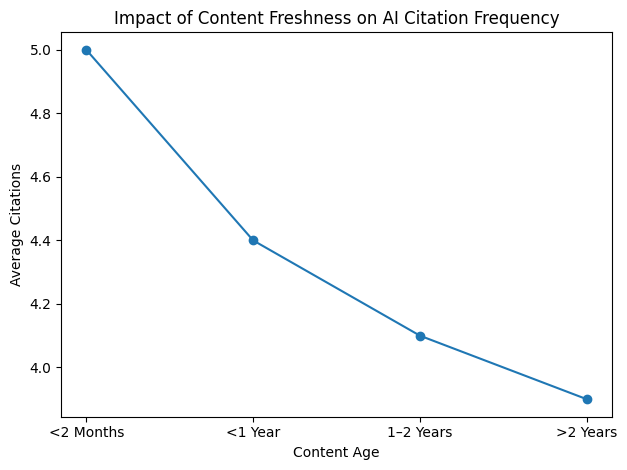
| Content Age | 0.14 | Minimal |
These results signal the decline of the authority-driven ranking paradigm that dominated search optimization during the previous decade. Instead, generative search systems rely on a set of new signals that reflect the way language models process, validate, and synthesize information.
Core GEO Visibility Signals and Their Impact
Researchers analyzing generative answer outputs have identified several technical attributes that significantly increase the probability of a source being cited by AI systems.
Table: Core Generative Engine Optimisation Ranking Signals
| GEO Visibility Factor | Correlation Coefficient (r) | Impact on Citation Selection |
|---|---|---|
| Multi-Modal Content Integration | 0.92 | Very High |
| Real-Time Factual Verification | 0.89 | Very High |
| Semantic Completeness | 0.87 | High |
| Vector Embedding Alignment | 0.84 | High |
| E-E-A-T Credibility Signals | 0.81 | High |
| Knowledge Graph Entity Density | 0.76 | Moderate |
Among these variables, multi-modal content integration emerges as the single most influential factor affecting AI citation frequency. Content that incorporates multiple information modalities — including text, images, video, charts, and structured data — demonstrates significantly higher selection rates within generative answers.
The Multi-Modal Multiplier Effect
Modern large language models process information through complex pattern recognition mechanisms that incorporate both textual and non-textual signals. As a result, content that presents information across multiple formats allows AI systems to cross-validate facts and improve confidence in the accuracy of extracted knowledge.
When an AI system encounters a statistic supported by both a textual explanation and a visual data chart, the model can verify the claim through multiple representations of the same information. This redundancy increases the probability that the content will be considered trustworthy during answer synthesis.
Table: Performance Impact of Multi-Modal Content Structures
| Content Format | Relative Citation Rate | Selection Improvement |
|---|---|---|
| Text Only | Baseline | — |
| Text + Structured Data | 1.8x | +80% |
| Text + Image Support | 2.1x | +110% |
| Text + Image + Video | 2.4x | +140% |
| Full Multi-Modal (Text, Charts, Media, Schema) | 3.17x | +217% |
When structured schema markup is added to multi-modal content, citation probability can increase by more than three times compared with traditional text-only formats.
This phenomenon is often described as the multi-modal multiplier effect because each additional content format increases the likelihood that the information can be validated and extracted by generative models.
Semantic Completeness and Self-Contained Knowledge
Another critical determinant of AI visibility is semantic completeness. This concept refers to a content passage’s ability to provide a fully self-contained explanation of a topic without requiring additional contextual sources.
Generative systems prefer content segments that can be extracted and inserted directly into synthesized answers. When a passage clearly defines a concept, provides supporting data, and explains context within a single coherent section, the likelihood of citation increases significantly.
Research indicates that content with high semantic completeness scores receives more than four times the citation frequency compared with fragmented or incomplete content structures.
Table: Impact of Semantic Completeness on AI Citations
| Content Structure Type | Average Citation Frequency |
|---|---|
| High Semantic Completeness | 4.2x higher citation rate |
| Moderate Completeness | 2.1x higher citation rate |
| Fragmented Content | Baseline |
Semantic completeness is often achieved through modular content design in which individual passages function as standalone knowledge units.
The Rise of Answer-First Content Architecture
In response to generative search systems, content architecture has evolved toward an “answer-first” structure. Rather than gradually introducing topics through narrative explanations, effective generative visibility strategies prioritize delivering concise answers immediately before expanding into supporting details.
The typical structure of answer-first content follows a modular format:
• Immediate summary or definition
• Key statistics and supporting evidence
• Supporting explanations and contextual insights
• Structured bullet points and sub-sections
This format allows AI systems to quickly extract the core informational component of a passage without parsing extensive narrative text.
Table: Comparison of Traditional Editorial vs AI-Optimized Content Structures
| Content Attribute | Traditional Editorial Structure | AI-Optimized Answer-First Structure |
|---|---|---|
| Introduction Style | Gradual narrative introduction | Immediate summary statement |
| Information Distribution | Spread across paragraphs | Modular knowledge blocks |
| Data Presentation | Embedded within narrative | Structured statistics and lists |
| Extractability | Moderate | Very High |
| Citation Likelihood | Low | High |
Content designed using answer-first architecture is significantly easier for retrieval-augmented systems to process because the core informational unit appears at the beginning of the passage.
Formatting as a Machine Parsability Requirement
In generative search environments, formatting is no longer purely a readability concern. It has become a technical requirement for machine parsability.
Large language models rely on structural cues to identify informational hierarchies within documents. These cues include header structures, list formatting, paragraph segmentation, and semantic tagging.
Content with clearly structured hierarchical headings is approximately 40 percent more likely to be cited within generative search responses.
Table: Impact of Structural Formatting on AI Citation Probability
| Formatting Feature | Citation Impact |
|---|---|
| Clear Section Headings | +40% |
| Structured Bullet Lists | +35% |
| Short Paragraph Blocks | +22% |
| Embedded Data Tables | +18% |
| Schema Markup | +56% |
The presence of these formatting elements allows generative systems to quickly identify key informational segments that can be inserted into synthesized answers.
Language Simplicity and Model Comprehension
Another important factor affecting generative search visibility is linguistic complexity. While academic writing often prioritizes technical precision and specialized terminology, generative models demonstrate higher extraction accuracy when content is written in accessible, easily interpretable language.
Studies comparing citation frequency across different reading levels reveal that moderately simplified content significantly outperforms highly technical writing.
Table: Reading Level Impact on AI Citation Frequency
| Reading Level | Average Citations per Passage |
|---|---|
| Grade 6–8 Readability | 4.6 |
| Grade 9–10 Readability | 4.3 |
| Grade 11–12 Readability | 4.0 |
| Academic / Technical Language | 3.8 |
Simpler language structures reduce ambiguity and enable generative models to extract factual information with greater confidence. When sentences become overly complex or contain dense technical jargon, the risk of misinterpretation or hallucination increases.
As a result, organizations are increasingly transforming complex knowledge into simplified informational units often referred to as knowledge chunks.
Knowledge Chunking and Extractable Information Design
Knowledge chunking refers to the process of structuring information into small, semantically complete segments that can be easily retrieved and interpreted by generative systems.
Effective knowledge chunks typically contain:
• One clearly defined concept
• Supporting statistics or data points
• A concise explanation
• Minimal contextual dependencies
Table: Characteristics of High-Quality Knowledge Chunks
| Attribute | Description | Benefit for Generative Systems |
|---|---|---|
| Concise Definition | Clear explanation of a concept | Improves retrieval precision |
| Supporting Data | Numerical evidence or statistics | Increases factual grounding |
| Structured Formatting | Lists or tables | Enhances machine readability |
| Context Independence | Self-contained information | Enables standalone citation |
By structuring content around extractable knowledge units, organizations significantly increase the probability that their information will be selected during generative answer construction.
Strategic Implications for Generative Search Visibility
The technical mechanics of AI visibility demonstrate that generative search systems evaluate content using fundamentally different principles than legacy search engines.
Instead of prioritizing backlink authority or keyword density, generative models prioritize content that is:
• Semantically complete
• Structurally extractable
• multi-modally verifiable
• factually grounded
• linguistically accessible
Organizations that adapt their content architecture, knowledge management practices, and structured data strategies to align with these principles are far more likely to achieve consistent visibility within AI-generated answers.
As generative search systems continue to evolve, the ability to produce machine-readable knowledge that satisfies these technical criteria will become one of the most important determinants of digital discoverability in the emerging AI-mediated information ecosystem.
4. The Vertical Divide: Sector Analysis and the “Invisible” Crisis
As generative search systems continue to redefine digital discovery, a significant divide has emerged between industries that have adapted their digital infrastructure for AI visibility and those that remain structurally unprepared. Although the global market for generative engine optimisation is expanding rapidly, readiness levels vary dramatically across sectors.
Large-scale analysis conducted in 2026 using the Fuel AI Health Score™ — a composite diagnostic framework designed to evaluate generative visibility readiness — reveals that a majority of major brands remain technically invisible to AI systems. Approximately 62 percent of global enterprise brands are unable to be reliably identified, interpreted, or cited by generative AI models during unbranded queries.
Technical invisibility occurs when AI systems cannot confidently associate a brand with its expertise, services, or authoritative content due to missing structured data, weak entity recognition signals, or inaccessible website architecture. This problem persists even among companies that have invested heavily in traditional search engine optimisation strategies.
In practical terms, brands experiencing technical invisibility fail to appear in AI-generated recommendations, product suggestions, knowledge explanations, and industry comparisons.
Understanding the Fuel AI Health Score Framework
The Fuel AI Health Score™ measures generative search readiness across several technical dimensions that determine whether AI systems can accurately understand and cite a brand. These dimensions include structured data implementation, entity identification, schema adoption, author verification signals, and website crawl accessibility.
Table: Core Factors Used in AI Visibility Health Scoring
| Evaluation Category | Description | Importance for Generative Visibility |
|---|---|---|
| Structured Data Coverage | Implementation of schema markup across webpages | Enables machine-readable knowledge extraction |
| Entity Identification | Presence of knowledge graph identifiers | Allows AI systems to disambiguate brands |
| Authorship Transparency | Clear author bylines and biographies | Supports expertise verification signals |
| Content Semantic Completeness | Self-contained informational content | Improves citation probability |
| Crawl Accessibility | Robots.txt configuration and page accessibility | Determines whether AI crawlers can access content |
Scores are typically measured on a scale of 0 to 100, with higher scores indicating stronger technical readiness for AI-driven discovery systems.
Industry-Level Visibility Benchmarks
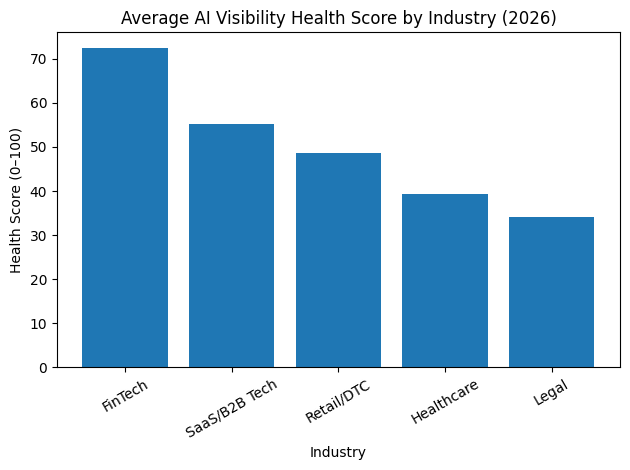
The 2026 cross-industry analysis reveals striking differences in AI visibility readiness across sectors. Industries that historically relied on structured data and transparent authorship systems demonstrate significantly stronger generative visibility scores.
Table: Industry Benchmarks for AI Visibility Readiness (2026)
| Industry Sector | Average AI Health Score (0–100) | Schema Adoption Rate | Robots.txt Blocking Rate | Generative Visibility Status |
|---|---|---|---|---|
| FinTech | 72.4 | 88% | 12% | Optimized |
| SaaS / B2B Technology | 55.1 | 45% | 34% | Mixed |
| Retail / Direct-to-Consumer | 48.6 | 62% | 5% | At Risk |
| Healthcare | 39.4 | 52% | 18% | Low Visibility |
| Legal Services | 34.2 | 8% | 21% | Technically Invisible |
The findings reveal a clear disconnect between historical digital dominance and generative search readiness. Many industries that previously excelled in traditional search rankings now struggle to achieve visibility within AI-generated answer environments.
FinTech: The Most Prepared Sector
Among all industries evaluated in the 2026 analysis, the financial technology sector demonstrates the highest level of readiness for generative search systems. This preparedness can largely be attributed to long-standing regulatory requirements that encouraged structured financial reporting and transparent disclosure practices.
Financial platforms frequently publish structured data, financial metrics, and regulatory documentation in machine-readable formats. These characteristics align closely with the data requirements of generative AI systems.
Additionally, FinTech publishers consistently provide clear authorship attribution, a key credibility signal used by AI models to verify expertise and authority.
Table: FinTech Sector AI Visibility Indicators
| Technical Signal | Adoption Rate |
|---|---|
| Structured Financial Data | 91% |
| Author Bylines with Verified Profiles | 92% |
| Knowledge Graph Entity Identification | 67% |
| Organization Schema Implementation | 74% |
Clear authorship structures are particularly valuable because generative models rely heavily on signals related to experience, expertise, authoritativeness, and trustworthiness when evaluating content sources.
SaaS and B2B Technology: Fragmented Readiness
The SaaS and B2B technology sectors exhibit mixed performance in generative visibility metrics. While these industries often produce large volumes of technical content, many organizations fail to structure that information in ways that generative models can reliably interpret.
One of the most common problems within this sector is excessive use of restrictive robots.txt configurations that block AI crawlers from accessing key informational resources.
Table: Common AI Visibility Challenges in SaaS and B2B
| Issue | Prevalence | Impact on Generative Visibility |
|---|---|---|
| AI crawler blocking in robots.txt | 34% | Prevents content retrieval |
| Inconsistent schema markup | 41% | Weak entity recognition |
| Lack of author attribution | 36% | Reduced credibility signals |
| Fragmented knowledge architecture | 29% | Lower semantic completeness |
These technical issues often result in strong content assets being overlooked by generative systems despite their informational quality.
Retail and Direct-to-Consumer Brands at Risk
Retail and direct-to-consumer brands represent one of the most economically vulnerable sectors within the generative discovery ecosystem. Although many retailers have adopted structured product schema for e-commerce pages, their broader informational content often lacks the structured data required for generative search visibility.
Retail companies frequently optimize product pages for search engines but neglect informational queries related to logistics, purchasing decisions, delivery timelines, and product comparisons.
Table: Retail Sector Generative Visibility Readiness
| Technical Capability | Adoption Rate |
|---|---|
| Product Schema Implementation | 78% |
| Shipping Policy Schema | 12% |
| Return Policy Schema | 8% |
| Organization Entity Schema | 21% |
This gap significantly affects the ability of generative AI systems to recommend retail brands when users ask conversational queries related to shipping timelines, gift purchasing, or product availability.
Healthcare and Medical Content Visibility Challenges
Healthcare organizations face additional challenges related to compliance requirements and regulatory constraints. Many healthcare institutions publish authoritative medical content but fail to implement the structured metadata necessary for AI systems to interpret that information.
In many cases, medical knowledge exists in long-form research articles or clinical documentation that lacks semantic segmentation and structured data annotations.
Table: Healthcare Sector Technical Readiness Indicators
| Technical Indicator | Adoption Rate |
|---|---|
| Medical schema markup | 31% |
| Structured authorship verification | 46% |
| Knowledge graph linking | 18% |
| Structured research metadata | 27% |
This structural limitation reduces the likelihood that medical institutions will be cited in generative health explanations, even when their expertise is significant.
Legal Services and the Visibility Gap
The legal industry demonstrates the lowest generative visibility readiness scores among the sectors analyzed in 2026. Despite possessing some of the most authoritative subject-matter expertise available online, many legal organizations operate websites that are fundamentally incompatible with machine-readable discovery systems.
Large law firms often publish detailed legal analyses in formats that are difficult for AI systems to parse, such as static PDF documents or dense long-form text without semantic structuring.
Table: Legal Sector Generative Visibility Deficiencies
| Technical Factor | Adoption Rate |
|---|---|
| Structured schema implementation | 8% |
| Knowledge graph entity linking | 11% |
| Author profile verification | 19% |
| Semantic content segmentation | 14% |
As a result, a substantial portion of the legal sector remains effectively invisible to generative search platforms.
The Schema Gap: A Critical Infrastructure Failure
One of the most alarming findings in the 2026 analysis is the emergence of what researchers describe as the Schema Gap. This gap refers to the widespread absence of structured organization-level metadata across major corporate websites.
Structured data schemas allow AI systems to understand organizational identity, relationships between entities, and authoritative ownership of content. Without these signals, generative models must rely on probabilistic inference to determine which entities are associated with specific content sources.
Table: Organization Schema Adoption Among Fortune 1000 Companies
| Implementation Status | Percentage of Companies |
|---|---|
| Valid Organization Schema with Knowledge Graph ID | 12.4% |
| Partial Schema Implementation | 33.7% |
| No Structured Organization Schema | 53.9% |
This absence of structured entity metadata dramatically reduces the likelihood that brands will be accurately identified during generative search processes.
Impact of Organization Schema on AI Citation Rates
Structured organization schema significantly improves the ability of generative systems to disambiguate brand identities, associate content with entities, and retrieve authoritative knowledge during answer generation.
Research indicates that domains with valid organization schema linked to knowledge graph identifiers are substantially more likely to appear in generative answers.
Table: Effect of Organization Schema on AI Citations
| Schema Status | Relative Citation Likelihood |
|---|---|
| Valid Organization Schema with Knowledge Graph ID | 3.5x higher citation rate |
| Partial Schema Implementation | 1.8x higher citation rate |
| No Organization Schema | Baseline |
This finding highlights the growing importance of entity-based optimisation strategies within generative search environments.
Retail Logistics Data and AI Recommendation Systems
The consequences of the schema gap are particularly visible within the retail sector. Generative shopping assistants frequently rely on structured logistics information such as delivery timelines, shipping availability, and return policies when recommending products to users.
However, many retailers fail to include this information in machine-readable schema formats outside of product pages.
Table: Retail Schema Coverage Beyond Product Pages
| Schema Type | Retail Adoption Rate |
|---|---|
| Product Schema | 78% |
| Shipping Details Schema | 14% |
| Merchant Return Policy Schema | 8% |
| Delivery Time Schema | 6% |
When generative AI systems attempt to answer queries such as “gifts that arrive by Friday,” they rely on structured delivery data to filter recommendations. Retailers that do not publish this information in machine-readable formats are automatically excluded from consideration.
The Strategic Consequences of Technical Invisibility
The sector analysis conducted in 2026 illustrates a growing digital divide between organizations that have adapted their technical infrastructure for generative discovery and those that remain reliant on outdated SEO frameworks.
Technical invisibility represents a critical business risk because generative search systems increasingly act as gatekeepers of information access. Brands that cannot be reliably interpreted by AI models are effectively removed from the discovery process for millions of users interacting with conversational search platforms.
Closing the schema gap, implementing entity-level structured data, and redesigning content architecture for machine readability are therefore becoming essential strategic priorities for organizations seeking to maintain visibility in the emerging AI-driven information ecosystem.
5. Platform Dynamics and the Referral Ecosystem
By 2026, the global search ecosystem has split into two parallel discovery environments. The first consists of traditional search engines that have integrated generative AI directly into their existing platforms. These systems, often referred to as “AI Mode” search engines, combine classic index-based search results with AI-generated summaries and answers. The second environment includes pure-play generative search engines built from the ground up around conversational AI systems.
This bifurcation has created a new layer of complexity for digital visibility strategies. Organizations must now understand how different AI platforms retrieve information, synthesize answers, and attribute citations.
AI-integrated search engines such as Google and Bing continue to rely on their traditional search infrastructure, meaning that their generative answers often reference the existing web index and ranking signals. Pure generative platforms such as ChatGPT and Perplexity operate differently. These systems rely heavily on large language models, retrieval pipelines, and proprietary knowledge datasets to construct answers.
Because each platform uses a different information retrieval architecture, the logic governing citations and referral traffic varies significantly across the ecosystem.
The Generative AI Platform Market Landscape
Despite the rapid expansion of generative search platforms, the market remains heavily concentrated among a small group of dominant providers. As of early 2026, conversational AI platforms collectively process hundreds of millions of daily queries, representing one of the fastest-growing user interaction channels in the digital economy.
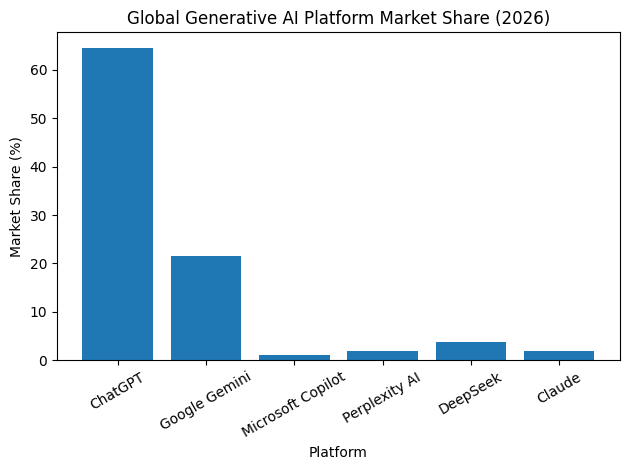
ChatGPT remains the most widely used generative AI platform globally, capturing the majority of generative search interactions. However, several competing platforms have rapidly expanded their user bases as organizations and consumers increasingly adopt conversational discovery tools.
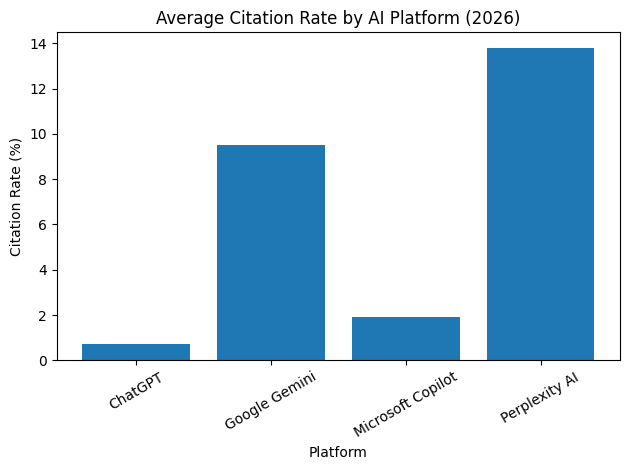
Table: Global Market Share of Major Generative AI Platforms (2026)
| AI Platform | Global Market Share | Active Monthly or Weekly Users | Average Citation Rate |
|---|---|---|---|
| ChatGPT | 64.5% | 800 Million+ Weekly Users | 0.7% |
| Google Gemini | 21.5% | 650 Million+ Monthly Users | 9.5% |
| Microsoft Copilot | 1.1% | 15 Million Paid Users | 1.9% |
| Perplexity AI | 2.0% | 189 Million Monthly Users | 13.8% |
| DeepSeek | 3.7% | Data Not Public | Data Not Public |
| Claude (Anthropic) | 2.0% | 180 Million Monthly Users | High (UGC Emphasis) |
Although ChatGPT commands the largest share of the generative AI market, the way it attributes information differs significantly from other platforms. This distinction has important implications for referral traffic and brand visibility.
Citation Logic and Referral Efficiency Across Platforms
One of the most important metrics for understanding generative search platforms is citation rate. Citation rate refers to the frequency with which an AI system links to or references the original source of information used to generate its answer.
Platforms vary dramatically in how often they provide source attribution. Some systems prioritize providing direct links to source materials, while others focus primarily on delivering synthesized answers without external referrals.
Table: Platform Referral Efficiency Comparison
| Platform | Traffic Volume Contribution | Citation Rate | Referral Efficiency |
|---|---|---|---|
| ChatGPT | Very High | 0.7% | Low |
| Google Gemini | High | 9.5% | Moderate |
| Perplexity AI | Moderate | 13.8% | Very High |
| Microsoft Copilot | Low | 1.9% | Low |
| Claude | Moderate | High (UGC Citations) | Moderate |
ChatGPT is responsible for approximately 87.4 percent of all AI-generated referral traffic across generative platforms. However, its extremely low citation rate means that users rarely click through to the original content source.
In contrast, Perplexity AI provides far more consistent source attribution within its generated responses. Although its total user base is significantly smaller than ChatGPT’s, its high citation rate makes it a more efficient driver of direct website traffic.
This dynamic illustrates an emerging trade-off in generative search optimization. Platforms with the largest user bases do not necessarily produce the most valuable referral traffic.
Integrated Search Engines Versus Pure Generative Platforms
Another key distinction in the generative search ecosystem lies in the difference between hybrid search platforms and pure conversational engines.
Integrated search engines such as Google and Bing continue to maintain traditional search result pages alongside AI-generated summaries. As a result, they retain a stronger link ecosystem because users can still access indexed websites through classic search results.
Pure generative engines often provide synthesized answers directly within the conversational interface. This reduces the need for users to click through to external websites, fundamentally changing how referral traffic flows across the internet.
Table: Structural Differences Between Generative Search Platforms
| Platform Category | Examples | Information Retrieval Method | Citation Behavior |
|---|---|---|---|
| Integrated AI Search | Google Gemini, Bing Copilot | Hybrid index plus generative synthesis | Moderate linking |
| Pure Generative Engines | ChatGPT, Perplexity, Claude | Retrieval-augmented generation | Variable linking |
| Enterprise AI Assistants | Microsoft Copilot Enterprise | Internal knowledge retrieval | Limited external citations |
Understanding these structural differences is essential for organizations attempting to optimize their content visibility across multiple generative search platforms.
Demographic Trends in Generative Search Adoption
User demographics play an increasingly important role in determining how generative search platforms evolve. Different age groups exhibit distinct patterns of adoption, query behavior, and platform preference.
Among generative search users, millennials represent the largest active demographic group across several AI discovery platforms.
Table: Age Distribution of Generative Search Platform Users (Google Gemini Example)
| Age Group | Percentage of Users |
|---|---|
| 18–24 (Generation Z) | 21.29% |
| 25–34 (Millennials) | 31.47% |
| 35–44 | 18.56% |
| 45–54 | 14.22% |
| 55+ | 14.46% |
Millennials dominate usage largely due to their familiarity with both traditional search engines and emerging AI tools. This demographic is also heavily represented in professional knowledge work environments, where generative search tools are increasingly integrated into daily workflows.
Geographic Distribution and Regional Adoption Patterns
The geographic distribution of generative search usage reveals another important dimension of platform dynamics. While North America remains a major market for conversational AI systems, emerging markets are driving rapid growth in mobile-based generative search adoption.
Table: Regional Distribution of Generative Search Platform Users
| Region | Share of Total Platform Users |
|---|---|
| United States | 12.37% |
| India | Rapidly Expanding |
| Europe | Moderate Growth |
| Southeast Asia | Rapid Mobile Adoption |
| Latin America | Emerging Growth |
India has emerged as one of the fastest-growing markets for mobile generative AI adoption. Approximately 52 percent of global downloads of certain AI applications occur within India, compared with roughly 11 percent within the United States.
This rapid expansion is driven primarily by mobile-first internet access, growing digital literacy, and increased demand for conversational knowledge interfaces.
Regional Citation Disparities in Generative Search
Another important characteristic of the generative search ecosystem is the uneven distribution of citation behavior across geographic regions. AI models tend to retrieve and cite sources more frequently from regions where their training datasets are strongest.
Currently, generative systems demonstrate stronger citation behavior when retrieving English-language content from North American domains.
Table: Regional Citation Performance in Generative Search
| Region | Brand Visibility Rate | Average Citation Rate |
|---|---|---|
| United States | 2.49% | 10.31% |
| Europe | 1.88% | 7.22% |
| Asia-Pacific | 1.34% | 6.58% |
| Latin America | 1.12% | 4.95% |
| Emerging Markets | 0.98% | 3.73% |
The citation rate for U.S.-based sources is approximately 2.8 times higher than that of many non-U.S. domains. This disparity reflects the historical dominance of English-language content within the datasets used to train many large language models.
As generative search technologies evolve, improving multilingual retrieval capabilities will likely become a major focus for AI developers.
Strategic Implications for Multi-Platform Optimization
The evolving platform dynamics of generative search demonstrate that visibility strategies must now account for multiple discovery ecosystems simultaneously. Each platform uses different retrieval pipelines, citation behaviors, and user interaction models.
Organizations seeking to maintain strong AI visibility must therefore optimize for a multi-platform environment that includes:
• Integrated AI search engines with hybrid result pages
• conversational generative engines with answer-based interfaces
• enterprise AI assistants embedded in productivity tools
Success in this environment requires a combination of structured data implementation, entity-based optimisation, semantic content design, and platform-specific visibility monitoring.
As generative search continues to mature, understanding the referral ecosystem of each platform will become a critical capability for organizations attempting to maintain discoverability in the increasingly AI-mediated information economy.
6. The Agency Landscape: Services, Costs, and Success Metrics
The rapid rise of generative search technologies has fundamentally reshaped the digital marketing services industry. By 2026, agencies that previously focused exclusively on search engine optimisation have expanded their offerings to include generative engine optimisation, AI content architecture, structured data engineering, digital public relations, and technical AI integration.
Generative discovery systems require a combination of marketing expertise and technical infrastructure capabilities. As a result, the modern GEO agency model increasingly blends disciplines that were previously separated across different departments or service providers.
Traditional SEO agencies are evolving into AI visibility consultancies that help organizations optimize their content, data architecture, and entity recognition signals for generative search platforms.
Table: Evolution of Digital Marketing Agency Service Models
| Agency Model Era | Primary Focus | Core Deliverables |
|---|---|---|
| Early SEO Agencies (2005–2015) | Keyword ranking optimisation | Link building, on-page SEO |
| Technical SEO Agencies (2015–2022) | Website performance and crawlability | Technical audits, site architecture |
| Content Marketing Agencies (2018–2024) | Editorial and authority building | Content strategy, digital PR |
| Generative Visibility Agencies (2024–2026) | AI discovery optimisation | GEO strategy, RAG readiness, entity optimisation |
The modern agency environment now revolves around ensuring that brands can be accurately interpreted, retrieved, and cited by generative AI systems across multiple discovery platforms.
Expansion of GEO Service Offerings
Agencies operating in the generative search ecosystem provide a wider range of services than traditional SEO firms. These services span technical, editorial, and infrastructure domains.
Table: Core Service Categories Offered by GEO Agencies
| Service Category | Description | Strategic Objective |
|---|---|---|
| Generative Engine Optimisation | Content and entity optimisation for AI citations | Increase AI visibility |
| Answer Engine Optimisation | Structuring content for direct AI answers | Improve citation probability |
| Structured Data Engineering | Implementation of schema and knowledge graph entities | Improve machine readability |
| Retrieval-Augmented Generation Consulting | Preparing enterprise data for AI retrieval systems | Enable internal AI knowledge pipelines |
| Digital PR and Authority Building | Securing authoritative references and mentions | Strengthen credibility signals |
| AI Visibility Monitoring | Tracking brand mentions in AI-generated answers | Measure generative discoverability |
This integrated approach reflects the reality that generative search visibility depends on a combination of content design, structured metadata, brand authority, and machine-readable information architecture.
Agency Pricing Models in the GEO Economy
As generative optimisation has become an ongoing operational process rather than a one-time project, agencies have increasingly transitioned from hourly billing structures to recurring retainer models. Monthly retainers reflect the continuous nature of generative search monitoring, content adaptation, and technical optimisation.
The cost of GEO services varies widely depending on the size of the organization, the complexity of the digital ecosystem, and the number of discovery channels involved.
Table: Typical GEO Agency Retainer Pricing by Business Size
| Business Category | Monthly Retainer Range (USD) | Typical Service Scope |
|---|---|---|
| Small Business | $2,500 – $7,500 | Limited GEO strategy, 1–2 channels |
| Mid-Market Companies | $7,500 – $25,000 | Multi-channel optimisation, structured data, AI visibility monitoring |
| Enterprise Organizations | $25,000 – $100,000+ | Global GEO strategy, knowledge graph engineering, custom AI audits |
Enterprise contracts frequently include technical services such as RAG readiness consulting, knowledge graph architecture, and AI crawler simulation testing.
These services often require multidisciplinary teams composed of data engineers, search strategists, machine learning specialists, and content architects.
Regional Pricing Variations for GEO Expertise
Pricing for generative search optimisation services also varies significantly by geographic location. Agencies operating in major technology hubs command higher hourly consulting rates due to the concentration of AI expertise and the competitive demand for specialized technical talent.
Table: Hourly Consulting Rates for GEO Specialists by Region
| Region | Typical Hourly Rate Range |
|---|---|
| Tier 1 Global Cities (New York, San Francisco, London) | $150 – $400+ |
| Major Technology Hubs | $120 – $300 |
| Mid-Sized Cities | $80 – $180 |
| Remote or Offshore Specialists | $40 – $120 |
Specialized agencies focusing on regulated industries or complex technology sectors often charge additional premiums due to the technical and compliance challenges associated with those industries.
Table: GEO Pricing Premiums by Industry Specialization
| Industry Focus | Average Pricing Premium |
|---|---|
| SaaS and Enterprise Technology | 20% – 25% |
| Financial Technology | 25% – 30% |
| Healthcare and Medical | 20% – 28% |
| Legal Services | 15% – 22% |
These premiums reflect the additional expertise required to implement generative optimisation strategies within complex regulatory environments.
Leading Agencies in the GEO Sector
The generative optimisation agency landscape is currently dominated by firms that recognized the shift toward AI-driven discovery earlier than the broader marketing industry. These agencies invested heavily in AI research, experimental search frameworks, and proprietary optimisation tools.
Several agencies have emerged as early leaders in this evolving ecosystem due to their ability to combine technical infrastructure expertise with advanced search strategy capabilities.
Table: Notable GEO-Focused Agencies and Strategic Approaches
| Agency | Core Strategic Focus | Distinguishing Capabilities |
|---|---|---|
| LSEO | Prompt-level optimisation | AI query ecosystem modelling |
| Intero Digital | Technical website optimisation | AI crawler simulation tools |
| iPullRank | Relevance engineering | Content chunking optimisation |
| CSP Agency | Revenue-aligned GEO strategies | Integrated media optimisation |
These agencies approach generative visibility from different strategic perspectives, reflecting the multidisciplinary nature of the field.
Case Study Insights from GEO Agency Engagements
Real-world performance outcomes demonstrate how generative optimisation strategies can translate into measurable business growth when implemented effectively.
Several high-profile agency engagements provide insight into the impact of GEO strategies on revenue generation and organic visibility.
Table: Selected GEO Case Study Outcomes
| Agency | Client Industry | Key GEO Strategy | Business Outcome |
|---|---|---|---|
| Intero Digital | Luxury Retail | GEO-aligned content architecture | 107.18% revenue increase |
| iPullRank | Mortgage Services | Content chunking optimisation | 27.4% quarter-over-quarter revenue growth |
| CSP Agency | Telecommunications and FinTech | Cross-channel GEO integration | Increased qualified lead volume |
| LSEO | Multiple industries | Prompt-level optimisation | Improved AI citation frequency |
In one notable case, a luxury retail client achieved more than 6,850 new first-page search placements after implementing a GEO-aligned content strategy combined with AI visibility monitoring.
Another case involved a mortgage services company that increased quarterly revenue by 27.4 percent by restructuring its content architecture to align with retrieval-augmented generation systems.
Measuring Success in Generative Search Optimisation
Traditional SEO metrics such as keyword rankings and backlink counts no longer provide a complete picture of generative visibility performance. GEO agencies now track a new set of performance indicators designed to measure how frequently brands appear in AI-generated responses.
Table: Key GEO Performance Metrics
| Metric | Description | Strategic Importance |
|---|---|---|
| AI Citation Frequency | Number of times a brand appears in AI-generated answers | Core visibility indicator |
| Entity Recognition Accuracy | Ability of AI models to identify a brand | Improves brand association |
| Generative Referral Traffic | Website visits originating from AI platforms | Measures direct traffic impact |
| Conversational Query Coverage | Percentage of relevant AI queries referencing a brand | Indicates topical authority |
| Knowledge Graph Association Strength | Strength of entity linking in structured data | Enhances discoverability |
These metrics provide a more accurate representation of how brands perform within conversational discovery systems.
Return on Investment for Enterprise GEO Programs
Enterprise organizations investing in advanced GEO strategies often see substantial returns when their brands achieve sustained visibility within generative search responses.
Based on aggregated agency performance data from 2026, organizations investing at least $10,000 per month in generative optimisation programs typically achieve strong long-term performance outcomes.
Table: Average ROI Benchmarks for Enterprise GEO Investments
| Investment Level | Average ROI Timeline | Typical Return Range |
|---|---|---|
| $5,000 – $10,000 per month | 12–18 months | 250% – 350% |
| $10,000 – $25,000 per month | 12–18 months | 400% – 600% |
| $25,000+ per month | 12–24 months | 500% – 800% |
Returns are typically measured through a combination of organic traffic value, lead generation volume, and improved brand discoverability across generative AI platforms.
The Strategic Future of GEO Agencies
The rapid expansion of generative search technologies indicates that the agency landscape will continue evolving toward a hybrid model that integrates marketing strategy with AI infrastructure engineering.
Agencies that succeed in this environment will likely possess expertise across several critical domains, including:
• semantic content architecture
• knowledge graph engineering
• AI crawler behaviour analysis
• generative visibility analytics
• enterprise RAG deployment consulting
As generative search systems continue to reshape digital discovery, the role of GEO agencies will expand beyond marketing into the broader domain of information architecture and machine-readable knowledge design.
Organizations seeking to maintain competitive visibility within AI-mediated discovery environments will increasingly rely on these specialized agencies to navigate the complex technical and strategic requirements of generative engine optimisation.
7. Measuring GEO Success: The New KPI Framework
By 2026, the metrics used to evaluate search performance have undergone a fundamental transformation. For over two decades, digital marketing success was largely measured through keyword rankings, organic traffic growth, and click-through rates from search engine results pages.
The emergence of generative search platforms has disrupted this measurement paradigm. In conversational AI environments, traditional rankings often no longer exist. Instead, users receive synthesized answers generated by large language models that incorporate information from multiple sources.
As a result, success in generative engine optimisation is no longer defined by occupying the top position in search results. Instead, visibility is measured by a brand’s presence within AI-generated responses, the frequency with which the brand is cited as a source, and the overall influence of the brand’s knowledge within the generative ecosystem.
This new measurement framework emphasizes a concept commonly referred to as “Share of Voice within AI responses,” which reflects how often a brand appears in the answers generated by conversational AI systems.
The Rise of AI Share of Voice as a Primary Visibility Metric
AI Share of Voice refers to the proportion of generative responses within a specific topic area that reference or mention a particular brand, organization, or information source. This metric functions similarly to traditional brand share-of-voice measurements used in advertising but is applied within the context of AI-generated information environments.
Instead of tracking how often a brand appears in advertising impressions or search rankings, AI Share of Voice measures how frequently a brand is included in AI-generated knowledge outputs.
Table: Comparison of Traditional SEO Metrics and GEO Metrics
| Traditional SEO KPI | GEO Equivalent Metric | Strategic Meaning |
|---|---|---|
| Keyword Rankings | AI Response Inclusion Rate | Frequency of appearance in AI answers |
| Organic Traffic | Generative Referral Traffic | Visits originating from AI platforms |
| Backlink Authority | Citation Frequency | Number of times an AI system references the source |
| SERP Position | AI Share of Voice | Brand representation across generative responses |
| Click-Through Rate | AI Mention Impact | Influence of brand mention within answers |
This shift reflects the broader transformation of search from a ranking-based discovery model to an answer-based information system.
The Economic Value of AI Mentions
One of the most important discoveries within the generative search ecosystem is that brand mentions alone can influence user behavior, even when users do not click through to the source website.
Research conducted across several generative search platforms indicates that approximately 93 percent of AI search sessions conclude without a direct website click. Instead, users consume the information directly within the conversational interface.
Despite this decline in traditional click behavior, brand mentions within AI responses still generate significant downstream value. When a brand is cited within an AI-generated answer, the likelihood that a user will engage with that brand later increases substantially.
Table: Behavioral Impact of AI Brand Mentions
| Visibility Condition | Average User Engagement Impact |
|---|---|
| Brand Mentioned in AI Response | +35% higher click-through probability |
| Brand Not Mentioned | Baseline engagement |
| Brand Mentioned with Direct Citation | Highest engagement potential |
This phenomenon reflects the role of AI systems as trusted intermediaries. When an AI platform references a specific brand as a credible source, users often interpret that reference as a recommendation.
Tools for Monitoring Generative Visibility
As the importance of AI visibility has increased, a new category of analytics platforms has emerged to measure brand presence across generative search systems. These platforms track how frequently brands appear in AI-generated answers, which sources are cited, and how information about the brand is represented within AI knowledge responses.
Table: Emerging GEO Analytics Platforms
| Platform | Core Measurement Capability | Primary Use Case |
|---|---|---|
| AtomicAGI | AI mention monitoring | Tracks brand presence in generative answers |
| SeerSignals | Share of Model analysis | Measures influence within AI response datasets |
| Rankshift | Generative search tracking | Monitors citation frequency across AI platforms |
These platforms analyze thousands of conversational queries across multiple AI systems and evaluate whether a brand appears in the generated answers. By aggregating this data, they provide organizations with a quantifiable measure of their generative search visibility.
Core GEO Performance Metrics in 2026
The new generative search environment has introduced a set of performance metrics specifically designed to evaluate how effectively a brand appears within AI-generated answers.
Table: Core GEO Performance Indicators
| Metric | Description | Measurement Method |
|---|---|---|
| AI Visibility Share | Percentage of AI responses mentioning the brand | Query sampling across AI platforms |
| Citation Frequency | Number of explicit source citations by AI models | URL reference tracking |
| Groundedness Score | Accuracy of AI-generated information about the brand | Fact verification analysis |
| AI-Referred Conversion Rate | Conversions from AI-originated traffic | Attribution modeling |
| Conversational Query Coverage | Share of relevant AI queries referencing the brand | Topic-level monitoring |
These metrics collectively provide a multidimensional view of generative search performance, combining visibility, accuracy, and conversion potential.
Target Growth Benchmarks for GEO Programs
Organizations implementing generative optimisation programs typically establish performance targets based on the improvement of these key metrics over time.
Table: Typical GEO Growth Targets for the First Year
| KPI | Expected Year-One Growth Target | Measurement Basis |
|---|---|---|
| AI Visibility Share | 40% – 60% increase | Frequency of brand mentions in AI answers |
| Citation Frequency | Significant uplift | Explicit source references |
| Groundedness Score | High accuracy target | Correct AI descriptions of brand |
| AI-Referred Conversions | 3x – 5x improvement | Lead generation from AI traffic |
These benchmarks provide organizations with measurable objectives for improving their presence within generative discovery systems.
Quality of AI-Generated Referral Traffic
Although generative search platforms produce fewer direct website visits compared with traditional search engines, the quality of the traffic they generate is significantly higher.
Users interacting with AI search tools often complete most of their research within the conversational interface before clicking through to external resources. As a result, visitors arriving from AI platforms typically have stronger intent and clearer informational needs.
Table: Comparison of Traffic Quality by Source
| Traffic Source | Conversion Rate | Average Session Duration | Research Stage |
|---|---|---|---|
| Traditional Organic Search | Baseline | Longer exploratory sessions | Early-stage research |
| Paid Search Traffic | Moderate | Medium duration | Consideration stage |
| AI-Generated Traffic | 2x higher conversion | Shorter sessions | Decision-ready |
Studies indicate that visitors referred from generative AI systems convert at roughly twice the rate of traditional organic search visitors. Additionally, these visitors typically complete their interactions within one-third of the session time required by traditional search traffic.
This behavior suggests that AI platforms often complete much of the research and evaluation process on behalf of the user before directing them to external sources.
The Groundedness Score and Brand Knowledge Accuracy
Another critical KPI within generative search optimisation is the groundedness score. This metric evaluates how accurately AI systems describe a brand, its products, and its expertise when generating responses.
Low groundedness scores indicate that AI systems may be misinterpreting or hallucinating information about a brand due to insufficient structured data, weak entity recognition signals, or inconsistent content representation.
Table: Groundedness Score Evaluation Levels
| Groundedness Score Range | Interpretation |
|---|---|
| 90 – 100 | Highly accurate brand representation |
| 75 – 89 | Mostly accurate with minor inconsistencies |
| 50 – 74 | Moderate inaccuracies present |
| Below 50 | High risk of AI misinformation |
Improving groundedness scores often requires organizations to strengthen their structured data, knowledge graph associations, and entity disambiguation signals.
The Role of Attribution Modeling in GEO Performance Analysis
One of the most complex challenges within generative search optimisation is accurately attributing conversions to AI visibility. Because many users interact with AI platforms before visiting a brand’s website, traditional attribution models often fail to capture the full influence of generative search interactions.
Organizations increasingly use multi-touch attribution models that consider AI mentions as part of the customer journey even when they do not generate immediate website visits.
Table: Attribution Stages in AI-Influenced Customer Journeys
| Stage | User Interaction Example |
|---|---|
| Awareness | AI platform mentions the brand in response to a query |
| Research | User compares brand recommendations within AI responses |
| Consideration | User searches brand name after AI recommendation |
| Conversion | User visits website or completes purchase |
This attribution framework recognizes that generative AI systems frequently function as early-stage advisors within the purchasing journey.
The Strategic Implications of the GEO Measurement Framework
The new KPI framework for generative engine optimisation reflects a broader transformation in the way digital visibility is measured and managed. Rather than focusing solely on driving website traffic, organizations must now consider how their knowledge is represented within the AI systems that mediate modern information discovery.
Success within the generative search ecosystem depends on a combination of factors including brand visibility within AI responses, citation frequency, accuracy of AI-generated brand information, and the conversion performance of AI-referred traffic.
As conversational AI continues to reshape the structure of the internet, organizations that adopt these new measurement frameworks will be better equipped to evaluate their performance and maintain discoverability within the emerging AI-driven information landscape.
8. Technical Metadata and the Credibility Paradox
As generative search systems become primary gateways to information discovery, a new technical risk has emerged within the AI visibility ecosystem. One of the most concerning issues identified in 2026 research is the phenomenon known as hallucinated citations.
Hallucinated citations occur when an AI system generates a reference to a source that either does not exist, is incorrectly attributed, or does not actually support the claim being made in the generated response. Because large language models generate text probabilistically rather than retrieving exact references from a deterministic index, they occasionally produce citations that appear legitimate but are not grounded in verifiable sources.
Large-scale analysis of AI-generated responses reveals that while many citations are valid, a significant portion of links produced by generative models are either inaccurate or fabricated.
Table: Accuracy of AI-Generated Citations (2026 Research Findings)
| Citation Category | Percentage of Generated Links |
|---|---|
| Correctly Attributed Real Sources | 69% |
| Incorrectly Attributed Real Sources | 19% |
| Completely Fabricated Sources | 12% |
This phenomenon introduces a new category of reputational risk for brands. If an AI system incorrectly associates a brand with a fabricated or misattributed source, users may encounter misleading or unverifiable information that appears credible due to the authority of the AI system presenting it.
The Credibility Paradox in Generative Information Systems
The rise of hallucinated citations creates what researchers describe as the credibility paradox of generative search. On one hand, users increasingly trust AI systems to summarize information quickly and accurately. On the other hand, the probabilistic nature of generative models means that citation errors can occur even when the system attempts to present authoritative information.
For brands and publishers, this paradox creates a dual challenge:
• Ensuring their content is easily verifiable by AI systems
• Preventing misattribution or fabricated associations
Organizations must therefore strengthen the technical metadata surrounding their content to ensure that AI systems can correctly identify authorship, expertise, and source credibility.
Author Provenance as a Core AI Credibility Signal
In response to the risk of hallucinated information, generative AI models are increasingly prioritizing author-level credibility signals when selecting sources for citation. This shift represents a move away from traditional domain authority metrics toward what is known as author provenance.
Author provenance refers to the traceable identity and professional background of the individual responsible for producing a piece of content. AI systems use these signals to evaluate whether the author possesses sufficient expertise to support the claims being presented.
Table: Key Author Provenance Signals Used by AI Systems
| Author Signal | Description | Impact on AI Citation Likelihood |
|---|---|---|
| Verified Author Profile | Dedicated page describing author credentials | High |
| Professional Certifications | Evidence of expertise in a specific field | High |
| Institutional Affiliations | Links to organizations or academic institutions | Moderate |
| Author Headshot and Identity Signals | Visual identity markers confirming authenticity | Moderate |
| Publication History | Record of previous authoritative content | High |
These signals help AI systems evaluate credibility when determining which sources should be included in generated answers.
The Decline of Domain Authority in Author Evaluation
Historically, search engines relied heavily on domain-level authority signals to determine which websites should rank prominently in search results. In the generative search ecosystem, however, AI systems increasingly evaluate credibility at the individual author level rather than the domain level.
This shift reflects the need for more granular verification mechanisms that reduce the likelihood of misinformation or fabricated claims.
Table: Comparison of Domain-Level and Author-Level Credibility Signals
| Credibility Model | Primary Evaluation Unit | Influence on Generative Citation |
|---|---|---|
| Traditional SEO Model | Website domain authority | Moderate |
| Generative AI Model | Individual author expertise | High |
Brands that invest in building transparent author ecosystems are therefore significantly more likely to achieve consistent visibility within AI-generated responses.
The Role of Author Schema in Machine-Readable Credibility
Structured data markup plays a crucial role in enabling AI systems to recognize and validate author information. Author schema markup allows websites to provide machine-readable metadata describing the identity, expertise, and affiliations of content creators.
Websites that implement structured author metadata significantly increase their likelihood of being cited by generative AI systems.
Table: Impact of Author Schema on AI Citation Probability
| Schema Implementation Status | Relative Likelihood of AI Citation |
|---|---|
| Author Schema with Verified Profiles | 3.0x higher citation probability |
| Partial Author Metadata | 1.6x higher citation probability |
| No Author Schema | Baseline |
The use of structured author metadata allows generative models to establish clear relationships between content, expertise, and organizational affiliation.
Content Freshness as a Visibility Signal
In addition to author credibility signals, generative search systems place significant weight on content freshness. Because large language models aim to provide up-to-date information, retrieval pipelines frequently prioritize recently updated content when selecting sources for citation.
Research examining citation frequency across different content age categories demonstrates a strong correlation between recency and generative visibility.
Table: Content Freshness and AI Citation Frequency
| Content Age | Average Number of AI Citations |
|---|---|
| Updated Within Last 2 Months | 5.0 citations |
| Updated Within Last Year | 4.4 citations |
| Updated 1–2 Years Ago | 4.1 citations |
| Older Than 2 Years | 3.9 citations |
The advantage of fresh content is particularly noticeable in rapidly evolving industries such as technology, finance, and healthcare where new information frequently supersedes older knowledge.
Organizations increasingly implement content refresh strategies to ensure that key informational pages remain current and therefore more likely to be selected by generative search systems.
Community Platforms as Social Proof Signals
Another powerful predictor of AI citation frequency is community engagement. Generative models often incorporate signals derived from large-scale online discussion platforms when evaluating the authority and relevance of brands.
Platforms such as community forums, user discussion sites, and social knowledge platforms generate large volumes of user-generated content that AI systems interpret as indicators of public relevance.
Table: Influence of Community Platform Mentions on AI Citations
| Community Engagement Level | Average AI Citation Frequency |
|---|---|
| 10 Million or More Mentions | 7.0 citations |
| 1–10 Million Mentions | 5.2 citations |
| 100,000 – 1 Million Mentions | 3.6 citations |
| Minimal Community Presence | 1.8 citations |
These findings suggest that generative AI systems use community discussion platforms as a form of collective validation. When a brand is widely discussed across user communities, the AI model interprets this activity as evidence of current relevance and authority.
The Integration of Social Signals in AI Knowledge Validation
Generative search models increasingly combine structured data signals with community engagement indicators to validate information sources. This approach allows the system to evaluate both technical credibility and real-world relevance.
Table: Combined Credibility Validation Model Used by Generative Systems
| Validation Signal Type | Data Source | Strategic Function |
|---|---|---|
| Author Provenance | Author schema and credentials | Verifies expertise |
| Structured Metadata | Organization and entity schema | Confirms identity |
| Content Freshness | Publication timestamps | Ensures current relevance |
| Community Mentions | Social and discussion platforms | Indicates popularity and social proof |
The integration of these signals helps generative systems determine whether a particular source is trustworthy enough to be cited in an AI-generated response.
Strategic Implications for Brand Credibility in Generative Search
The credibility paradox identified in 2026 research demonstrates that generative search visibility is increasingly tied to transparent, machine-readable signals of expertise and authenticity.
Brands that fail to provide clear authorship attribution, structured metadata, and current content updates may struggle to establish credibility within AI discovery systems. Conversely, organizations that build robust author ecosystems, maintain regularly updated knowledge resources, and engage actively with online communities are more likely to be recognized as authoritative sources.
In the emerging generative information ecosystem, credibility is no longer determined solely by domain reputation. Instead, it is constructed through a combination of verifiable authorship, structured metadata, fresh information, and community validation signals that collectively enable AI systems to identify trustworthy sources with greater confidence.
Conclusion
By 2026, generative search optimisation has evolved from an emerging experimental discipline into a foundational pillar of digital visibility strategy. The shift from traditional search engine rankings to AI-mediated information synthesis has fundamentally altered how users discover brands, evaluate expertise, and make decisions online.
Search is no longer a list of links competing for clicks. Instead, it has become a dynamic knowledge interface in which artificial intelligence systems retrieve, synthesize, and present information directly to users. This transformation has created a new discovery infrastructure where visibility is determined not by where a webpage ranks but by whether an AI system chooses to cite, reference, or mention a source when generating answers.
In this environment, the role of content, technical architecture, and structured knowledge has become far more complex. Organizations must now optimize not only for human readers but also for machine interpretation systems that evaluate credibility, semantic completeness, and factual grounding before incorporating information into generative responses.
The Rise of Citation-Based Visibility
One of the defining characteristics of the generative search landscape in 2026 is the transition from ranking-based visibility to citation-based visibility. Traditional SEO focused on appearing in the first position on search engine results pages. Generative search, however, measures success by the frequency with which a brand or source is cited within AI-generated answers.
Citation visibility has become the new currency of digital authority. When a brand is referenced by an AI model in response to a user query, it gains immediate exposure within the conversational interface that users increasingly trust as their primary knowledge gateway.
This shift has significant implications for digital marketing strategy. Brands that fail to appear in generative responses risk becoming effectively invisible, even if they maintain strong positions in traditional search rankings. Conversely, organizations that successfully optimize for AI citations can achieve disproportionate influence in user decision-making processes.
The Expanding Technical Complexity of GEO
Generative search optimisation in 2026 is no longer purely a content discipline. It now requires a multidisciplinary approach that integrates search strategy, knowledge engineering, data architecture, and artificial intelligence infrastructure.
Modern AI discovery systems rely heavily on retrieval-augmented generation frameworks, vector databases, knowledge graphs, and structured metadata to retrieve and validate information. These systems interpret content through semantic embeddings rather than keyword matching, meaning that traditional optimisation techniques alone are no longer sufficient.
To achieve visibility within generative systems, organizations must build digital knowledge infrastructures that AI models can interpret with precision. This includes implementing structured schema markup, establishing clear entity relationships, maintaining authoritative author profiles, and designing content architectures that allow machine learning systems to extract meaningful information segments.
The infrastructure required to support generative visibility is therefore far more technical than legacy SEO environments. Companies that invest in scalable knowledge frameworks and machine-readable content structures are significantly more likely to achieve sustained visibility across generative platforms.
The Importance of Author Credibility and Expertise Signals
Another defining feature of generative search optimisation is the increasing importance of author-level credibility signals. Unlike earlier search algorithms that primarily evaluated domain-level authority, modern generative systems increasingly analyze the identity, expertise, and professional credentials of individual content creators.
This shift reflects the need for AI models to verify the reliability of information sources in an environment where misinformation and hallucinated outputs remain persistent challenges. Clear authorship attribution, verified professional credentials, and structured author metadata now serve as essential signals that help AI systems determine whether a source should be trusted.
Organizations that build transparent author ecosystems and demonstrate verifiable expertise across their content portfolios are therefore far more likely to appear within AI-generated answers.
The Economic Implications of AI Visibility
The transformation of search into a generative discovery environment also carries significant economic implications for digital businesses. In traditional search ecosystems, traffic volume was often the primary metric of success. Generative search, however, emphasizes quality of influence over raw click volume.
Research indicates that a large majority of AI search interactions now conclude without a website visit. Instead, users consume information directly within the AI interface. While this reduces direct referral traffic, it simultaneously elevates the importance of brand mentions and citations as influence mechanisms.
Users exposed to brands through AI-generated responses frequently develop trust in those brands before ever visiting their websites. As a result, when AI-generated traffic does occur, it often represents highly qualified users who have already completed much of their research within the conversational interface.
This phenomenon explains why visitors originating from generative AI platforms often convert at significantly higher rates than traditional search traffic.
The Role of Platform Dynamics in the Generative Ecosystem
The generative search landscape is also shaped by the dynamics of multiple competing platforms. Integrated AI search environments such as those operated by major search engines coexist alongside independent generative platforms built entirely around conversational interfaces.
Each platform uses different retrieval mechanisms, citation behaviors, and knowledge synthesis models. As a result, organizations must adopt multi-platform optimisation strategies that ensure their information can be discovered across a diverse range of AI systems.
Understanding how different platforms retrieve and attribute information has become a critical component of GEO strategy. Some systems emphasize structured data signals, while others rely heavily on semantic embeddings or community-driven knowledge signals.
Brands that monitor platform behavior and adapt their optimisation strategies accordingly are better positioned to maintain consistent visibility across the evolving generative search ecosystem.
The Growing Role of Community Validation
Another notable trend in the generative search environment is the increasing role of community engagement as a credibility signal. AI systems frequently evaluate signals from online communities, forums, and social discussion platforms to determine which brands and organizations are actively discussed within public discourse.
Large volumes of community discussion often function as indicators of relevance, popularity, and real-world authority. Brands that maintain active engagement across knowledge-sharing communities and discussion networks therefore strengthen their visibility within generative systems.
This development reinforces the idea that digital authority in the AI era is not built solely through technical optimisation but also through sustained participation in public knowledge ecosystems.
The Strategic Importance of Structured Data
Structured data has emerged as one of the most critical technical foundations of generative search optimisation. Schema markup allows organizations to provide machine-readable descriptions of entities, products, services, authors, and organizational relationships.
Without structured metadata, generative systems often struggle to correctly identify and disambiguate entities. This limitation can lead to inaccurate brand associations, missed citation opportunities, or reduced visibility within AI-generated answers.
Organizations that implement comprehensive structured data frameworks are significantly more likely to appear in generative responses because their information is easier for AI systems to interpret and validate.
The Evolving Role of Digital Agencies
The rapid expansion of generative search technologies has also reshaped the digital marketing services industry. Agencies are increasingly evolving into generative visibility consultancies that combine marketing expertise with technical AI infrastructure capabilities.
Modern GEO agencies now provide services that extend beyond traditional SEO, including structured data engineering, knowledge graph development, AI crawler simulations, and retrieval-augmented generation consulting.
As the technical complexity of generative search continues to increase, organizations are likely to rely more heavily on specialized expertise to navigate this rapidly evolving landscape.
The Long-Term Outlook for Generative Search Optimisation
Looking ahead, generative search optimisation is likely to become one of the defining disciplines of the digital economy. As conversational interfaces continue to replace traditional search results, the ability to ensure that a brand’s knowledge is accurately represented within AI-generated responses will become a core competitive advantage.
Future developments in generative search technology will likely include improved multilingual retrieval systems, more sophisticated knowledge graph integration, and enhanced attribution mechanisms that reduce the risk of hallucinated citations.
At the same time, regulatory frameworks governing AI transparency, content attribution, and algorithmic accountability will likely shape how generative platforms operate in the years ahead.
Organizations that invest early in generative optimisation infrastructure will be better positioned to adapt to these evolving technological and regulatory conditions.
Final Perspective on the State of GEO in 2026
The state of generative search optimisation in 2026 reflects a broader transformation in how knowledge is produced, distributed, and consumed on the internet. Search is no longer simply a tool for locating information; it has become an intelligent intermediary that interprets knowledge and presents it in synthesized form.
In this new environment, digital visibility depends on an organization’s ability to structure its knowledge, demonstrate its expertise, and ensure that AI systems can accurately retrieve and interpret its information.
Generative search optimisation therefore represents more than a new marketing tactic. It is the foundation of a new information architecture that defines how brands, institutions, and knowledge sources participate in the AI-mediated internet.
As generative search continues to mature, the organizations that embrace this transformation and invest in AI-ready knowledge infrastructure will shape the future of digital discovery.
If you are looking for a top-class digital marketer, then book a free consultation slot here.
If you find this article useful, why not share it with your friends and business partners, and also leave a nice comment below?
We, at the AppLabx Research Team, strive to bring the latest and most meaningful data, guides, and statistics to your doorstep.
To get access to top-quality guides, click over to the AppLabx Blog.
People also ask
What is Generative Search Optimisation (GEO)?
Generative Search Optimisation (GEO) is the practice of optimizing content so AI search engines and generative models can cite, reference, or mention it in AI-generated answers rather than traditional search rankings.
How is GEO different from traditional SEO?
Traditional SEO focuses on ranking webpages in search results. GEO focuses on increasing the likelihood that AI models cite your content when generating answers in platforms like conversational search engines.
Why is GEO important in 2026?
In 2026, many searches are answered directly by AI. If a brand is not cited in AI responses, it may lose visibility even if it ranks well in traditional search engines.
What does AI visibility mean in generative search?
AI visibility refers to how often a brand, product, or source appears in AI-generated answers. It measures whether AI systems recognize and reference your content in responses to user queries.
What is Share of Voice in AI search?
Share of Voice in AI search measures how frequently a brand appears in AI responses compared with competitors. It is a key metric used to evaluate Generative Search Optimisation success.
Which platforms influence generative search visibility?
Major platforms include conversational AI tools, AI-integrated search engines, and generative answer engines that retrieve information and synthesize responses using large language models.
What is Retrieval-Augmented Generation (RAG)?
Retrieval-Augmented Generation is an AI architecture that retrieves relevant documents from databases or websites before generating answers, improving factual accuracy and enabling citations.
How do AI models choose which sources to cite?
AI systems evaluate semantic relevance, structured metadata, factual reliability, author expertise, and multi-modal signals when selecting sources to include in generated answers.
What is semantic completeness in GEO?
Semantic completeness refers to content that provides a full answer within a single section. AI systems prefer self-contained explanations because they can easily extract and cite them.
How does structured data affect AI citations?
Structured data such as schema markup helps AI systems understand entities, products, and organizations. Websites with structured metadata are more likely to be cited by AI search engines.
What is the role of knowledge graphs in generative search?
Knowledge graphs connect entities like brands, authors, and topics. AI models use these relationships to validate information and determine which sources are credible enough to cite.
Why are author profiles important for GEO?
Author profiles help AI systems verify expertise and credibility. Pages with detailed author information, credentials, and structured metadata are more likely to appear in AI answers.
What are hallucinated citations in AI search?
Hallucinated citations occur when AI models generate references that are inaccurate or fabricated. This highlights the importance of strong metadata and verifiable authorship signals.
How does content freshness impact AI visibility?
Recently updated content is more likely to be cited because AI systems prioritize current information. Regular updates signal that the information remains relevant and reliable.
Why does multi-modal content improve AI citations?
Content that includes text, images, charts, or video allows AI systems to cross-verify information across formats, increasing confidence in the source and boosting citation likelihood.
What are the key ranking factors for generative search?
Important factors include semantic relevance, structured data, author credibility, knowledge graph signals, content freshness, and alignment with AI retrieval systems.
What tools measure AI search visibility?
Specialized platforms track brand mentions, citation frequency, and AI Share of Voice across generative search systems to evaluate how often content appears in AI responses.
What is AI-referred traffic?
AI-referred traffic comes from users who visit a website after discovering a brand through generative AI responses or conversational search recommendations.
Does AI traffic convert better than organic search traffic?
AI traffic often converts at higher rates because users typically receive answers and recommendations first, meaning they arrive at websites later in the decision-making process.
What industries are most prepared for generative search?
Industries with strong structured data and clear authorship signals, such as financial technology and SaaS, tend to perform better in generative search environments.
Why are some brands invisible to AI search engines?
Brands become invisible when their websites lack structured data, entity recognition signals, or machine-readable content that AI systems can easily interpret.
How does schema markup help GEO strategies?
Schema markup provides structured context about organizations, products, and authors. This allows AI models to better identify entities and include them in generated responses.
What is the Schema Gap in generative search?
The Schema Gap refers to the widespread lack of structured metadata across websites, which prevents AI systems from correctly identifying brands and their expertise.
How does community engagement influence AI visibility?
AI systems often use signals from online discussions and community platforms to validate brand authority and determine which sources are widely trusted.
Why are knowledge chunks important for AI optimisation?
Knowledge chunks are concise information units that contain a complete answer. AI systems can easily extract these segments and incorporate them into generated responses.
What role do digital agencies play in GEO?
Digital agencies now offer GEO services including AI visibility audits, structured data implementation, content architecture design, and generative search strategy consulting.
What are the main KPIs for Generative Search Optimisation?
Key metrics include AI Share of Voice, citation frequency, groundedness accuracy, generative referral traffic, and conversational query coverage.
How can businesses start implementing GEO strategies?
Businesses should focus on structured metadata, semantic content architecture, verified authorship signals, and regular content updates to improve AI discoverability.
Will traditional SEO disappear because of generative search?
Traditional SEO will continue to exist, but it is evolving. GEO and SEO now work together to ensure visibility across both search results and AI-generated answers.
What is the future of search beyond 2026?
Search will continue evolving toward conversational AI interfaces where generative systems act as knowledge intermediaries, prioritizing credible, structured, and authoritative information sources.
Sources
E Intelligence
Elementor
Fuel Online
SEO
Al Jazeera
Intel Market Research
Dimension Market Research
Superlines
ALM Corp
Digital Silk
Squirro
Kellton
Rag About It
RT Insights
Wellows
ConvertMate
Averi
Rudys AI
Fat Joe
SeoProfy
MTHD Marketing
BA3 Digital Marketing
InfluenceFlow
LSEO
Intero Digital
iPullRank
CSP Agency
Rankshift
Conductor
Business Wire
Firebrand Marketing