


























Key Takeaways
- Yemen remains largely excluded from AI search in 2026, with over 80% offline and limited infrastructure restricting widespread GEO impact.
- Google dominates Yemen’s search landscape with over 90% market share, making it the only viable platform for SEO and AI search visibility.
- Mobile-first, low-bandwidth platforms like WhatsApp and voice AI are emerging as the most effective channels for AI adoption and content discovery.
Yemen stands at a critical intersection of digital transformation and structural constraint, where the global rise of AI-powered search and generative engine optimisation (GEO) is colliding with one of the world’s most challenging connectivity environments. As artificial intelligence reshapes how information is discovered, ranked, and consumed across advanced economies, Yemen presents a starkly different reality—one defined not by rapid adoption, but by limited access, fragmented infrastructure, and deeply uneven digital participation. Understanding AI search in Yemen in 2026 therefore requires more than a surface-level analysis of technology trends; it demands a grounded examination of access, affordability, geopolitics, and user behaviour in a country where the majority of the population remains offline.

With a population exceeding 42 million and growing at nearly 3% annually, Yemen is expanding faster than its digital ecosystem can support. Internet penetration remains among the lowest globally, with fewer than one in five Yemenis connected. This alone fundamentally alters the role of AI search. While markets in North America, Europe, and parts of the Middle East are experiencing an explosion in generative search usage—driven by platforms such as ChatGPT and AI-enhanced search engines—Yemen’s digital landscape is still grappling with basic connectivity. For over 80% of the population, AI search is not yet a tool to adopt or optimise for; it is a technology that remains entirely out of reach.
Even among those who are online, the conditions under which AI search operates are far from ideal. Yemen is overwhelmingly a mobile-first market, with mobile connections far outpacing fixed broadband access. However, the presence of mobile broadband does not guarantee meaningful usability. Speeds remain inconsistent, data costs are high relative to income, and infrastructure resilience is low. These constraints significantly impact the performance of generative AI tools, which typically require stable, high-bandwidth connections to deliver real-time, conversational responses. As a result, the practical experience of AI search in Yemen differs sharply from that in more developed markets, where speed and reliability are often taken for granted.
Compounding these challenges is the country’s political and regulatory fragmentation. Yemen’s internet is effectively split into two parallel ecosystems, governed by different authorities with distinct policies on access, censorship, and platform availability. This division has profound implications for AI search and GEO strategies. In some regions, access to global platforms and advertising ecosystems is restricted or disrupted, while in others, connectivity is comparatively more open. For businesses, publishers, and organisations seeking to reach Yemeni audiences, there is no single “Yemen digital market,” but rather a set of fragmented environments that must be understood and approached individually.
Despite these constraints, there are important signals of emerging digital behaviour that hint at how AI could take root in Yemen under the right conditions. Social media usage, while still limited in absolute terms, plays an outsized role in content discovery compared to traditional search engines. Messaging platforms, particularly WhatsApp, have demonstrated remarkable engagement levels when used as delivery channels for AI-powered tools, especially in humanitarian and communication contexts. These patterns suggest that Yemen’s pathway to AI adoption may not follow the conventional trajectory of search engine evolution. Instead, it may leapfrog directly into chat-based, voice-driven, and mobile-native AI experiences that are better suited to low-bandwidth environments.
At the same time, global AI trends continue to accelerate, creating a widening gap between connected and unconnected populations. The surge in AI-driven traffic, the rapid integration of generative search into mainstream platforms, and the expansion of AI markets across the Middle East highlight a regional transformation that Yemen risks being excluded from. While neighbouring Gulf countries are investing heavily in AI infrastructure and adoption, Yemen’s ongoing conflict and economic challenges have limited its ability to participate in this shift. This divergence is not just technological; it is economic and societal, with long-term implications for access to information, education, and opportunity.
Within this complex landscape, satellite internet technologies such as Starlink have introduced a new, albeit limited, dimension to Yemen’s connectivity story. While still financially inaccessible to most households, these services represent one of the few scalable pathways to expanding high-speed internet access in underserved areas. For a small but growing segment of users, particularly in urban centres and among higher-income groups, this could enable more meaningful engagement with AI search tools. However, regulatory restrictions and political dynamics continue to shape the extent to which such technologies can contribute to broader digital inclusion.
Against this backdrop, the concept of generative engine optimisation in Yemen must be redefined. In highly connected markets, GEO focuses on optimising content for AI-driven discovery across search engines and conversational interfaces. In Yemen, however, the challenge is more fundamental. It is not simply about ranking within AI systems, but about ensuring that content is accessible, lightweight, mobile-optimised, and compatible with the realities of constrained connectivity. Arabic-language support, fast loading times, and adaptability to voice and messaging platforms are not optional enhancements; they are prerequisites for any meaningful digital presence.
This comprehensive collection of 52 statistics, data points, and trends provides a detailed, evidence-based view of AI search and GEO in Yemen in 2026. It brings together insights on connectivity, search engine market share, infrastructure performance, censorship, satellite internet, and real-world AI use cases to paint a holistic picture of where Yemen stands today—and where it may be heading. For marketers, technologists, policymakers, and researchers, these insights offer both a reality check and a strategic foundation. They highlight not only the limitations of the current environment but also the unique opportunities that could emerge if access barriers are addressed.
Ultimately, Yemen’s relationship with AI search is not defined by a lack of interest or potential, but by a lack of access. The country’s young population, growing mobile adoption, and demonstrated engagement with low-bandwidth AI tools indicate a latent demand that could be unlocked under the right conditions. As global AI continues to evolve, the question is not whether Yemen will participate, but how—and through which pathways. The data that follows explores this question in depth, offering a nuanced understanding of one of the most complex and underexamined digital markets in the world.
But, before we venture further, we like to share who we are and what we do.
About AppLabx
From developing a solid marketing plan to creating compelling content, optimizing for search engines, leveraging social media, and utilizing paid advertising, AppLabx offers a comprehensive suite of digital marketing services designed to drive growth and profitability for your business.
At AppLabx, we understand that no two businesses are alike. That’s why we take a personalized approach to every project, working closely with our clients to understand their unique needs and goals, and developing customized strategies to help them achieve success.
If you need a digital consultation, then send in an inquiry here.
Or, send an email to [email protected] to get started.
52 AI Search & GEO in Yemen Statistics, Data & Trends in 2026
🌐 Section A: Yemen’s Digital Baseline
1. With only 7.44 million internet users representing a 17.7% penetration rate, Yemen remains one of the least-connected nations in the world, making AI search adoption a distant prospect for the vast majority of its population.
2. Yemen’s population of 42.1 million — growing at 2.9% annually — is expanding faster than its digital infrastructure can accommodate, widening the gap between population growth and meaningful internet access.
3. The fact that 34.6 million Yemenis — 82.3% of the population — remain completely offline in 2026 means that generative AI search tools are effectively irrelevant to most citizens, regardless of global AI advancements.
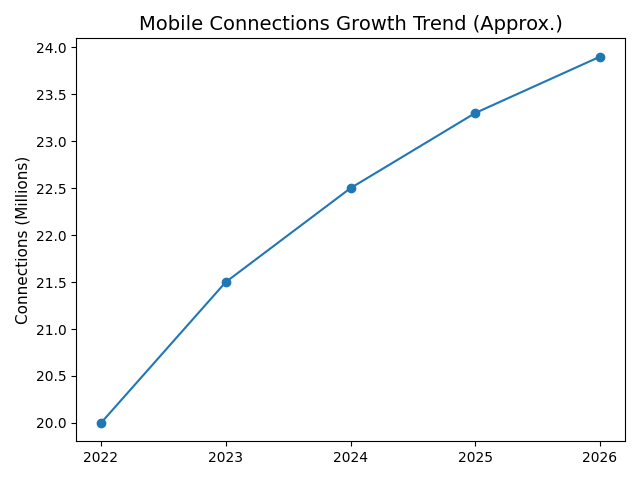
4. Yemen’s 23.9 million mobile connections (56.8% of population) suggest that mobile networks, not fixed broadband, are the only realistic gateway to AI-powered search for those who do get online.
5. A 5.8% year-on-year growth in mobile connections is an encouraging sign of gradual digital expansion, but at this pace, meaningful AI search penetration in Yemen remains years away without significant infrastructure investment.
6. While 76.9% of Yemen’s mobile connections qualify as broadband (3G/4G/5G), this figure is misleading — many connections are limited to voice and SMS only, and broadband access does not equate to usable AI search speeds.
7. Yemen’s 6.67 million social media users (15.9% of population) reveal that social platforms, not AI-powered search engines, are the primary digital discovery channel for most Yemeni internet users.
8. With a median age of just 18.4 years, Yemen has one of the world’s youngest populations — a demographic that is inherently more receptive to AI tools and generative search, but is currently blocked from that potential by poverty and conflict.
9. The 58.7% rural majority in Yemen faces dramatically worse connectivity than urban centres, meaning any AI search growth will be concentrated in cities like Aden and Sana’a rather than distributed nationally.
10. Yemen’s fixed internet download speed rose by an impressive 119% to 16.60 Mbps — a positive signal, though speeds still fall well short of what is needed for smooth, real-time generative AI search experiences.
11. LinkedIn’s advertising reach of just 1.7% of Yemen’s total population confirms that professional and B2B digital channels are negligible in Yemen, with AI-driven B2B search optimisation strategies holding little practical relevance in this market.
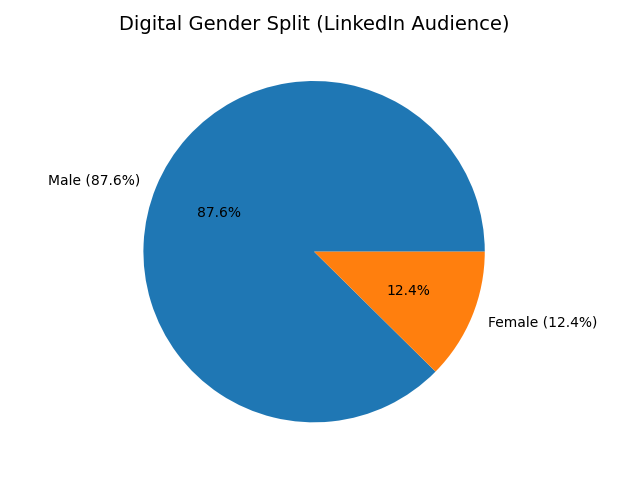
12. The 87.6% male skew of LinkedIn’s ad audience in Yemen reflects a wider structural gender gap in digital access — meaning AI search tools, when they do arrive at scale, risk deepening existing inequalities if access equity is not prioritised.
🔍 Section B: Yemen’s Search Engine Landscape
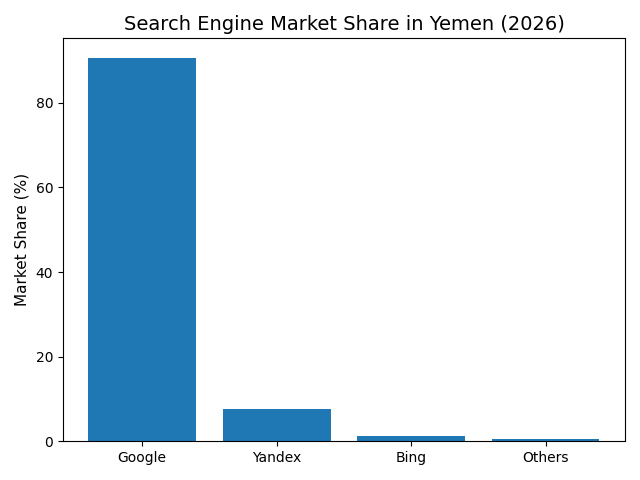
13. Google’s commanding 90.69% search market share in Yemen as of February 2026 makes it the only search engine that practically matters for SEO and generative search optimisation strategies targeting Yemeni audiences.
14. Yandex’s unusually high 7.53% market share in Yemen — far above its global average — likely reflects Houthi-aligned political influence and Russian-language technology penetration in conflict-affected regions, and is a critical consideration for any northern Yemen digital strategy.
15. With Bing at 1.24% and all other engines below 0.2%, Yemen is effectively a single-search-engine market — simplifying SEO strategy but also creating a fragile over-reliance on Google’s algorithm decisions for any content reaching Yemeni audiences.
16. Google’s 95.09% desktop market share in Yemen in early 2025 confirms that even desktop users overwhelmingly choose Google, eliminating any practical argument for investing in Bing or alternative platform optimisation.
17. Google’s near-total consistency around 97% search share throughout early-to-mid 2025 signals an exceptionally stable search environment in Yemen — unusual for a conflict zone — suggesting that online users are anchored to familiar tools amid broader uncertainty.
18. Bing’s sub-2% market share in Yemen means Microsoft’s AI-powered Copilot search — one of the world’s most prominent generative search tools — has negligible reach in the country, leaving Yemen’s AI search landscape effectively underpowered.
19. The failure of local search engine YemenPortal.net to gain traction underscores a global pattern: in low-connectivity markets, users default to the most familiar and resource-light tools, consolidating Google’s dominance even further.
20. For marketers and content publishers targeting Yemen in 2025, a Google-first SEO strategy is not just recommended — it is the only data-justified approach, given that no alternative platform commands enough audience to warrant a separate optimisation investment.
📡 Section C: Infrastructure, Connectivity & Speed
21. Yemen’s 30% internet resilience score from the Internet Society is a stark warning: the digital infrastructure underpinning AI search in Yemen is fragile, and any significant disruption — from conflict, flooding, or cyberattack — could cut millions off from online access instantly.
22. The fact that only 2% of the world’s top 1,000 websites are cached locally in Yemen forces nearly all web traffic to travel through expensive, slow international routes — making AI search tools that depend on fast server response times significantly less functional for Yemeni users.
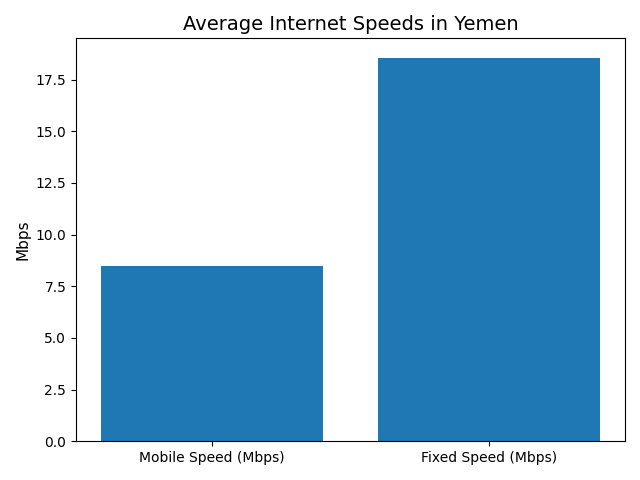
23. Yemen’s average broadband download speed of 18.57 Mbps is technically sufficient to use basic AI search interfaces, but the mobile average of just 8.48 Mbps — where most users connect — creates a substandard experience for generative AI tools that are data-intensive.
24. Internet access consuming 4.53% of average Yemeni income highlights a critical affordability barrier: for most households, the cost of getting online already represents a significant financial burden, making premium AI search services essentially inaccessible.
25. With 76% 4G coverage but less than 1% 5G, Yemen is locked in a mid-tier connectivity tier — capable of basic AI search interactions but unable to support the low-latency, high-bandwidth requirements of next-generation generative AI applications.
26. Yemen’s cybersecurity score of 7.19 and e-government readiness of 23.18 are among the lowest globally, reflecting an environment where AI-driven public services, digital identity, and secure online search are not yet viable at a national level.
27. Yemen having once ranked as the slowest mobile data market in the world at 3.98 Mbps underscores how recently — and how conditionally — the country has reached even basic usability thresholds for mobile AI search.
28. Ranking approximately 145th out of 152 countries for fixed download speed places Yemen in the bottom 5% globally — a structural reality that means AI search tools relying on fast data retrieval will consistently underperform for Yemeni users.
29. With fixed broadband subscriptions at roughly 1% of the population, Yemen’s AI search future is entirely mobile-dependent — a factor that content creators and SEO professionals must treat as a non-negotiable constraint in any Yemen-targeted digital strategy.
30. The emergence of limited LTE in Aden and Sana’a represents the most significant near-term opportunity for AI search growth in Yemen — urban users in these cities are the only realistic early adopters of generative search tools in the current environment.
31. Yemen’s split telecom governance between Houthi and IRG authorities is not just a political problem — it is a technical barrier to national AI search infrastructure, effectively creating two separate digital markets with incompatible regulatory environments.
32. Growth from 84,000 to 486,000 fixed broadband subscriptions between 2010 and 2022 demonstrates real, if modest, long-term progress — but 486,000 subscriptions for a 42-million-person country still represents one of the world’s lowest fixed internet penetration rates.
🛰️ Section D: Starlink & Satellite Internet
33. Yemen being the first Arabian Peninsula country to gain Starlink access in September 2024 is a landmark development — satellite internet is the most viable near-term pathway to delivering AI search and generative tools to underserved Yemeni communities.
34. The five-year Starlink licensing agreement signed in January 2024 provides a rare degree of long-term digital infrastructure certainty in an otherwise volatile environment, potentially enabling sustained AI search access planning for Yemen’s southern regions.
35. At USD 389 for hardware and USD 35–50 per month in subscription costs, Starlink remains financially out of reach for most Yemenis — limiting its AI search democratisation potential to the country’s wealthier urban minority and diaspora-funded households.
36. APNIC data showing high Starlink IP-attributed ad impressions in Yemen suggests that those who can afford satellite internet are highly active online, and likely among the earliest and most engaged users of AI-assisted search tools in the country.
37. The Houthi ban on Google ad services on YemenNet in June 2025 has effectively created a two-tier Yemeni search economy — with southern, government-controlled users having access to Google’s full commercial and AI ecosystem, while northern users do not.
38. The Houthi order to surrender Starlink devices by May 2025 is a direct suppression of the only viable alternative to state-controlled internet infrastructure — a move that directly undermines AI search access for millions of northern Yemenis and signals that technology is being weaponised as a tool of political control.
🚫 Section E: Internet Censorship & AI Search Constraints
39. The blocking of approximately 200 news websites by Houthi authorities — including major international outlets — means that AI-powered news search and information retrieval tools, when available, will encounter a curated and politically filtered information environment in northern Yemen.
40. The blocking of Zoom, Google Meet, and Signal in September 2023 reveals a pattern of targeting AI-adjacent communication platforms — a trend that suggests AI search tools may face similar suppression if they are perceived as enabling uncensored information access.
41. Yemen’s classification as “Not Free” for internet access places it in the same category as North Korea, Iran, and China for digital restrictions — meaning any global AI search strategy applied to Yemen must account for systematic content filtering and platform suppression.
42. The bifurcation of Yemen’s internet into YemenNet (Houthi) and AdenNet (IRG) means there is no single national AI search environment — digital strategies must treat northern and southern Yemen as fundamentally different markets with different access realities.
43. The Internet Society’s “very poor” rating for ISP choice in Yemen reflects a near-monopoly condition in both territories — a lack of market competition that historically suppresses the investment and innovation needed to support AI-ready digital infrastructure.
🤖 Section F: AI & Generative Technology Use Cases in Yemen
44. A 94.53% survey completion rate for an AI-powered WhatsApp chatbot deployed across Yemen’s conflict lines is a remarkable finding — it demonstrates that Yemeni citizens are willing and able to engage with AI tools when they are accessible via familiar, low-bandwidth platforms like WhatsApp.
45. The CMI project’s 36.76% female participation in AI-mediated dialogue in Yemen is a meaningful data point, suggesting that AI-powered tools delivered via mobile messaging may be more effective at bridging Yemen’s gender digital divide than traditional internet-based platforms.
46. The successful use of OpenAI transcription and translation tools to process Yemeni Arabic voice messages confirms that generative AI is already operating in Yemen — not through search engines, but through humanitarian and peacebuilding applications that circumvent traditional digital infrastructure barriers.
47. The gradual emergence of voice search optimisation and short-form video as relevant digital marketing topics in Yemen’s business community signals that, at least in urban centres, forward-thinking Yemeni businesses are beginning to align with global AI-first content trends.
48. Arabic-first, mobile-optimised content that loads in under three seconds is not just best practice for Yemen — it is an absolute requirement, given that the majority of Yemeni internet users access content on 3G mobile connections with limited data budgets.
🌍 Section G: Global AI Search Benchmarks
49. The global 8x surge in AI-driven traffic — with ChatGPT alone commanding 77% of AI platform visits — illustrates the scale of the generative search revolution that Yemen’s 82.3% offline population is currently entirely excluded from, representing a compounding digital equity crisis.
50. The Middle East’s 75% workplace AI adoption rate — above the 69% global average — reveals a stark regional inequality: Gulf states are racing ahead with AI integration while conflict-affected nations like Yemen are left structurally unable to participate in the same digital economy.
51. The Middle East & Africa AI market’s projected growth from USD 27.39 billion to USD 256.92 billion by 2032 is a regional story, not a Yemeni one — unless ceasefire, reconstruction, and deliberate digital investment intersect, Yemen will observe this growth from the outside.
52. The GCC AI market’s trajectory toward USD 15.5 billion by 2030 is geographically proximate to Yemen but economically worlds apart — illustrating how conflict, not just poverty, can exclude a nation from one of the most significant technological shifts of the century.
Conclusion
Yemen’s position in the global evolution of AI search and generative engine optimisation (GEO) is defined less by technological lag and more by structural exclusion. The 52 statistics and trends explored throughout this analysis make one reality unmistakably clear: Yemen is not simply behind in adopting AI-driven search—it is operating within a fundamentally different digital paradigm, where access, infrastructure, and political conditions dictate what is possible far more than innovation cycles or platform advancements.
At a time when AI-powered search is rapidly redefining how billions of users interact with information, Yemen remains a predominantly offline society. With more than four out of five citizens disconnected from the internet, the majority of the population is entirely absent from the generative search revolution. This is not a temporary gap that will close organically with time; it is a structural divide shaped by conflict, economic hardship, and underdeveloped infrastructure. As global AI ecosystems continue to mature, this divide risks becoming more pronounced, creating a long-term digital inequality that extends beyond access to include knowledge, opportunity, and economic participation.
However, within these constraints lies a more nuanced and strategically important insight. Yemen is not following the same digital trajectory as more connected markets, and therefore should not be analysed or approached through the same frameworks. Traditional SEO assumptions—based on high-speed connectivity, multi-device usage, and stable platform access—do not translate effectively into the Yemeni context. Even though Google dominates the search landscape almost entirely, the limited size of the online population and the prominence of social and messaging platforms significantly reduce the impact of conventional search optimisation strategies.
Instead, the data points toward an alternative model of digital engagement—one that is mobile-first, bandwidth-sensitive, and increasingly shaped by conversational interfaces rather than traditional search engines. The success of AI-powered tools delivered through platforms like WhatsApp demonstrates that when accessibility barriers are removed, Yemeni users are not only willing but highly capable of engaging with AI technologies. This suggests that the future of AI search in Yemen will not be driven by browser-based experiences alone, but by integrated, low-friction interfaces that align with existing user behaviour and technological limitations.
This shift has important implications for how GEO should be understood and applied in Yemen. Optimisation in this market is not about competing for visibility across multiple AI platforms or refining content for advanced ranking algorithms. It is about ensuring that content can be accessed at all. Speed, simplicity, and localisation become the defining factors of success. Arabic-first content, lightweight page structures, voice compatibility, and mobile optimisation are not enhancements; they are fundamental requirements. In many cases, the most effective “search strategy” may not involve search engines in the traditional sense, but rather distribution through messaging ecosystems, social platforms, and community-driven networks.
The role of infrastructure remains central to any forward-looking assessment. Improvements in mobile broadband coverage, incremental gains in download speeds, and the introduction of satellite internet services such as Starlink all represent meaningful, if uneven, progress. These developments indicate that Yemen’s digital environment is not static. There are emerging pockets of connectivity—particularly in urban centres like Aden and Sana’a—where more advanced forms of AI interaction are becoming viable. These areas are likely to serve as the initial testing grounds for AI search adoption, offering insights into how usage patterns may evolve as access expands.
Yet, infrastructure alone will not determine the trajectory of AI search in Yemen. The country’s political fragmentation introduces an additional layer of complexity that cannot be overlooked. The existence of parallel internet governance systems, combined with censorship, platform restrictions, and regulatory inconsistencies, effectively creates multiple digital realities within a single national boundary. Any strategy related to AI search or GEO must account for these divisions, recognising that access to tools, platforms, and information can vary significantly depending on geography and governance. This fragmentation not only limits scalability but also shapes user trust, content availability, and the overall digital experience.
Another critical dimension highlighted by the data is the risk of deepening inequality. Existing disparities—between urban and rural populations, between men and women, and between different income groups—are likely to be amplified as AI technologies become more integrated into global information systems. Those with access to reliable connectivity, higher-end devices, and unrestricted platforms will benefit disproportionately from AI-driven tools, while those without such access may fall further behind. Addressing this imbalance will require more than technological solutions; it will demand coordinated efforts across policy, infrastructure investment, and inclusive digital design.
Despite these challenges, Yemen’s long-term potential should not be underestimated. The country’s demographic profile, with a median age under 19, represents a generation that is inherently adaptable and receptive to new technologies. As connectivity improves, even incrementally, this young population could become a powerful driver of AI adoption, particularly if solutions are tailored to local realities. The demonstrated success of voice-based tools, mobile-first applications, and AI-assisted communication platforms provides a clear blueprint for how this transition could unfold.
From a global perspective, Yemen offers an important case study in the limitations of one-size-fits-all approaches to AI search and GEO. It underscores the need for more context-aware strategies that account for infrastructure constraints, cultural dynamics, and political environments. For businesses, organisations, and policymakers, the key takeaway is not that Yemen is an unviable market, but that it is a fundamentally different one—requiring adaptation, patience, and a focus on accessibility over sophistication.
Looking ahead, the future of AI search in Yemen will likely be shaped by a combination of gradual infrastructure improvements, continued innovation in low-bandwidth AI delivery, and the evolving political landscape. While widespread adoption may still be years away, the foundations for meaningful engagement are already visible in specific use cases and user behaviours. The challenge—and opportunity—lies in building on these foundations in a way that prioritises inclusion, resilience, and relevance.
In conclusion, Yemen’s AI search landscape in 2026 is best understood not as a reflection of global trends, but as a distinct environment with its own constraints and possibilities. The insights presented in these 52 statistics reveal a market that is constrained yet dynamic, limited yet evolving, and excluded yet not without potential. As the global AI ecosystem continues to expand, ensuring that countries like Yemen are not left behind will be one of the defining challenges of the next decade.
If you are looking for a top-class digital marketer, then book a free consultation slot here.
If you find this article useful, why not share it with your friends and business partners, and also leave a nice comment below?
We, at the AppLabx Research Team, strive to bring the latest and most meaningful data, guides, and statistics to your doorstep.
To get access to top-quality guides, click over to the AppLabx Blog.
People also ask
What is AI search and how does it work in Yemen in 2026?
AI search uses artificial intelligence to deliver conversational, context-aware results. In Yemen, limited internet access and slow speeds mean usage is restricted to a small, connected population.
What does GEO mean in the context of Yemen’s digital landscape?
Generative Engine Optimisation (GEO) refers to optimising content for AI-driven search tools. In Yemen, GEO focuses on mobile-friendly, low-bandwidth, and Arabic-first content.
How many people in Yemen use the internet in 2026?
Around 7.44 million Yemenis are online in 2026, representing just 17.7% of the population, leaving the majority without access to AI search tools.
Why is AI search adoption low in Yemen?
Low internet penetration, high costs, weak infrastructure, and political instability limit access, making AI search inaccessible to most Yemenis.
Which search engine dominates Yemen in 2026?
Google dominates with over 90% market share, making it the primary platform for search and SEO strategies in Yemen.
Is Google the only important search engine in Yemen?
Yes, Google holds overwhelming dominance, while Bing and others have negligible usage, simplifying but concentrating SEO efforts.
What role does mobile internet play in Yemen’s AI search usage?
Mobile is the main gateway to the internet in Yemen, meaning AI search experiences must be optimised for low-speed mobile connections.
Are Yemeni users accessing AI tools like ChatGPT?
Access is limited to a small, connected segment, often in urban areas or via satellite internet, rather than the general population.
How does Yemen’s low internet penetration affect SEO strategies?
It reduces reach significantly, meaning SEO must be highly targeted, mobile-first, and focused on accessible, lightweight content.
What are the biggest barriers to AI search in Yemen?
Key barriers include affordability, infrastructure gaps, censorship, slow speeds, and limited broadband access.
Is Yemen a good market for AI search optimisation?
It is a niche market with limited reach today, but offers long-term potential as connectivity improves.
How important is Arabic content for AI search in Yemen?
Arabic-first content is essential, as most users prefer local language and dialect-compatible information.
Do Yemeni users rely more on social media than search engines?
Yes, social platforms play a major role in content discovery, often more than traditional search engines.
Can generative AI tools work effectively on slow connections in Yemen?
Basic AI tools can function, but performance is limited. Lightweight, text-based, or voice-based tools work best.
What is the average internet speed in Yemen?
Mobile speeds average around 8.48 Mbps, while fixed broadband is higher but still below global standards.
How does Yemen’s political situation affect AI search access?
Internet governance is split, leading to censorship, platform restrictions, and unequal access across regions.
What is the impact of Starlink on Yemen’s AI search landscape?
Starlink improves access for a small group of users but remains too expensive for widespread adoption.
Is voice search important in Yemen?
Yes, voice search is highly relevant due to mobile usage patterns and varying literacy levels.
What type of content performs best in Yemen’s digital environment?
Fast-loading, mobile-optimised, Arabic content with simple formats performs best in low-bandwidth conditions.
How does Yemen compare to other Middle East countries in AI adoption?
Yemen lags significantly behind due to conflict and infrastructure challenges, unlike rapidly advancing Gulf states.
Are businesses in Yemen adopting AI search strategies?
Adoption is limited but emerging in urban areas, especially among forward-thinking businesses.
What is the future of AI search in Yemen?
Growth will depend on infrastructure improvements, affordability, and political stability.
How does mobile broadband coverage affect AI usage in Yemen?
Although coverage exists, inconsistent speeds and costs limit effective AI search usage.
Is LinkedIn or B2B search relevant in Yemen?
No, LinkedIn reach is very low, making B2B digital strategies less effective compared to other channels.
What are the key GEO strategies for Yemen in 2026?
Focus on mobile-first design, fast load times, Arabic content, and compatibility with low-speed networks.
Can AI tools help bridge Yemen’s digital divide?
Yes, especially through mobile messaging and voice-based solutions that require minimal bandwidth.
How does censorship impact AI-powered search in Yemen?
Censorship restricts access to information and platforms, limiting the effectiveness of AI search tools.
Why is WhatsApp important for AI use cases in Yemen?
It is widely used, low-bandwidth, and familiar, making it ideal for delivering AI-powered services.
What percentage of Yemen’s population is still offline?
About 82.3% of Yemenis remain offline, highlighting the scale of digital exclusion.
What should marketers know about AI search in Yemen?
They should prioritise accessibility, mobile optimisation, and local context over advanced AI optimisation tactics.
Sources
DataReportal
StatCounter Global Stats
Internet Society Pulse
AppLabx
TS2 Tech
BuddeComm
Carnegie Endowment for International Peace
APNIC Blog
Committee to Protect Journalists
Article 19
France 24
Crisis Management Initiative
SE Ranking
PwC Middle East
Fortune Business Insights
Arab News
Statista
GSMA Intelligence
United Nations Population Division
Ookla Speedtest Global Index
International Telecommunication Union
Kepios