























Key Takeaways
- The UAE leads global AI search adoption in 2026, making GEO and AI-first SEO essential for digital visibility and growth.
- Generative AI is reshaping search behaviour, with zero-click results, voice search, and AI answers driving how users discover brands.
- Businesses that invest early in GEO, multilingual content, and AI-driven authority signals gain a competitive edge in the UAE market.
The United Arab Emirates is rapidly emerging as the world’s most advanced real-world laboratory for artificial intelligence adoption, and nowhere is this transformation more visible than in search. In 2026, the UAE is not simply following global AI trends — it is setting them. With generative AI usage reaching unprecedented levels among its population, near-universal internet penetration, world-leading mobile infrastructure, and a government that has spent nearly a decade embedding AI into national strategy, the UAE offers a uniquely accelerated glimpse into the future of search, marketing, and digital discovery.

This article brings together 155 of the most important statistics, data points, and trends shaping AI search, Generative Engine Optimization (GEO), and SEO in the UAE in 2026. Whether you are a digital marketer, founder, enterprise leader, or SEO strategist, understanding these shifts is no longer optional. The rules of visibility, traffic, and customer acquisition are being rewritten in real time — and the UAE is one of the first markets where those new rules are fully visible at scale.
At the heart of this transformation is a fundamental shift in how people search. Traditional keyword-based search is rapidly being supplemented — and in some cases replaced — by AI-driven experiences such as Google AI Overviews, ChatGPT, Perplexity, and voice assistants. Instead of scrolling through blue links, users increasingly expect direct, summarised, and conversational answers. This shift is giving rise to new disciplines like Generative Engine Optimization (GEO) and Answer Engine Optimization (AEO), where the goal is not just to rank on a search engine results page, but to be cited, referenced, and trusted by AI systems themselves.
The UAE stands apart in this transition. With one of the highest AI adoption rates globally and a digitally native, multilingual population, consumer behaviour in the UAE is evolving faster than in most other markets. Search is becoming more conversational, more mobile, more voice-driven, and more influenced by AI-generated summaries. For businesses operating in the UAE, this means that traditional SEO strategies — while still important — are no longer sufficient on their own. Brands must now optimise for how AI systems interpret, summarise, and recommend content across multiple platforms.
Compounding this shift is the scale of investment flowing into the UAE’s AI ecosystem. From multi-billion-dollar infrastructure projects and sovereign AI funds to the development of homegrown large language models and Arabic AI capabilities, the country is building both the supply and demand sides of the AI economy simultaneously. This has direct implications for search: faster compute, local data processing, and regionally tuned models all contribute to more sophisticated, more relevant AI-driven search experiences for users in the UAE.
At the same time, the rise of AI search introduces new complexities and challenges. Zero-click searches are increasing, meaning users often get answers without visiting a website. AI-generated results are dynamic and probabilistic, with citations that can change frequently. Trust in AI is high in the UAE, but so is the need for credible, authoritative content that can be reliably surfaced by AI systems. As a result, visibility is no longer just about rankings — it is about presence across a fragmented ecosystem of AI interfaces.
This is where data becomes critical. The statistics in this report are not just numbers; they are signals of how quickly the search landscape is evolving and where the next competitive advantages will emerge. From AI adoption rates and infrastructure growth to search behaviour, conversion patterns, and GEO best practices, these insights provide a comprehensive view of how AI is reshaping digital marketing in the UAE.
Importantly, while many global reports discuss AI and search in broad terms, the UAE context is distinct. High connectivity, a young and affluent population, bilingual search behaviour (Arabic and English), and strong government support for AI all combine to create a market where change happens faster and at greater scale. Strategies that may still be considered “early” in other regions are already becoming baseline expectations in the UAE.
For marketers and businesses, this creates both an opportunity and a risk. Those who understand and adapt to AI search early can capture disproportionate visibility, authority, and conversion advantages. Those who rely solely on legacy SEO approaches may find their traffic declining without fully understanding why. The shift is not theoretical — it is already underway, and the data in this article makes that clear.
This guide is designed to help you navigate that shift. By analysing 155 carefully curated statistics across AI adoption, infrastructure, search behaviour, GEO strategy, and future predictions, it provides a structured, evidence-based view of where the UAE stands today and where it is heading next. More importantly, it highlights the practical implications behind the numbers — what they mean for your content, your visibility, and your competitive positioning in an AI-first search landscape.
As you read through the data, one theme will become increasingly clear: the future of search is not just about engines, but about intelligence. And in 2026, the UAE is one of the first places where that future has already arrived.
But, before we venture further, we like to share who we are and what we do.
About AppLabx
From developing a solid marketing plan to creating compelling content, optimizing for search engines, leveraging social media, and utilizing paid advertising, AppLabx offers a comprehensive suite of digital marketing services designed to drive growth and profitability for your business.
At AppLabx, we understand that no two businesses are alike. That’s why we take a personalized approach to every project, working closely with our clients to understand their unique needs and goals, and developing customized strategies to help them achieve success.
If you need a digital consultation, then send in an inquiry here.
Or, send an email to [email protected] to get started.
155 AI Search & GEO in UAE Statistics, Data & Trends in 2026
SECTION 1: UAE Generative AI Adoption & Global Ranking
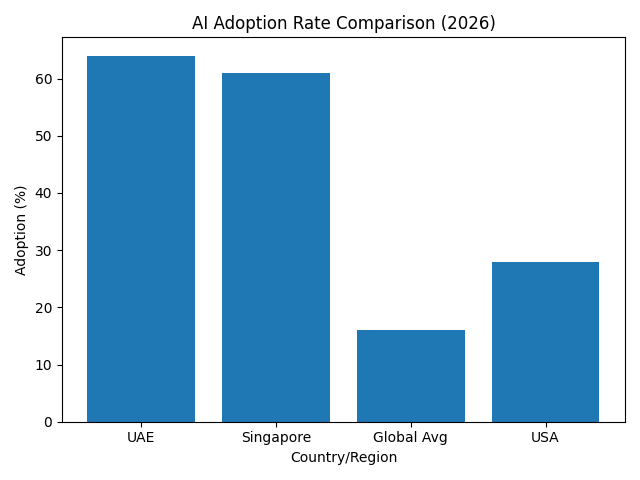
1. The UAE’s position as the world’s #1 country for AI adoption — with 64% of its working-age population using generative AI tools by end of 2025 — reflects a combination of deliberate government policy, young demographics, and high digital literacy, rather than organic consumer demand alone.
2. The UAE’s 4.6-percentage-point rise in AI adoption within a single year (from 59.4% to 64.0%) signals accelerating momentum, though sustaining this growth will require continued investment in Arabic-language AI tools and workforce upskilling programs.
3. The UAE’s 3-percentage-point lead over Singapore in AI adoption is meaningful but narrow, suggesting that other small, high-income, tech-forward nations are credible rivals for the top spot in coming years.
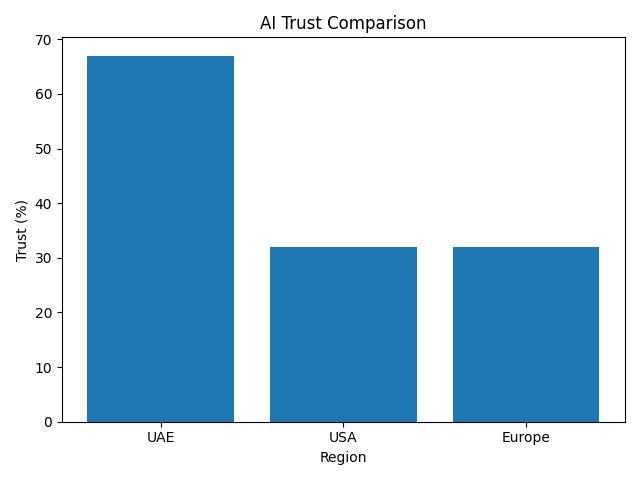
4. The UAE’s 67% public AI trust rate — more than double the US figure of 32% — is a significant structural advantage for AI-first business models, though it also raises questions about whether adequate AI literacy and critical evaluation skills are keeping pace with enthusiasm.
5. The fact that the UAE and Singapore are the only two countries where more than 60% of the population uses generative AI tools places both nations in a distinct category of AI readiness that the rest of the world has not yet reached.
6. The UAE’s AI adoption rate being more than 4x the global average of 16.3% underscores the scale of the opportunity gap for businesses that invest in AI-native digital marketing and search strategies in the region versus those that don’t.
7. The 35-percentage-point AI trust gap between the UAE and Western Europe is one of the starkest attitudinal differentials in global technology surveys, and it directly influences how UAE consumers respond to AI-generated search results and recommendations.
8. The US falling to 24th place globally in AI adoption — with only 28.3% of its working-age population using generative AI — is a counterintuitive finding given America’s dominance in AI infrastructure and model development, suggesting that access and trust, not just technology availability, drive consumer adoption.
9. The UAE’s 64% AI adoption rate being nearly 4x the global average of 16.3% means that global AI search benchmarks frequently understate the importance of AI-first strategies for brands competing specifically in the UAE market.
10. The wide variance in AI adoption across GCC nations — from UAE’s 64% to Kuwait’s 19.1% — illustrates that even within the same region, AI readiness is highly uneven, meaning pan-GCC marketing strategies must be tailored by country.
SECTION 2: UAE AI Market Size & Investment
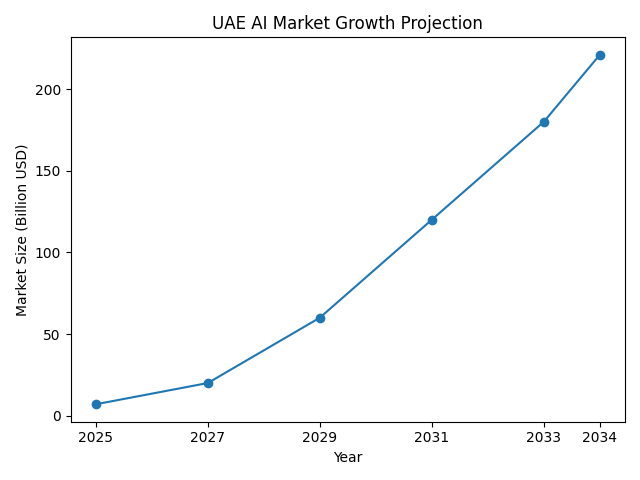
11. The UAE AI market’s projected growth from $7.39 billion in 2025 to $221.38 billion by 2034 at a 45.9% CAGR is a striking forecast, though aggressive CAGR projections in emerging tech markets should be interpreted with caution as they are highly sensitive to geopolitical and regulatory conditions.
12. The Trends Research & Advisory projection of $46.33 billion for UAE’s AI market by 2030 is more conservative than some estimates, but still represents a 13x growth from 2023–2024 levels — reinforcing that early AI investment in the UAE is entering during a high-growth window.
13. AI’s projected $100 billion contribution to UAE GDP by 2030 — roughly 14% of total GDP — would represent one of the highest AI-to-GDP ratios of any country, making the UAE’s economic future meaningfully dependent on the success of its AI strategy.
14. If AI contributes 20% of the UAE’s non-oil GDP by 2031 as CSIS projects, it would effectively replace a significant portion of hydrocarbon dependency — a strategic objective the UAE government has explicitly prioritised for decades.
15. Statista’s more modest $4.285 billion UAE AI market projection by 2030 — at a 28.54% CAGR — reminds analysts that AI market sizing varies significantly by methodology, and decision-makers should triangulate across multiple credible sources.
16. The UAE generative AI market’s projected growth from $341.6 million in 2025 to $4.389 billion by 2033 is primarily driven by software applications, meaning the largest commercial opportunity lies not in infrastructure but in AI-powered products and services built on top of it.
17. The fact that software commands 84.31% of the UAE generative AI market’s revenue share suggests that UAE businesses are principally AI consumers rather than AI infrastructure builders — a distinction with significant implications for digital marketing and SEO investment decisions.
18. Microsoft’s $15.2 billion UAE investment is the largest single-country AI infrastructure commitment by any Western technology company to a Gulf state, and positions the UAE as a de facto test case for how US AI technology can be deployed globally through sovereign partnerships.
19. The MGX fund’s potential to manage up to $100 billion in AI assets signals the UAE’s ambition to be not just an AI adopter but a global AI capital allocator — a role that will attract AI talent, startups, and enterprise buyers to the region.
20. The $30 billion private equity base of the MGX-BlackRock-Microsoft fund represents a rare convergence of sovereign wealth, global asset management, and Big Tech — a coalition that could accelerate UAE AI deployment timelines significantly if governance and deployment align.
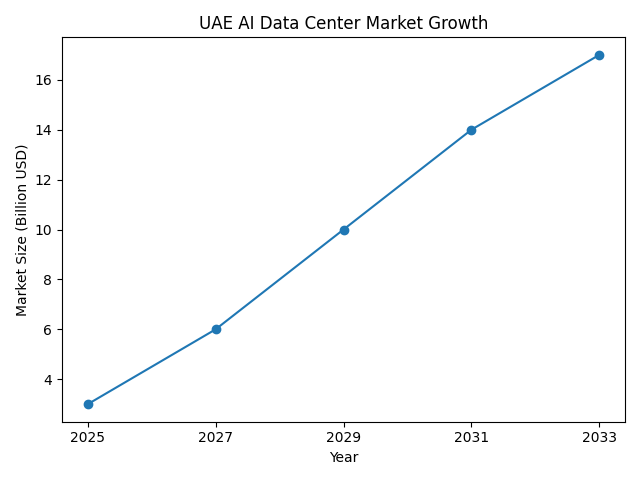
21. The UAE AI data center market’s projected growth from $3.45 billion in 2025 to $17.54 billion by 2033 reflects both international hyperscaler demand and domestic AI consumption growth — with the infrastructure build-out likely preceding widespread AI search and GEO adoption by 12–24 months.
22. The Mordor Intelligence projection of $797 million for UAE AI-optimised data center capacity by 2031 at a 15.86% CAGR is notably more conservative than Grand View Research’s figure — illustrating the range of uncertainty inherent in forecasting nascent infrastructure markets.
23. The PS Market Research forecast of $7.1 billion for UAE’s AI market by 2032 at a 7.4% CAGR is among the most conservative available, and may more accurately reflect organic AI revenue generation as opposed to total infrastructure investment value.
24. The fact that 42% of UAE businesses are actively using AI — while 65% report accelerated AI rollout — suggests a meaningful gap between adoption intent and full operational deployment, which UAE SEO and digital marketing providers can capitalise on with implementation services.
25. The finding that 98% of UAE businesses view AI as a key resilience enabler, while 75% maintain or increase AI investment, indicates that AI adoption in the UAE is increasingly viewed as essential infrastructure rather than optional innovation.
SECTION 3: UAE AI Infrastructure & Data Centers
26. The UAE surpassing 580 MW of AI-ready data center capacity positions it as the Middle East’s leading AI compute hub, though this capacity remains a fraction of what the US and China operate — underscoring both how far the UAE has come and how far it has yet to go at global scale.
27. With 250 MW live and 500 MW under development, the UAE’s data center pipeline suggests that AI compute capacity will more than triple in the near term — creating the physical foundation for more sophisticated AI search, inference, and generative content services.
28. Dubai and Abu Dhabi hosting 84% of UAE data center capacity reflects the country’s centralised urban structure, but also creates geographic concentration risk that future resilience planning should address.
29. The 5-gigawatt UAE-US AI Campus in Abu Dhabi — the largest AI infrastructure project outside the US — is an unprecedented geopolitical and commercial statement, though its full impact on local AI adoption and search behaviour will unfold over a 5–10 year horizon.
30. Microsoft and G42’s 200 MW data center expansion via Khazna — expected online before end of 2026 — will meaningfully increase UAE-based AI compute capacity, reducing latency for UAE users accessing Microsoft Copilot, Bing AI, and Azure OpenAI services.
31. The GCC data center market’s projected growth from $3.48 billion in 2024 to $9.49 billion by 2030 at 18.2% CAGR indicates that the UAE is operating within a fast-growing regional market — with Saudi Arabia and Qatar as its primary competitive neighbours for data center investment.
32. The Middle East hyperscale segment reaching $16.38 billion by 2031 at a 23.53% annual growth rate confirms that international cloud providers view the region as a strategic expansion priority, not merely an emerging market afterthought.
33. Core42’s inauguration of the Middle East’s first sovereign LLM training facility — powered by 10,000 NVIDIA H100 GPUs — marks a qualitative shift from the UAE merely hosting AI compute to actively producing frontier AI models within its borders.
34. Cloud Service Providers holding 55.12% of the UAE AI data center market reflects the dominant role of hyperscalers (AWS, Microsoft Azure, Google Cloud) in driving UAE AI infrastructure — a dynamic that gives these platforms outsized influence over UAE AI search and GEO standards.
35. Tier IV facilities commanding 60.92% of UAE’s AI data center market highlights the country’s preference for premium, highly resilient infrastructure — consistent with the UAE’s broader positioning as a trusted, always-on digital hub for regional businesses.
36. The IT and ITES sector’s 33.15% revenue share of UAE’s AI data center market reflects the natural first-mover advantage of technology-native industries, though financial services, government, and healthcare are expected to close this gap as AI maturity increases.
37. Microsoft’s plan to nearly quadruple UAE data center capacity to the equivalent of 81,900 H100 chips by 2029 is a commitment that, if realised, would place the UAE among the world’s top 10 AI compute locations — a direct enabler of faster, more accurate AI search and GEO capabilities for UAE-based brands.
SECTION 4: UAE Internet & Digital Infrastructure
38. The UAE’s near-universal internet penetration of 99% — covering 11.1 million users — creates the ideal baseline for AI search adoption, as almost every resident is already digitally connected and reachable through online channels.
39. With 195 mobile connections per 100 residents, the UAE’s hyper-mobile population is inherently predisposed to mobile-first AI search behaviours, making mobile GEO and voice search optimisation non-negotiable for UAE brands in 2026.
40. Social media reaching 100% of the UAE’s total population is a rare global phenomenon and a strong signal that social platform brand signals — increasingly important for AI citation algorithms — are a critical component of any UAE GEO strategy.
41. The UAE’s world-leading mobile internet speed of 652.87 Mbps removes latency as a barrier to AI tool adoption, enabling UAE users to engage with generative AI search interfaces faster and more fluidly than users in most other countries.
42. UAE mobile internet speeds averaging 441.89 Mbps and fixed broadband at 300.65 Mbps mean that AI-heavy search interfaces, video search, and real-time generative AI content delivery perform at near-optimal conditions in the UAE market.
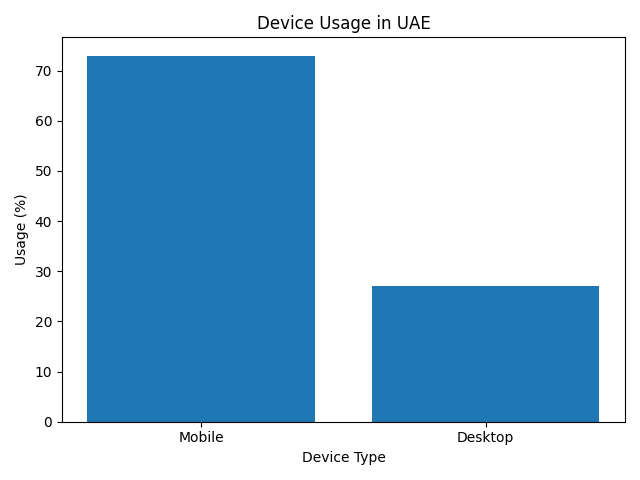
43. Mobile devices accounting for 72.75% of UAE internet usage confirms that mobile-first indexing, fast-loading pages, and responsive AI-generated content are table-stakes requirements — not best practices — for UAE digital marketers in 2026.
44. UAE residents spending an average of 8 hours and 11 minutes online daily creates substantial daily touchpoint opportunities for AI-powered search, content, and advertising — one of the highest per-capita daily digital engagement rates in the world.
45. Chrome’s 74.80% browser dominance in the UAE means Google’s AI Overviews and SGE features are experienced by the vast majority of UAE internet users, giving Google’s generative search features outsized reach versus rival AI search engines in the market.
46. The UAE’s average fixed broadband speed of 235.72 Mbps places it well above the global average, meaning bandwidth constraints will not limit the uptake of data-intensive AI search experiences, including multimodal and video-based search.
47. With mobile broadband connections exceeding 300 per 100 residents, the UAE’s connectivity density is among the world’s highest — a structural enabler of always-on AI assistant usage and continuous voice/conversational search behaviour.
SECTION 5: UAE Digital Search Behavior
48. Over 92% of Dubai consumers using Google to find local businesses confirms that Google Search remains the dominant discovery channel in the UAE, and that Google AI Overviews and SGE features directly shape the majority of local commercial search experiences.
49. More than 2.5 million daily Google searches in Dubai alone — a city of approximately 3.7 million people — underscores the remarkable search intensity of UAE consumers and the high-stakes nature of AI search visibility for local businesses.
50. The fact that 80% of UAE consumers search for local businesses online weekly, with 32% doing so daily, creates a high-frequency touchpoint where AI Overviews and GEO-optimised business listings can significantly influence purchase decisions.
51. SEO leads converting at 14.6% versus 1.7% for outbound marketing represents a compelling ROI argument for UAE businesses to prioritise organic and AI search visibility — particularly as AI search visitors have been shown to convert at even higher rates than traditional organic visitors.
52. Local SEO delivering 3.5x the ROI of traditional advertising in the UAE makes a strong case for geographic and intent-based search optimisation, with GEO layered on top to capture AI-driven discovery as well as traditional organic ranking.
53. The UAE’s 88.1% urban population concentration means that hyper-local search queries — for neighbourhood businesses, local services, and city-specific information — are disproportionately high relative to the national population, making local GEO a particularly high-value strategy.
54. The UAE’s median age of 31.6 places it in a sweet spot: old enough to have established purchasing power and brand loyalty, yet young enough to have grown up with digital-first behaviours — making this one of the most AI-receptive consumer demographics anywhere.
55. Digital ad spend in the UAE growing at 12% annually through 2033 creates a rising competitive environment where organic AI search visibility — through GEO and AEO — becomes increasingly valuable as a cost-efficient alternative to paid acquisition.
SECTION 6: Google AI Overviews & Generative Search
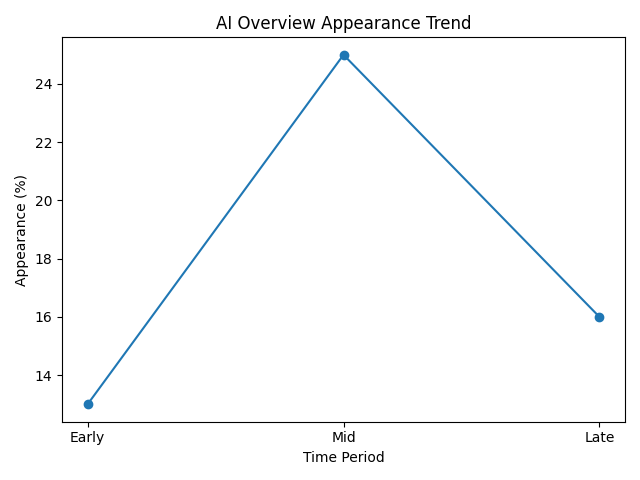
56. Google AI Overviews appearing in 25.11% of searches globally — up from 13.14% just months earlier — signals that generative answers are transitioning from an experimental feature to a mainstream search experience, requiring UAE brands to treat GEO as a core SEO pillar in 2026.
57. Google AI Overviews reaching 1.5–2 billion monthly users globally establishes them as arguably the world’s most widely accessed generative AI surface — making inclusion in AI Overviews one of the most valuable brand visibility opportunities in digital marketing today.
58. The finding that SGE influences up to 86.83% of all UAE search queries, pushing organic listings down by up to 1,600 pixels, is perhaps the single most urgent statistic for UAE digital marketers — it means that traditional rank-tracking and CTR models are no longer sufficient to measure actual search visibility.
59. AI Overviews being available in 40+ languages including Arabic confirms that Arabic-language content is now eligible for inclusion in Google’s most prominent generative search feature — making Arabic GEO strategy an immediate priority for UAE brands serving Arabic-speaking audiences.
60. AI Overviews reducing website clicks by 58% is a double-edged finding: while it threatens traditional traffic metrics, it simultaneously elevates the commercial value of being cited within an AI Overview, as those citations carry significant credibility and intent signals.
61. The fact that only 7.9% of local searches trigger an AI Overview globally offers some reassurance to UAE local businesses: near-term local search traffic may be less disrupted by AI Overviews than broad or informational queries, giving local SEO a relatively stable foundation.
62. The volatility of AI Overview appearance rates — swinging from 6.5% to 25% and back to 16% within a single year — is an important reminder that brands should not build their entire digital strategy around a single feature whose trigger conditions Google changes frequently and without public notice.
63. The fact that 88% of AI Overview-triggering queries are informational in nature guides UAE content strategy: comprehensive, authoritative, and well-structured explainer content is the primary lever for earning AI Overview placement.
64. AI Overview citations changing 70% of the time for the same query — and 45.5% of sources being replaced on regeneration — means UAE brands cannot assume that earning one AI citation is a permanent achievement; sustained content quality and authority-building are ongoing requirements.
65. The finding that 76.1% of AI Overview-cited URLs also rank in Google’s top 10 confirms that traditional SEO and GEO are not competing disciplines — they are complementary, with strong organic rankings remaining the most reliable pathway to generative AI citation.
SECTION 7: Generative Engine Optimization (GEO) & AEO
66. The GEO market growing from $848 million in 2025 to $33.7 billion by 2034 at a 50.5% CAGR represents one of the fastest-growing digital marketing disciplines in history — and UAE agencies and brands that develop GEO expertise now will have a significant first-mover advantage.
67. With 54% of US marketers planning to implement GEO within 3–6 months, UAE marketers who delay adoption risk falling behind not just locally but globally — particularly in competitive categories like finance, real estate, hospitality, and e-commerce.
68. Gartner’s prediction that 50% of all searches will involve an AI assistant by 2028 should be treated as a planning horizon: UAE brands have a 2-year window to build the content, authority, and structured data infrastructure needed to be visible in AI-assisted search environments.
69. Gartner’s projection that traditional search volumes will drop 25% by 2026 does not mean organic SEO is dead — it means the nature of search discovery is fragmenting across Google AI Overviews, ChatGPT, Perplexity, and voice assistants, requiring multi-platform optimisation strategies.
70. The finding that 44.2% of LLM citations come from content introductions highlights a critical content structuring principle for UAE marketers: the most important information, key claims, and brand differentiators must appear in the first 30% of any piece of content to maximise AI citation probability.
71. Websites with over 32,000 referring domains being 3.5x more likely to be cited by ChatGPT reinforces that authority-building through digital PR, thought leadership, and high-quality backlink acquisition remains as strategically relevant in the AI search era as in classical SEO.
72. The 4x higher ChatGPT citation probability for brands with active presence on Quora and Reddit underscores that these platforms — often overlooked in UAE digital marketing strategies — function as critical trust and authority signals for AI engines.
73. Review platform presence on Trustpilot, G2, and similar sites tripling the likelihood of ChatGPT citation is particularly actionable for UAE B2B and hospitality brands: systematic review generation and management is now a GEO strategy, not just a reputation management tool.
74. The less-than-1-in-100 chance of AI engines giving the same brand list twice is a profound finding for UAE competitive strategy: AI brand visibility is probabilistic, not deterministic, which means share-of-voice metrics across hundreds of queries must replace single-query rank tracking.
75. ChatGPT citing direct competitors together rather than ranking one winner above others means UAE brands competing on AI visibility must focus on being consistently present in AI answers rather than trying to exclude competitors — a fundamentally different competitive mindset than traditional SEO.
SECTION 8: AI Search Traffic & User Behavior
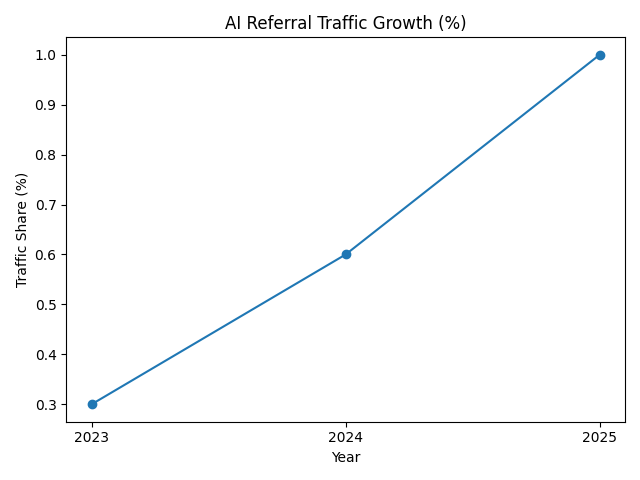
76. AI referral traffic accounting for 1.08% of all website traffic globally — with ChatGPT driving 87.4% of it — reveals that while AI search is growing rapidly, traditional search engines still dominate direct referral traffic; UAE brands should invest in AI visibility without abandoning their existing SEO foundations.
77. The 357% year-over-year growth in AI platform referral visits (to 1.13 billion in June 2025) is one of the most dramatic traffic growth curves in the history of digital marketing, and UAE brands not tracking AI referral traffic in their analytics are already measuring an incomplete picture.
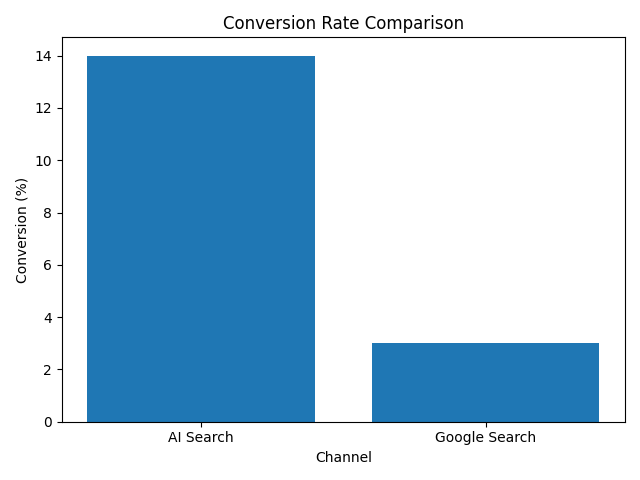
78. AI search visitors converting at 14.2% versus Google’s 2.8% — a 5x difference — suggests that users arriving from AI search engines exhibit significantly stronger purchase intent, making AI referral traffic quality far superior to volume metrics alone would suggest.
79. The finding that 93% of AI search sessions end without a website visit reframes the AI search challenge: brand awareness and recall built inside the AI answer may be more valuable than the click itself, which has major implications for how UAE brands measure AI search ROI.
80. With 60% of searches now ending without a click, UAE brands must develop a zero-click strategy — optimising for brand mentions, structured answers, and rich snippets that deliver value within search results, rather than relying solely on click-through traffic as the primary conversion pathway.
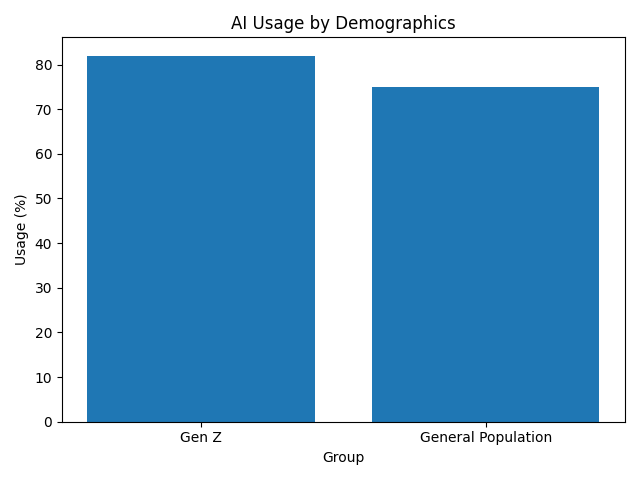
81. The finding that 75% of people globally use AI search tools more than a year ago — with 43% using them daily — confirms that AI search has crossed the threshold from early adopter novelty to mainstream consumer behaviour, making it a durable channel rather than a temporary trend.
82. The preference of 82% of Gen Z for AI tools providing direct answers over traditional search is particularly consequential in the UAE, where the median age is 31.6 — meaning a substantial portion of the UAE’s high-spending consumer base already prefers AI-mediated search experiences.
83. 28% of Gen Z globally using AI chatbots as their primary search entry point is a behaviour that, given UAE’s world-leading AI adoption rates, is likely already equal to or higher in the UAE market — meaning youth-targeted UAE brands cannot afford to ignore ChatGPT and Perplexity visibility.
84. The fact that 62% of consumers trust AI recommendations more when source links are visible reinforces that citation-worthy, authoritative content with clear provenance is the trust-building currency of the AI search era — not just keyword optimisation.
85. Only 10% of users trusting the first AI result alone — while 48% verify across multiple platforms — means UAE brands must pursue multi-platform AI visibility across Google AI Overviews, ChatGPT, Perplexity, and Gemini simultaneously, as no single AI engine is the final arbiter of consumer trust.
SECTION 9: ChatGPT & AI Platform Usage
86. ChatGPT’s weekly active user base doubling from 400 million to 800 million–1 billion within a year represents growth at a pace that outstrips even the fastest-growing social media platforms in history, making it a media channel of genuinely unprecedented scale.
87. ChatGPT processing 2.5 billion daily prompts means it is already operating at a search scale comparable to — though not yet equal to — Google’s estimated 8.5 billion daily searches, and the gap is narrowing faster than most marketers appreciate.
88. ChatGPT’s 81% market share in the AI chatbot space creates a winner-takes-most dynamic reminiscent of Google’s dominance in traditional search — though the AI chatbot market remains earlier in its consolidation cycle, leaving room for challengers to gain share.
89. ChatGPT becoming the 4th most visited website globally with 5.72 billion visits in January 2026 marks a historic milestone: a generative AI product has entered the same traffic tier as Google, YouTube, and Facebook, fundamentally reshaping the digital attention landscape.
90. ChatGPT reaching 12% of Google’s search volume in under three years is a disruption trajectory that should prompt UAE brands to ask not just “how do I rank on Google?” but “how do I get cited by ChatGPT?” — two questions that require meaningfully different strategies.
91. ChatGPT’s mobile app having 557 million monthly active users — 8x Gemini’s 70 million — confirms that OpenAI currently dominates the mobile AI search experience, which is critical context for UAE brands given the country’s 72.75% mobile internet usage rate.
92. 66% of 18–24-year-olds in the US using ChatGPT for information discovery — nearly matching Google’s 69% among the same demographic — signals a generational search preference shift that UAE brands must anticipate given the country’s young, digitally native consumer base.
93. The finding that 59% of local intent prompts in ChatGPT trigger a web search — versus 19% for informational queries — is actionable for UAE local businesses: optimising for AI search discoverability of local businesses is a high-priority GEO tactic with measurable impact.
94. Commercial intent prompts triggering web searches in ChatGPT at 53.5% — nearly 3x the rate of informational queries — suggests that UAE brands in high-purchase-intent categories like real estate, automotive, and luxury goods face the greatest AI search disruption risk and the greatest citation upside.
95. Perplexity’s 22 million monthly active users being predominantly senior leaders and high-income professionals makes it a premium discovery channel for UAE B2B brands: a relatively small audience with outsized purchasing authority and willingness to act on AI-sourced recommendations.
SECTION 10: UAE Voice Search, Arabic AI & Multilingual Search
96. With 85% of UAE residents having used a voice assistant and 43% doing so regularly, the UAE is one of the world’s most advanced voice search markets — yet the majority of UAE brand websites remain unoptimised for conversational, long-tail voice queries in either Arabic or English.
97. The preference of 65% of UAE voice users for Arabic as their primary voice assistant language confirms that Khaleeji Arabic-optimised content is not a niche requirement but a mainstream need — one that most global SEO tools and frameworks are still poorly equipped to serve.
98. Voice searches in the UAE growing 340% between 2024 and 2025, with 68% containing mixed Arabic-English phrases, creates a unique bilingual optimisation challenge that standard English-language SEO tools and strategies cannot adequately address without specialist localisation.
99. The projection that over 60% of UAE search traffic will originate from spoken or conversational queries by 2026 represents the most significant structural change to UAE search behaviour in a decade — and means that website content written purely for reading, not speaking, will become progressively less discoverable.
100. 75% of UAE households projected to own at least one smart speaker reinforces that the UAE home environment is increasingly AI-mediated, with voice search becoming the default discovery mechanism for everything from product research to restaurant recommendations.
101. The finding that bilingual Arabic-English voice optimisation can capture 75% of all UAE voice searches — combining 34% pure Arabic and 41% hybrid queries — makes a compelling commercial case for investing in comprehensive multilingual content and technical voice search optimisation.
102. Businesses using multilingual voice search optimisation seeing 3.2x higher conversion rates in Dubai is a striking ROI finding, though it is worth noting that early adopters in any optimisation category tend to see outsised returns before the strategy becomes widely adopted.
103. Voice commerce in Dubai projected to reach $2.3 billion by 2026 represents a meaningful and fast-growing retail channel — one where early Arabic voice commerce optimisation could yield competitive advantages comparable to those early mobile commerce adopters experienced a decade ago.
104. The prediction that over 50% of Middle East searches will be voice-based by 2025 may be slightly ahead of realised behaviour, but the directional trend is clear: UAE brands must treat voice search optimisation as a present-day technical requirement, not a future roadmap item.
105. AI handling 25% of global queries by 2026 — combined with the UAE’s 64% AI adoption rate — suggests the share of AI-mediated queries in the UAE could significantly exceed the global average, making AI-first search optimisation strategies more urgent and more impactful here than in most other markets.
SECTION 11: UAE Homegrown AI Models, Research & Talent
106. The UAE developing Falcon LLM — trained on 40 billion parameters and 1 trillion tokens — demonstrates genuine sovereign AI capability rather than merely deploying Western technology, giving the UAE geopolitical independence in AI development that few nations possess.
107. Falcon 180B, trained on 3.5 trillion tokens, competing with the world’s most powerful open-source LLMs is a remarkable achievement for a nation of 11 million people, and positions the UAE as a credible AI research superpower by any global benchmark.
108. MBZUAI’s status as the world’s first AI-only university — established in 2019, three years before ChatGPT — reflects the UAE’s foresight in AI institution-building, though the long-term impact on UAE’s AI talent pipeline will depend on how many graduates remain in-country versus emigrating to higher-paying markets.
109. MBZUAI’s 5% acceptance rate from 8,000+ applicants for Fall 2025 signals growing global prestige and competitive positioning — but also the need for the UAE to scale AI talent development beyond a single elite institution to meet the broader workforce demands of a 64% AI-adopting economy.
110. MBZUAI’s collaboration with G42 to produce Arabic, Kazakh, and Hindi LLMs — with 700+ students from 49 nations — shows that the UAE is positioning itself as a global hub for non-English AI model development, an underserved market with massive untapped commercial potential.
111. The Jais Arabic LLM being considered the world’s most advanced Arabic language model is significant not just for the UAE but for the entire Arabic-speaking world of 400+ million people, for whom Jais could underpin the next generation of Arabic AI search, content generation, and voice assistant experiences.
112. TII’s 13,824-GPU HPC cluster enabling regional open-weights LLM training in under 90 days demonstrates that the UAE has achieved both the compute capacity and the technical expertise to operate at frontier AI research speed — a capability that directly underpins its AI search and GEO ecosystem.
113. The UAE using AI to draft and amend laws — aiming to speed up the legislative process by 70% — is an extraordinary use case that, if successful, could create a governance model other nations adopt, while also demonstrating that the UAE’s AI strategy extends far beyond commercial applications.
114. The UAE appointing the world’s first Minister of State for AI in 2017 — five years before the general public had heard of ChatGPT — is the clearest indicator that the country’s AI leadership position in 2026 reflects a decade of deliberate strategy, not recent opportunism.
115. The UAE National AI Strategy 2031 targeting AED 335 billion in economic growth from AI across 9 priority sectors creates a government-level mandate that shapes public procurement, regulatory frameworks, and private sector investment decisions throughout the economy.
116. Over 400 AI firms registered in the UAE — attracted by Golden Visa programs and regulatory sandboxes — create a competitive and fast-moving ecosystem that raises the digital marketing and AI search sophistication bar across industries.
117. Microsoft’s commitment to upskill 1 million UAE residents in AI and cloud by 2027 is the most ambitious corporate AI education initiative announced in the Middle East, though its measurable impact on actual AI search behaviour and digital marketing capability is yet to be independently assessed.
SECTION 12: UAE GEO/SEO Landscape for 2026
118. SGE pushing organic search listings 1,600 pixels below the fold fundamentally disrupts the traditional concept of “above the fold” visibility — UAE brands that have not yet adapted their search strategies to this new page architecture are systematically losing visibility they may not even realise they have lost.
119. Only 13.7% overlap between Google AI Overview citations and AI Mode citations creates a strategic implication for UAE brands: securing visibility in one feature does not automatically guarantee visibility in the other, requiring separate content and authority-building strategies for each.
120. 80% of B2B technology buyers trusting AI as much as traditional search for supplier research is a seismic shift in B2B buying behaviour — UAE B2B brands that delay AI search optimisation risk ceding early stages of the purchase journey to competitors who are already AI-visible.
121. AI-written content appearing in over 17% of top global search results creates a mixed landscape where quality and authority remain differentiators — UAE brands should use AI to scale content production while maintaining rigorous human editorial oversight to preserve the E-E-A-T signals that both Google and AI citation algorithms favour.
122. AI-created content appearing in search results within 2 months offers UAE content teams a meaningfully faster time-to-visibility than traditional long-form content often delivers — a productivity advantage most significant in fast-moving categories like finance, property, and events.
123. Nearly 47% of online sellers globally using AI for product descriptions illustrates that AI content generation is now standard practice in e-commerce — UAE retailers not yet leveraging this capability risk both a productivity disadvantage and, potentially, a search visibility gap.
124. 39% of global marketers reporting traffic drops following AI Overview rollout — with technology, travel, and retail among the most affected — maps directly onto three of the UAE’s largest and most competitive digital marketing sectors, making AI search strategy an urgent boardroom priority.
125. AI Overviews appearing 5x more often for 10-word queries than single-word searches validates the long-standing content marketing principle of targeting specific, detailed questions — in the UAE context, this means Arabic and English long-tail question-based content should be a core GEO investment.
126. The average AI Overview length of 1,766 characters (254 words) provides UAE content creators with a practical calibration: content summaries, FAQ answers, and meta descriptions designed to be AI-citeable should target approximately this length for maximum compatibility with the feature’s output format.
127. AI Mode responses including approximately 12 links — and AI Overviews linking to 13.3 sources on average — means that each AI search response creates over a dozen citation opportunities, significantly increasing the potential for multiple UAE brands in the same category to simultaneously benefit from AI search visibility.
SECTION 13: UAE Social Media Search & E-Commerce
128. Facebook reaching 86.5% of UAE’s total population (9.7 million users) confirms it remains a dominant social media channel in the UAE — though its role has increasingly shifted from organic discovery to paid advertising and community building, with AI-powered ad targeting now central to its marketing value.
129. YouTube’s 73.6% population reach in the UAE (8.25 million users) makes it the dominant video platform in the country — and given that YouTube brand mentions correlate strongly with AI citation probability, UAE brands should treat YouTube not just as an advertising channel but as an AI authority-building platform.
130. Instagram reaching 67.8% of the UAE population with 8.6% year-over-year audience growth reflects sustained momentum in visual social search — a behaviour pattern reinforced by Instagram’s increasingly prominent AI-powered discovery features.
131. TikTok reaching 123.1% of UAE adults aged 18+ — a rate exceeding 100% because the platform includes non-resident users and multiple accounts — confirms it is effectively saturating the UAE young adult population, making it an essential channel for brands targeting under-35 UAE consumers.
132. YouTube brand mentions being the top correlating factor with AI brand visibility in ChatGPT, AI Mode, and AI Overviews means that UAE brands investing in YouTube content creation are simultaneously investing in AI search discoverability — a synergy that makes video content strategy even more commercially valuable in 2026.
133. Social media penetration of 123.1% among UAE adults 18+ means that virtually every adult in the UAE has at least one active social media account — creating a rich web of brand signals, mentions, and reviews that AI engines can draw on when evaluating brand authority and citation-worthiness.
134. The global AI-enabled e-commerce market growing from $7.25 billion in 2024 to $64.03 billion by 2034 at a 24% CAGR mirrors the UAE’s own e-commerce ambitions, where AI-powered product discovery, personalisation, and search are transforming how consumers shop online.
135. 97% of retailers globally planning to increase AI spending — and 87% reporting positive revenue impact — suggests that UAE retail brands not yet investing meaningfully in AI are increasingly outliers in their own industry, not prudent late adopters.
SECTION 14: UAE AI Search — Key Predictions & 2026 Outlook
136. Deloitte’s prediction that 72% of adults globally will have experienced an AI-generated search overview by mid-2026 — a figure exceeding standalone gen AI tool users (61%) — confirms that passive AI search exposure is becoming the dominant AI interaction mode, not intentional tool usage.
137. Deloitte’s forecast of 29% of adults in developed markets conducting daily AI-summarised searches by 2026 suggests that AI search overviews are becoming a habitual daily behaviour — and given UAE’s advanced adoption profile, this percentage is likely already substantially higher among UAE users.
138. Gen AI daily usage within search being 300% more common than standalone gen AI tool use by 2026 is the most important implication for UAE marketers: AI search is not a niche behaviour for tech enthusiasts — it is rapidly becoming the default search experience for ordinary consumers across income and age groups.
139. The prediction that AI search visitors will surpass traditional search visitors globally by 2028 sets a two-year countdown for UAE brands to build mature GEO capabilities — those that wait until the tipping point to adapt will face a significantly higher competitive barrier than those investing now.
140. The projection that 36% of US adults will use gen AI for online search by 2028 — a threshold the UAE will likely reach far sooner — means UAE brands are operating in an AI search future that the rest of the world is still only approaching, creating both an opportunity and a challenge without clear international precedents to follow.
141. The growth from 13 million to 90 million generative AI primary search users between 2023 and 2027 — nearly 7x in four years — represents an adoption rate comparable to early social media growth curves, suggesting we are in the rapid acceleration phase of a fundamental behavioural transition in search.
142. The projection that 1.1 billion people will use AI tools globally by 2031 — combined with the UAE’s current 64% adoption rate — suggests the UAE will remain a global AI usage leader even as the rest of the world catches up, giving it a sustained first-mover advantage in AI commerce, search, and services.
143. The 615x citation volume difference for the same brand between AI platforms (Grok vs Claude) is perhaps the most startling finding in AI search measurement — it demonstrates that AI brand visibility is wildly platform-dependent and cannot be meaningfully assessed from a single AI engine’s outputs.
144. The “ghost citation” phenomenon — where Gemini cited a domain 182 times but mentioned the brand name zero times — exposes a critical measurement gap in UAE GEO tracking: domain-level citations and brand-name mentions must be tracked separately, as they can diverge dramatically.
145. Perplexity’s 13.05% citation rate versus Grok’s 27.01% for the same content illustrates that AI platform citation algorithms vary not just in frequency but in kind — making platform-specific content and authority strategies more important than a one-size-fits-all GEO approach.
SECTION 15: Additional UAE-Specific AI & Digital Marketing Data
146. Microsoft’s in-country data processing for Microsoft 365 Copilot in the UAE — enabling local AI inference from early 2026 — removes data sovereignty concerns that have previously slowed enterprise AI adoption in the public sector, potentially accelerating UAE government and large enterprise AI search and productivity tool deployment.
147. AI being integrated into the UAE school curriculum from Kindergarten through Grade 12 from 2025 is a generational investment: the children entering primary school today will be the workforce of the UAE’s 2040 economy, and building AI fluency from the earliest ages creates structural advantages that compound over decades.
148. The UAE co-developing a $30–$50 billion AI data center in France shows that the country’s AI strategy has an explicitly international dimension — positioning the UAE not as a passive adopter of Western AI technology but as an active co-investor in global AI infrastructure with sovereign partners.
149. The UAE National AI Strategy 2031 targeting AED 335 billion in economic growth — representing 20% of non-oil GDP — makes AI the single most economically significant non-hydrocarbon initiative in the country’s history, with direct implications for government digital procurement, public AI services, and the search and discovery ecosystem.
150. The UAE approaching near-universal working-age AI usage before any other nation is not merely a vanity metric: it means the UAE will be the first real-world test case at scale for what a society looks like when nearly everyone uses AI as a daily tool, with genuine lessons for policy, business, and marketing strategy worldwide.
151. The UAE’s regulatory sandbox approach — enabling controlled AI experimentation without full regulatory compliance burden — has been explicitly acknowledged by Western regulators as a model worth studying, suggesting the UAE’s AI governance framework may become an internationally influential template.
152. 76% of UAE consumers wishing to experience personalised brand interactions confirms that AI-powered personalisation in search results, product recommendations, and content delivery is not a luxury differentiator in the UAE market — it is an expectation that brands must meet to remain competitive.
153. Digital ad spending in the UAE growing 12% annually through 2033 creates an increasingly crowded paid media environment — which, paradoxically, strengthens the ROI case for AI search optimisation and organic GEO strategies that generate visibility without proportional cost increases.
154. The UAE’s GCC AI Alliance developing a regional Arabic LLM with a 2025–2026 beta release target could be transformative: a high-quality, regionally-tuned Arabic LLM would reshape Arabic search AI, content generation, and voice assistant capabilities for the entire Arabic-speaking world — with the UAE positioned at its centre.
155. The UAE deploying the Arab world’s first 5G network in 2019 — seven years before most markets reached comparable coverage — established the connectivity foundation on which today’s AI search boom is built, illustrating that infrastructure foresight compounds into competitive advantages that are difficult to replicate quickly.
Conclusion
The data presented in these 155 statistics makes one thing unmistakably clear: the UAE is not just participating in the evolution of AI search — it is operating at the leading edge of it. In 2026, the country represents one of the most advanced, high-adoption, and fast-moving AI search ecosystems in the world, where generative AI, GEO, and next-generation SEO are no longer emerging concepts but active, competitive realities.
What sets the UAE apart is the convergence of multiple reinforcing factors. High AI adoption, strong public trust in AI systems, world-class digital infrastructure, and sustained government investment have created an environment where AI-driven search behaviour is accelerating faster than global averages. This means that trends still considered “early signals” in many markets — such as zero-click search, conversational queries, AI-generated answers, and multi-platform discovery — are already shaping everyday consumer behaviour in the UAE.
For businesses, this shift fundamentally changes how visibility is earned and measured. Traditional SEO, built around rankings, keywords, and click-through rates, is evolving into a broader discipline that includes Generative Engine Optimization (GEO) and Answer Engine Optimization (AEO). Success is no longer defined solely by where a website ranks on Google, but by whether a brand is cited, referenced, and trusted across AI systems like Google AI Overviews, ChatGPT, Perplexity, and voice assistants.
One of the most important takeaways from this analysis is that AI search is not a single channel — it is an ecosystem. Users are increasingly cross-checking information across multiple AI platforms, comparing responses, and validating sources before making decisions. This means brands must think beyond single-platform optimisation and instead build a consistent, authoritative presence across the entire AI search landscape. Visibility is now probabilistic and distributed, not fixed and centralised.
At the same time, the rise of AI search is redefining the value of content. High-quality, structured, and authoritative information is becoming the primary currency for visibility in AI-generated results. Content that clearly answers questions, demonstrates expertise, and provides trustworthy signals is significantly more likely to be cited by AI systems. This elevates the importance of E-E-A-T principles, digital PR, expert-driven content, and credible third-party mentions in ways that go beyond traditional SEO.
The UAE’s unique linguistic and cultural context adds another layer of strategic importance. The growth of Arabic AI models, the prevalence of bilingual Arabic-English search behaviour, and the rapid rise of voice and conversational queries mean that localisation is no longer optional. Brands that invest in high-quality Arabic content, culturally relevant messaging, and voice-optimised experiences will be better positioned to capture the full spectrum of AI-driven search demand in the region.
Another critical insight is the changing nature of traffic and conversion. While AI search is increasing zero-click interactions, it is also driving higher-intent engagement when users do visit websites. This shifts the focus from pure traffic volume to traffic quality, brand recall, and influence within AI-generated answers. In this new environment, being mentioned in an AI response can be just as valuable — if not more so — than earning a click.
The competitive implications are significant. As more businesses recognise the importance of AI search, the level of competition for AI visibility will increase rapidly. Early adopters of GEO strategies are likely to benefit from a first-mover advantage, establishing authority and citation presence before the space becomes saturated. Conversely, brands that delay adaptation risk losing visibility in ways that are not immediately visible through traditional analytics or ranking tools.
Looking ahead, the trajectory is clear. AI will continue to integrate more deeply into search, commerce, and everyday digital interactions. The UAE, with its advanced infrastructure and proactive strategy, is likely to remain ahead of the global curve, making it a critical market for observing how AI search evolves at scale. The lessons learned here will not only shape regional strategies but will also offer valuable insights for global markets as they move in the same direction.
Ultimately, the transition to AI-driven search is not a temporary disruption — it is a structural shift in how information is discovered, evaluated, and acted upon. The statistics in this report are not just indicators of current performance; they are signals of a new digital paradigm where visibility depends on relevance, authority, and adaptability within AI systems.
For marketers, founders, and decision-makers, the path forward is clear. Invest in high-quality, authoritative content. Build strong digital credibility across platforms. Embrace multilingual and voice search optimisation. Track AI visibility alongside traditional metrics. And most importantly, treat AI search not as an add-on to SEO, but as a core component of your digital strategy.
Those who act on these insights now will be better positioned to lead in an AI-first search landscape. Those who wait may find themselves competing in a system whose rules have already changed.
In the UAE in 2026, the future of search is already here — and it is powered by AI.
If you are looking for a top-class digital marketer, then book a free consultation slot here.
If you find this article useful, why not share it with your friends and business partners, and also leave a nice comment below?
We, at the AppLabx Research Team, strive to bring the latest and most meaningful data, guides, and statistics to your doorstep.
To get access to top-quality guides, click over to the AppLabx Blog.
People also ask
What is AI search and how is it changing SEO in the UAE?
AI search uses generative models to deliver direct answers instead of links. In the UAE, it is shifting SEO toward GEO and AEO, where visibility depends on being cited in AI responses rather than just ranking on search engines.
What does GEO mean in digital marketing?
GEO stands for Generative Engine Optimization. It focuses on optimising content so AI tools like ChatGPT and Google AI Overviews cite your brand in answers, not just rank your website in traditional search results.
Why is the UAE leading in AI search adoption?
The UAE combines strong government AI strategy, high digital literacy, fast internet, and a young population, creating ideal conditions for rapid adoption of AI-powered search and tools.
How many people use generative AI in the UAE?
A large portion of the UAE’s working-age population actively uses generative AI tools, making it one of the highest adoption rates globally and a key driver of AI search behaviour.
How is AI search different from traditional Google search?
Traditional search shows ranked links, while AI search provides direct, summarised answers. This reduces clicks and shifts focus toward content authority and AI citation.
What are Google AI Overviews and why do they matter?
Google AI Overviews are AI-generated summaries at the top of search results. They matter because they capture attention first and influence user decisions before users scroll to organic listings.
What is zero-click search in AI SEO?
Zero-click search happens when users get answers directly from AI or search results without visiting a website. This makes brand visibility and citations more important than traffic alone.
How does GEO impact UAE businesses?
GEO helps UAE businesses appear in AI-generated answers across platforms. This increases brand visibility, authority, and high-intent traffic, especially in competitive digital markets.
Is traditional SEO still relevant in 2026?
Yes, traditional SEO remains important, but it now works alongside GEO. Strong rankings, backlinks, and authority still influence whether AI systems cite your content.
What role does Arabic content play in AI search?
Arabic content is essential in the UAE due to language preferences. Optimising in both Arabic and English increases visibility across AI search and voice queries.
How important is voice search in the UAE?
Voice search is rapidly growing, driven by mobile usage and smart devices. Businesses must optimise for conversational and long-tail queries in both Arabic and English.
What is AEO and how is it different from SEO?
AEO stands for Answer Engine Optimization. It focuses on structuring content to directly answer user questions, increasing chances of being featured in AI-generated responses.
How do AI tools like ChatGPT affect search traffic?
AI tools reduce traditional traffic but increase high-intent visits. Users often research within AI platforms, making brand mentions and citations more valuable than clicks.
Why is AI trust higher in the UAE?
Higher trust comes from strong government support, digital maturity, and positive user experiences with technology, encouraging faster adoption of AI-driven tools and search.
What industries benefit most from AI search in the UAE?
Real estate, finance, hospitality, e-commerce, and healthcare benefit most, as users rely on AI for research, comparisons, and decision-making in these sectors.
How can brands get cited in AI search results?
Brands need authoritative content, strong backlinks, clear structure, and consistent mentions across trusted platforms to increase their chances of being cited by AI systems.
What is the future of search in the UAE?
Search is becoming AI-driven, conversational, and multi-platform. Users will rely more on AI assistants, reducing reliance on traditional search engines alone.
How does mobile usage affect AI search in the UAE?
High mobile usage drives fast, on-the-go AI interactions. Websites must be mobile-first, fast-loading, and optimised for conversational queries.
What are the key AI search trends in 2026?
Key trends include zero-click searches, AI-generated answers, voice search growth, multilingual queries, and increased reliance on AI platforms for discovery.
Why is content authority important for GEO?
AI systems prioritise credible sources. High-authority content with expertise, trust signals, and backlinks is more likely to be cited in AI-generated responses.
How does AI search impact digital marketing strategies?
It shifts focus from traffic to visibility, requiring brands to optimise for AI citations, structured content, and multi-platform presence.
What is conversational search and why is it growing?
Conversational search uses natural language queries. It is growing due to AI assistants and voice search, making content optimisation more question-based.
How can businesses optimise for AI Overviews?
Use clear headings, concise answers, structured data, and authoritative sources to increase the chances of being included in AI-generated summaries.
Does AI search reduce website traffic?
It can reduce clicks, but increases brand exposure and high-intent visits. Businesses must adapt by focusing on visibility within AI results.
What platforms matter for GEO besides Google?
ChatGPT, Perplexity, Gemini, and voice assistants are key platforms where users search and discover information beyond traditional search engines.
How does AI search affect local SEO in the UAE?
Local SEO remains important, but now includes AI citations. Businesses must optimise for both Google listings and AI-driven local recommendations.
What is multilingual SEO and why is it important?
Multilingual SEO involves optimising content in multiple languages. In the UAE, Arabic and English optimisation is crucial for reaching diverse audiences.
How do backlinks influence AI search visibility?
Backlinks signal authority and trust. AI systems use these signals to determine which sources to cite in generated answers.
What is the biggest challenge in AI search optimisation?
The dynamic nature of AI results makes visibility unpredictable. Brands must continuously update content and maintain authority to stay visible.
Why should businesses invest in GEO now?
Early adopters gain a competitive advantage. As AI search grows, brands that optimise now will secure stronger visibility and authority in the future search landscape.
Sources
Microsoft AI Economy Institute
Edelman Trust Barometer
Rest of World
The Decoder
Nation Thailand
Middle East AI News
The Report Cubes Market Research
Trends Research & Advisory
Statista
Grand View Research
TechCrunch
CSIS
Mordor Intelligence
PS Market Research
AInvest
Klover
Cushman & Wakefield
Introl
US Department of Commerce
Microsoft Source EMEA
G42
HPC Wire
AI Wire
DataReportal
ElectroIQ
Aletihad News
Global Media Insight
UpScale Digital
C2C Media
SE Ranking
Superlines
Search Engine Land
Exposure Ninja
Right Media
serps
Position Digital
Dimension Market Research
Gartner
Growth Memo
SparkToro
Profound
Conductor
Similarweb
Brosch Digital
Semrush
Bain & Company
Yext
Adobe
DemandSage
Fractl
Nectiv
Josh Blyskal
CMO Cheatsheet
Go Digital
Pearl Digital
Digital Bee Studio
Squarespace
SEOSpace
Technology Innovation Institute
Gulf International Forum
FundingSouq
Panamedia
Ahrefs
Responsive Buyer Intelligence
Meta
TikTok
Precedence Research
NVIDIA
Deloitte
Superlines Research