





















Key Takeaways
- Pakistan’s AI search ecosystem is expanding rapidly, driven by rising ChatGPT adoption, a young digital population, and over 100 million internet users shaping the future of online discovery.
- Generative Engine Optimisation (GEO) is emerging as a critical strategy as AI assistants, zero-click search, and AI-generated answers increasingly influence how Pakistani users find information.
- Businesses, freelancers, and IT exporters in Pakistan must adapt to AI-driven search trends to maintain global digital visibility, compete in international markets, and capture new opportunities in the AI economy.
Artificial intelligence is rapidly reshaping how people discover information online, and Pakistan is entering this transformation at a pivotal moment. With a population of more than 255 million and one of the world’s youngest demographics, the country is becoming an increasingly important frontier for AI-driven search, generative AI adoption, and Generative Engine Optimisation (GEO). As AI assistants, conversational search tools, and large language models change the mechanics of online discovery, businesses, publishers, and freelancers in Pakistan are facing a fundamental shift in how digital visibility is earned.
For more than two decades, traditional search engines defined the rules of the internet. Websites competed for rankings on Google through search engine optimisation (SEO), focusing on keywords, backlinks, and technical site performance. Today, however, the emergence of generative AI platforms such as ChatGPT and the rapid rollout of AI-powered search experiences are redefining the information ecosystem. Instead of simply presenting lists of links, AI systems increasingly generate direct answers, summarise content, and cite sources from across the web. This transformation is giving rise to a new discipline known as Generative Engine Optimisation, or GEO, which focuses on making content visible, trustworthy, and citable within AI-generated responses.

Pakistan’s digital landscape is uniquely positioned to experience this shift at scale. The country now has over 116 million internet users and roughly 190 million mobile connections, with around 140 million smartphone users accessing the internet primarily through mobile devices. Broadband subscriptions exceed 150 million, and mobile internet penetration continues to rise, particularly in major urban centres such as Karachi, Lahore, and Islamabad where connectivity speeds increasingly support real-time AI tools and conversational search experiences. At the same time, more than half of the population remains offline, highlighting the enormous potential for future growth in AI-powered search adoption as connectivity expands.

This digital foundation is intersecting with a rapidly evolving artificial intelligence economy. Estimates suggest Pakistan’s AI market could approach hundreds of millions of dollars in value in the mid-2020s, with projections indicating the potential to grow into the multi-billion-dollar range by the end of the decade. More broadly, digital transformation initiatives are expected to unlock trillions of rupees in economic value for Pakistan by 2030, reinforcing the idea that AI, data infrastructure, and digital services will play a central role in the country’s long-term economic development.
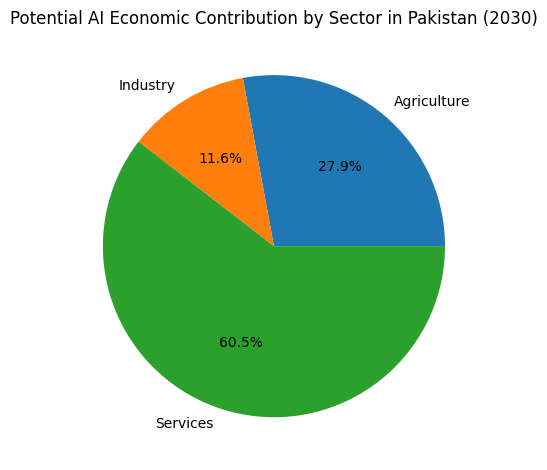
The economic implications extend far beyond technology companies alone. Artificial intelligence has the potential to contribute tens of billions of dollars to Pakistan’s economy across sectors including agriculture, industry, and services. Service industries in particular—such as digital marketing, software development, e-commerce, and online media—stand to benefit significantly from the expansion of AI-powered search and content discovery systems. As AI becomes embedded within search engines, voice assistants, and digital platforms, the ability to create authoritative, well-structured, and machine-readable content will become a critical competitive advantage.

Generative AI adoption in Pakistan is already advancing faster than many observers expected. Awareness of tools such as ChatGPT has spread rapidly among internet users, particularly among younger demographics that make up the majority of the country’s population. Globally, younger users are increasingly turning to AI assistants to answer questions, learn new skills, and explore topics that previously required traditional search engines. In Pakistan, where the median age is just over twenty years, this behavioural shift could accelerate the transition toward AI-driven search far more quickly than in older, more saturated digital markets.

At the same time, the global AI search ecosystem is expanding at an unprecedented pace. ChatGPT alone processes billions of prompts every day and attracts hundreds of millions of weekly users worldwide. AI-powered search features such as Google’s AI Overviews are now appearing across hundreds of countries and languages, fundamentally changing the way search results are displayed and consumed. Instead of navigating through multiple webpages, users increasingly receive summarised answers generated directly by AI systems, often accompanied by a small set of cited sources.

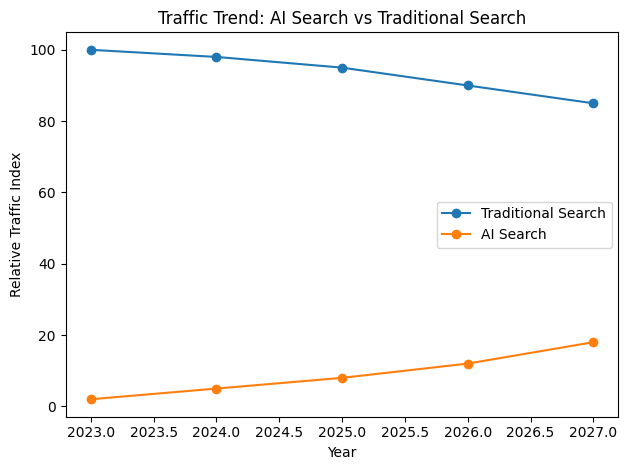
This new search paradigm has major implications for website traffic and online visibility. Studies show that AI-generated summaries can significantly reduce click-through rates to traditional search results, as many users obtain the information they need without leaving the search interface. The rise of so-called “zero-click” searches—where users receive answers without visiting external websites—means that digital visibility is no longer measured solely by website traffic. Instead, brand presence within AI-generated answers, citations, and recommendation lists is becoming an increasingly important indicator of online influence.

For businesses and publishers in Pakistan, this shift represents both a challenge and an opportunity. On one hand, the dominance of AI-generated answers may reduce the organic traffic that many websites have historically relied on. On the other hand, companies that successfully position themselves as authoritative sources within AI responses can achieve unprecedented visibility and credibility. Appearing as a cited source in an AI-generated answer may carry greater influence than simply ranking on the first page of traditional search results.
This is where Generative Engine Optimisation comes into play. GEO focuses on designing content that large language models can easily interpret, summarise, and cite. It involves a combination of structured content creation, entity-based optimisation, authoritative information architecture, and cross-platform visibility strategies. Unlike traditional SEO, which largely targets search engine algorithms, GEO targets AI systems that synthesise knowledge across the web and deliver it conversationally to users.
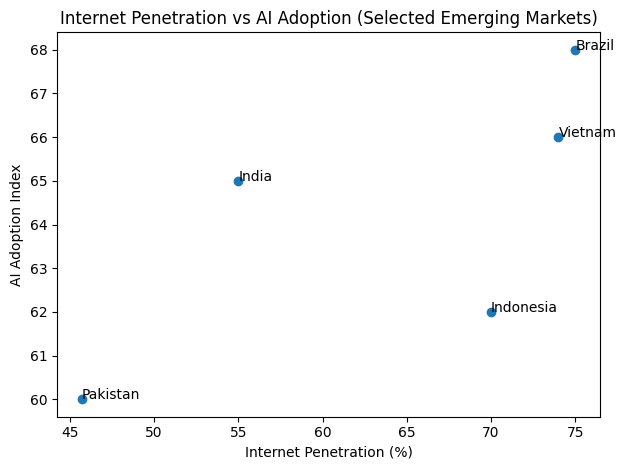
In Pakistan, the GEO landscape is still emerging, but signs of rapid development are already visible. Digital agencies and independent consultants are beginning to offer specialised services focused on AI search optimisation, answer engine optimisation, and semantic SEO. A growing number of Pakistani content creators and marketers are experimenting with strategies designed to increase the likelihood that their websites, brands, or products are referenced by AI systems. As the global GEO market expands into a multi-billion-dollar industry, Pakistani professionals have the opportunity to establish themselves as early adopters in a field that remains relatively uncrowded.
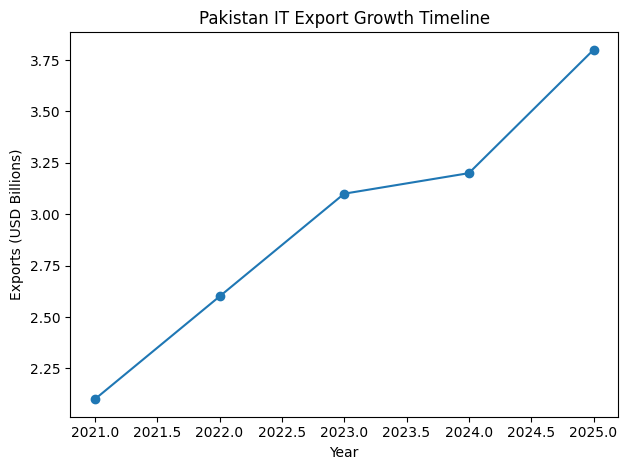
The implications are particularly significant for Pakistan’s technology export sector. IT exports have reached record levels in recent years, contributing billions of dollars annually to the national economy. At the same time, the country hosts one of the world’s largest freelance workforces, with millions of professionals providing digital services to international clients. As generative AI begins to automate routine tasks in writing, design, coding, and customer support, Pakistani freelancers and software companies must increasingly differentiate themselves through AI expertise, strategic thinking, and advanced digital marketing capabilities.
Developing strong GEO capabilities may therefore become a key factor in maintaining Pakistan’s competitiveness in the global digital services market. Businesses that understand how AI systems evaluate and cite online information will be better positioned to attract international clients, generate qualified leads, and establish authority in competitive industries. Conversely, companies that fail to adapt to the new AI search landscape risk losing visibility as information discovery shifts toward conversational interfaces and automated knowledge synthesis.
Government policy is also beginning to recognise the importance of artificial intelligence within Pakistan’s digital future. The approval of the National AI Policy in 2025 marked a significant milestone in the country’s efforts to build a coordinated strategy for AI development, education, and economic growth. The policy outlines ambitious goals, including large-scale AI training initiatives, increased awareness of artificial intelligence technologies, and the establishment of specialised institutions designed to support research and innovation.
At the same time, large-scale digital skills programmes are attempting to expand the country’s technology workforce. Initiatives such as DigiSkills have already trained millions of Pakistanis in various digital disciplines, and newer iterations of these programmes are incorporating artificial intelligence and machine learning into their curricula. While Pakistan continues to face a significant shortage of highly specialised AI professionals, these training programmes represent an important step toward building the human capital required for an AI-driven economy.
Telecommunications infrastructure will also play a crucial role in determining how quickly AI search technologies become mainstream in Pakistan. The country’s mobile-first internet usage patterns mean that voice search, conversational assistants, and app-based AI tools are likely to drive adoption more than traditional desktop search. Improvements in broadband coverage, mobile network speeds, and the eventual rollout of 5G services could significantly enhance the performance and accessibility of AI-powered applications.
Voice search in particular is expected to grow rapidly as natural language processing models become more sophisticated and multilingual capabilities improve. AI systems are increasingly capable of understanding and responding in dozens of languages, opening the door to more inclusive digital experiences for users who prefer Urdu or regional languages. As voice assistants become more embedded in smartphones, smart devices, and messaging platforms, businesses will need to optimise their content for conversational queries rather than traditional keyword-based searches.
Meanwhile, the global shift toward generative AI is accelerating at an extraordinary pace. Analysts predict that within the next few years, a substantial portion of all online searches will involve AI assistants in some form. Some forecasts even suggest that AI platforms could eventually drive more information discovery than traditional search engines. While conventional search will continue to play a central role in the digital ecosystem, the boundaries between search engines, AI assistants, and recommendation systems are rapidly dissolving.
For Pakistan’s digital economy, this transformation represents both disruption and opportunity. The transition toward AI-generated search results may reshape industries ranging from online media to e-commerce and digital marketing. At the same time, it opens new pathways for innovation, entrepreneurship, and international competitiveness. Pakistani developers, content creators, and technology entrepreneurs have the chance to participate in one of the most significant shifts in the history of the internet.
Understanding the data behind these trends is essential for navigating the future of AI search in Pakistan. Statistics on internet penetration, generative AI adoption, telecom infrastructure, AI investment, and global search behaviour provide valuable insights into how quickly the landscape is evolving and where the greatest opportunities lie.
This comprehensive collection of 155 AI search and GEO statistics, data points, and trends for Pakistan in 2026 brings together insights from across the country’s digital ecosystem and the global artificial intelligence industry. From the growth of Pakistan’s internet user base and AI market projections to the rise of generative search platforms, voice assistants, and zero-click search behaviour, these statistics offer a detailed snapshot of how artificial intelligence is reshaping the way Pakistanis discover information online.
For entrepreneurs, marketers, freelancers, policymakers, and technology professionals, these insights reveal not only where Pakistan stands today but also where the country may be heading in the coming decade as AI search becomes an integral part of the global digital infrastructure.
But, before we venture further, we like to share who we are and what we do.
About AppLabx
From developing a solid marketing plan to creating compelling content, optimizing for search engines, leveraging social media, and utilizing paid advertising, AppLabx offers a comprehensive suite of digital marketing services designed to drive growth and profitability for your business.
At AppLabx, we understand that no two businesses are alike. That’s why we take a personalized approach to every project, working closely with our clients to understand their unique needs and goals, and developing customized strategies to help them achieve success.
If you need a digital consultation, then send in an inquiry here.
Or, send an email to [email protected] to get started.
155 AI Search & GEO in Pakistan Statistics, Data & Trends in 2026
SECTION 1: Pakistan’s AI Market Size & Economic Impact
#1. Pakistan’s AI market is projected to reach $274.91 million in 2025, reflecting the country’s early but accelerating entry into the global artificial intelligence economy.
#2. A higher Statista estimate places Pakistan’s AI market at $949.17 million in 2025, growing at a 27.76% CAGR toward $3.23 billion by 2030 — suggesting significant variance in methodology but consistent agreement on strong growth direction.
#3. Digital transformation could unlock PKR 9.7 trillion ($34.9 billion) in economic value for Pakistan by 2030, underscoring how foundational digital infrastructure investment is to long-term AI and search-related growth.
#4. Google’s AI solutions contributed PKR 3.9 trillion ($14 billion) to Pakistan’s economy in 2023 — a 222% increase since 2020 — demonstrating that AI-powered tools like Google Search and its AI features already deliver measurable national economic impact.
#5. AI is estimated to contribute between $10 billion and $20 billion to Pakistan’s economy by 2030, a wide range that reflects honest uncertainty but consistent optimism about AI’s transformative potential across sectors.
#6. Pakistan’s National AI Policy 2025 estimates AI adoption could accelerate GDP growth from 7% to 15% by 2030 — an ambitious target that requires substantial improvements in digital literacy, infrastructure, and regulatory support to be realised.
#7. AI could add $12 billion to Pakistan’s agriculture sector, $5 billion to industry, and $26 billion to services by 2030 — with services standing out as the highest-impact domain, directly relevant to the growth of AI-powered search and digital marketing.
#8. Pakistan’s AI-driven IT exports are expected to surpass $1 billion by 2027, creating a direct incentive for Pakistani software companies to invest in AI-search-optimised content and global digital visibility.
#9. Global AI spending is projected to reach $2.5 trillion in 2026 — a 44% increase — meaning Pakistani AI vendors, freelancers, and GEO practitioners operate within one of the fastest-growing sectors in economic history.
#10. Corporate AI investment globally reached $1.6 trillion between 2013 and 2024, forming the macro-funding environment within which Pakistan’s nascent AI startups are competing for a share.
#11. Pakistan loses an estimated $9 billion annually — roughly 2.5% of GDP — to financial and digital scams, highlighting a critical gap that AI-driven cybersecurity and search-trust solutions could meaningfully address.
SECTION 2: Internet & Digital Infrastructure
#12. Pakistan had 116 million internet users at the start of 2025, with an internet penetration rate of 45.7% — meaning more than half the population remains offline and represents a vast untapped AI search audience.
#13. Pakistan’s internet user base grew by 1.7 million (+1.5%) between January 2024 and January 2025 — steady but modest growth that underscores the need for infrastructure investment to accelerate AI search adoption.
#14. With 157 million broadband subscribers as of January 2026 — 153 million on mobile broadband — Pakistan’s AI search growth story is overwhelmingly a mobile-first story.
#15. Pakistan has over 200 internet service providers, suggesting a competitive but fragmented market that has not yet produced the consistent speeds and coverage needed to support latency-sensitive AI search applications.
#16. Pakistan has 66.9 million social media identities as of January 2025, representing 26.4% of the population — a social layer that increasingly intersects with AI-generated content discovery and generative search.
#17. Pakistan’s 190 million cellular mobile connections at the start of 2025 make it one of the most mobile-connected developing nations, with every new AI search and voice search feature effectively being a mobile-first feature for Pakistani users.
#18. Pakistan’s total telecom revenues exceeded Rs 1 trillion in FY 2024–25, up 12% year-on-year, confirming that the underlying revenue base exists to fund the network upgrades required for advanced AI search infrastructure.
#19. 4G penetration reached 61% of Pakistani subscribers in January 2026 — a milestone that enables more Pakistanis to access AI-powered search tools, though the remaining 39% without 4G still face a significant access gap.
#20. Mobile internet penetration reached nearly 60% of Pakistan’s population by mid-2025, with approximately 140 million smartphone users — firmly establishing mobile as the primary screen through which most Pakistanis will experience AI search.
#21. Urban mobile internet penetration in Karachi, Lahore, and Islamabad stands at 70–75% with average speeds of 15–20 Mbps — conditions sufficient for real-time AI search and voice assistant use in Pakistan’s major cities.
#22. Rural mobile internet penetration in Pakistan sits at approximately 45–50%, creating a persistent urban-rural AI search divide that is unlikely to close without targeted government infrastructure investment.
#23. Pakistan’s telecom market is valued at $4.52 billion and projected to grow to $5.32 billion by 2029, suggesting a moderately growing foundation that will need to scale faster to support the data-heavy demands of generative AI.
#24. Pakistan has yet to launch commercial 5G services while over 100 countries already have — a significant technological lag that constrains the speed, capacity, and low-latency performance needed for next-generation AI search applications.
#25. With a population of 255.2 million, Pakistan is the world’s 5th most populous country — making it one of the largest potential markets for AI search platforms if digital access continues to expand.
#26. Pakistan’s median age of 20.6 years positions it as one of the world’s most youthful digital populations — a demographic that globally shows the highest rates of AI tool adoption and generative search usage.
#27. With 38.6% of Pakistanis in urban areas and 61.4% in rural areas, AI search growth will be uneven — urban-centric in the short term — unless mobile-first and low-bandwidth AI tools are developed for rural connectivity conditions.
#28. Pakistan’s e-commerce market is projected to cross PKR 500 billion by 2026, yet online retail remains below 2% of total sales — a structural gap where AI-powered search discovery could play a decisive role in accelerating e-commerce adoption.
SECTION 3: ChatGPT & Generative AI Adoption
#29. Pakistan ranks 4th globally in ChatGPT awareness at 76% — a strikingly high figure for a country with sub-50% internet penetration, suggesting that AI tool awareness is spreading faster than digital access itself.
#30. With 28% of its population using ChatGPT daily, Pakistan ranks 2nd globally in daily generative AI usage frequency — a behavioural signal that AI search is not a future trend in Pakistan, but an active present reality.
#31. Pakistan’s 64% youth population is among its greatest structural assets for AI adoption — young, digitally curious users are the primary drivers of ChatGPT, AI search, and generative content consumption worldwide.
#32. Pakistan’s 76% ChatGPT awareness nearly matches the 80% global average across major markets, a remarkable parity given the country’s lower GDP per capita and internet access rates.
#33. Generative AI job vacancies in Pakistan grew fourfold between 2022 and 2024, mirroring a global shift toward AI skill demand and signalling that Pakistani employers and clients are beginning to value GenAI competencies in hiring and outsourcing.
#34. Up to 30% of solutions from major Pakistani IT export companies are now AI-based — reflecting both genuine client demand and the risk of commoditisation if GEO and AI-search-readiness are not built into service offerings.
#35. By mid-2025, nearly 40% of enterprise IT spending in Pakistan is expected to flow into cloud services — a critical enabler for AI-powered applications, including the large language models that underpin generative search.
#36. An AI Specialist in Pakistan earns around PKR 780,000 per year on average, rising to over PKR 2.3 million at senior levels — compensation that is growing but still lags global benchmarks, contributing to talent emigration.
#37. Less than 10% of Pakistan’s computing and IT workforce is AI-skilled, exposing a severe human capital gap that, if unaddressed, will limit the country’s ability to participate in — let alone lead — the generative AI economy.
#38. Pakistan’s Vyro AI app surpassing 5 million global users is a proof point that Pakistani AI products can achieve international scale — a template for other local AI and GEO-focused startups to follow.
SECTION 4: Global AI Search Trends Affecting Pakistan
#39. ChatGPT holds 80.49% of the generative AI chatbot market as of January 2026 — making optimisation for ChatGPT citations the single most impactful GEO investment for Pakistani brands seeking AI search visibility.
#40. ChatGPT’s weekly active users surpassed 900 million in early 2026, more than doubling in under a year — a growth trajectory that confirms generative search is transitioning from niche to mainstream at extraordinary speed.
#41. ChatGPT processes 2.5 billion daily prompts from 5.72 billion monthly visitors — a scale of AI search interaction that dwarfs most traditional media and creates both a massive opportunity and a deeply competitive landscape for Pakistani content visibility.
#42. ChatGPT’s monthly visits grew 3.73% from December 2025 to January 2026, indicating continued sustained growth rather than a usage plateau — the window for Pakistani brands to establish early AI search visibility remains open.
#43. ChatGPT is now the 4th most visited website globally, surpassing Reddit, Wikipedia, and X — a ranking that Pakistani digital strategists should treat as a clear signal to prioritise AI platform visibility alongside traditional SEO.
#44. The US accounts for 17.46% and India for 9.78% of total ChatGPT visitors — meaning English and South Asian content ecosystems heavily shape the AI search environment that Pakistani users both contribute to and consume from.
#45. ChatGPT has been downloaded 1.44 billion times cumulatively since May 2023, with 73.4 million downloads in December 2025 alone — app-based AI search is a growing access point for Pakistan’s smartphone-first users.
#46. Among 18–24-year-olds globally, 66% use ChatGPT for information — nearly equalling the 69% who use Google — a generational parity shift that is especially significant given Pakistan’s overwhelmingly young population.
#47. 82% of Gen Z users globally prefer AI tools that deliver direct answers over traditional web search — a preference that, applied to Pakistan’s under-30 majority, suggests AI search tools will rapidly become the default discovery mechanism.
#48. 28% of Gen Z now initiate searches via AI chatbot rather than a search engine — a behavioural shift that Pakistani publishers, educators, and e-commerce brands must factor into their content and GEO strategies now.
#49. Google’s global search market share dropped below 90% for the first time since 2015 in October 2024 — a symbolic but meaningful shift that opens space for AI-native search tools to capture Pakistani search behaviour.
#50. Google still commands approximately 89.6% of global search queries as of May 2025 — Pakistani businesses should pursue GEO and AI Overviews optimisation as a complement to, not a replacement for, their existing Google SEO investments.
#51. Gartner forecasts that 50% of all online searches globally will involve an AI assistant by 2028 — giving Pakistani businesses roughly two years to build AI search visibility before it becomes table stakes for digital competitiveness.
#52. Gartner also projects a 25% decline in traditional search engine volume by 2026 — a disruption timeline that is imminent, not distant, for Pakistani SEO practitioners and digital marketers.
#53. Middle-income economies — the category Pakistan belongs to — account for half of global ChatGPT traffic, affirming that AI search adoption in Pakistan is not an outlier but part of a broader emerging-market trend.
#54. AI adoption globally correlates with digital infrastructure quality, English fluency, and human capital — Pakistan’s high English literacy in educated segments is an advantage, while infrastructure and skills gaps remain structural constraints.
#55. The Asia Pacific AI market is projected to grow at a 19.8% CAGR from 2025 to 2034 — Pakistan’s AI search ecosystem, though currently underdeveloped, sits within the world’s fastest-growing regional AI market.
#56. Asia Pacific holds 19.3% of the global AI search engines market in 2025 and is projected to be the fastest-growing region — providing Pakistani AI companies with a compelling regional export opportunity.
#57. Generative AI now accounts for 54.2% of the global AI search engine market in 2025 — confirming that the future of search is generative, and that GEO is no longer an optional capability for Pakistani digital businesses.
#58. AI platforms currently account for just 1.08% of all website referral traffic but are growing at roughly 1% month over month — small today but compounding rapidly, making early GEO investment by Pakistani brands strategically sound.
#59. AI platform visits globally grew 28.6% between January 2025 and January 2026, while AI-to-site referrals remained relatively flat — signalling that users are increasingly finding answers within AI platforms without visiting external sites, including Pakistani ones.
#60. AI search traffic converts at 14.2% compared to Google’s 2.8% — meaning the smaller volume of AI-referred visitors to Pakistani websites is worth disproportionately more in commercial outcomes per click.
SECTION 5: Google AI Overviews & Zero-Click Search
#61. Google AI Overviews now appear in over 200 countries and 40 languages — Pakistan is firmly included, meaning every Pakistani business with a Google-indexed website is already operating in an AI Overview-impacted search environment.
#62. Two billion monthly users globally engage with Google AI Overviews — a user base larger than most social networks — confirming that AI-generated search summaries have become a primary information interface for the global (and Pakistani) web audience.
#63. Google AI Overviews now appear in 25.11% of all Google searches, up sharply from 13.14% in March 2025 — a near-doubling in coverage that means roughly one in four Google queries in Pakistan now surfaces an AI-generated answer above traditional results.
#64. Click-through rates drop 34% to 46% when AI summaries appear on results pages — a direct revenue and traffic threat to Pakistani publishers, news sites, and bloggers who have not yet adapted their content strategy for AI search.
#65. According to Ahrefs (February 2026), AI Overviews now reduce organic clicks by up to 58% — making GEO — specifically earning citations inside the Overview — the most critical traffic-recovery lever for Pakistani content sites.
#66. A Seer Interactive study found organic CTR collapsed from 1.76% to 0.61% when AI Overviews appear — a 65% relative drop that Pakistani SEO professionals must factor into traffic forecasting and content ROI models.
#67. Paid CTR crashed 68% when AI Overviews are present — a finding that should prompt Pakistani performance marketers to review Google Ads bidding strategies for high-intent keywords where AI Overviews now dominate the above-the-fold experience.
#68. Brands cited inside AI Overviews earn 35% more organic clicks and 91% more paid clicks — quantifying the commercial premium of AI search visibility and making GEO citation-earning a direct revenue optimisation strategy for Pakistani brands.
#69. Zero-click searches jumped from 56% to 69% between May 2024 and May 2025 — meaning more Pakistani web users are getting answers without ever leaving Google, dramatically reducing the organic traffic that many local websites depend on.
#70. Around 93% of AI search sessions end without a visit to a website — a figure that underscores why Pakistani businesses must shift from purely traffic-oriented SEO to brand-visibility-and-citation-oriented GEO strategies.
#71. 88% of queries that trigger AI Overviews are informational — meaning Pakistani educational sites, how-to guides, news publishers, and resource portals face the greatest immediate disruption from AI-generated search answers.
#72. AI Overviews are increasingly appearing for commercial queries — up from 8% to 18% — directly threatening Pakistani e-commerce and service businesses that rely on Google to drive product discovery and purchase intent.
#73. AI Overviews now appear in over 80% of information-driven searches globally — a near-ubiquitous presence that makes optimising for AI citation inclusion a baseline requirement, not an advanced tactic, for Pakistani content creators.
#74. 76.1% of URLs cited in AI Overviews already rank in Google’s top 10 — confirming that strong traditional SEO remains the foundation of AI search visibility, and Pakistani sites cannot skip organic rankings to pursue GEO shortcuts.
#75. Only 7.9% of local searches trigger an AI Overview — a relatively low rate that means Pakistani local businesses (restaurants, clinics, retailers) still derive most of their Google traffic from traditional local SEO and Google Business Profiles.
#76. The average Google AI Overview contains approximately 169 words and seven links — a content format that Pakistani brands should study when crafting structured, citation-worthy content for AI search inclusion.
#77. 44.2% of LLM citations come from the first 30% of a piece of content — a structural insight that tells Pakistani content writers to place their most authoritative, specific, and citable information at the very beginning of articles and web pages.
#78. AI Overview content changes 70% of the time for the same query, and 45.5% of citations get replaced when it refreshes — meaning Pakistani brands cannot assume a single AI citation is permanent and must maintain consistent content quality to retain visibility.
#79. Only 13.7% of citations overlap between Google AI Overviews and AI Mode — a finding that requires Pakistani brands to develop distinct content and optimisation strategies for each of Google’s AI search surfaces.
#80. Users spend 49 seconds in AI Mode versus 21 seconds in AI Overviews — the deeper engagement of AI Mode suggests Pakistani brands cited within it benefit from more considered and higher-quality user attention.
SECTION 6: GEO Landscape
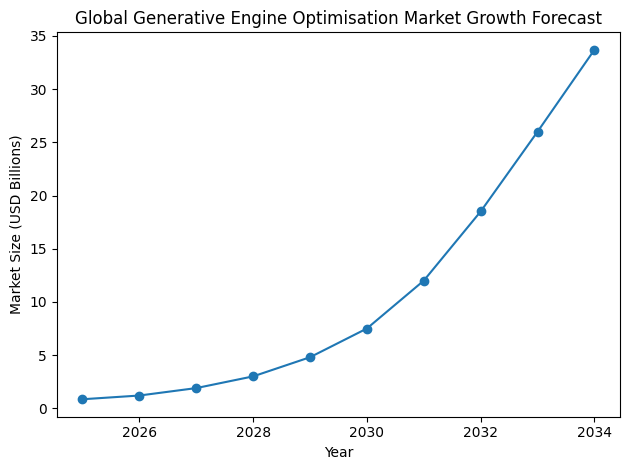
#81. The global GEO market is valued at $848 million in 2025 and projected to reach $33.7 billion by 2034 — a growth rate that makes GEO one of the most commercially attractive digital marketing specialisations for Pakistani agencies to develop now.
#82. Pakistan’s SEO landscape now includes practitioners specialising in Generative Engine Optimisation (GEO) — an encouraging sign of professional maturity, though the community remains small relative to the scale of the country’s digital economy.
#83. Islamabad-based agency Web at Max launched a dedicated GEO and search-first design framework in March 2026 — an early-mover positioning that illustrates the growing awareness among Pakistani digital agencies that AI search requires a new set of services.
#84. Only 22% of marketers globally are actively tracking AI search visibility — meaning Pakistani brands that begin monitoring AI citations today enter a space with limited competition and significant first-mover advantage.
#85. 54% of US marketers plan to implement GEO within 3–6 months (eMarketer, January 2026) — as global demand for GEO services rises, Pakistani freelancers and agencies with GEO expertise are well-positioned to service international clients.
#86. 25.7% of marketers globally plan to develop content specifically designed to earn AI citations — a relatively low adoption rate that confirms GEO remains an early-stage practice where Pakistani early adopters can establish credibility and competitive differentiation.
#87. AI-generated citations influence up to 32% of sales-qualified leads at some enterprises — a conversion impact that makes GEO not just a traffic strategy but a direct revenue enabler for Pakistani B2B companies targeting international clients via AI search.
#88. The same brand appearing in a list of AI recommendations has less than a 1-in-100 chance of appearing in the same position across 100 different queries — Pakistani brands must approach AI visibility as a probabilistic, multi-query phenomenon rather than a fixed ranking.
#89. The same brand’s citation volumes can differ by up to 615x between Grok and Claude — a staggering variance that makes multi-platform AI tracking essential for any Pakistani brand seriously investing in generative search visibility.
#90. Only 13.7% of citations overlap between Google AI Overviews and AI Mode — confirming that GEO is not a one-strategy discipline and that Pakistani businesses need platform-specific content approaches to maximise AI search coverage.
#91. ChatGPT accounts for 87.4% of all AI referral traffic to external websites — making it the single most important generative AI platform for Pakistani businesses to optimise for when pursuing AI-driven web traffic.
#92. Sites still generate 34 times more traffic from Google than from chatbots — a ratio that should temper overhyped GEO narratives; Pakistani brands should treat GEO as a long-term brand visibility investment while preserving their Google SEO foundations.
#93. Pakistani GEO service providers like artxpro are actively packaging Generative Engine Optimisation as a standalone service offering — signalling that the country’s digital marketing ecosystem is beginning to commercialise AI search optimisation.
#94. 31% of ChatGPT prompts globally trigger a web search, rising to 59% for local-intent prompts — meaning Pakistani businesses with strong local content and structured data have a meaningful chance of being surfaced in locally-triggered AI search responses.
#95. ChatGPT is more likely to cite content that is definitive in tone, contains a question mark in the title, has high entity density, and is written simply — practical, actionable writing guidelines for Pakistani content creators optimising for AI citations.
#96. YouTube mentions and branded web mentions are the top factors correlated with AI brand visibility across ChatGPT, AI Mode, and AI Overviews — Pakistani brands should treat a multi-channel presence (especially YouTube) as foundational to their GEO strategy.
#97. AI platforms generated 1.13 billion referral visits globally in June 2025 — a 357% increase from June 2024 — confirming that AI-driven traffic to websites is real, growing, and already commercially significant for globally-visible Pakistani brands.
#98. 60% of searches now end without users clicking through to any website — a zero-click majority that forces Pakistani businesses to rethink how they measure search value, shifting from traffic metrics to brand awareness and AI citation share.
SECTION 7: IT Exports, Freelancers & AI Disruption
#99. Pakistan’s IT exports hit an all-time monthly high of $437 million in December 2025 — a historic milestone that reflects genuine momentum but also a growing dependency on a sector now being reshaped by AI automation.
#100. Pakistan’s IT exports totalled $3.8 billion in FY25 — 18% growth from $3.2 billion in FY24 — confirming a strong trajectory that must be sustained through AI upskilling and GEO-driven international digital visibility.
#101. Pakistan’s IT exports reached a monthly peak of $386 million in October 2025 with five consecutive months of annual growth — a streak that reflects both increasing global demand for Pakistani tech services and a favourable exchange rate environment.
#102. IT exports now account for over 10.8% of Pakistan’s total exports for the first time ever — a structural shift that elevates the IT sector to a strategic national priority and makes digital competitiveness, including AI search visibility, a matter of economic policy.
#103. Pakistan’s IT exports reached $1.8 billion in the first five months of FY25 (July–November), up 19% year-on-year — demonstrating that the sector’s growth is broad-based, not dependent on one-off transactions or a single service vertical.
#104. Pakistan’s national target of $10 billion in annual IT exports by 2029 requires more than doubling current revenues in under four years — an ambitious goal that makes AI capability development and international search visibility critical growth levers.
#105. Pakistan is among the top 3 global freelancing hubs with 2.3–3 million freelancers — a workforce whose livelihoods are directly tied to how well they adapt to AI tools, AI search visibility, and GEO-relevant content skills.
#106. Pakistani freelancers contributed approximately $400 million in foreign exchange earnings in FY25 — a significant but potentially fragile income stream as AI automates many of the writing, design, and coding tasks they currently provide.
#107. Pakistan’s BPO sector recorded $328 million in FY25 exports, up 24.6% year-on-year — strong growth that faces structural disruption risk as AI models increasingly handle voice, chat, and data processing tasks currently performed by human agents.
#108. Fiverr lost over 60% of its stock value in the 12 months to February 2026 — partly attributable to AI disruption of creative and coding freelance work — a clear warning signal for Pakistan’s 2.3 million+ Fiverr-dependent freelancers to diversify and upskill.
#109. Fiverr’s active buyer count declined from 3.6 million to 3.1 million and the company laid off 25% of its workforce in September 2025 — structural demand contractions on Pakistan’s most-used freelancing platform that should accelerate AI skills adoption among local freelancers.
#110. Upwork’s stock dropped 17% in a single day after its Q4 2025 earnings call projected declining Gross Services Volume — another platform-level warning that Pakistani freelancers who rely on Upwork must urgently differentiate via AI-enhanced service offerings.
#111. Brookings research shows freelancers in AI-exposed roles have seen a 2% decline in contracts and a 5% drop in earnings since generative AI became mainstream — modest figures that may understate the longer-term disruption trajectory facing Pakistani freelancers.
#112. Nearly 78,000 tech jobs globally were eliminated due to AI automation in 2025 alone — the macro-level displacement context within which Pakistan’s freelancers, BPO workers, and IT professionals are competing for diminishing traditional roles.
#113. Female labour force participation in Pakistan stands at just 22% — making digital freelancing and AI-powered tools one of the most structurally significant pathways for women’s economic inclusion in the country.
#114. Women make up approximately 28% of Pakistan’s digital skills trainees — a share that, while encouraging, must grow substantially if AI and GEO-related digital skills are to deliver equitable economic opportunities for Pakistani women.
#115. Pakistan produces 20,000–35,000 IT graduates annually against an industry need of 100,000 skilled professionals — a supply gap that, if unaddressed, will constrain both domestic AI adoption and the country’s capacity to export AI-enhanced digital services.
#116. Pakistan has over 2,000 tech companies and 300,000 English-speaking IT professionals — a competitive foundation for global digital services exports, provided the sector successfully transitions to AI-native service delivery models.
SECTION 8: Pakistan National AI Policy 2025
#117. Pakistan’s National AI Policy was formally approved by the federal cabinet on July 30, 2025 — a governance milestone that provides a policy framework for AI investment, though implementation timelines and funding commitments remain the critical test.
#118. The National AI Policy targets 90% AI awareness among internet users by 2026 — an aspirational benchmark that, if achieved, would transform Pakistan into one of the most AI-aware developing nations, with profound implications for generative search adoption.
#119. Training 1 million AI professionals and 10,000 new trainers by 2027 — against a baseline where fewer than 10% of IT workers are AI-skilled — is an extraordinary scale challenge that will require both public funding and private sector partnership to succeed.
#120. The establishment of a National AI Fund (NAIF) and distributed Centers of Excellence in AI signals a structural commitment to AI development beyond Islamabad — critical for ensuring that GEO, AI literacy, and digital search competencies reach Pakistan’s secondary cities and underserved regions.
#121. Pakistan’s AI policy aspires to make the country a world leader in AI readiness by 2035 — a target that is achievable given the country’s young population and existing tech talent, but will require consistent policy execution over a decade-long horizon.
#122. The policy’s train-the-trainer bootcamps and approximately 20,000 national internships represent practical, ground-level interventions that go beyond rhetoric — though their quality, geographic reach, and industry alignment will determine their real impact on Pakistan’s AI search workforce.
#123. The State Bank of Pakistan’s decision to raise the foreign currency retention limit for IT exporters from 35% to 50% is a tangible, near-term incentive that makes AI-driven export growth financially more attractive for Pakistani tech companies.
SECTION 9: Digital Skills, Workforce & AI Training
#124. DigiSkills.pk’s 4.5 million+ trainings since 2018 — spanning 300 cities — represent the largest government-funded digital skills initiative in Pakistan and a critical supply-side driver of AI and GEO-ready human capital.
#125. DigiSkills 3.0’s 25 free courses include a dedicated Artificial Intelligence using Python module — a meaningful curriculum upgrade that directly addresses Pakistan’s AI skills deficit and prepares a new generation of AI-literate digital professionals.
#126. DigiSkills 3.0’s Rs 1.79 billion budget is a substantial public investment in digital training, though its effectiveness will depend on course quality, employer linkages, and the conversion of certifications into actual income for participants.
#127. Over 800,000 women have benefited from DigiSkills training since 2018 — Pakistan’s largest government-funded female digital upskilling effort — with the potential to create a pipeline of women-led GEO and AI content businesses.
#128. DigiSkills 3.0 opens 300,000 seats in its first batch alone — a scale that, if matched by strong curriculum design and post-training support, could significantly accelerate Pakistan’s AI and generative search readiness at population scale.
#129. Global GenAI job vacancies surged ninefold from 2022 to 2024 — a demand signal that Pakistani training institutions, universities, and bootcamps must urgently calibrate their curricula toward, specifically in AI, NLP, and search-technology domains.
#130. The convergence of DigiSkills, e-Rozgaar, and TechLift into a multi-programme digital skills ecosystem is encouraging, but risks fragmentation and duplication — coherent national coordination will be needed to create a unified pipeline of AI-capable professionals.
SECTION 10: Telecom, Mobile & Voice Search
#131. Pakistan’s telecom market is consolidating into three major operators — Jazz (38%), Zong (26.6%), and a merged PTCL-Telenor entity (~35%) — a structure that could accelerate network investment and expand the infrastructure base for AI-powered mobile search.
#132. PTCL’s completion of its Telenor Pakistan acquisition on December 31, 2025 — merging over 67 million combined subscribers — creates a telecom entity large enough to drive 5G deployment, a prerequisite for next-generation AI search experiences in Pakistan.
#133. Pakistan’s internet usage is predominantly in English, meaning global English-language AI search dynamics, citation norms, and GEO best practices apply directly and with limited localisation friction to Pakistani digital content.
#134. 97% of mobile users globally are already using voice search or AI voice assistants — a near-universal adoption rate that, as it mirrors in Pakistan’s 140 million+ smartphone base, will drive demand for voice-optimised and conversational AI search content.
#135. Global voice commerce is expected to reach $80 billion by 2026 — an emerging market category relevant to Pakistani e-commerce platforms and brands that begin optimising for voice-triggered purchasing journeys today.
#136. 46% of all voice searches globally are for local businesses, and 76% of those result in a same-day visit — giving Pakistani local businesses (restaurants, clinics, salons, retail) a strong commercial incentive to invest in voice and AI search visibility now.
#137. NLP models now understand 135+ languages — expanding the reach of AI search to Urdu, Punjabi, Sindhi, and Pashto speakers in Pakistan, though meaningful Urdu-language AI search optimisation remains underdeveloped relative to the opportunity.
#138. 40% of voice assistants now use generative AI to personalise responses — meaning Pakistan’s mobile users are increasingly receiving AI-generated, context-sensitive answers rather than static search results, raising the stakes for brand representation in AI outputs.
#139. 57% of businesses globally have already optimised for voice search in 2025 — a threshold Pakistan’s business community is significantly below, representing both a competitive gap and an opportunity for early-mover Pakistani brands to capture voice search share.
SECTION 11: GEO Metrics, AI Search Traffic & Content Optimisation
#140. 75% of people globally say they are using AI search tools more than a year ago, with 43% using them daily — a usage surge that is visibly taking hold among Pakistan’s urban, educated, and tech-connected population.
#141. Only 10% of users trust the first AI result, while 48% verify answers across multiple platforms — a trust landscape that makes consistent multi-platform AI brand presence, not just single-platform citation, the correct GEO strategy for Pakistani businesses.
#142. 62% of consumers trust AI recommendations more when they include source links — a finding that should motivate Pakistani brands to ensure their content is authoritative, well-attributed, and structured to be cited with visible source links in AI outputs.
#143. AI platforms are expected to drive more website visits than traditional search engines by 2028 — a crossover point that gives Pakistani brands a limited but meaningful window to build AI search visibility before the channel becomes as competitive as Google SEO.
#144. LLM-driven web traffic grew 529% between January–May 2024 and the same period in 2025 — an explosive growth trajectory that, while starting from a small base, validates GEO as a credible and commercially measurable marketing channel for Pakistani companies.
#145. People aged 16–27 in the US use AI search tools more than any other age group — a demographic behaviour pattern almost certainly replicated in Pakistan, where the same cohort constitutes a majority of the population and a large share of online users.
#146. Traditional organic search still accounts for 25% of average website traffic versus AI referrals at 1.08% — a ratio that makes clear GEO should supplement, not supplant, Pakistani brands’ investment in organic search and Google SEO.
#147. Google’s AI Overviews are driving over 10% more Google queries for the searches they cover — meaning AI-enhanced results are growing the total search query pie, not just redistributing it, which is a net positive for Pakistani brands that earn AI Overview inclusion.
#148. The niches with the highest AI Overview frequency include Relationships (~61%), Business (~57%), Education (~50%), and Food & Beverage (~46%) — categories closely aligned with Pakistani users’ documented search interests and content consumption patterns.
#149. A single ChatGPT query consumes approximately 0.34 Wh — ten times the energy of a Google search — a fact that contextualises AI search’s environmental cost and is relevant to Pakistan’s AI infrastructure planning given the country’s chronic energy challenges.
#150. Pakistan’s e-commerce market is projected to cross PKR 500 billion in 2026, yet online retail remains below 2% of total sales — an extraordinary growth gap where AI-powered search discovery, personalisation, and GEO can serve as transformative demand-generation levers.
#151. Google’s Year in Search 2025 data shows Pakistanis searching for topics ranging from e-challans to Ghibli-style AI image creation — a search diversity that reflects a population growing steadily more comfortable with AI tools as part of everyday digital life.
#152. In 2026, Pakistan’s SEO ecosystem now formally includes practitioners in Semantic SEO, Answer Engine Optimisation (AEO), and GEO — a professional evolution that signals the industry is catching up to global AI search trends, even if at a nascent stage.
#153. 66% of people globally trust AI-generated content without verifying its accuracy — a trust gap that Pakistani media organisations and information publishers should actively address by producing high-quality, fact-checked content designed to earn authoritative AI citations.
#154. 51% of US adults have used AI to look up answers to questions — a majority-adoption milestone being mirrored in Pakistan’s urban, digitally-connected demographics — marking AI search as a mainstream, not niche, information behaviour.
#155. Enterprise-grade GEO monitoring tools start at approximately $500 per month — a cost threshold that is high for most Pakistani SMEs, underscoring the need for the local agency ecosystem to develop affordable, localised GEO tools and measurement frameworks tailored to Pakistan’s market.
Conclusion
Artificial intelligence is no longer a distant technological trend. It is already reshaping how information is created, discovered, and consumed across the internet. The statistics presented in this report illustrate a pivotal moment for Pakistan’s digital ecosystem, where generative AI, AI-powered search, and Generative Engine Optimisation are beginning to influence everything from online marketing and e-commerce to education, freelancing, and national economic policy.
Taken together, the 155 AI search and GEO statistics, data points, and trends for Pakistan in 2026 reveal a country at the early but accelerating stage of a profound digital transformation. Pakistan’s internet user base has crossed 100 million, smartphone adoption continues to expand rapidly, and mobile broadband connectivity is becoming the primary gateway through which millions of Pakistanis access online services. With a population exceeding 255 million and a median age barely above twenty, Pakistan represents one of the largest and youngest digital markets in the world. These demographic and technological conditions create a powerful foundation for widespread AI adoption.
At the same time, the global search landscape is undergoing one of the most dramatic shifts since the creation of modern search engines. Traditional search results are increasingly being supplemented or replaced by AI-generated summaries, conversational answers, and integrated knowledge responses. Tools such as ChatGPT and other generative AI systems have introduced a new way of interacting with information online, where users ask questions in natural language and receive immediate, synthesised responses rather than navigating through multiple webpages.
For Pakistani businesses, publishers, and digital professionals, this shift carries major strategic implications. The rules that governed search visibility for decades are evolving rapidly. Ranking on the first page of Google remains important, but it is no longer the only way to reach audiences online. AI assistants now summarise information, recommend brands, and cite sources directly within their responses. This means that digital authority, structured knowledge, and clear informational content are becoming critical factors in determining which sources are surfaced by AI systems.
This environment is precisely where Generative Engine Optimisation (GEO) becomes essential. GEO represents the next stage of search visibility, focusing on ensuring that content is understandable, authoritative, and easily cited by large language models and AI-powered search systems. Unlike traditional SEO, which primarily optimises for search engine ranking algorithms, GEO focuses on visibility inside AI-generated answers, summaries, and recommendations.
The statistics in this report show that AI-generated search experiences are already affecting user behaviour worldwide. A growing share of search queries now trigger AI summaries, and many information-seeking sessions end without users clicking through to external websites. This phenomenon, often referred to as zero-click search, is reshaping the way digital value is measured. Instead of focusing solely on website traffic, businesses must increasingly consider metrics such as brand mentions, AI citations, and presence within AI-generated recommendations.
For Pakistan’s digital economy, adapting to this change is not optional. The country’s rapidly expanding technology sector, freelance workforce, and IT export industry are deeply connected to global digital platforms. As artificial intelligence automates many routine digital tasks, Pakistani professionals must move further up the value chain by developing expertise in AI tools, advanced digital marketing strategies, and emerging disciplines such as GEO and semantic search optimisation.
The importance of this transition becomes even clearer when viewed through the lens of Pakistan’s broader economic ambitions. The country has set ambitious targets for IT exports and digital sector growth over the coming decade. Achieving these goals will require more than simply expanding the number of technology companies or freelancers. It will require building a workforce capable of operating in an AI-first digital environment where automation, machine learning, and conversational interfaces shape the future of global commerce and information exchange.
Encouragingly, there are already signs that Pakistan is moving in the right direction. Government initiatives aimed at expanding digital skills training, combined with large-scale programmes such as DigiSkills and other technology education efforts, are beginning to address the country’s AI talent gap. The approval of the National AI Policy represents another important milestone, signalling a growing recognition that artificial intelligence will play a central role in Pakistan’s economic development and technological competitiveness.
However, the statistics also highlight several structural challenges that must be addressed if Pakistan is to fully realise the opportunities presented by AI search and generative technologies. Internet penetration remains below the global average, leaving a significant portion of the population without reliable digital access. Rural connectivity gaps persist, and the rollout of next-generation mobile infrastructure such as 5G has yet to occur. Bridging these gaps will be essential for ensuring that the benefits of AI-powered technologies are distributed broadly across society rather than concentrated in a handful of urban centres.
Equally important is the need to develop stronger AI-related human capital. Although Pakistan produces tens of thousands of IT graduates each year, the number of professionals with advanced artificial intelligence and machine learning skills remains relatively limited. Expanding AI education, research capacity, and industry collaboration will be critical for building a workforce capable of competing in the global AI economy.
The rise of AI-powered search also presents a major opportunity for Pakistani entrepreneurs and content creators. As generative search platforms expand, the demand for high-quality, authoritative, and well-structured information will continue to grow. Websites that provide clear answers, credible data, and well-organised knowledge are more likely to be cited by AI systems, increasing their visibility and influence across digital platforms.
This creates a particularly compelling opportunity for Pakistani businesses operating in sectors such as education, technology services, healthcare, finance, and e-commerce. By investing in authoritative content, structured data, and AI-friendly information architecture, these organisations can position themselves as trusted sources within AI-generated search responses. Over time, this type of visibility can translate into stronger brand recognition, increased customer trust, and improved lead generation.
The statistics in this report also highlight the importance of a multi-platform approach to digital visibility. AI systems increasingly draw information from a wide range of online sources, including websites, news articles, videos, and social media content. As a result, building a strong presence across multiple digital channels is becoming a key factor in achieving consistent AI citations and recommendations.
For Pakistani digital marketers and SEO professionals, this means expanding beyond traditional optimisation techniques and embracing a broader strategy that incorporates semantic search, entity-based content development, and cross-platform brand authority. In many ways, GEO represents a natural evolution of the digital marketing profession, requiring practitioners to think not only about search engines but also about how artificial intelligence systems interpret and synthesise information.
The coming years will likely see even faster adoption of AI-powered search technologies. As natural language processing models improve and conversational interfaces become more intuitive, users will increasingly rely on AI assistants to answer questions, recommend products, and guide decision-making. Voice search, multimodal AI systems, and personalised AI responses will further blur the lines between search engines, digital assistants, and online knowledge platforms.
Pakistan’s young, mobile-first population makes it particularly well positioned to adopt these technologies rapidly. Younger users around the world are already demonstrating a strong preference for conversational AI tools that provide immediate answers rather than lists of links. As these behavioural patterns spread, AI-driven search could become the dominant mode of information discovery for a significant portion of Pakistan’s online population.
Ultimately, the most important lesson from the data presented in this report is that the future of search is becoming increasingly intelligent, conversational, and context-aware. Artificial intelligence is transforming the internet from a collection of static webpages into a dynamic knowledge network where information is continuously analysed, summarised, and delivered in real time.
For Pakistan, this transformation represents both a challenge and a remarkable opportunity. Countries that adapt quickly to the AI-driven internet will gain a significant advantage in global digital competition. Those that fail to invest in infrastructure, skills, and innovation risk falling behind as the digital economy becomes increasingly automated and AI-centric.
Businesses, marketers, freelancers, policymakers, and educators all have a role to play in shaping Pakistan’s response to this shift. By embracing AI technologies, developing strong digital skills, and investing in strategies such as Generative Engine Optimisation, Pakistan can position itself as an active participant in the next era of the global internet.
The 155 statistics presented in this guide provide a detailed snapshot of where Pakistan currently stands within the rapidly evolving world of AI search. They highlight both the progress that has already been made and the challenges that remain. Most importantly, they underline the enormous potential that exists for Pakistani businesses, professionals, and innovators who are prepared to adapt to the changing rules of digital discovery.
As artificial intelligence continues to redefine how information is found and trusted online, the organisations that succeed will be those that understand not only how search works today, but how it is likely to evolve in the years ahead. In that sense, the rise of AI search and GEO is not simply a technological trend. It is a fundamental shift in how the internet functions.
For Pakistan’s digital ecosystem, the time to understand and act on these trends is now.
If you are looking for a top-class digital marketer, then book a free consultation slot here.
If you find this article useful, why not share it with your friends and business partners, and also leave a nice comment below?
We, at the AppLabx Research Team, strive to bring the latest and most meaningful data, guides, and statistics to your doorstep.
To get access to top-quality guides, click over to the AppLabx Blog.
People also ask
What is AI search and how does it work?
AI search uses artificial intelligence and large language models to understand questions and generate direct answers instead of just listing links. It analyzes information from multiple sources and delivers summarized responses, often citing websites, articles, or databases.
What is Generative Engine Optimisation (GEO)?
Generative Engine Optimisation is the practice of optimizing content so AI tools like ChatGPT and AI-powered search engines cite and reference your website in their generated answers, increasing brand visibility beyond traditional SEO rankings.
Why is AI search important for Pakistan in 2026?
AI search is becoming a primary way users discover information online. With Pakistan’s growing internet population and young digital audience, AI-powered search tools are expected to significantly influence online learning, marketing, and e-commerce.
How many internet users are there in Pakistan?
Pakistan has over 100 million internet users, with most accessing the web through smartphones. This large digital population creates a major opportunity for AI search platforms, generative AI tools, and online businesses.
How popular is ChatGPT in Pakistan?
Awareness of ChatGPT in Pakistan is high among internet users, particularly among younger demographics. Many users rely on AI tools for learning, research, content creation, and everyday problem-solving.
What industries in Pakistan benefit most from AI search?
Industries such as digital marketing, e-commerce, education, technology services, and media benefit the most. AI search helps businesses reach audiences through conversational answers and AI-generated recommendations.
How does AI search affect traditional SEO?
AI search shifts focus from ranking pages to becoming a trusted source that AI systems cite. Websites must create clear, authoritative, and structured content that AI models can easily summarize and reference.
What is zero-click search and why does it matter?
Zero-click search occurs when users receive answers directly from AI summaries without visiting websites. This means brands must focus on visibility within AI-generated answers rather than relying only on website traffic.
How can Pakistani businesses optimise for AI search?
Businesses should produce high-quality informational content, structure their data clearly, build brand authority online, and focus on topics where AI systems frequently pull citations.
What role does mobile internet play in AI search adoption?
Mobile devices are the main way Pakistanis access the internet. AI search tools and voice assistants are often used on smartphones, making mobile optimization essential for businesses and websites.
What is the future of SEO in an AI-driven search environment?
SEO will evolve toward semantic search, structured data, and entity-based optimization. Websites must focus on expertise, credibility, and clear answers rather than simply targeting keywords.
How does voice search relate to AI search?
Voice search uses natural language processing to understand spoken queries. AI assistants generate responses in real time, making conversational and question-based content increasingly important.
What is the AI market outlook for Pakistan?
Pakistan’s AI sector is expected to grow significantly in the coming years, supported by digital transformation initiatives, technology exports, and increasing adoption of AI-powered tools.
How does AI search impact e-commerce in Pakistan?
AI-powered search tools can recommend products, summarize reviews, and guide purchase decisions. Businesses that appear in AI-generated recommendations gain higher visibility and trust.
Why should freelancers in Pakistan learn about AI search?
Freelancers who understand AI tools, generative content, and GEO strategies can offer higher-value services, stay competitive globally, and adapt to automation reshaping digital work.
How does AI search influence online marketing strategies?
Marketing strategies now focus on brand authority, content quality, and multi-platform presence. Businesses must ensure their information is credible enough to be referenced by AI systems.
What is the difference between AI search and traditional search engines?
Traditional search engines display lists of links, while AI search systems generate direct answers by synthesizing information from multiple sources and presenting it conversationally.
How can content creators benefit from AI search trends?
Content creators who publish authoritative, informative material are more likely to be cited by AI systems. This increases brand recognition and positions them as trusted sources.
What skills are important for GEO and AI search optimisation?
Important skills include semantic SEO, data structuring, AI content strategy, research-based writing, and understanding how large language models process information.
How does Pakistan’s young population influence AI adoption?
Pakistan has one of the youngest populations globally. Younger users tend to adopt new technologies faster, accelerating the adoption of AI tools and conversational search platforms.
Can AI search replace traditional search engines completely?
AI search is unlikely to fully replace traditional search engines in the near future. Instead, both systems will coexist, with AI features integrated into conventional search platforms.
Why is high-quality content important for AI citations?
AI systems prioritize accurate, well-structured, and authoritative information. High-quality content increases the chances that AI models will reference and cite your website.
What are AI Overviews in search engines?
AI Overviews are AI-generated summaries displayed at the top of search results. They provide quick answers and include links to sources used to generate the response.
How does AI search impact website traffic?
Some users may find answers without visiting websites. However, being cited by AI systems can increase brand trust and bring highly qualified traffic from users seeking deeper information.
What role does structured data play in AI search optimisation?
Structured data helps AI systems understand the context and meaning of information on a webpage, improving the chances of appearing in AI-generated responses.
How can Pakistani startups leverage AI search trends?
Startups can build authority through educational content, strong digital branding, and innovative AI-driven services that align with emerging search behaviour.
What challenges does Pakistan face in AI adoption?
Key challenges include digital infrastructure gaps, limited AI-skilled workforce, rural connectivity issues, and the need for stronger AI research and development.
How does AI search affect digital visibility for brands?
Brands that are frequently mentioned, cited, or recommended by AI systems gain stronger digital authority and recognition compared to those relying only on traditional search rankings.
What role does content structure play in GEO?
Content that presents clear answers, logical headings, and concise explanations is easier for AI systems to analyze and cite, increasing the likelihood of appearing in AI responses.
What is the long-term impact of AI search on Pakistan’s digital economy?
AI search will reshape digital marketing, education, e-commerce, and online services. Businesses that adapt early will benefit from increased visibility, global reach, and new digital opportunities.
Sources
Statista
Invest2Innovate
Pakistan Institute of Development Economics
Pakistan & Gulf Economist
DataReportal
Wikipedia
Chinook Strategy
TechMag Pakistan
Population Pyramids
TechJuice
Whop
World Bank
HadiaTech
Habib University Blog
Innovapath
DemandSage
Superlines
Visual Capitalist
SE Ranking Blog
Wellows
Omnius
TTMS
ScienceDirect
World Development Journal
Shopify Pakistan
Coherent Market Insights
Similarweb
Exposure Ninja
Search Engine Journal
Position Digital
DataSlayer
Semrush
Vocal Media
ArtxPro
TryProfound
WordStream
Dostii4ever
The Nation
Eurasia Review
GEO.tv
Nucamp
DigiSkills
ProPakistani
Shakirjobs
Factfile
Marketing LTB
Incremys